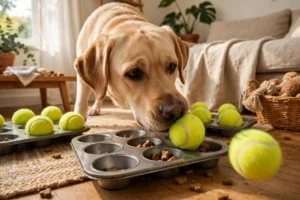
If your dog inhales dinner in forty seconds and then stares at you like you’re starving them, you don’t have a food problem — you have a boredom problem. The muffin tin game dogs go nuts for is the simplest fix I know: treats hidden under tennis balls in a muffin tin, and suddenly mealtime takes ten minutes instead of ten seconds.
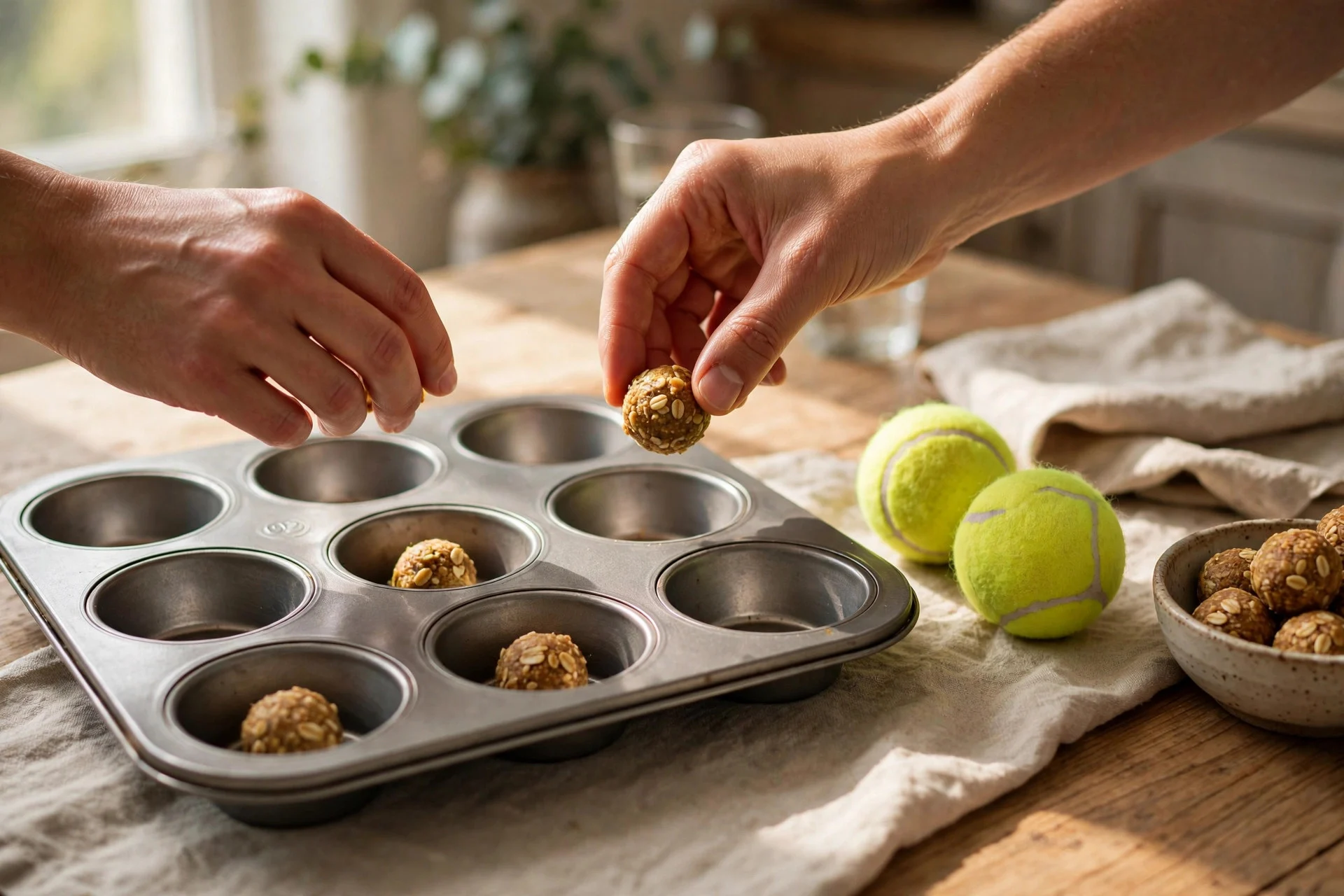
All you need is a muffin tin and six tennis balls (or crumpled paper, or small toys — whatever fits). Drop a treat in each cup, cover each cup with a ball, and let your dog figure out the rest. It sounds almost too simple. That’s because it is. And dogs love it anyway.
5 Muffin Tin Treat Games for Dogs
1. The Classic: Treats Under Tennis Balls
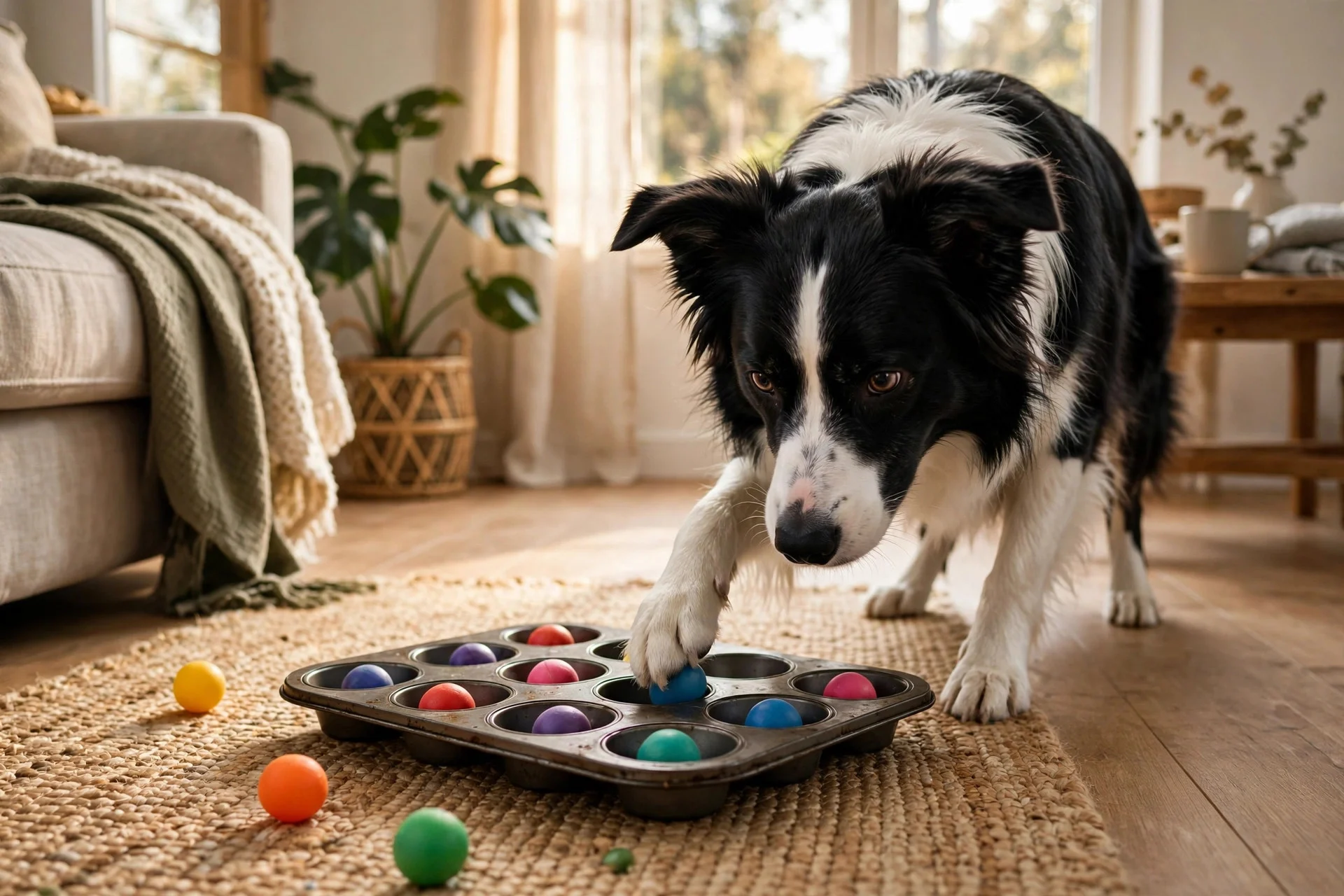
The original and still the best. Place a small treat in each cup of a muffin tin, then cover every cup with a tennis ball. Your dog has to nose or paw each ball off to get the reward underneath. First-timers might stare at it like it’s modern art — nudge one ball off yourself to demonstrate, and they’ll get it within a minute. Use small, smelly treats (tiny pieces of cheese or freeze-dried liver work great) so the scent guides them. Start with just three or four covered cups if your dog is new to puzzle games; a full tin of twelve can overwhelm a beginner. Once they’ve got the concept, fill all twelve and watch them work systematically down the row like a tiny, furry accountant.
2. The Layered Challenge: Cups Within Cups
For dogs who solved game one in ninety seconds flat. Put a treat in each muffin cup, cover with a tennis ball, then place a second treat on top of each ball. Now the dog has to decide: grab the easy visible treat first, or work for the hidden one? Most dogs grab the top treat, then realize there’s more underneath and go back for round two. It adds a decision layer that keeps clever dogs engaged longer. You can also vary it: some cups get a ball, some get a crumpled paper ball, some get nothing. Unpredictability is enrichment gold.
3. The Frozen Muffin Tin
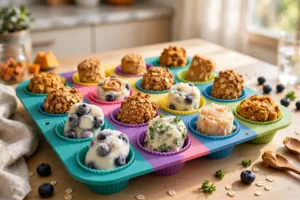
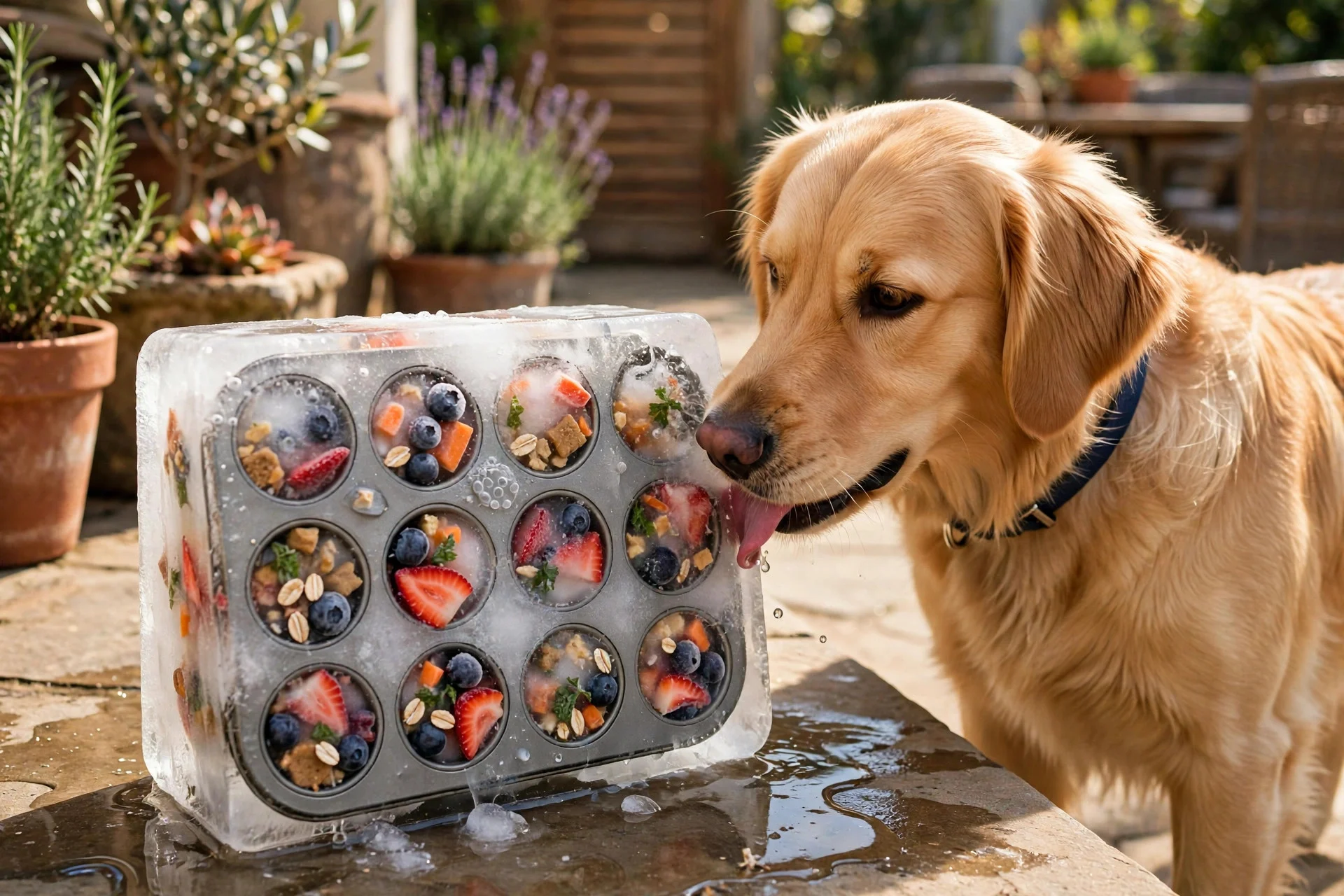
Fill each cup halfway with water or low-sodium bone broth, drop a treat or a blueberry into each, and freeze solid. Pop the whole frozen block out (run warm water on the back of the tin for a few seconds) and serve it on a towel or outside. This turns a two-minute game into a twenty-minute project. The dog has to lick and melt their way to each prize. Perfect for hot days, post-walk cooldowns, or rainy afternoons when a walk isn’t happening. For power chewers, freeze in a silicone tin — it’s gentler on teeth than metal if they get impatient and start gnawing the edges.
4. The Scent Ladder: Easy to Hard
Set up three muffin tins (or use one tin in three rounds) with increasing difficulty. Round one: treats sitting openly in the cups, no covers. Round two: half the cups covered with balls. Round three: all cups covered, and you’ve rubbed a tiny bit of peanut butter on the underside of two random balls as a bonus jackpot. This progression teaches the dog that persistence pays and builds their problem-solving confidence. It’s also a great way to introduce puzzle games to nervous or older dogs — nobody likes starting on hard mode. I use this version with foster dogs who’ve never seen a puzzle toy in their lives. By round three, they’re hooked.
5. The Muffin Tin Buffet: Mixed Rewards
Not every cup needs the same thing. Fill the twelve cups with a mix: kibble in some, a blueberry in others, a tiny piece of cheese in two, a lick of peanut butter smeared in one, and leave two empty. Cover them all with balls. Now it’s a foraging lottery — every cup is a surprise. The empty cups are important: they teach the dog that not trying means missing out, and the variable rewards keep them checking every single cup instead of quitting after the good ones. This is the version I use most often because it uses whatever’s in the fridge and takes two minutes to set up.
Tips That Actually Matter
Match the difficulty to the dog. A bored border collie needs the frozen version; a nervous rescue needs the open-cup version for the first week. Always supervise — tennis balls are a choking hazard for power chewers who might try to compress and swallow them, so use larger balls or switch to crumpled paper for those dogs. And keep sessions short: ten to fifteen minutes of puzzle work is genuinely tiring for most dogs. A tired brain is just as good as a tired body.
Mistakes to Avoid
Don’t start too hard. A dog who can’t solve the puzzle in the first two minutes gets frustrated, not enriched — and a frustrated dog learns that puzzle toys are annoying. Build up gradually. Don’t use the game as a full meal replacement every day without adjusting portions; twelve treats across twelve cups adds up. And retire the game if your dog starts chewing the tennis balls instead of nosing them off. The point is problem-solving, not ball destruction. Swap to a different cover (small stuffed toys, silicone lids) if needed.
FAQs
What can I use instead of tennis balls?
Crumpled paper balls, small rubber balls, rolled-up socks, or silicone muffin liners placed upside-down over the cups. Anything that covers the cup and can be nosed off works. For dogs who chew, use larger items they can’t fit in their mouths.
Is the muffin tin game good for puppies?
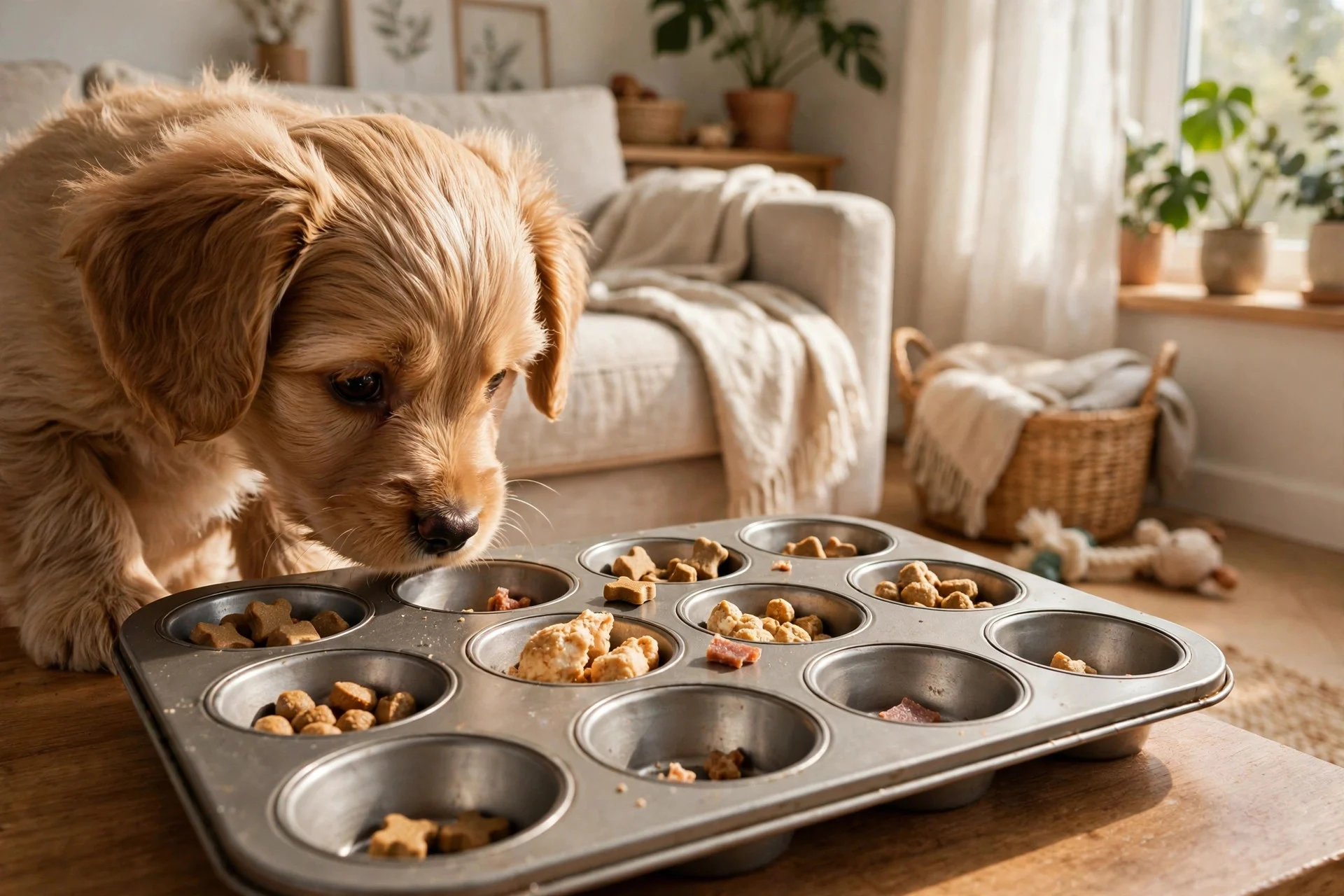
Yes — it’s one of the best starter puzzles. Use just three or four cups, leave them uncovered at first, and use the puppy’s regular kibble so you’re not adding extra calories. Keep sessions to five minutes.
My dog just flips the whole tin over. Now what?
That’s actually problem-solving — just not the kind you wanted. Put the tin on a non-slip mat, hold it steady the first few times, or use a heavier cast-iron muffin pan. Most dogs stop flipping once they learn nosing works better.
How often should I play this game?
A few times a week is plenty. Daily is fine too if you vary the setup — dogs habituate fast, so change the covers, the treats, or the difficulty regularly to keep it interesting.
The muffin tin game costs basically nothing, takes two minutes to set up, and buys you a solid chunk of peace. There aren’t many better deals in dog ownership.