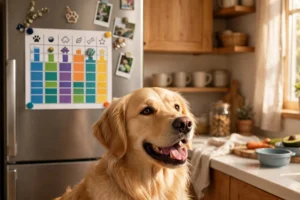
Here’s the dream: your dog walks to the back door, rings a little bell with his nose, and you get a calm, clear signal that it’s potty time. No more accidents because you missed the whining. No more frantic scratching at 2 a.m. that you slept through. It sounds almost too tidy to work — but bell training dogs actually works, and it’s one of the simplest skills you can teach.
I was skeptical too. My beagle mix, Biscuit, had a habit of staring silently at the door, then giving up and choosing the rug. The bell changed everything within about two weeks. The trick is that bell training isn’t really about the bell — it’s about giving your dog a button he can press to talk to you. Here’s how to set it up without the common headaches.
6 Steps to Bell-Train Your Dog
1. Pick the right bell (and hang it low)
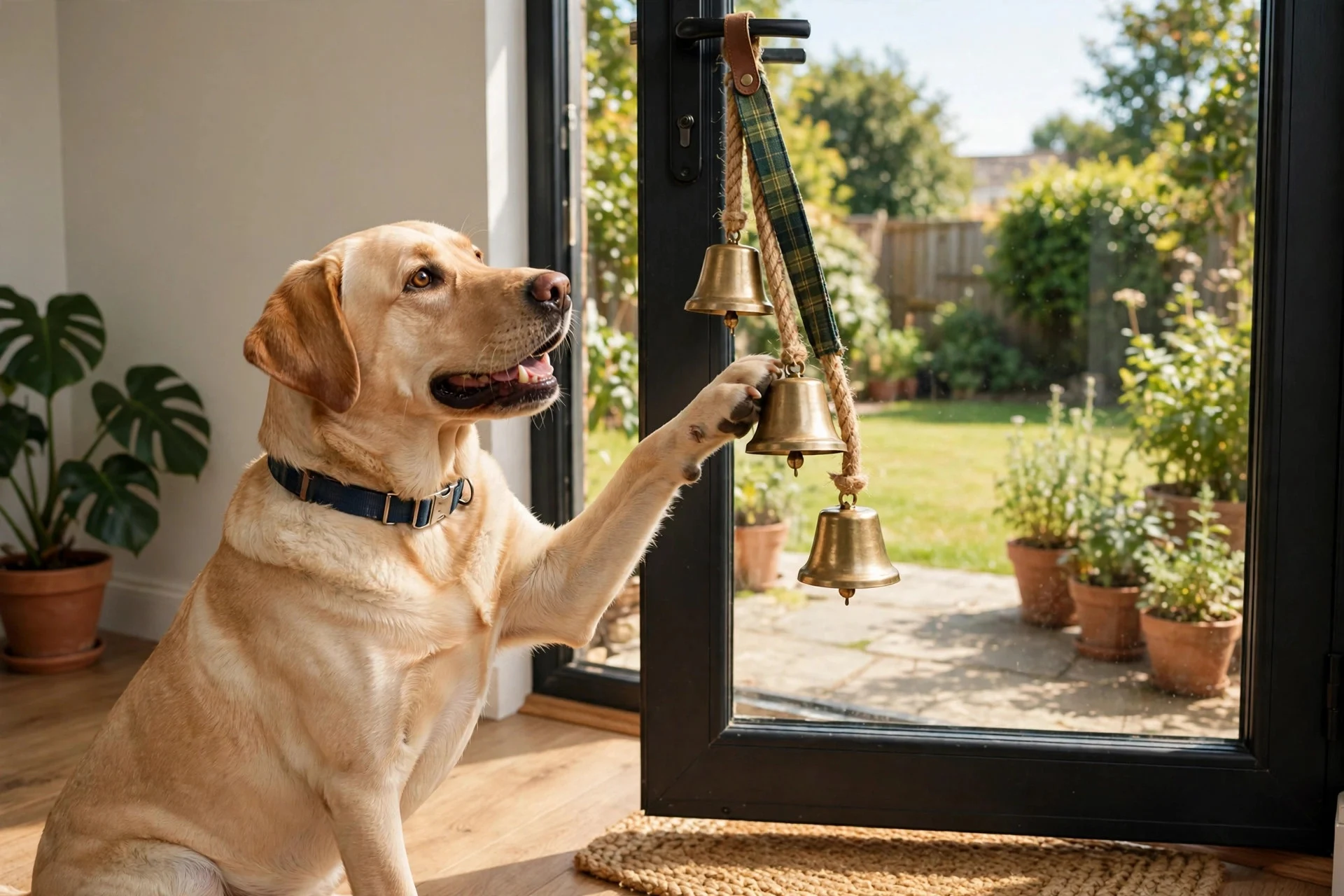
Most people use a strip of jingle bells that hangs from the doorknob — the kind sold as “potty training bells.” They work fine. The key detail is height: hang the bells low enough that your dog can reach them with his nose or a paw without jumping. For a puppy or small dog, that might mean a few inches off the floor. If he has to strain to reach it, he’ll just give up and go back to staring at you. Secure it so it can’t swing into his eyes and startle him.
2. Teach him to touch the bell first — nowhere near the door
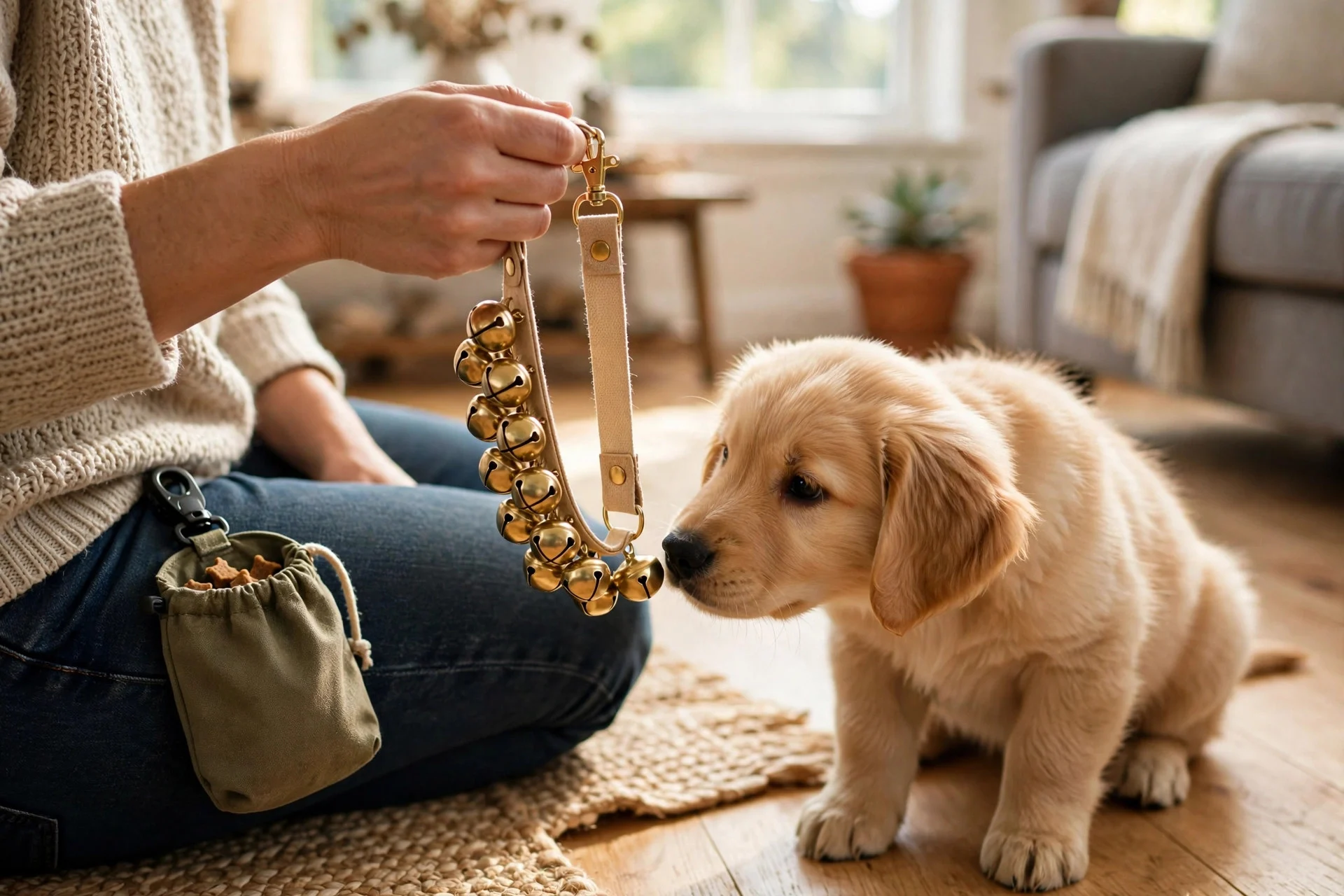
Don’t start at the door. Start in your living room. Hold the bell strip in your hand, and the second your dog sniffs or noses it, mark it (“yes!”) and treat. Repeat a dozen times. You’re just building the association: touch the bell, good things happen. Keep these mini-sessions to two or three minutes. If your dog is paw-oriented rather than nose-oriented, reward whichever he offers first — either works for potty signaling.
3. Move the bell to the door
Now hang the bells on the door you use for potty trips. When it’s time to go out, walk to the door and cue the touch just like you did in the living room. He noses the bell — you open the door immediately and head out. The sequence matters: bell, door opens, outside. He needs to learn the bell is the magic button that makes the door open, not just a toy that earns treats indoors.
4. Fade the treats for the bell itself
This is where most people mess up. Once he’s ringing the bell reliably at the door, stop treating the ring itself. The reward becomes going outside. Why? Because if the bell keeps earning treats, he’ll ring it forty times a day just to collect snacks — and you’ll never know which rings mean “potty” and which mean “I’m bored, entertain me.” The door opening is the reward now.
5. Take him straight out — every single time
For the first few weeks, every ring means an immediate trip outside, even the suspicious ones at 11 p.m. that are probably fake. Yes, this is tedious. But if you start ignoring rings, the bell loses its meaning fast — he learns that ringing sometimes works and sometimes doesn’t, and unreliable buttons get abandoned. Take him out, give him three to five minutes, and if nothing happens, back inside with zero drama.
6. Reward the potty, not the trip
Once you’re outside, this is a normal potty trip: wait, let him do his business, then praise and treat like you mean it. The bell got him outside; the treat celebrates the actual potty. Over time, the whole chain — ring, outside, potty, treat — locks together into one smooth habit. Most dogs get the full sequence down in one to three weeks.
Practical Tips That Make It Stick
One bell, one door. Don’t hang bells on three different doors — your dog will ring the one closest to the couch and you’ll still be guessing. Pick the door you use for potty trips and train only there.
Keep early sessions short and upbeat. Five minutes of happy practice beats twenty minutes of drilling. End every session while he’s still having fun.
Use it alongside your normal potty schedule, not instead of it. The bell is a backup communication system, not a replacement for regular trips — puppies still need to go out every couple of hours.
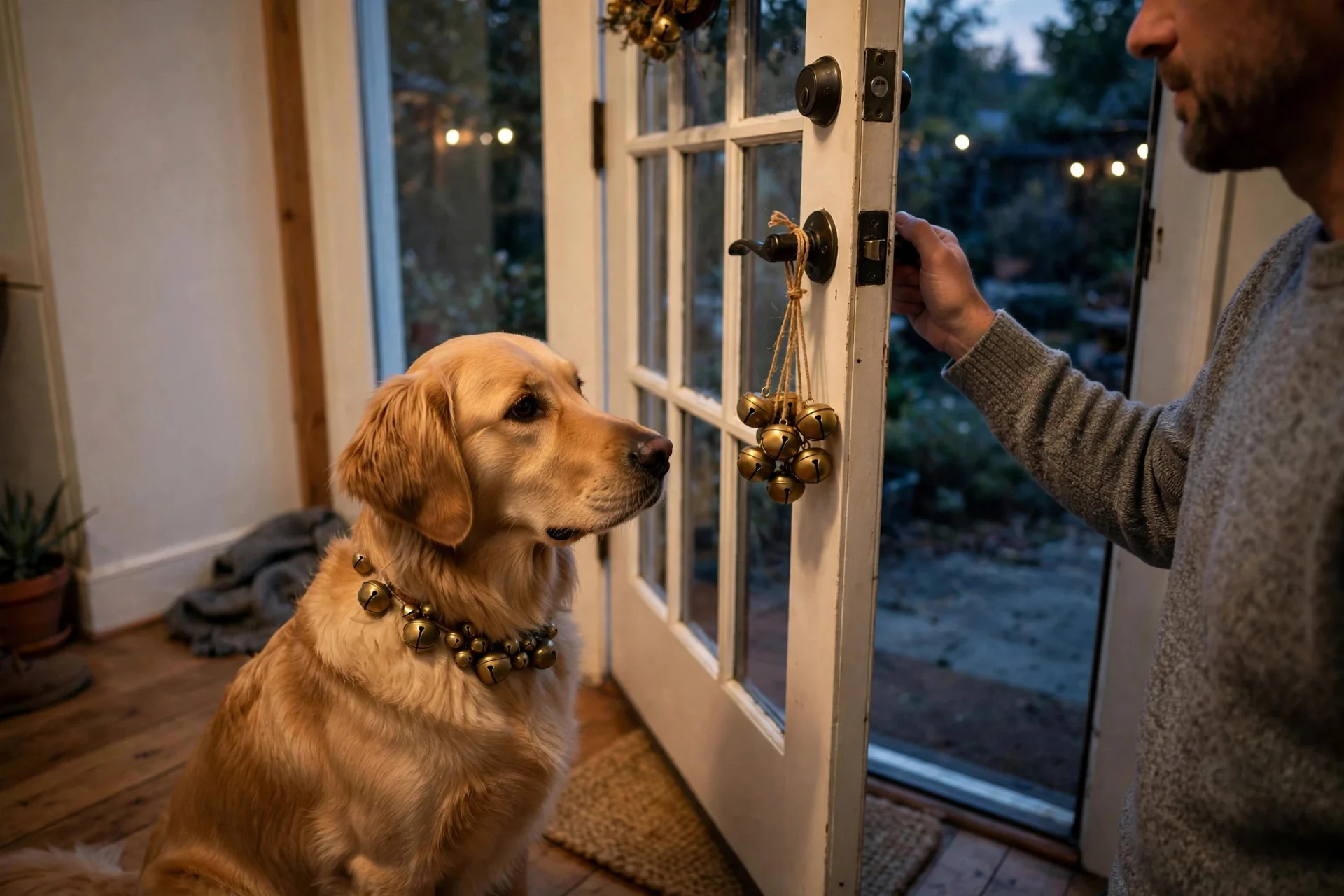
If your dog is scared of the jingle sound, desensitize first: let the bells sit on the floor for a day, treat him for sniffing them, and only hang them up once he’s comfortable. A startled dog won’t touch a scary thing twice.
Mistakes That Ruin Bell Training
The biggest one is treating the bell ring forever. I said it above and I’ll say it again: once he knows the game, the treat for ringing stops. Otherwise you get a dog who rings the bell like he’s playing a slot machine, and you can’t tell a real potty emergency from a snack request.
Don’t punish false alarms. If he rings and doesn’t potty, just bring him back in calmly. Scolding him for “lying” teaches him that ringing the bell is risky — and then he stops ringing it at all, which defeats the entire project.
Don’t skip the “touch the bell” foundation step. People who hang the bells up and just wait for the dog to figure it out often wait weeks. Ten minutes of deliberate foundation work in the living room saves you days of confusion at the door.
And don’t expect it to fix a dog who isn’t otherwise potty trained. The bell is a communication tool. If your puppy doesn’t yet understand that outside is the bathroom, the bell just becomes a fun noise-maker. Get the basics solid first.

FAQs
How long does bell training take?
Most dogs get the basic chain — ring, door opens, outside — within one to three weeks of consistent practice. Puppies sometimes pick it up faster than adults because they’re already in learning mode. If it’s taking longer, the usual culprit is skipping the foundation step or inconsistent responses to the ringing.
What if my dog rings the bell constantly just for fun?
Totally normal phase. Remember step four: the bell itself stops earning treats, and not every trip outside is a party. Take him out, give him a few boring minutes, come back in. Most dogs figure out within a week or two that fake rings produce boring results, and the frequency drops to genuine requests.
Can I bell train an older dog?
Absolutely. Adult dogs often learn faster than puppies because they already understand the potty routine — you’re just adding a communication button. The only adjustment is patience with dogs who are nervous about new objects; go slower with the desensitization.
Should I use bells or a doorbell button?
Either works. Jingle-bell strips are cheap and most dogs take to them quickly. Electronic doorbell buttons (the kind made for dogs) are louder and harder to miss from another room, but some dogs find the sound startling. Pick whichever your dog seems comfortable with — the training steps are identical.
Two weeks of consistent practice, and you’ll have a dog who can tell you — politely, clearly — when nature calls. It’s a small skill with an outsized payoff: fewer accidents, less guessing, and a dog who feels heard. And honestly? The first time he rings that bell on his own, you’ll feel like a genius. Enjoy it.