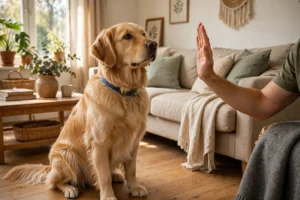
“Down” might be the most underrated cue in dog training. Everyone obsesses over sit, but down is the real workhorse — it’s the position you use when you need your dog truly settled: at a restaurant patio, during a vet exam, when guests arrive, when the doorbell goes off. A dog in a down is a dog who’s decided to stay a while. And it’s easy to teach dog down command in a day or two, as long as you don’t make the classic beginner mistake.
That mistake? Pushing on the dog’s back or shoulders to force him down. Don’t. It confuses him, it can scare a nervous dog, and it teaches him that “down” is something that happens to him rather than something he chooses to do. The lure method — guiding him into position with a treat — gets you a happy, voluntary down in a day or two. Here’s the whole process.
5 Steps to Teach Your Dog to Lie Down
1. Start from a sit with a treat at his nose
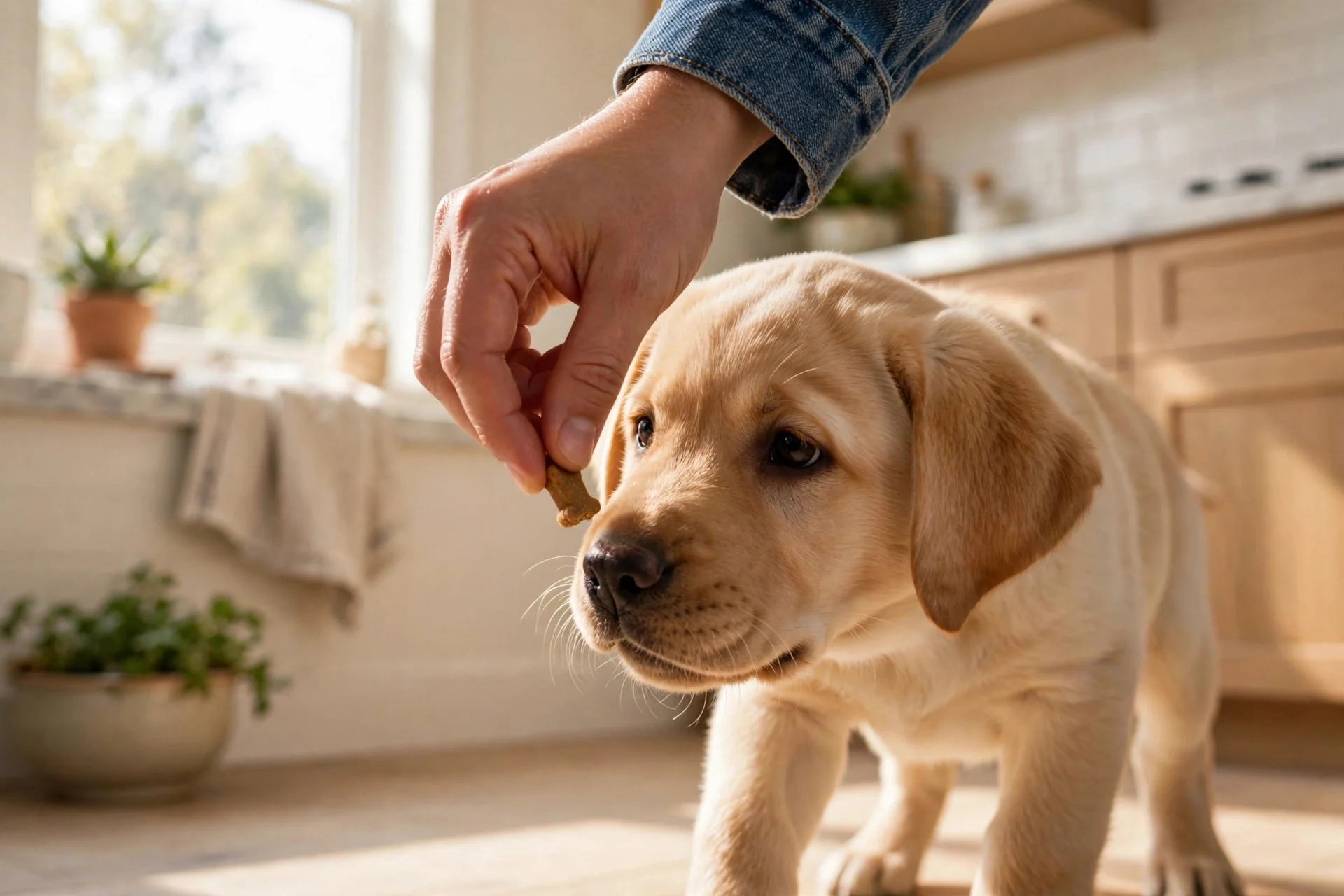
Ask your dog to sit. Hold a treat right at his nose — close enough that he can smell it but not grab it. This is your steering wheel. Everything that follows is just moving that treat in a way that makes lying down the obvious, comfortable choice. Keep your hand low and move slowly. Fast, jerky hand movements just excite him and he pops up.
2. Lure down and slightly toward you
From his nose, move the treat straight down to the floor, then slowly drag it along the floor toward you — like drawing an “L” shape. His nose follows the treat down, his front elbows bend, and his body folds into a down. The instant his belly touches the floor, mark it (“yes!”) and give him the treat. If he stands up or backs away instead, you’re moving too fast or the treat isn’t smelly enough. Reset and try again, slower.
3. Repeat until he offers it — then add the word
Do the lure ten or fifteen times over a couple of sessions. You’ll notice him starting to drop faster, almost anticipating the movement. That’s your signal to add the verbal cue: say “down” right as you start the lure motion. The word goes before the behavior, every time. After a few dozen reps, try saying “down” with just a tiny hand gesture — no treat in the luring hand. When he drops, reward from your other hand or pocket.
4. Fade the lure into a hand signal
Now shrink the lure into a signal. Instead of the full L-shaped drag, just point your finger toward the floor. He already knows what that means. Reward every correct response at first, then start rewarding every other one, then randomly. This is how the hand signal becomes permanent and the food lure disappears. Most dogs make this transition in three to five short sessions.
5. Add duration and real-life practice
A two-second down isn’t useful yet. Once he’s dropping on cue, start delaying the treat by a second or two — then five, then ten. You’re building the same duration muscle as with stay training. Then practice in new spots: the hallway, the backyard, a friend’s house. And use it in real life: ask for a down before meals, before the leash goes on, before guests come in. Real-life reps are what turn a trick into a habit.
Practical Tips That Make It Stick
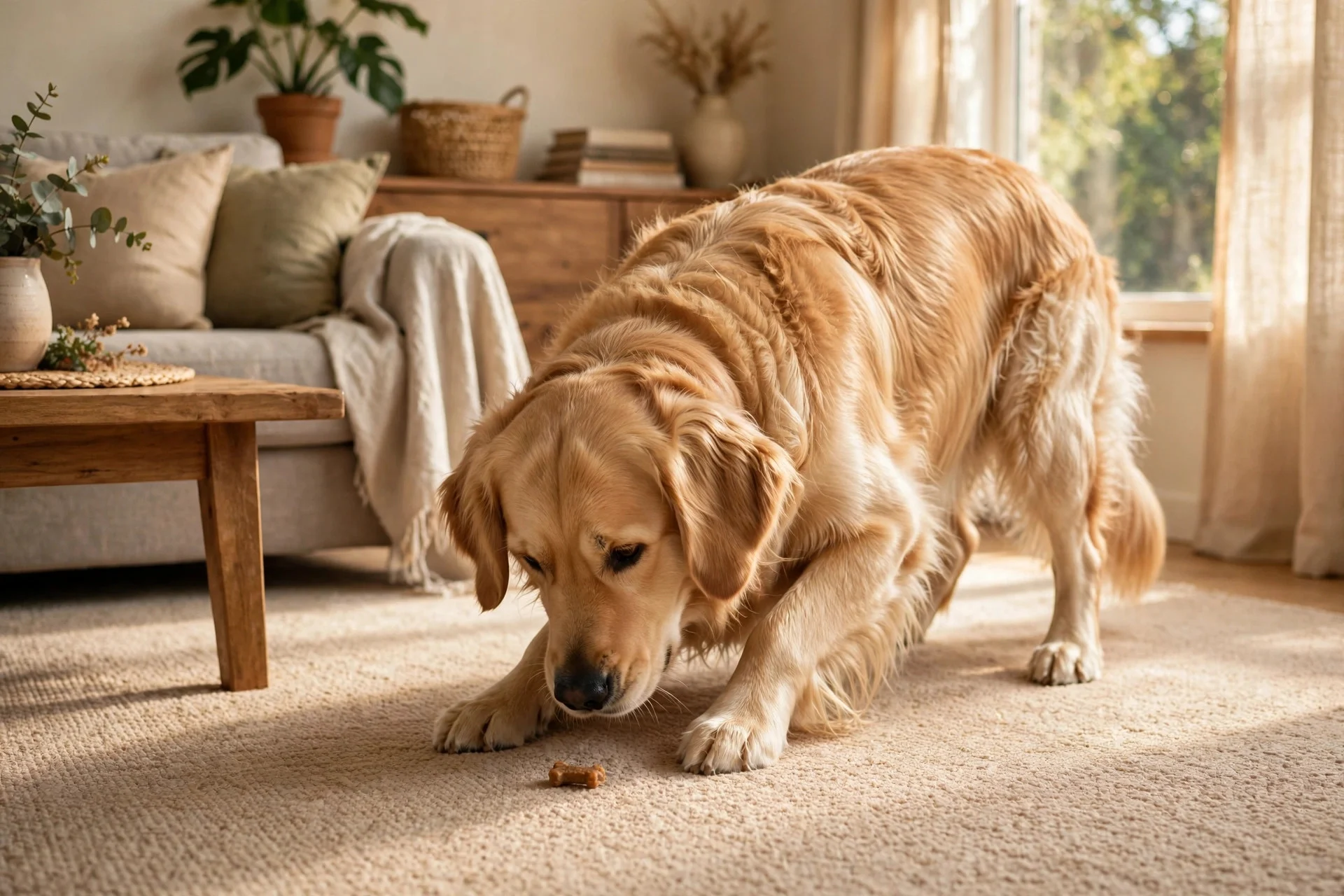
Train on a comfortable surface. Hard tile or cold concrete makes lying down unpleasant, and dogs won’t volunteer for unpleasant. A rug, carpet, or grass is ideal for the early sessions.
Use a different word than “down” if your household already uses “down” to mean “get off the couch.” Pick one meaning per word. Some people use “lie down” for the position and “off” for getting off furniture — that works fine.
Keep sessions to three or four minutes. Luring is mentally tiring, and a tired dog starts offering random behaviors hoping one pays off. End while he’s still nailing it.
If your dog keeps popping his butt up into a play bow instead of lying flat, you’re luring too far forward. Bring the treat motion closer to his chest, straight down rather than out. Small adjustment, big difference.

Mistakes That Ruin “Down”
Never push, press, or force him down physically. Beyond being unpleasant, it teaches the wrong lesson: he learns that down is something you do to him, so he never offers it himself. The whole point of lure training is voluntary behavior — protect that.
Don’t say the cue before he knows what it means. “Down down down!” while he’s standing there confused just poisons the word. He’ll learn to tune it out. Add the word only after the lure reliably produces the behavior — then the word gets paired with success from the very first use.
Don’t train down right after a long, exciting play session. An amped-up dog physically struggles to settle, and you’ll both get frustrated. Train when he’s calm but not sleepy — after a short walk is the sweet spot.
And don’t forget to actually use it. A cue you never use in real life fades. Ask for a down at mealtimes, at doorways, during TV time. Every real-life rep is worth five training reps.
FAQs
What if my dog won’t follow the lure down?
Two common fixes. First, try a smellier treat — real meat beats dry biscuits for luring. Second, try luring under a low obstacle: sit on the floor with your knees bent and lure him under your leg. Dogs naturally duck under things, and the down happens almost by accident. Mark and reward it big.
How is “down” different from “stay”?
“Down” is a position; “stay” is duration in a position. Many trainers combine them: “down” means lie down and stay there until released. If you want them separate, that’s fine too — just be consistent. Either way, add a release word so he knows when the down is over.
My large dog finds down uncomfortable. What should I do?
Some big or senior dogs have joint issues that make the full sphinx down uncomfortable. Watch for hesitation, shifting weight, or reluctance on hard floors. A vet check is worth it if he’s suddenly avoiding a position he used to do easily. In the meantime, train on soft surfaces and accept a relaxed hip-roll down — comfort beats picture-perfect form.
Can I teach down to a puppy?
Yes — puppies as young as eight weeks can learn the lure. Keep sessions to a minute or two, use tiny soft treats, and don’t worry about duration yet. You’re just building the association: the word, the motion, the position, the treat. The polish comes later.
Down is one of those cues you’ll use a hundred times a week once it’s trained — at the vet, at cafes, when the doorbell rings, when you need him settled during dinner. Two or three days of patient luring buys you a lifetime skill. Grab a smelly treat, find a rug, and start drawing that L in the air.