Every dog owner has a chewing story. Mine involves a television remote, a pair of running shoes, and — the one that still hurts — a wooden chair leg that Biscuit decided was a chew toy during his teenage months. Here’s what most people get wrong about a dog chewing everything in sight: it’s not spite or dominance. Chewing is one of the most natural dog behaviors there is. Puppies chew to explore and to soothe teething gums. Adult dogs chew to relieve stress, fight boredom, and burn energy.
So the goal was never to stop the chewing — it’s to redirect it. You can’t train the chew out of a dog, but you can teach him what to chew. These seven strategies do exactly that.
7 Ways to Stop Your Dog Chewing Everything
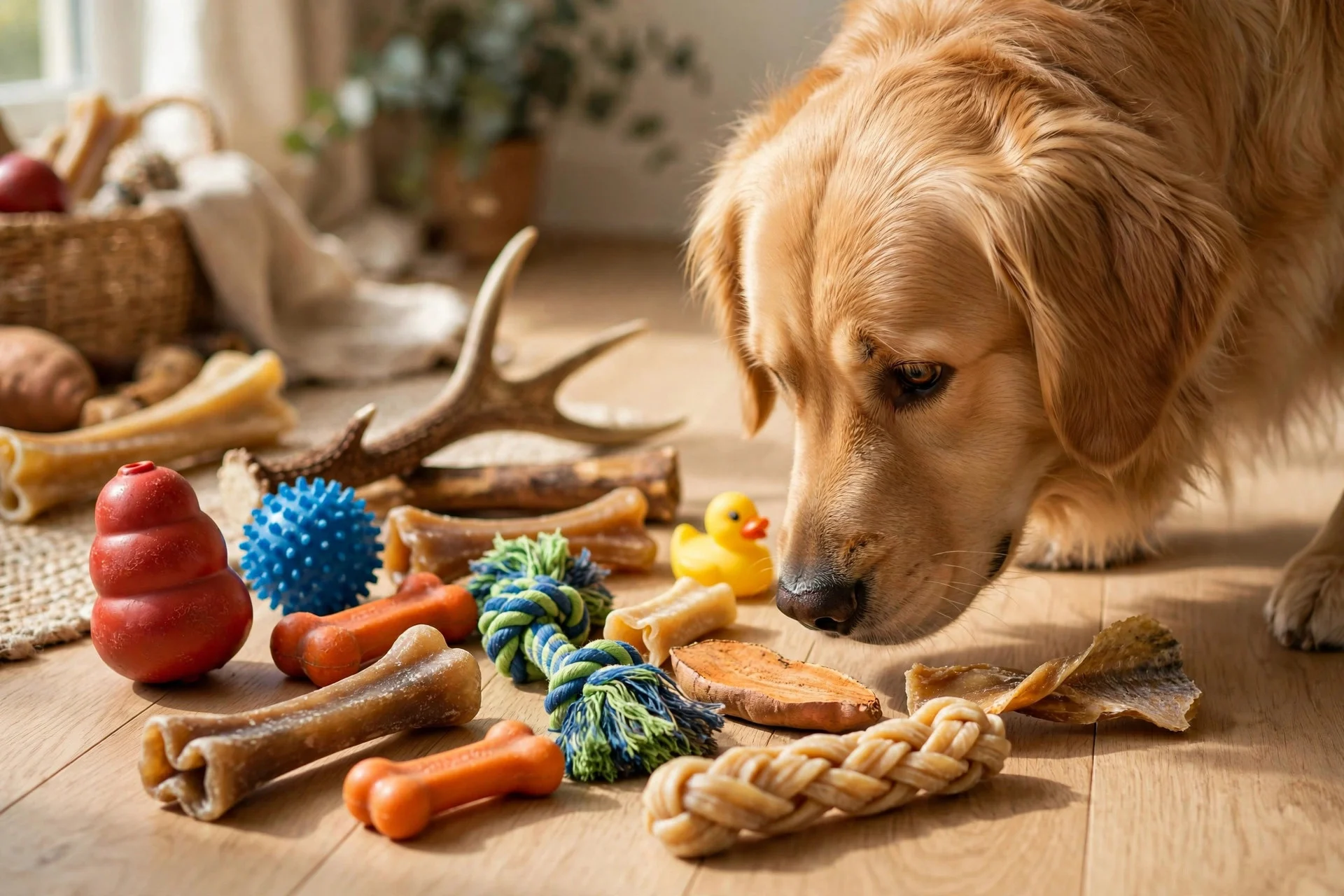
1. Give him legal things to chew — lots of them
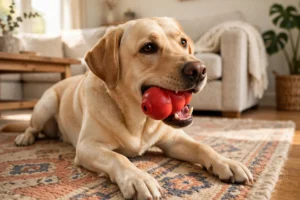
This is step one and it’s non-negotiable. A dog with nothing appropriate to chew will invent his own options, and his options will always be your stuff. Stock up on a variety: rubber chew toys, natural chews, frozen stuffed toys. Rotate them every few days so they stay interesting — a toy that’s been on the floor for a month is invisible to him.
2. Puppy-proof like you mean it
Management beats training when it comes to chewing. If the shoes are in the closet, he can’t chew the shoes. Pick up the laundry, close the bedroom doors, put the remote on a high shelf. Every successful chew of a forbidden object is practice — and practice makes permanent. The fewer rehearsals he gets, the faster the habit dies.
3. Exercise the body, tire the brain
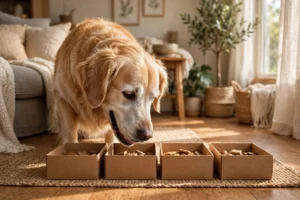
A shocking amount of destructive chewing is unspent energy. A tired dog is far less interested in your baseboards. Twenty minutes of sniffing games or puzzle feeders tires a dog out more than an hour of fetch.
4. Teach “leave it” and “trade” — the emergency brakes
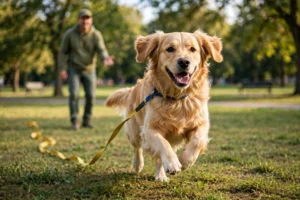
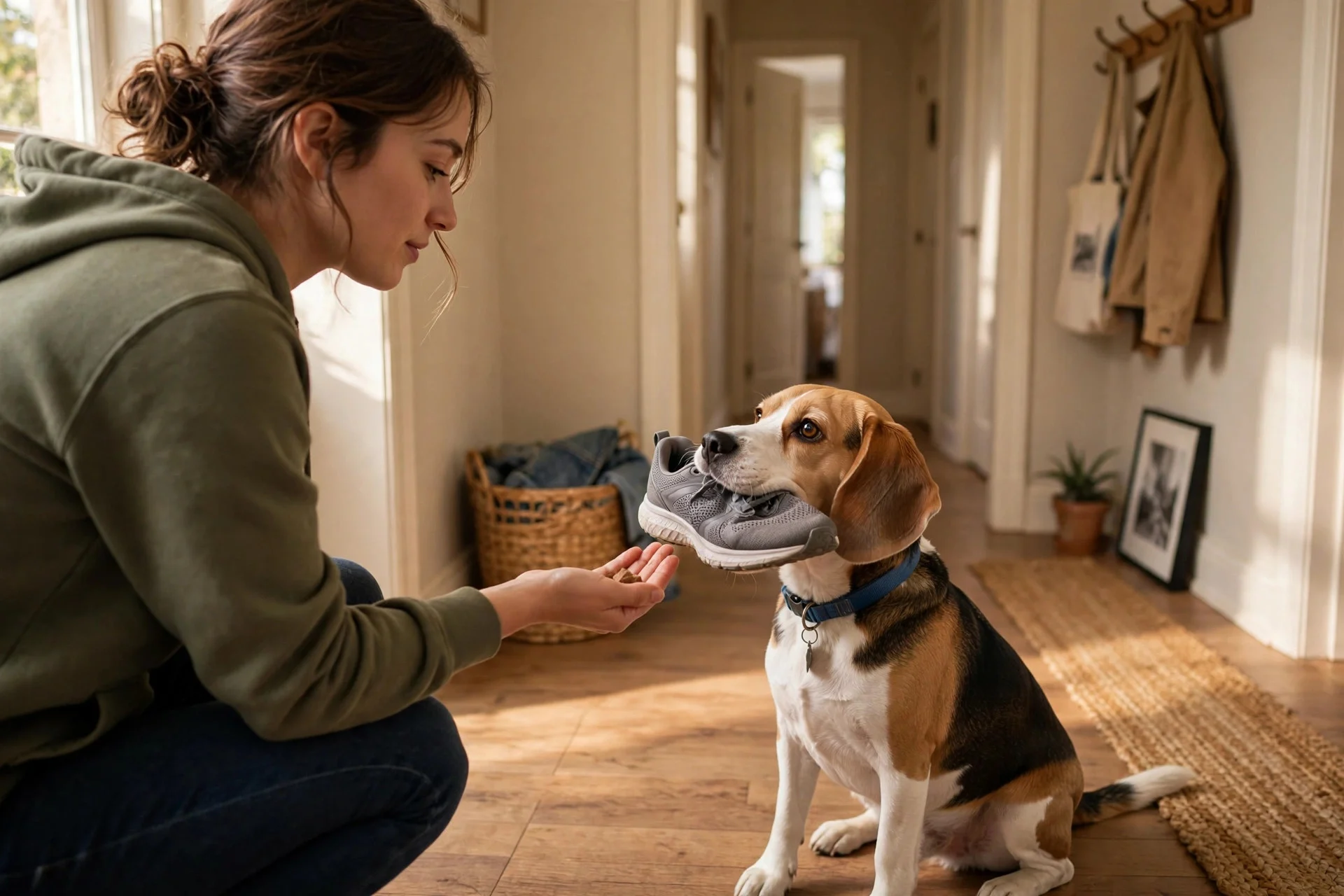
You need a way to interrupt a chew in progress without chasing him around the house (chasing turns it into a thrilling game of keep-away, which is the opposite of what you want). “Leave it” stops him before he grabs something. “Trade” — offering a high-value treat in exchange for the forbidden object — gets it back without a fight. Practice both with boring objects first, so they’re reliable when it really counts. Never just yank things out of his mouth; that teaches him to chew faster and guard harder.
5. Use bitter spray as a backup, not a plan
Bitter apple spray works on some dogs for some objects — chair legs, table corners, that one spot on the rug. But it’s wildly inconsistent. Plenty of dogs either don’t mind the taste or just move to a different target. Use it as a supplement to management and training, never as the whole strategy. And test it first: spray a little on a tissue and offer it. If he licks it happily, save your money.
6. Crate or confine when you can’t supervise
Chewing happens when nobody’s watching. If you’re at work or asleep, your untrained chewer shouldn’t have free roam of the house — that’s just setting him up to practice the wrong thing for hours. A crate, a puppy-proofed room, or a playpen with appropriate chews keeps him safe and keeps your furniture intact. This isn’t punishment; it’s prevention. Freedom is earned gradually as the chewing habit fades.
7. Check for anxiety, not just boredom
Most chewing is normal — but if your dog only destroys things when you’re gone, drools excessively, or seems panicked rather than playful, you might be looking at separation anxiety rather than ordinary chewing. Anxious chewing needs a different approach: gradual alone-time training, and often professional help. More exercise won’t fix anxiety. If the pattern fits, talk to your vet or a certified behaviorist before assuming it’s “just” a chewing phase.
Practical Tips That Make It Stick
Match the chew to the chewer. Power chewers destroy plush toys in minutes and can swallow chunks — they need tough rubber or size-appropriate natural chews. Gentle chewers do fine with softer options.
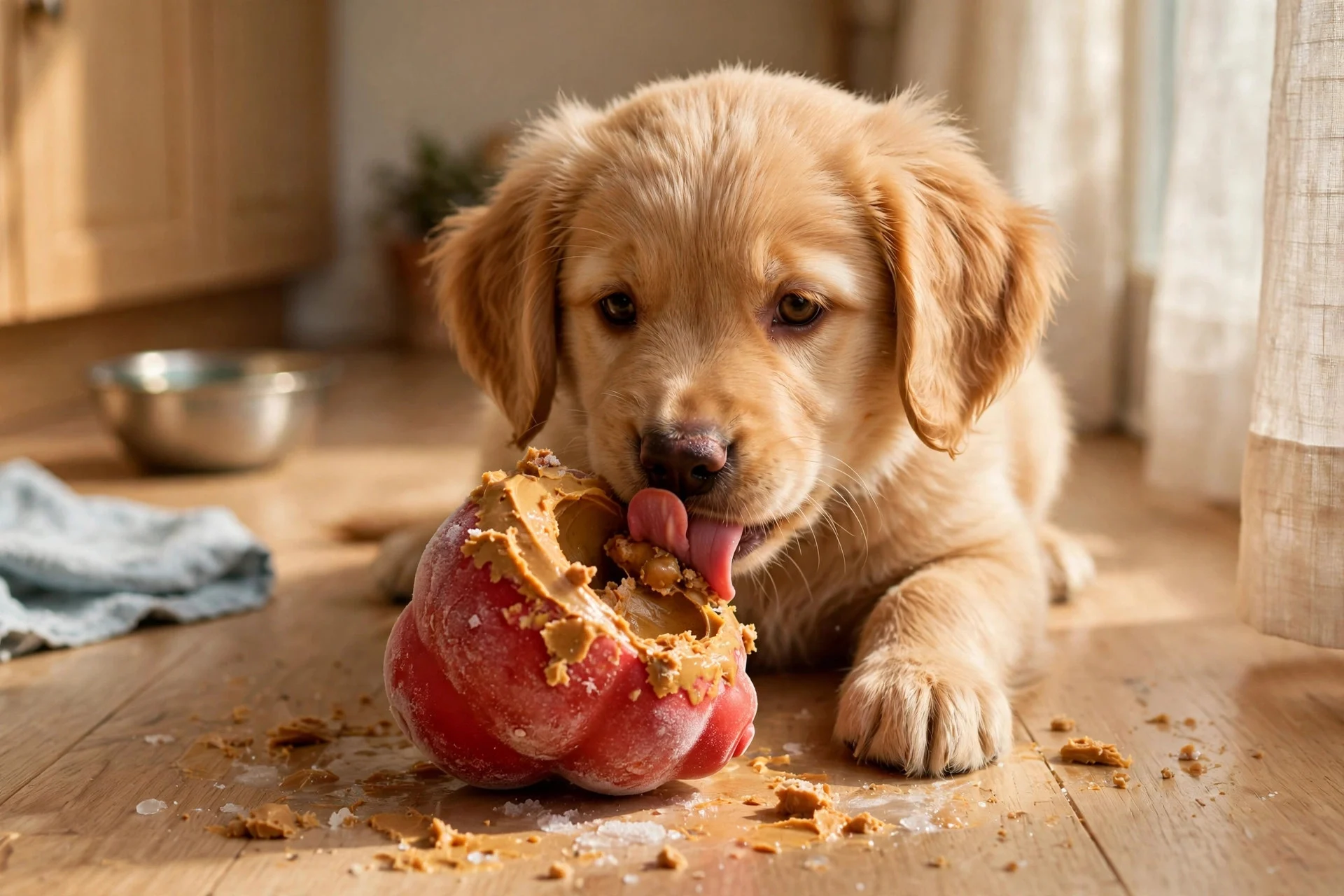
Frozen is your friend. Stuff a rubber toy with xylitol-free peanut butter and freeze it overnight — it lasts ten times longer and soothes teething gums.
Reward him for chewing the right things. When you catch him gnawing his own toy, praise him calmly. You’re not just preventing bad chewing — you’re actively building the habit of choosing the right chew. Catch him being good.
For teething puppies specifically: keep a rotation of cold items — frozen washcloths, chilled rubber toys, frozen carrots. Teething hurts, and cold is the fastest relief. The worst chewing weeks are usually between four and six months.
Mistakes That Make Chewing Worse
Punishing after the fact is useless. He chewed the shoe three hours ago; he has no idea why you’re upset now. All he learns is that you sometimes get scary for no apparent reason. If you didn’t catch it happening, just clean up and manage better next time.
Chasing him to get the object back is the biggest tactical error. To a dog, being chased while holding something is the best game ever invented. He’ll grab forbidden things more often just to start the chase. Trade, don’t chase. Every time.
Giving him old shoes or socks as toys, then being surprised when he chews the new ones. Dogs don’t understand the difference between “old shoe I’m allowed” and “new shoe I’m not.” If it’s shaped like a shoe, it’s a shoe. Keep all human items off the toy menu.
And the sneakiest mistake: inconsistency between household members. If one person trades calmly and another chases and yells, the dog gets mixed signals and the training stalls. Get everyone on the same page.
FAQs
At what age do dogs stop chewing everything?
The intense puppy chewing phase usually peaks between four and seven months (teething) and tapers off significantly by twelve to eighteen months. But adult dogs chew throughout their lives — the goal isn’t zero chewing, it’s chewing the right things. A two-year-old who still destroys furniture likely needs more exercise, better management, or an anxiety check.
Are rawhide chews safe?
Rawhide is controversial for good reason: it can swell in the stomach and cause blockages, especially in aggressive chewers who gulp chunks. Many vets recommend skipping it in favor of digestible alternatives. If you do use rawhide, supervise closely, choose appropriate sizes, and take it away when it gets small enough to swallow.
My dog only chews when I’m gone. Is that separation anxiety?
Possibly. The key signs of separation anxiety versus boredom: destruction focused on doors and windows (trying to get to you), drooling or panting, and distress that starts soon after you leave. Set up a camera and watch what happens in the first thirty minutes after you go — that footage tells the real story. If it’s anxiety, standard chew-training won’t fix it; you need a desensitization plan.
Should I use a muzzle to stop chewing?
No — a muzzle doesn’t teach anything, and leaving one on unsupervised is dangerous. Muzzles are for short, supervised situations like vet visits. For chewing, the answer is management, appropriate chews, exercise, and training — not restraint.
Chewing isn’t a character flaw; it’s a dog being a dog. Your job isn’t to suppress it — it’s to channel it. Stock the legal chews, manage the environment, tire out the brain, and trade instead of chase. Do that consistently for a few months, and the shoe-eating phase becomes a funny story instead of an ongoing crisis. Biscuit hasn’t touched a chair leg in years. There’s hope for yours too.