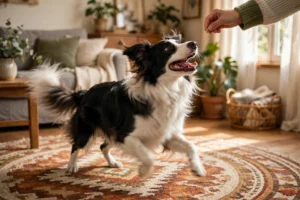
Spin is the trick that makes people laugh. Your dog whirls in a happy circle, tail going like a propeller, and suddenly everyone in the room is delighted. It’s cute, it’s impressive-looking, and here’s the part nobody expects: it’s also genuinely useful. A teach dog spin trick session doubles as mental exercise, it’s a great warm-up before training, and it gives high-energy dogs a job to do when they’re bouncing off the walls. Plus it takes about ten minutes to teach. Let’s do it.
Spin is what’s called a “lure trick” — you guide the dog’s nose in a circle with a treat, and his body follows. Almost every dog gets it within a single session because the mechanics are so natural. Dogs turn in circles anyway; you’re just putting it on cue. The only real skill involved is your timing with the treat.
5 Steps to Teach Your Dog to Spin
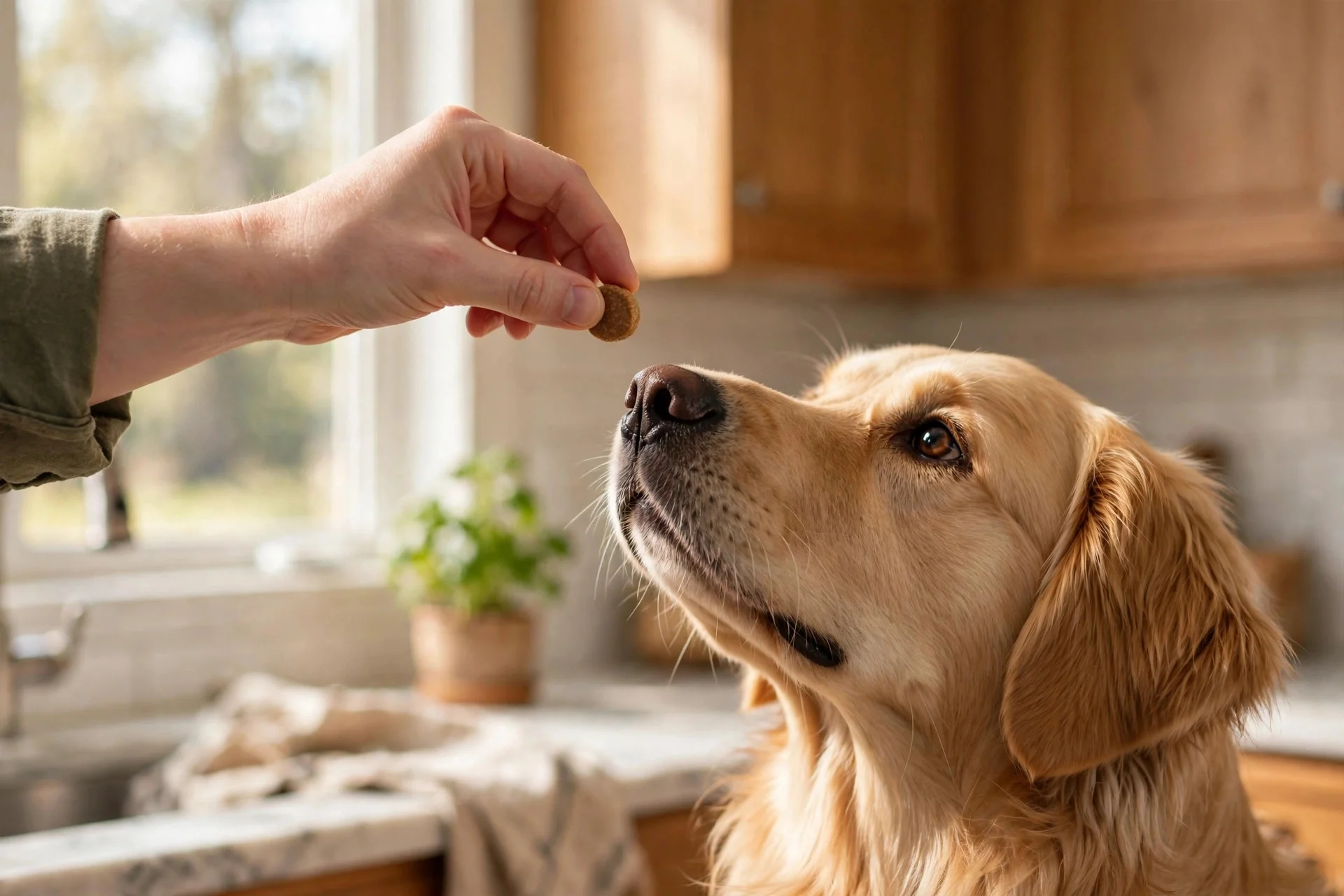
1. Get a treat to his nose and start a small circle
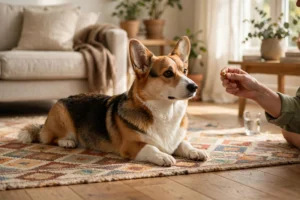
Stand in front of your dog with a treat pinched between your fingers, held right at his nose. Slowly move your hand in a tight circle to one side — like you’re drawing a small halo around his head. His nose follows the treat, his body follows his nose, and around he goes. The moment he completes the circle, mark it (“yes!”) and treat. Keep the first circles small and slow. Big fast circles make dogs dizzy or cause them to lose track of the treat.
2. Pick a direction and stick with it
Dogs, like people, usually have a preferred turning direction. Try both ways once or twice and see which is smoother — then train that direction first. You’ll add a separate cue word for each direction later (“spin” for one way, “twist” for the other is the classic pair). For now, one direction only. Master it, then teach the mirror image as a separate trick.
3. Add the cue word as he turns
After ten or fifteen successful lured spins, start saying your cue word — “spin!” — right as you begin the hand motion. Word first, then motion, every time. Dogs learn the word by hearing it paired with the behavior dozens of times. After another dozen reps, try just the word with a tiny hand gesture. When he spins on the word alone, jackpot him — three or four treats in a row. That big payoff tells him this one really matters.
4. Fade the lure to a hand signal
Shrink the big circular lure into a small circular finger gesture. Then shrink it further — just a flick of your wrist. The goal is a cue so subtle it looks like magic to onlookers. Practice this transition over a few sessions; don’t rush it. If he stops responding when you shrink the signal, you shrank it too fast. Go back one step.
5. Add it to real life (and teach the other direction)
Use spin as a warm-up before training sessions — two or three spins gets his brain engaged and burns a little fizzy energy. Use it when he’s getting restless during downtime. And once the first direction is rock solid, teach the opposite direction with a different word. Having both directions is not just flashy; it keeps the trick physically balanced so he’s not always twisting the same way.
Practical Tips That Make It Stick
Train on a non-slippery surface. Spinning on slick tile or hardwood is awkward and dogs can tweak something. Carpet, grass, or a yoga mat is ideal.
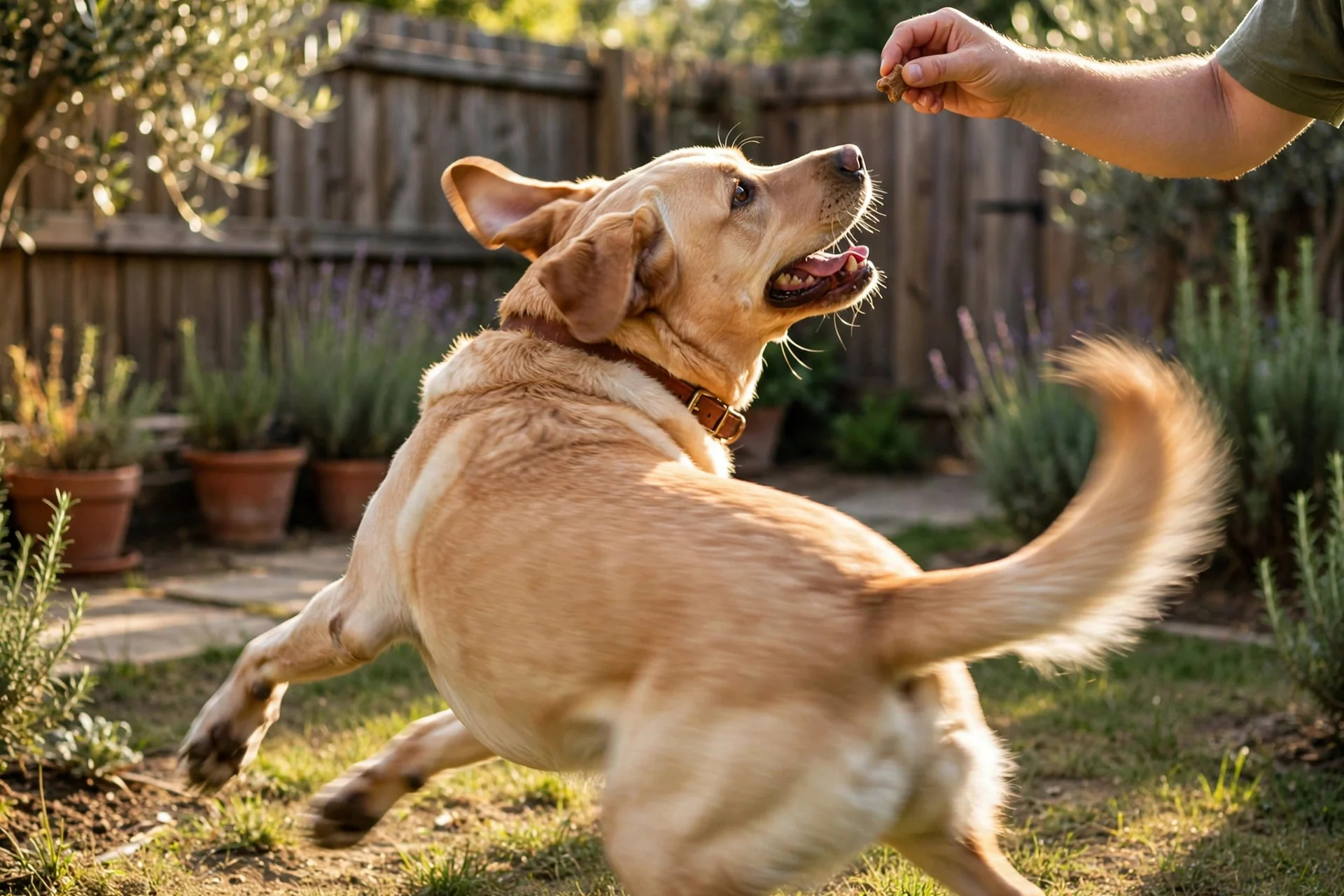
Keep your lure hand at nose height the whole circle. If your hand drifts up, he’ll jump. If it drops to the floor, he’ll lie down. Nose height, steady circle — that’s the whole technique.
Short sessions, always. Spin is exciting and dogs get revved up fast. Two minutes of spinning, then a calm-down break. An over-aroused dog starts offering frantic, sloppy spins, and that’s not what you want to reinforce.
For older or larger dogs, keep the circles slow and the reps few. A senior dog with a stiff back shouldn’t be cranking out twenty spins. A handful of gentle ones is plenty.
Mistakes That Ruin Spin
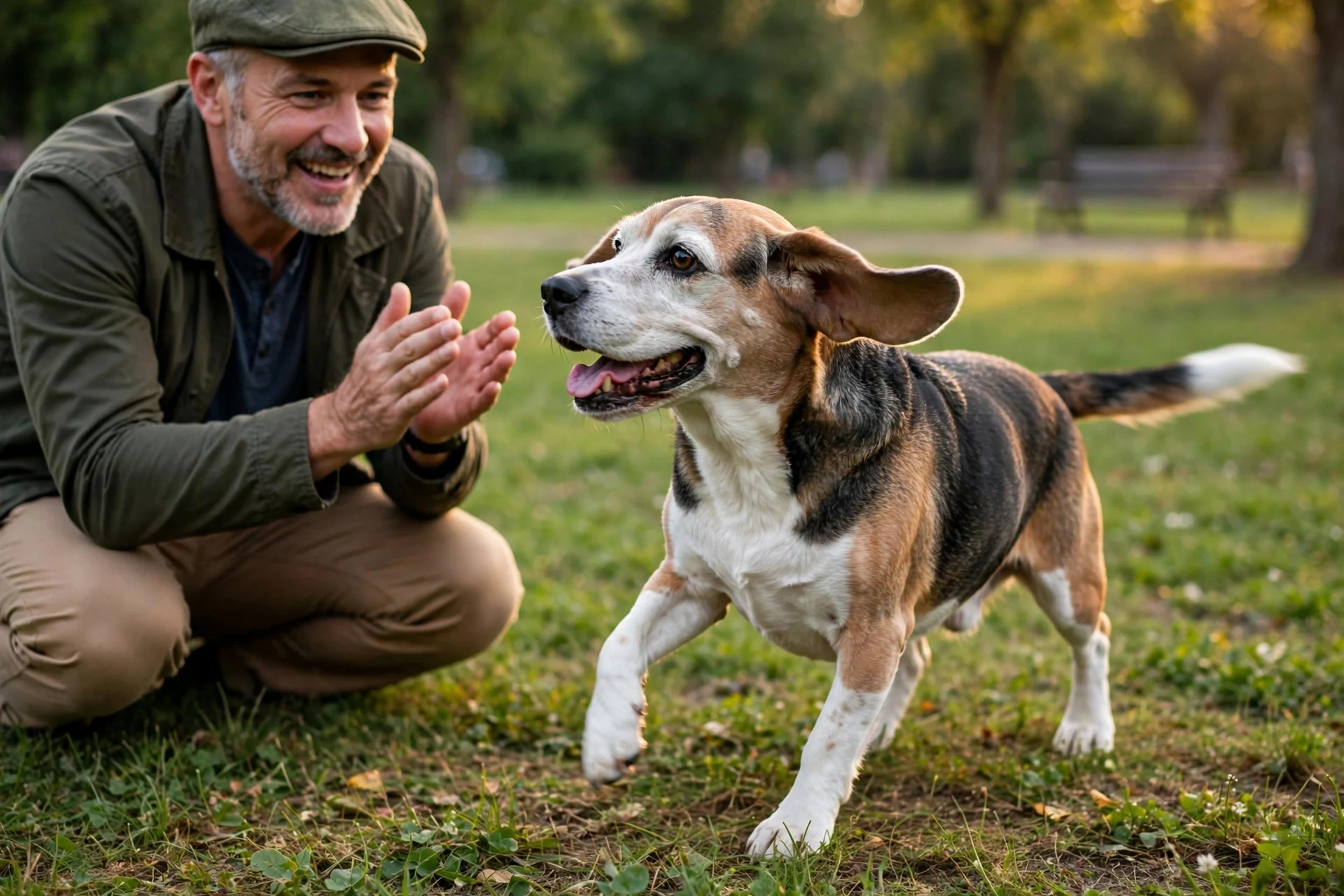
The classic error is luring too fast. Your hand whips around, the dog loses the treat, gets confused, and starts jumping or barking instead. Slow down. The circle should take a full two to three seconds. Boring is good here.
Don’t teach both directions in the same session when starting out. It muddies the cue and frustrates the dog. Get one direction clean first — word, signal, the works — then introduce the second direction a few days later as its own mini-project.
Don’t reward sloppy spins once he knows better. In the beginning, any full circle earns a treat. But once he’s reliably spinning, start rewarding only the crisp, complete ones. If you keep paying for half-hearted quarter-turns, that’s what you’ll get forever.
And don’t use spin to hype up an already overexcited dog. It’s a fun trick, but it’s also arousing. If your dog is already bouncing off the walls, spinning him faster isn’t training — it’s just adding fuel. Use it to engage a calm dog, not to wind up a wild one.
FAQs
How long does it take to teach spin?
Most dogs learn the basic lured spin in one session of five to ten minutes. Getting it on verbal cue alone usually takes another two or three short sessions. The full polish — both directions, small hand signal, reliable in different locations — takes a week or two of casual practice.
My dog gets dizzy and stumbles. Is that normal?
A little wobbliness on the first few reps is normal, especially in puppies. But if he’s consistently stumbling or looks genuinely disoriented, your circles are too fast or too many. Slow down, do fewer reps per session, and give him a break between turns. If it persists, check with your vet — inner ear issues can make spinning uncomfortable.
Can I teach spin to a senior dog?
Yes, with adjustments. Keep circles slow and wide, limit reps to three or four per session, and skip it entirely if your dog has known back, hip, or vestibular issues. For a healthy senior, a gentle spin is actually nice low-impact mental exercise.
What’s the difference between “spin” and “twist”?
Just direction. By convention, “spin” usually means turning to the dog’s left (your right) and “twist” means the opposite — but there’s no official rule. Pick two distinct words, assign one to each direction, and be consistent. The words themselves don’t matter; the consistency does.
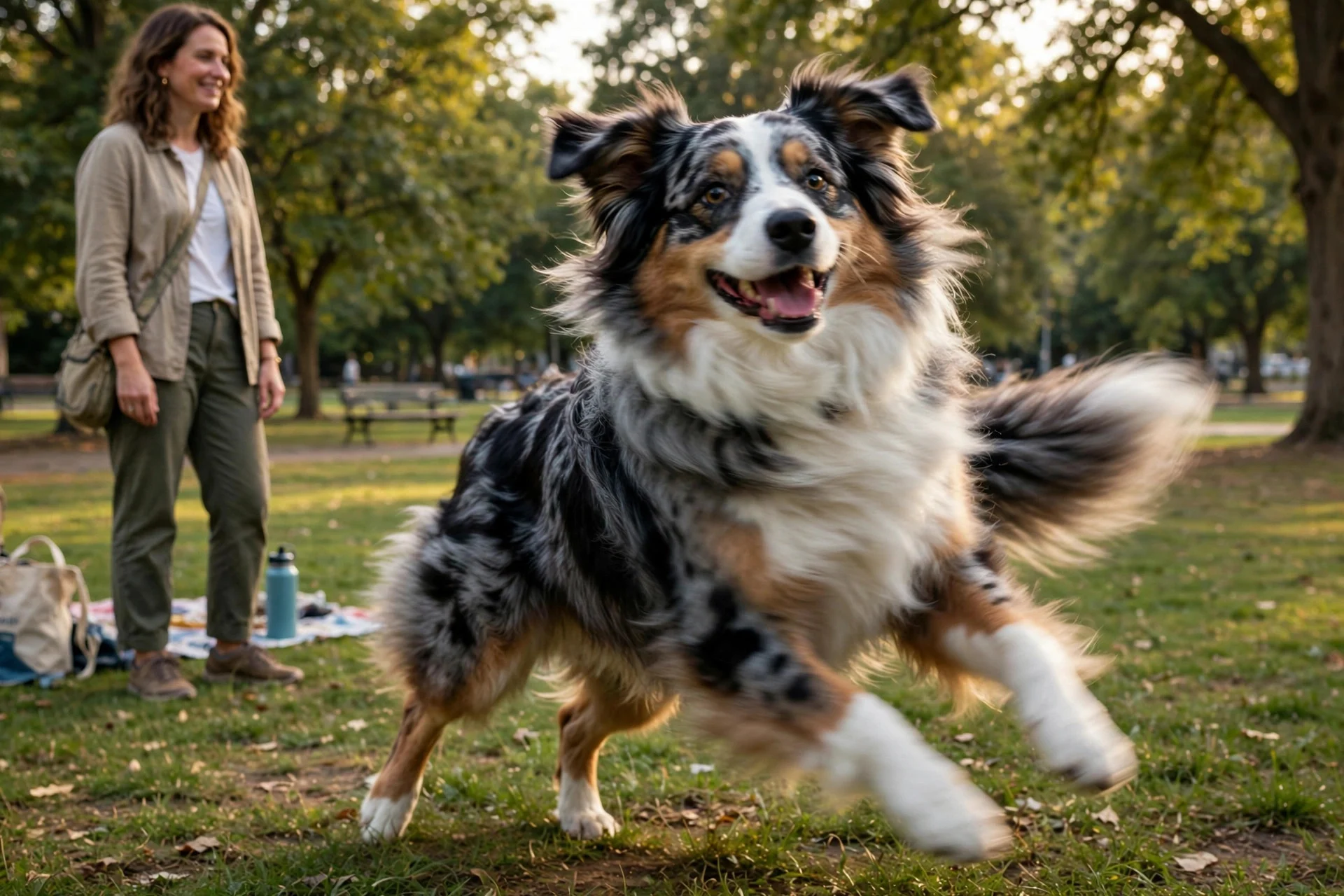
Spin is pure joy in trick form — easy to teach, fun to watch, and secretly useful as a warm-up and energy burner. Grab a treat, draw a slow circle in the air, and enjoy the moment your dog figures out the game. That first voluntary spin, with the tail going a mile a minute? Worth every second.