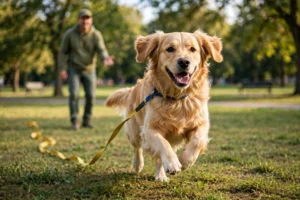
“Stay” is the cue that keeps your dog safe. It’s the difference between a dog who bolts after a squirrel toward traffic and a dog who plants his butt and waits. And it’s one of the first commands every trainer teaches — because a reliable stay is genuinely a safety skill, not just a party trick. The good news? Anyone can teach dog stay successfully. The bad news? Most people rush it, and a rushed stay is a stay that falls apart the second something interesting happens.
Here’s the secret nobody tells beginners: “stay” isn’t one skill. It’s three skills stacked together — duration (staying put over time), distance (staying while you move away), and distraction (staying when the world gets exciting). You train them separately, one at a time. Try to build all three at once and you’ll just confuse your dog. Let’s do it the slow way that actually sticks.
5 Steps to Teach Your Dog to Stay
1. Start with duration: two seconds of stillness
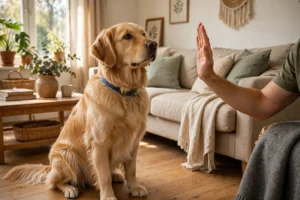
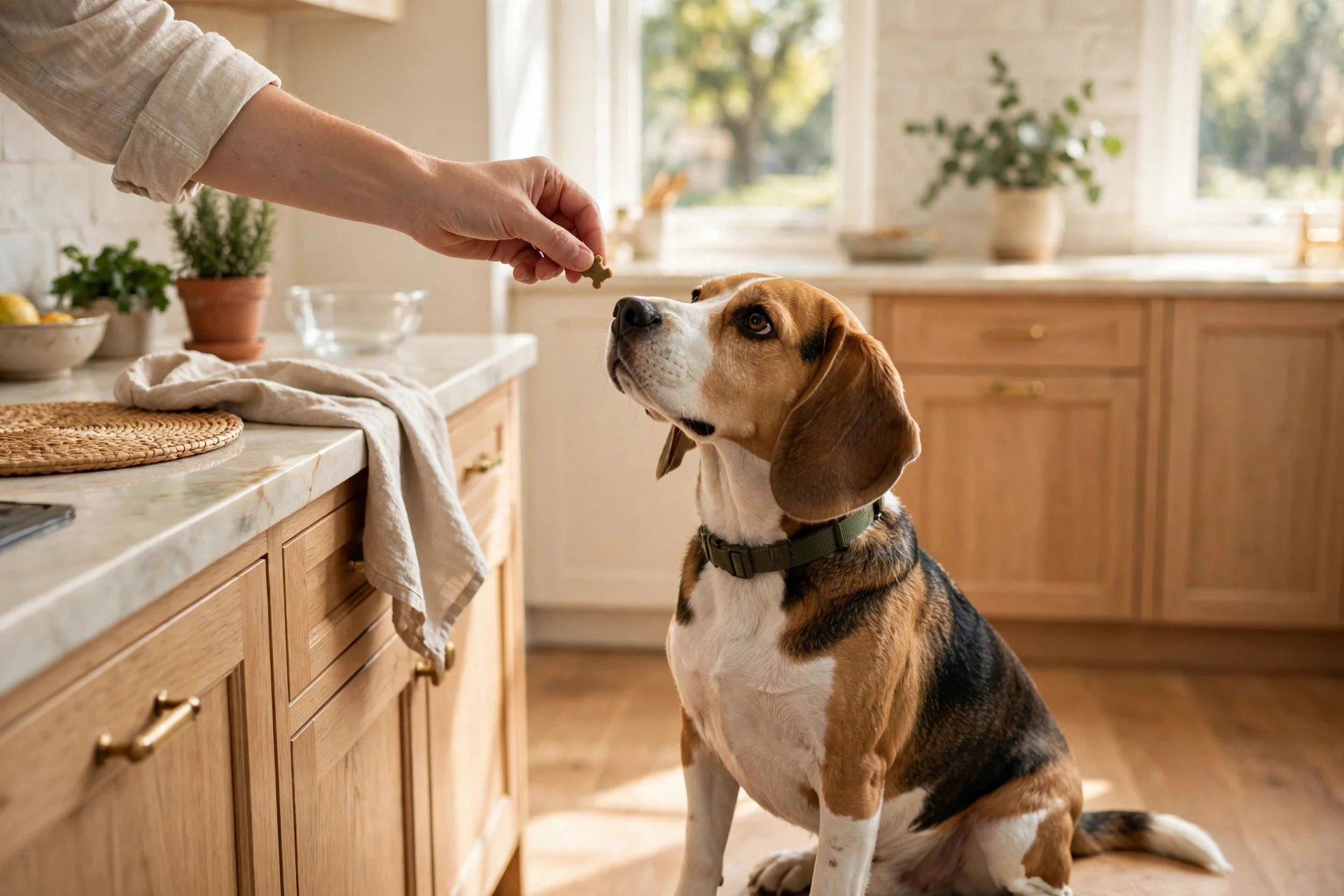
Ask your dog to sit. Then hold your flat palm up in front of his face like a stop sign — that’s your stay signal. Wait two seconds. If he stays put, mark it (“yes!”) and treat. That’s it. Two seconds. You’re not being lazy; you’re building the foundation. Repeat this five or six times. He needs to learn that “stay” means “freeze in this position until I say otherwise,” and the only way to learn that is dozens of tiny, successful reps.
2. Build duration gradually — seconds, not minutes
Once two seconds is easy, stretch it to five, then ten, then twenty. Add time in small jumps. If he breaks at fifteen seconds, drop back to ten and rebuild. This is the boring part of stay training, and it’s the part that matters most. A dog who can hold a stay for a full minute in your living room has a real skill. A dog who was rushed to thirty seconds and keeps breaking has learned that “stay” is more of a suggestion.
3. Add distance: one step back
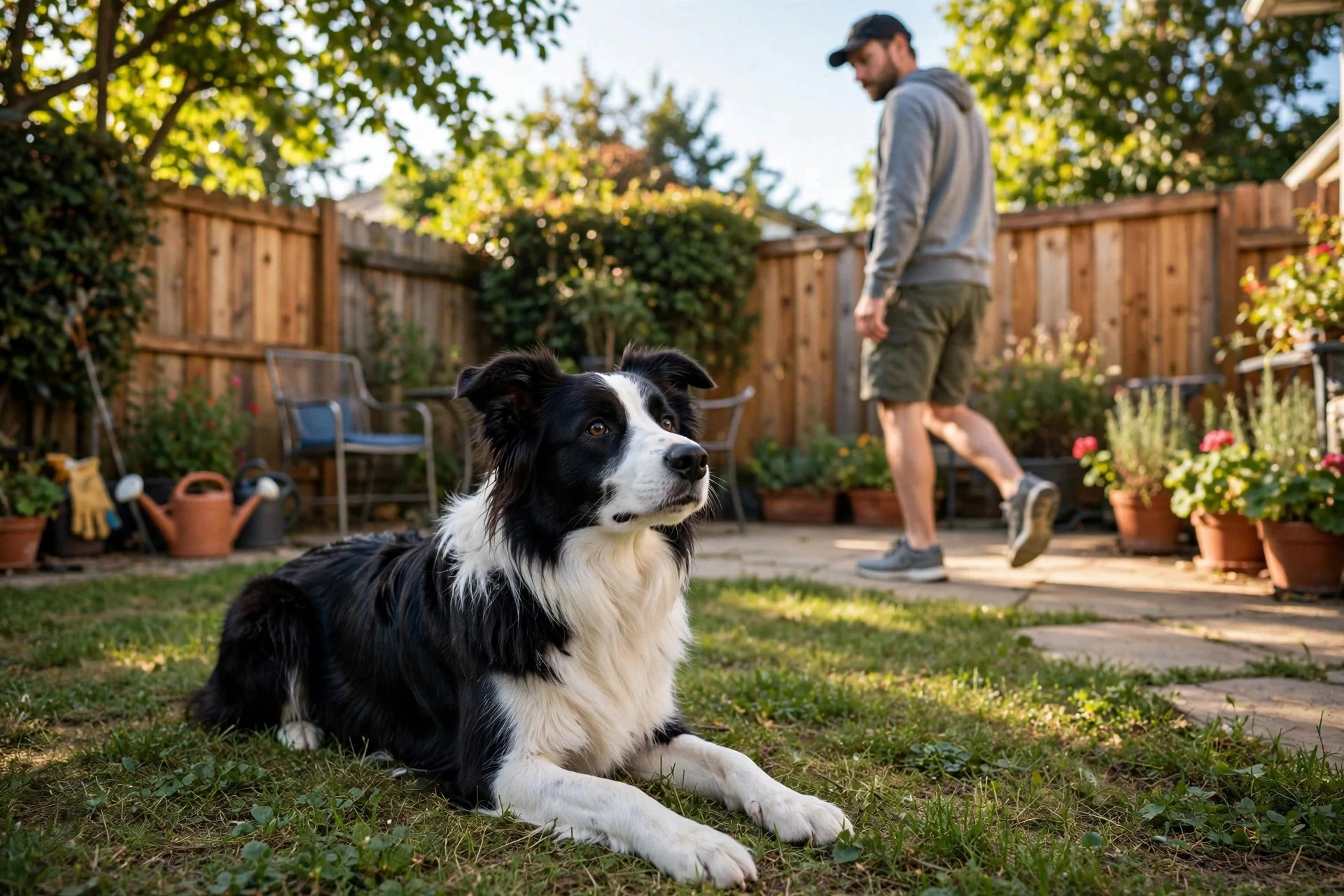
With duration solid at thirty seconds or so, start adding distance. Ask for the stay, then take one single step back. Pause. Step back in and treat. That’s the whole exercise. Over sessions, work up to two steps, then across the room, then out of sight for a second. Always return to him to reward — don’t call him to you out of the stay, or he’ll start anticipating the release and breaking early.
4. Add a release word
Your dog needs to know when the stay is over, or he’ll either break randomly or sit there forever looking confused. Pick a release word — “okay,” “free,” “all done” — and use it every single time you end a stay. Say it cheerfully, then invite him to move. The release word is a promise: stay still, and I’ll always tell you when you’re done. Dogs who trust the release hold stays far better than dogs who never know if they’re allowed to move.
5. Proof it with distractions — slowly
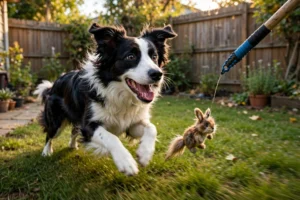
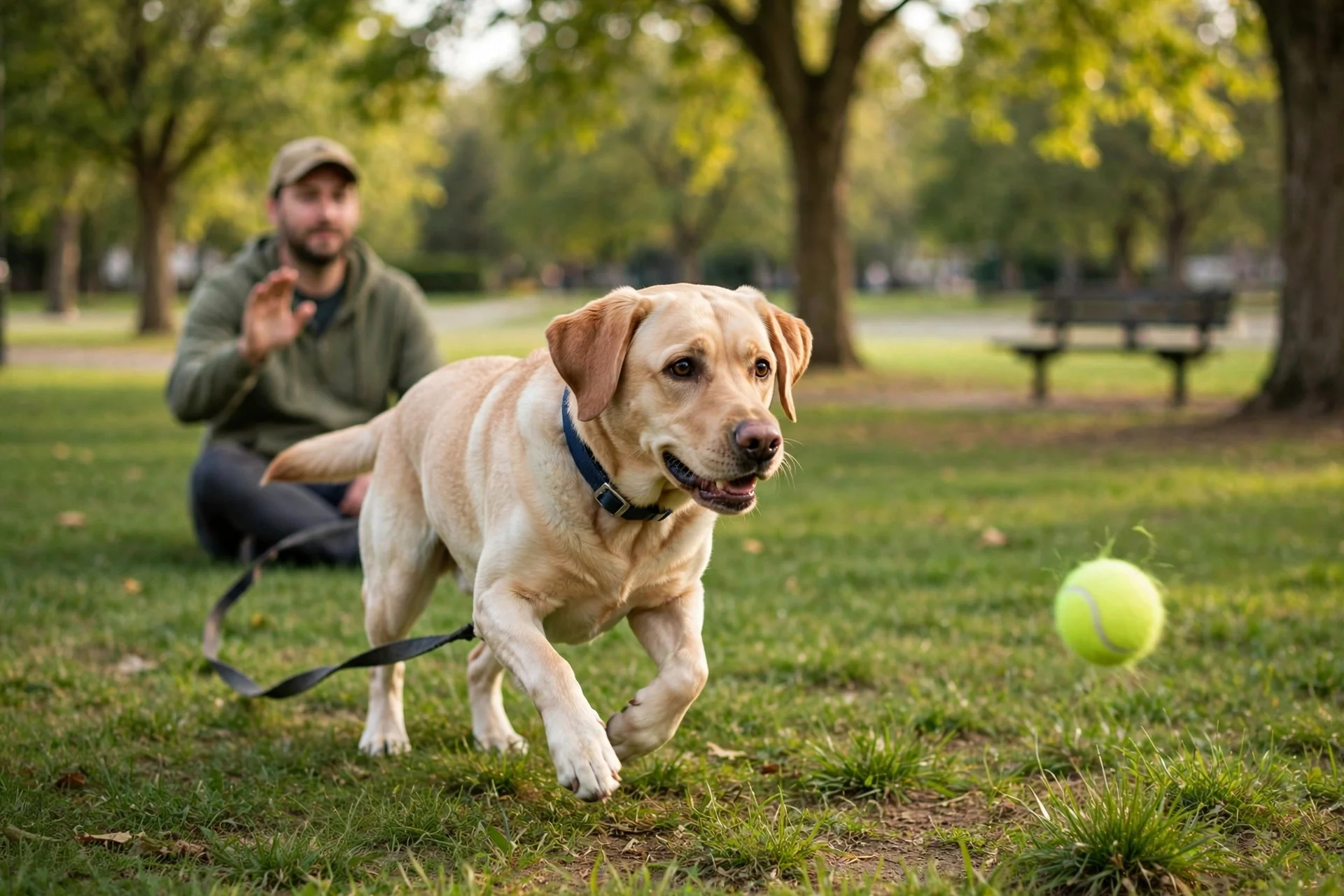
Last and hardest: distractions. Start silly-small. Ask for a stay, then clap once. Then bounce a ball softly. Then have someone walk past at a distance. Each new distraction gets introduced at baby level, and you only raise the difficulty when he’s succeeding. The classic mistake is going from “stay in a quiet room” straight to “stay while the neighbor’s cat strolls by.” That’s not training, that’s setting him up to fail.
Practical Tips That Make It Stick
Train when he’s a little bit tired, not wired. A dog fresh off a nap or a short walk learns faster than a dog bouncing off the walls. Five calm minutes beats fifteen chaotic ones.
Keep your body language boring during the stay. Don’t wave your arms, don’t lean in dramatically, don’t stare him down. Still body, calm voice. The less exciting you are, the easier it is for him to hold position.
Practice in different rooms and different spots. Dogs don’t generalize well — a stay in the kitchen doesn’t automatically transfer to the front yard. Once it’s solid indoors, restart the difficulty at easy in each new location.
Use high-value treats for the hard reps. Kibble is fine for easy living-room stays. When you’re proofing around distractions, bring out the good stuff — cheese, chicken, whatever makes his eyes go wide.
Mistakes That Ruin a Stay
The number one killer of stay training is repeating the cue. “Stay… stay… STAY.” Every repetition teaches him that the first “stay” didn’t really count. Say it once. If he breaks, calmly reset him — walk him back, ask for the sit, and try again at an easier level. One cue, one chance, then reset.
Don’t punish breaking. If he gets up, he’s not being defiant — the exercise was too hard. Dragging him back or scolding him just makes stays stressful, and stressed dogs don’t learn. Reset cheerfully and make it easier.
Don’t train duration, distance, and distraction all in the same session. Pick one variable per session. When you add distance, drop the duration back down. When you add distractions, drop both. Only one hard thing at a time — that’s the golden rule of proofing.
And don’t forget the release word. I see this constantly: people train the stay but never teach the dog how it ends. The dog either self-releases (breaking the stay) or sits there anxiously. Always, always release.
FAQs
How long should I train “stay” each day?
Two or three short sessions of three to five minutes. Stays are mentally tiring for dogs — long sessions just produce a tired, sloppy dog. Frequency beats duration: a few minutes daily will get you further than one long weekend session.
My dog stays until I turn my back, then moves. What do I do?
He’s telling you the distance/distraction jump was too big. Go back to where he was succeeding — maybe that’s you taking one step back while facing him — and rebuild more gradually. Turning your back is actually a big deal for dogs; it removes the visual anchor. Practice it in tiny increments.
Should I use “stay” or just make “sit” mean stay until released?
Both approaches work. Many trainers teach that sit and down are “stay until released” by default, which simplifies things. If you go that route, be consistent: every sit means sit-and-wait until the release word. The separate “stay” cue is more traditional and fine too — just pick one system and stick with it.
At what age can puppies learn stay?
You can start the very basics — two or three seconds of stillness — as early as eight to ten weeks. Keep expectations realistic: a young puppy’s impulse control is genuinely limited, so short durations and lots of rewards. The serious proofing work comes later, around five to six months and beyond.
A rock-solid stay takes weeks, not days — and that’s fine. Every short, successful session is a deposit in the bank. One day you’ll drop your keys near a busy road, say “stay,” and your dog will plant himself like a statue while you pick them up. That’s the moment all those boring two-second reps pay off. Start today, go slow, and release every time.