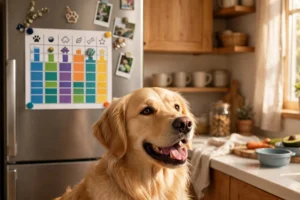
Everyone tells new puppy owners to “socialize, socialize, socialize” — and then nobody explains what that actually means. So people take their 9-week-old puppy to the dog park, where a rude adolescent Lab body-slams them, and wonder why their dog is now terrified of other dogs. If you want to know how to socialize a puppy properly, here’s the truth: socialization isn’t about meeting every dog. It’s about having good experiences with the world.
The socialization window — roughly 3 to 14 weeks — is when your puppy’s brain is deciding what’s normal and safe. Positive exposures during this period pay dividends for life. But quality beats quantity every time. One calm, treat-filled encounter with a bearded man in a hat teaches more than fifty chaotic ones. This checklist covers what to expose your puppy to, and how to do it safely.
The Safe Socialization Checklist
1. People of All Shapes and Sizes
Puppies need positive experiences with men, women, kids, elderly people, people in uniforms, hats, sunglasses, beards, wheelchairs — the full variety of humanity. The key word is positive: have the person toss treats (not loom over the puppy), keep interactions short, and let the puppy approach rather than being grabbed. Five calm minutes with a friendly stranger beats a forced cuddle session. Aim for 2 to 3 new positive people per week during the window. And never force it — a puppy who hides behind your legs is telling you they need more distance, not more exposure.
2. Other Dogs (Carefully Chosen Ones)
Your puppy needs to meet stable, vaccinated, friendly adult dogs — not random dogs at the park. One calm older dog who ignores puppy nonsense teaches better manners than ten wild play sessions. Arrange playdates with known dogs, or join a well-run puppy class. Watch the body language: play should be bouncy, reciprocal, with role reversals. If one dog is always chasing and the other always fleeing, intervene. And skip the dog park entirely until your puppy is older and has solid recall — it’s the least controlled socialization venue that exists.
3. Sounds, Surfaces, and Weird Objects
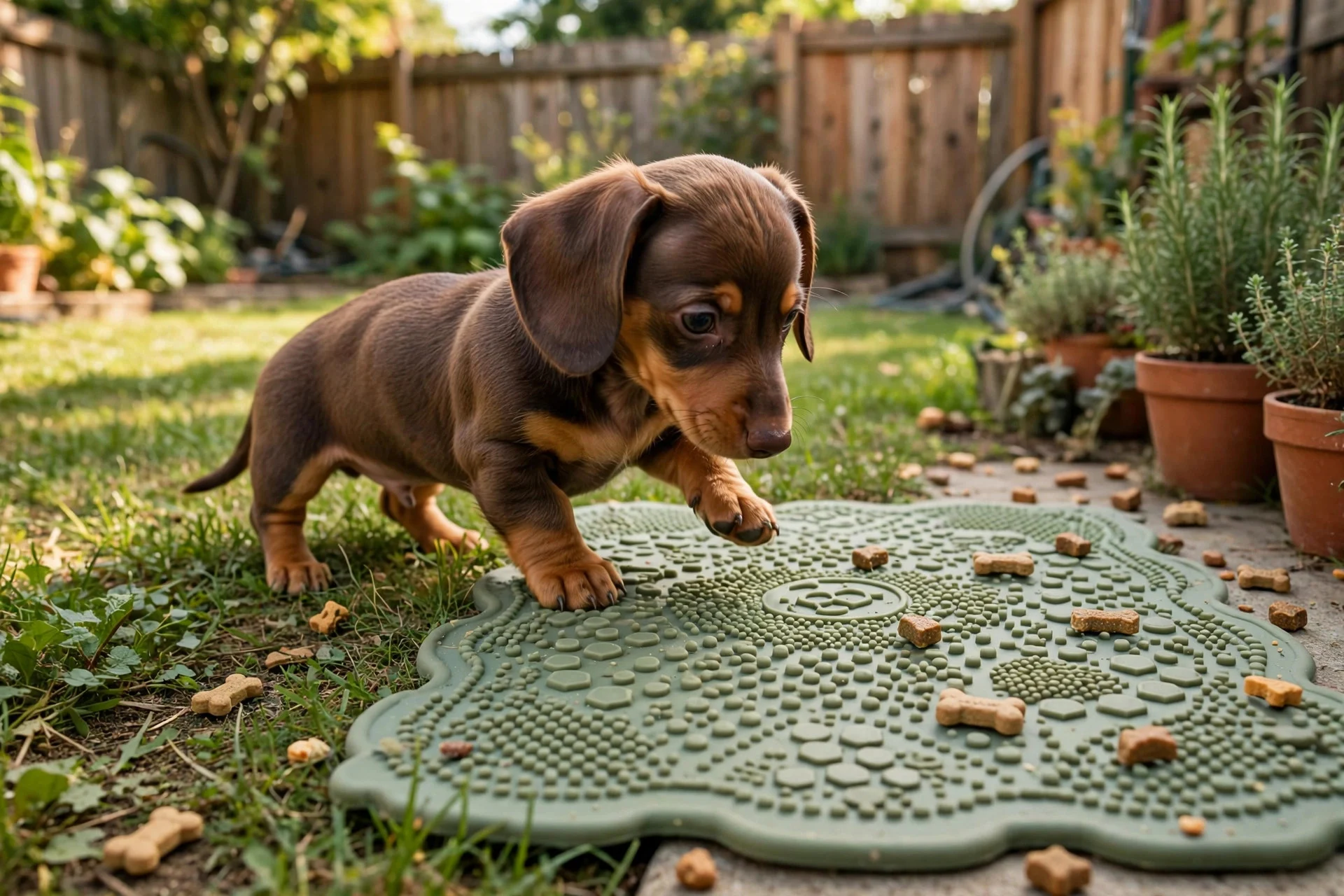
Vacuum cleaners, doorbells, thunder recordings (start quiet), skateboards, umbrellas opening, trash cans — the world is full of startling things. Expose your puppy gradually: present the scary thing at a distance or low volume, pair it with treats, and let the puppy investigate at their own pace. Walk on grass, gravel, wet pavement, metal grates, wooden floors. A puppy who’s walked on ten surfaces by 12 weeks won’t panic at the vet’s slippery floor later. Keep sessions to 5 minutes; you’re seasoning, not flooding.
4. Handling and Grooming Practice
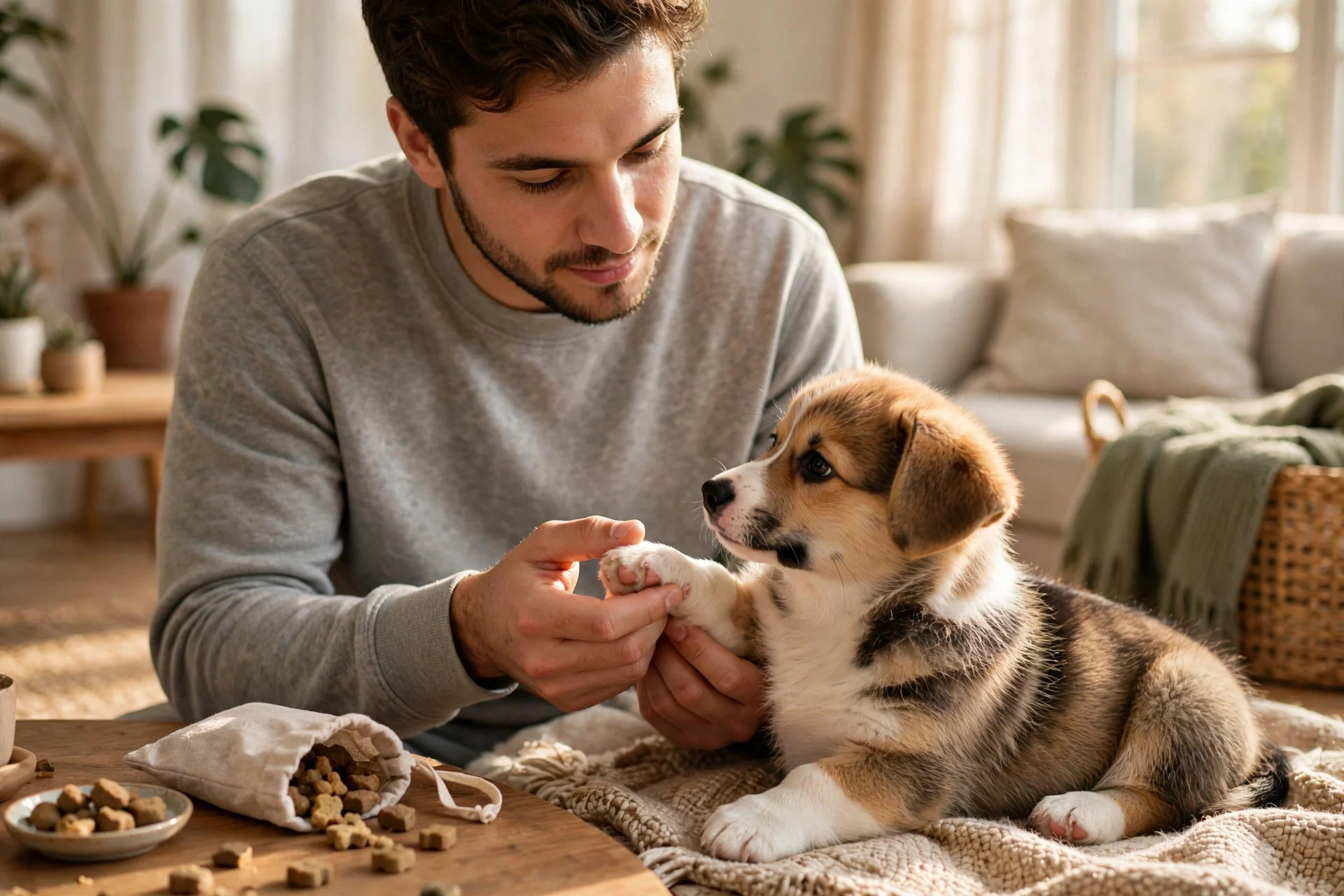
Touch your puppy’s paws, ears, mouth, belly, and tail daily — gently, with treats for cooperation. This pays off at every vet visit and grooming appointment for the rest of their life. Practice mock exams: lift a paw like a nail trim, look in the ears, open the mouth briefly. Pair every touch with something good. A puppy who learned at 10 weeks that paw-handling earns chicken will be a dream at the groomer at 2 years old. Five minutes a day is all it takes.
5. Car Rides and New Places
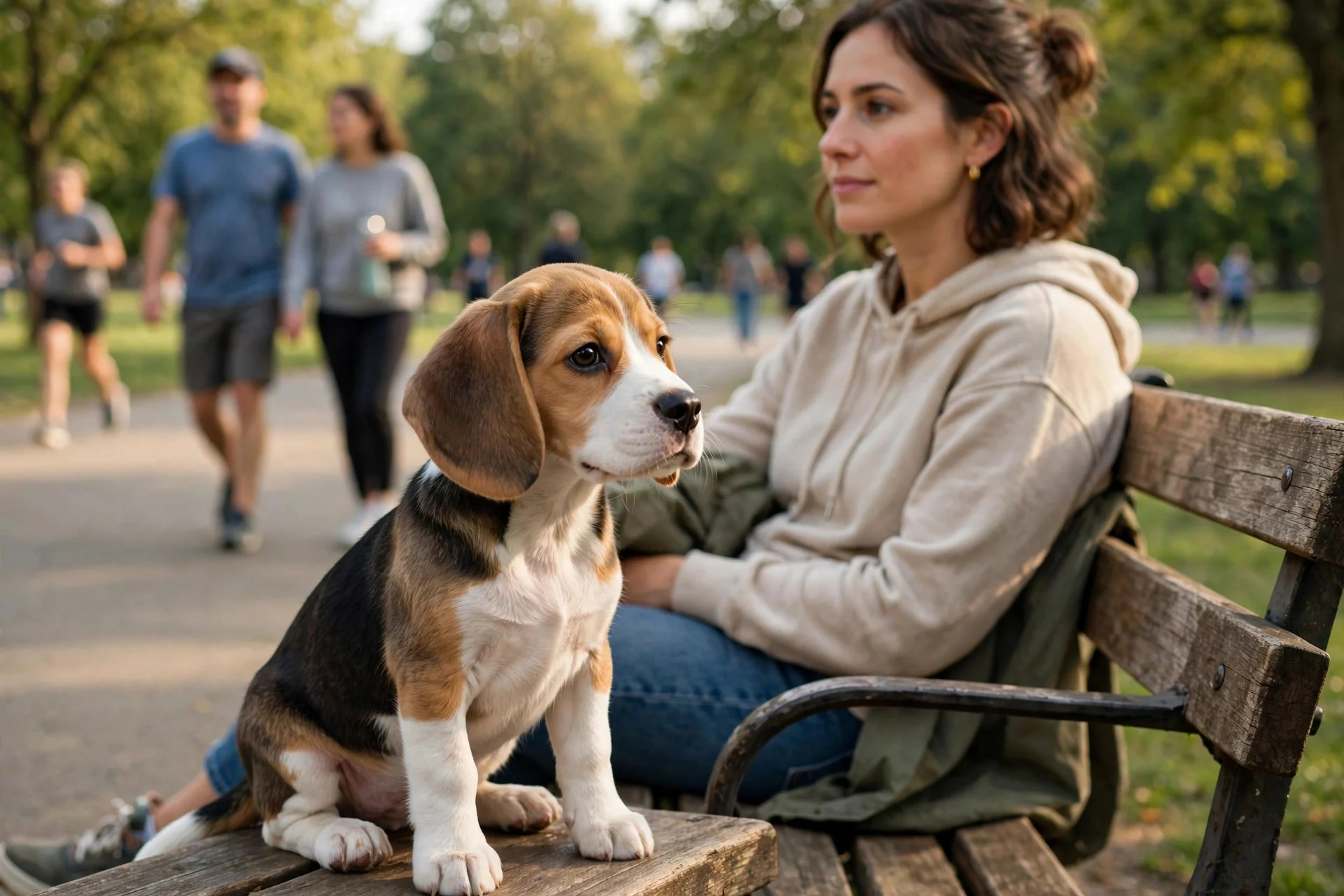
Short, positive car rides — to somewhere fun, not just the vet — prevent car anxiety. Visit friends’ houses, pet-friendly stores, quiet parks. Let the puppy observe the world from a safe spot: a bench at the farmers market, watching kids play at a distance. These “socialization field trips” of 15 to 20 minutes, a few times a week, build a confident dog who takes new environments in stride. Bring treats and let the puppy set the pace.
6. Alone-Time Practice (Yes, This Is Socialization Too)
Socialization isn’t only about the exciting stuff. Puppies also need to learn that being alone is safe and boring. Practice brief separations from day one: step out of sight for 30 seconds, return, reward calm. Use a pen or crate with a chew. This prevents the separation anxiety that hits so many under-socialized-to-solitude puppies at 6 months. It’s the least glamorous item on this checklist and one of the most important.
The Safety Rules (Disease vs. Socialization)
The big worry: parvo and other diseases before vaccinations are complete. The veterinary consensus (including the AVSAB position) is that the risk of behavior problems from under-socialization outweighs the disease risk of careful exposure — as long as you’re smart about it. Carry your puppy in public places rather than letting them walk where unknown dogs eliminate. Avoid dog parks and pet store floors. Stick to clean, controlled environments and known healthy dogs.
Talk to your vet about your area’s specific risks, but don’t let fear keep your puppy in a bubble until 16 weeks. By then, the socialization window is closing, and you can’t get it back. A carried puppy watching the world from your arms is getting socialized safely. A puppy locked inside for two months is missing the most important learning period of their life.
Mistakes That Backfire
Flooding is the big one — overwhelming the puppy with too much, too fast. The puppy who gets dragged into a crowd of kids and spends the whole time trembling isn’t being socialized; they’re being traumatized. Every exposure should be at an intensity where the puppy stays under threshold: curious or neutral, taking treats, loose body. If they’re cowering, barking frantically, or won’t eat, you’re too close or it’s too much. Increase distance and try again.
Another mistake: only socializing with dogs and forgetting the rest of the world. The dog who plays beautifully but panics at men in hats, thunderstorms, or the vet’s office was half-socialized. Use a checklist (like this one) and track what you’ve covered. And if your puppy has a scary experience — it happens — don’t panic. One bad event doesn’t ruin a puppy if it’s followed by many good ones. Just don’t repeat the scary setup.
FAQs
What if I got my puppy after 14 weeks? Is it too late?
No — the prime window is ideal, but socialization still works after it. It just takes more patience and smaller steps. An older puppy or rescue can absolutely learn to be comfortable with the world; you’ll just progress more gradually and may need professional guidance for existing fears.
How do I know if an experience was positive or negative?
Watch the puppy, not the situation. Loose body, wagging tail, taking treats, choosing to approach — positive. Cowering, tucked tail, refusing treats, trying to flee — negative or too intense. The puppy’s body language is the only report card that matters.
Should I take my puppy to puppy class?
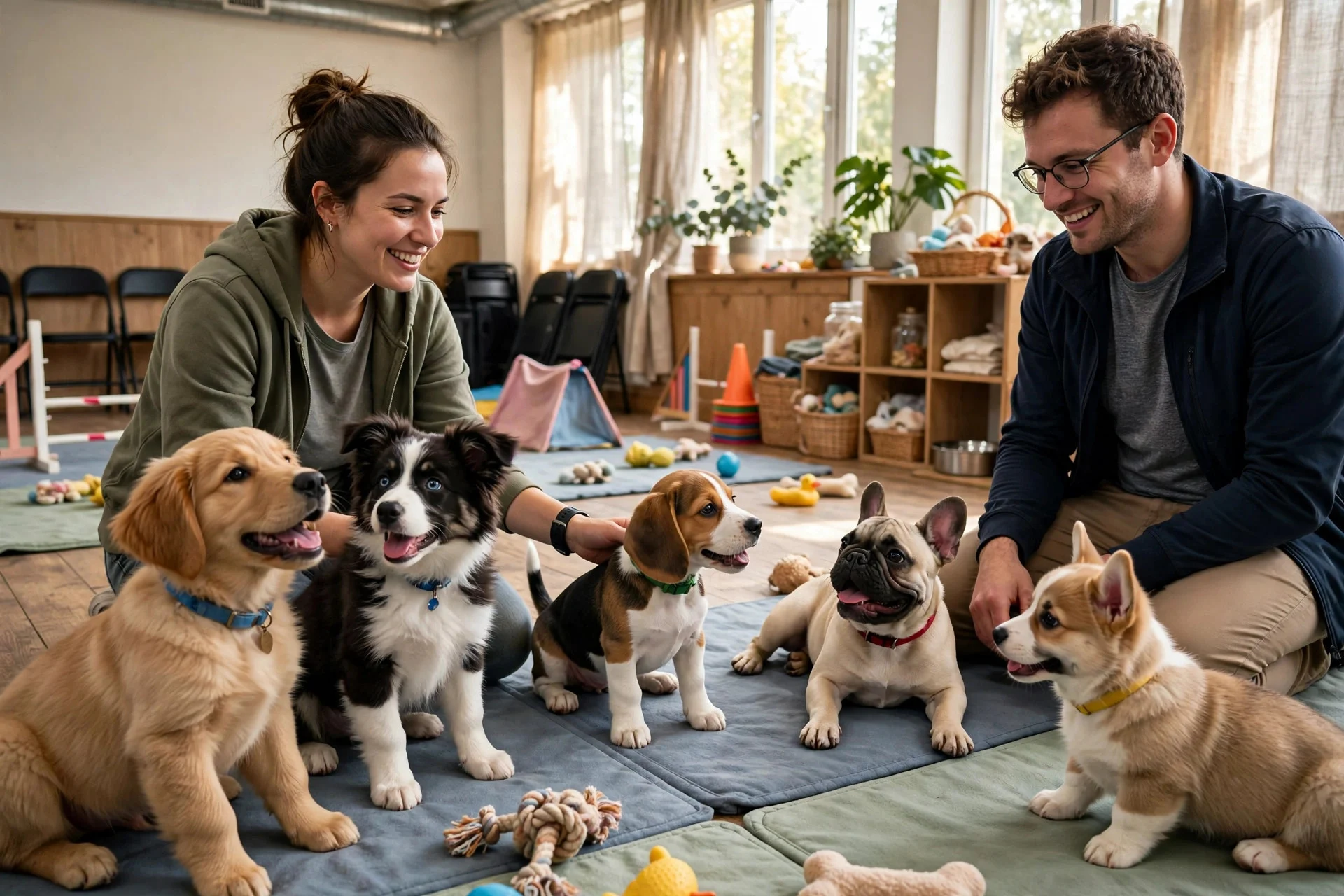
Yes — a well-run puppy kindergarten is one of the best socialization investments you can make. Look for classes that require vaccinations, keep groups small, supervise play closely, and focus on positive training. Avoid classes that use punishment or let play get out of hand.
My puppy is scared of everything. What do I do?
Slow everything down. Work at whatever distance your puppy can handle, pair everything with high-value treats, and celebrate tiny wins. If fear is generalized and severe — scared of most new things most of the time — consult a certified behaviorist early. The earlier you intervene with fear, the better the outcome.
Socialization is a gift you give your puppy once, and they unwrap it every day for the rest of their life. Keep it positive, keep it gradual, check things off the list week by week — and enjoy watching your puppy turn into a confident dog who takes the world in stride.