Standing in the kitchen trying to remember whether it’s onions or leeks that are the problem (spoiler: both) is a pretty universal dog-owner experience. Rather than searching each food individually every time, this is the one page to bookmark — a full A-Z rundown of common human foods, sorted into safe, toxic, and “it depends,” with links to the full details on anything that needs more explanation than a quick yes or no.
How to Use This List
Foods here are grouped into three categories:
- ✅ Safe — generally fine in moderation, following proper preparation
- ⚠️ Caution — safe in some forms or amounts, risky in others
- ❌ Toxic — should never be given to dogs, in any amount
For anything with real nuance (prep steps, portion sizes, symptoms to watch for), click through to the full guide. This page is meant to be your fast reference, not the final word on every food’s fine print.
Fruits
| Food | Status | Details |
|---|---|---|
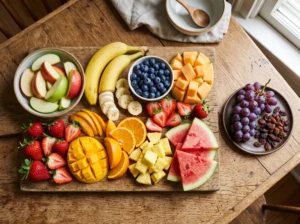
| Apples | ✅ Safe | Remove seeds and core. Full guide |
| Applesauce | ✅ Safe | Choose unsweetened only. Full guide |
| Bananas | ✅ Safe | Great low-mess treat. Full guide |
| Blueberries | ✅ Safe | Excellent low-calorie training treat. Full guide |
| Cantaloupe | ✅ Safe | Remove seeds and rind. Full guide |
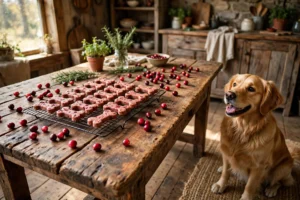
| Cherries | ⚠️ Caution | Flesh is fine; pit, stem, and leaves contain cyanide-producing compounds. Full guide |
| Grapes | ❌ Toxic | No safe amount. Can cause kidney failure. Full guide |
| Mango | ⚠️ Caution | Flesh is fine; pit is a choking/blockage hazard. Full guide |
| Oranges | ⚠️ Caution | Flesh in small amounts only; skip peel and seeds. Full guide |
| Pineapple | ⚠️ Caution | Flesh only; skip skin, core, and crown. Full guide |
| Raisins | ❌ Toxic | Same toxicity as grapes, more concentrated. |
| Strawberries | ✅ Safe | Remove the green top first. Full guide |
| Watermelon | ⚠️ Caution | Flesh only; remove seeds and rind. Full guide |
Vegetables
| Food | Status | Details |
|---|---|---|
| Beets | ✅ Safe (in moderation) | Full guide |
| Broccoli | ✅ Safe | Keep to occasional, small portions. Full guide |
| Celery | ✅ Safe | Cut into pieces to reduce choking risk. Full guide |
| Corn (kernels) | ✅ Safe | Plain kernels only. Full guide |
| Corn (cob) | ❌ Toxic risk | Serious blockage hazard — never let a dog eat the cob. Full guide |
| Garlic | ❌ Toxic | More concentrated than onion. Damages red blood cells. Full guide |
| Mushrooms (store-bought) | ✅ Safe | Plain, cooked, unseasoned only. Full guide |
| Mushrooms (wild) | ❌ Toxic risk | Treat all wild mushrooms as potentially dangerous. Full guide |
| Onions | ❌ Toxic | Every form — raw, cooked, powdered — is dangerous. Full guide |
| Peas | ✅ Safe | Fresh or frozen preferred over canned. Full guide |
| Popcorn | ⚠️ Caution | Plain, air-popped only; unpopped kernels are a hazard. Full guide |
| Potatoes | ⚠️ Caution | Cooked only, no green parts. Full guide |
| Spinach | ⚠️ Caution (small amounts) | Full guide |
| Tomatoes (ripe) | ✅ Safe | Flesh only, in moderation. Full guide |
| Tomatoes (green/unripe) | ⚠️ Caution | Contains more solanine than ripe fruit. Full guide |
Proteins & Dairy
| Food | Status | Details |
|---|---|---|
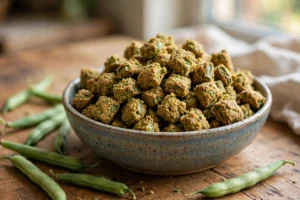
| Beans (plain, cooked) | ✅ Safe | Full guide |
| Cheese | ⚠️ Caution | Fine in small amounts if your dog tolerates dairy. Full guide |
| Eggs (cooked) | ✅ Safe | Plain, fully cooked, no seasoning. Full guide |
| Eggs (raw) | ⚠️ Caution | Salmonella and biotin-absorption risk. Full guide |
| Ham | ⚠️ Caution | High sodium and fat; occasional only. Full guide |
| Shrimp (cooked) | ✅ Safe | Remove shell, tail, and vein. Full guide |
| Shrimp (raw) | ❌ Avoid | Bacteria and parasite risk. Full guide |
Nuts, Grains & Pantry Staples
| Food | Status | Details |
|---|---|---|
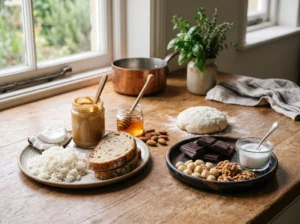
| Almonds | ⚠️ Caution | Not toxic, but a choking hazard and hard to digest. Full guide |
| Bread (baked) | ✅ Safe | Plain, in moderation — offers little nutrition. Full guide |
| Bread dough (raw/unbaked) | ❌ Toxic risk | Expands and ferments in the stomach; genuine emergency. Full guide |
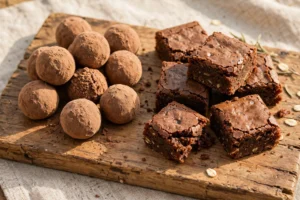
| Chocolate | ❌ Toxic | All forms — darker chocolate is more dangerous. Full guide |
| Coconut | ✅ Safe | Small amounts; watch the fat content. Full guide |
| Honey | ⚠️ Caution | Skip for puppies and immune-compromised dogs. Full guide |
| Macadamia nuts | ❌ Toxic | Causes weakness, vomiting, and tremors. |
| Peanut butter | ⚠️ Caution | Always check for xylitol before sharing. Full guide |
| Rice (plain, cooked) | ✅ Safe | Full guide |
| Walnuts | ❌ Toxic risk | Can be moldy and cause tremors or seizures. |
| Xylitol (any product) | ❌ Toxic | Found in some peanut butter, gum, and sugar-free products. Causes rapid blood sugar crash. |
Avocado — Its Own Category
| Food | Status | Details |
|---|---|---|
| Avocado (flesh) | ⚠️ Caution | Lower risk than assumed, but still not recommended given fat content. Full guide |
| Avocado (pit) | ❌ Toxic risk | Serious choking and blockage hazard. Full guide |
| Avocado (skin) | ⚠️ Caution | Higher persin content than the flesh. Full guide |
The Foods Worth Memorizing (The “Never” List)
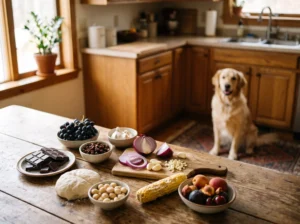
If you only remember one section of this whole page, make it this one. These foods are dangerous in essentially any amount and are common enough to end up in a dog’s bowl by accident:
- Grapes and raisins — no known safe amount, can cause kidney failure
- Chocolate — theobromine and caffeine, darker is more dangerous
- Onions and garlic — damage red blood cells, garlic more concentrated
- Xylitol — causes rapid, dangerous blood sugar crashes
- Macadamia nuts — causes weakness and tremors
- Raw bread dough — expands and ferments in the stomach
- Alcohol — even small amounts are dangerous
- Corn cobs, fruit pits, and bones that splinter — not toxic, but serious blockage hazards
General Safety Rules That Apply to Almost Everything
A few habits that cover you across basically every food on this list:
- Plain beats seasoned, every time. Butter, oil, salt, garlic, and onion seasoning turn a safe food into a risky one more often than the food itself does.
- Cooked is usually safer than raw, particularly for proteins, due to bacteria concerns.
- Portion size matters even for “safe” foods. Most fruits and vegetables are fine in small amounts and problematic in large ones, mostly due to sugar, fiber, or fat content adding up.
- New foods should be introduced one at a time, in small amounts. This makes it much easier to identify the cause if your dog has a reaction.
- When in doubt, don’t. If you’re not sure whether something is safe, it’s simpler to skip it than to search for reassurance that confirms what you’re hoping to hear.
What to Do in an Emergency
If your dog eats something on the toxic list, or you’re unsure and symptoms are showing up, don’t wait to see how things develop. Contact your vet or an emergency animal poison line right away, and have the following ready:
- What was eaten, and roughly how much
- When it happened
- Your dog’s approximate weight
- Any symptoms you’ve noticed so far
For general guidance on recognizing when something’s wrong with your dog, our common signs and symptoms guide is a useful reference point, and our dog diarrhea remedies guide covers general at-home care for milder digestive upset once a vet has confirmed it’s appropriate to monitor rather than treat urgently.
FAQ: Dog Food Safety
What’s the single most common toxic food dogs get into by accident? Chocolate and foods containing onion or garlic tend to be among the most frequent, mostly because they’re everyday kitchen staples rather than something a dog would need to seek out.
Are all “safe” foods on this list fine to give every day? No. Most items marked safe are meant as occasional treats, not daily additions, especially fruits with meaningful sugar content.
My dog ate something not on this list — what should I do? Contact your vet or an animal poison control line with details about what and how much was eaten. It’s always better to ask than to guess.
Is this list complete? This covers many of the most commonly asked-about foods, but it’s not exhaustive. If you’re ever unsure about a specific food, checking with your vet directly is the safest move.
Why do some “safe” foods still have warnings attached? Because safety often depends on preparation, portion, and which part of the food is being offered — a ripe tomato and a green tomato plant aren’t the same risk level, for example, even though they come from the same plant.
The Bottom Line
Most food safety questions with dogs come down to the same handful of principles: keep it plain, keep portions small, know which handful of foods are genuinely off-limits, and when something’s unclear, check rather than guess. Bookmark this page for a quick gut-check next time you’re debating whether to share a bite from your plate — and click through to the full guides above whenever you need the complete picture on a specific food.