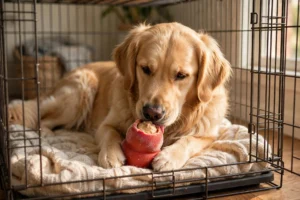
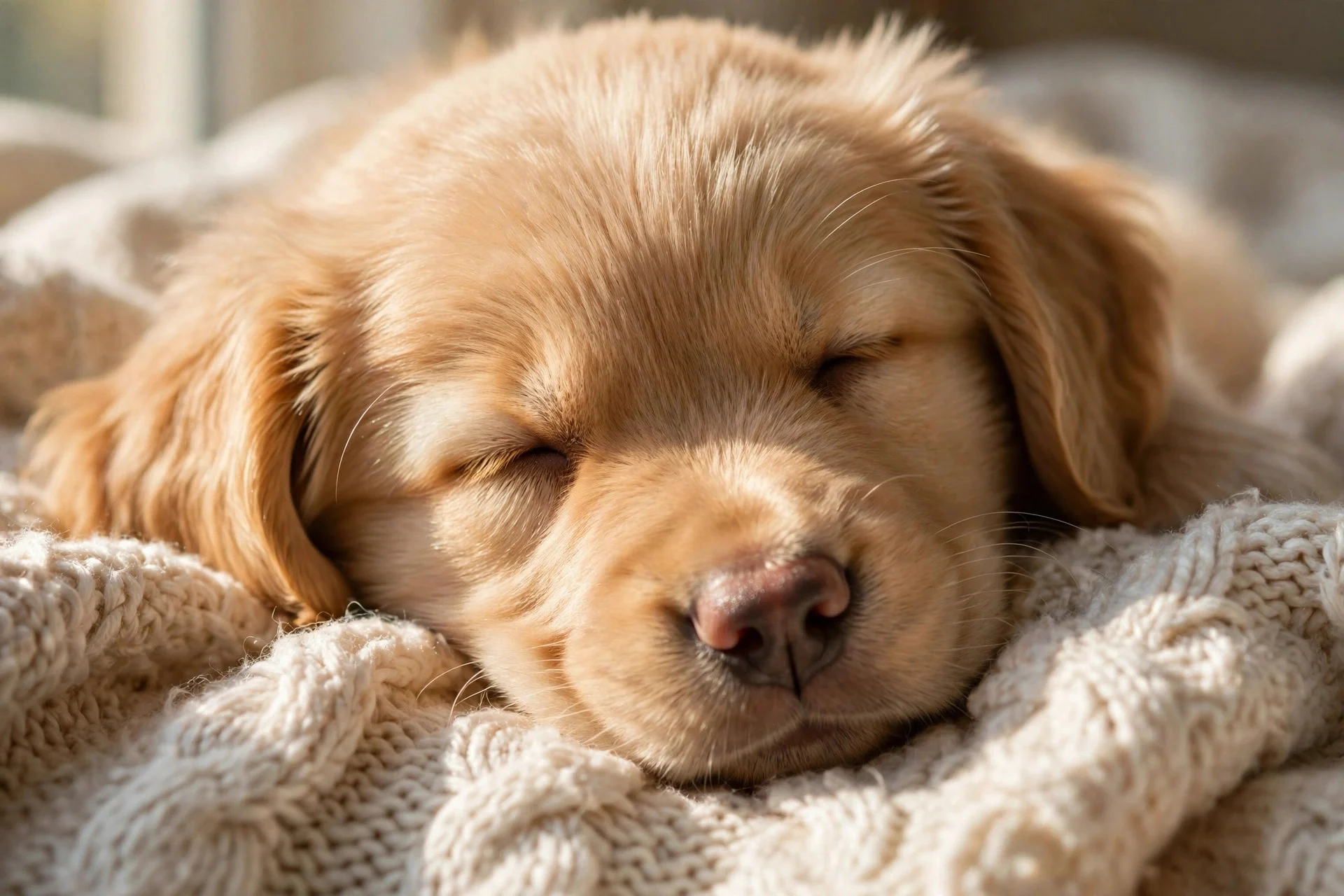
If your puppy seems to do nothing but sleep, congratulations — that is exactly right. New puppy owners are always surprised by how much their little tornado naps, and they should not be. A healthy puppy sleep schedule involves far more rest than most people expect.
Here is the number that changes everything: puppies sleep 18 to 20 hours a day. Not a typo. Eighteen to twenty hours. When my first puppy arrived, I thought something was wrong with him for the first week. Turns out the only thing wrong was my expectations. Here is the full puppy sleep by age breakdown, plus how to protect it.
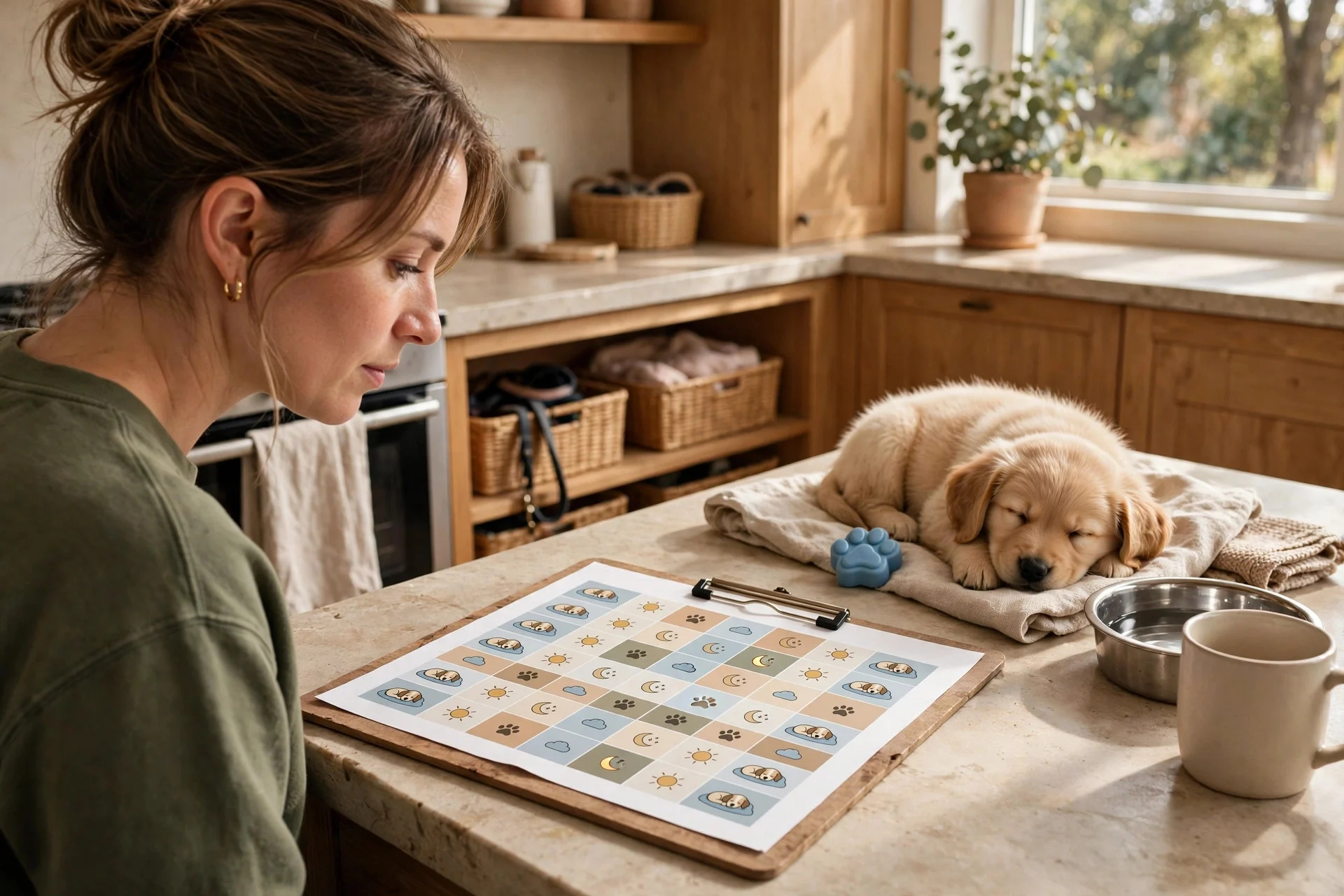
Puppy Sleep: How Much by Age (Chart)
| Age | Daily Sleep Needed | Nighttime Sleep | Daytime Naps |
|---|---|---|---|
| 8–12 weeks | 18–20 hours | 8–10 hours (with potty breaks) | 8–10 hours in short bursts |
| 3–4 months | 16–18 hours | 9–11 hours | 6–8 hours |
| 4–6 months | 14–16 hours | 9–11 hours | 4–6 hours |
| 6–12 months | 12–14 hours | 10–12 hours | 2–4 hours |
| Adult | 12–14 hours | 10–12 hours | 2–4 hours of lounging |
The First Two Months Home: Sleep Is the Job
At 8 to 12 weeks, your puppy will play hard for 45 minutes and then collapse like a tiny drunk person. This is normal and healthy. Their brains are wiring themselves at an incredible rate, and sleep is when that happens. Do not wake a sleeping puppy for play or cuddles. Let them sleep. The awake windows are short — use them for training, socialization, and potty practice, then back to bed.
Three to Four Months: Patterns Emerge
Nighttime sleep starts consolidating — most puppies can hold their bladder longer and give you longer stretches. Daytime naps are still frequent but slightly longer and less random. This is when a loose routine helps enormously: wake, potty, play, train, nap, repeat. Puppies thrive on predictability. You will start to see their personal rhythm, and you can plan your day around it.
Four to Six Months: The Teenage Dip
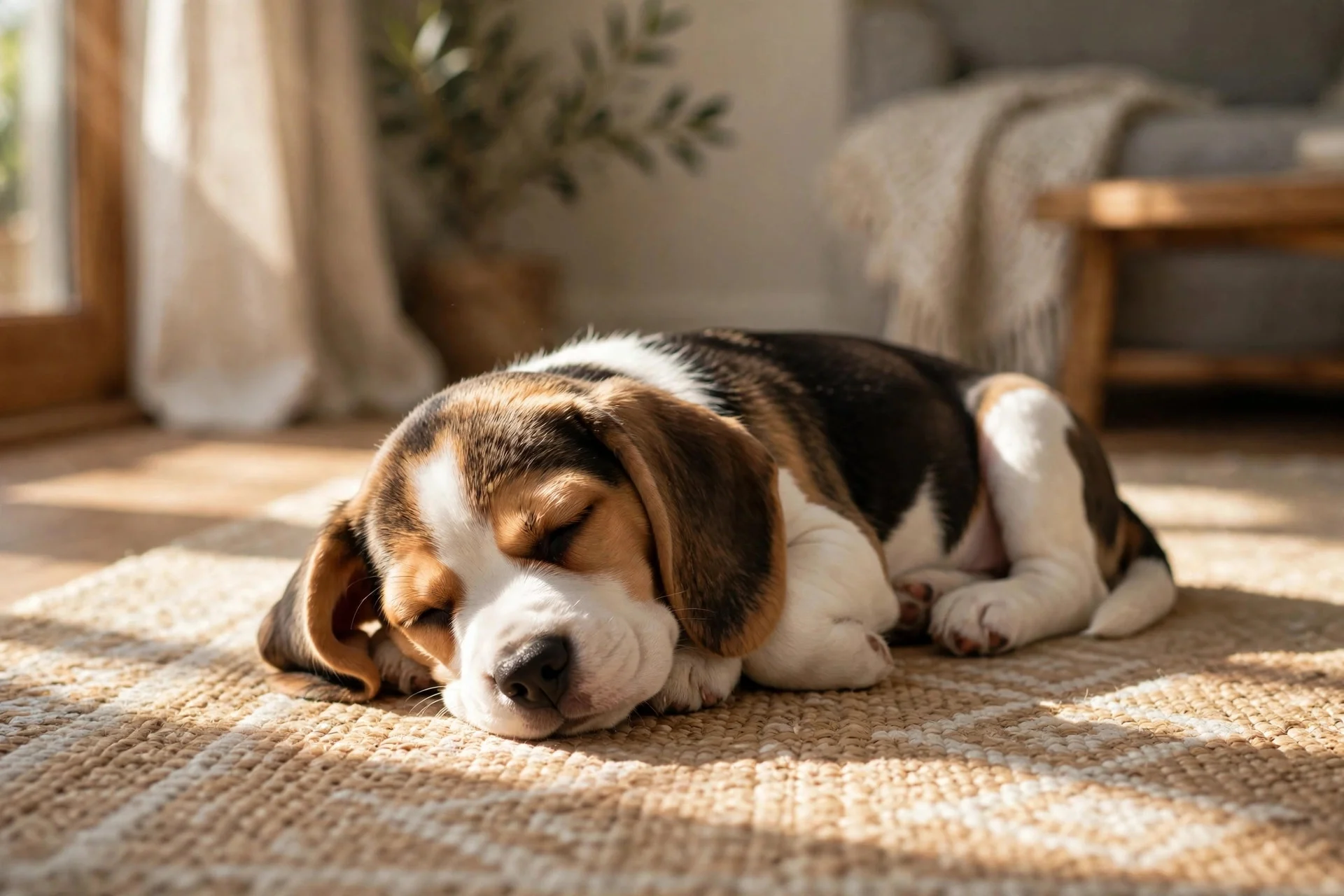
Sleep needs drop a little, but do not be fooled — a four-month-old still needs 14 to 16 hours. This is also the age when overtired behavior peaks. The wild, bitey, zoomie-crazed puppy at 7 p.m. is almost always an overtired puppy, not an under-exercised one. Enforced naps in the crate or a quiet room remain essential. I have never met a puppy owner who regretted enforcing naps. I have met hundreds who regretted not doing it.
Six to Twelve Months: Approaching Adult Patterns
By six months, most puppies sleep through the night reliably and nap less during the day — though they still need 12 to 14 hours total. Big growth spurts can bring back the heavy sleeping temporarily. Let it happen. Growing is exhausting work, and a puppy who suddenly sleeps like a newborn for a few days is usually just growing.
Where They Sleep Matters
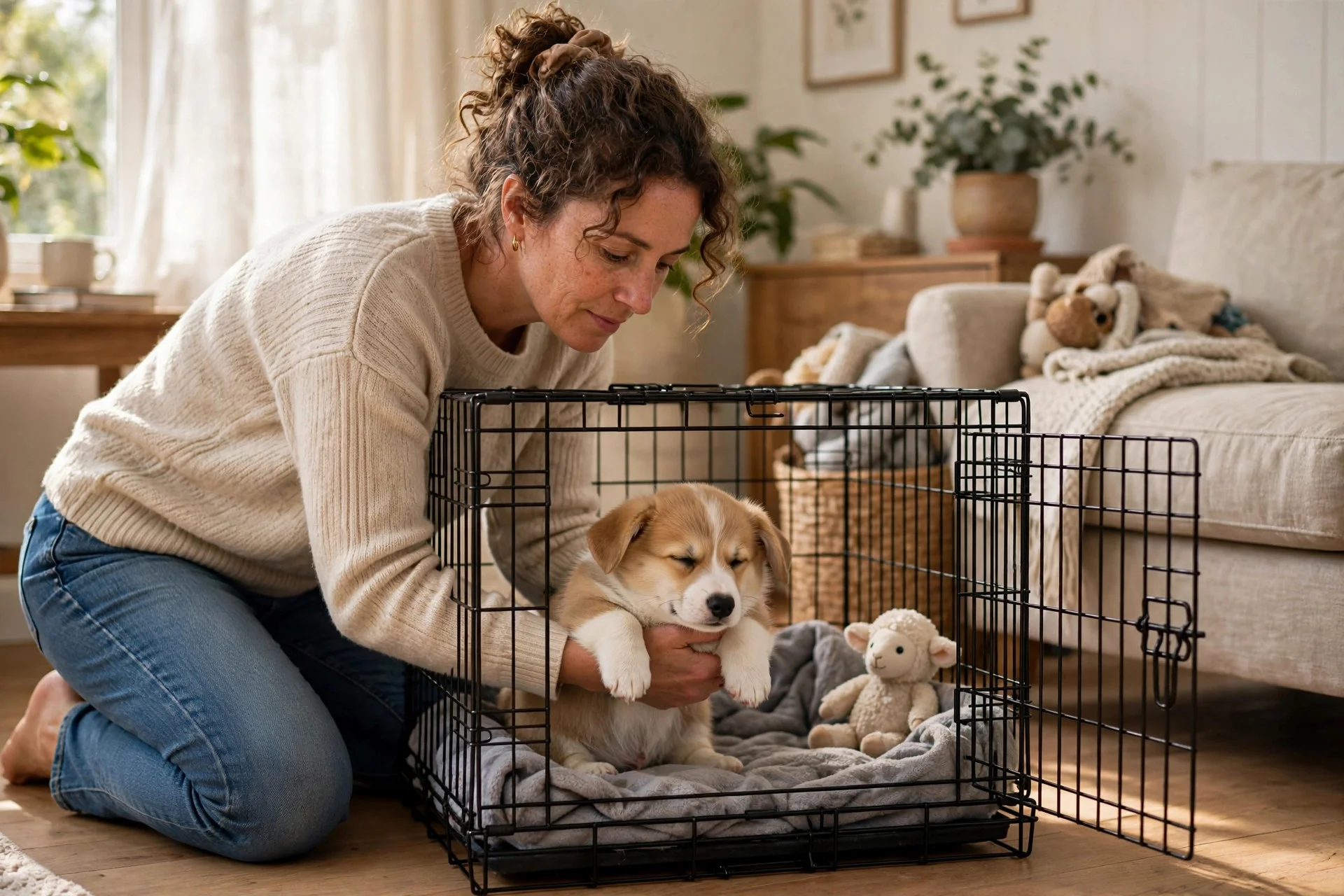
A crate in a quiet corner of your bedroom is ideal for young puppies — close enough that they feel safe, contained enough that they learn to settle. Keep the sleeping area dark, cool, and boring. White noise helps if your house is loud. And here is the rule people resist: the crate is for sleep, not punishment. A puppy who loves their crate sleeps better, and a puppy who sleeps better is a puppy you actually enjoy.
Practical Tips for Better Puppy Sleep
Build a bedtime routine — last potty, a calm chew, lights low — and do it the same way every night. Puppies are creatures of habit and routines signal their brains that sleep is coming. Avoid wild play in the hour before bed. A frozen Kong at bedtime gives them something to do while they wind down. And if your puppy wakes at night, keep it boring: out for potty, back to bed, no play, minimal talking. You are teaching them that nighttime is for sleeping, not partying.
Mistakes That Wreck Puppy Sleep
Do not let kids or guests wake a sleeping puppy — sleep deprivation in puppies causes exactly the behavior problems people complain about: biting, hyperactivity, inability to settle. Do not skip enforced naps because your puppy “does not seem tired”; puppies are terrible at self-regulating and will run themselves into the ground. Do not put the crate in the busiest, loudest room in the house. And do not respond to every nighttime whimper with attention and play — you will accidentally train a 3 a.m. playmate.
FAQs About Puppy Sleep
Is it normal for my puppy to sleep all day?
Yes. Eighteen to twenty hours is normal for an 8-to-12-week-old puppy. They sleep in bursts between short awake periods. As long as they are bright and playful when awake, eating well, and growing, the sleeping is fine.
Should I wake my puppy to go potty at night?
For the first couple of weeks, yes — set an alarm every 2 to 3 hours. After that, let them wake you. Most puppies will whine when they need to go. Once they can hold it longer, let them sleep.
My puppy will not nap unless I hold them. What do I do?
Start practicing independent settling: put them in the crate or pen when drowsy but awake, with a chew. Stay nearby at first, then gradually leave. It takes a few days. A puppy who only sleeps on you is a puppy who cannot settle — and that becomes a real problem fast.
When do puppies start sleeping through the night?
Most puppies manage 6 to 8 hour stretches by 12 to 16 weeks. Full nights usually come by 4 to 6 months. Every puppy is different, but a consistent routine gets you there faster.
Sleep is not wasted time — it is when your puppy’s brain builds itself. Protect the naps, respect the bedtime, and enjoy the quiet hours. They grow out of the heavy sleeping faster than you think, and you will miss the tiny snores.