You turn your back for ten seconds. When you look again, there’s a nose in the butter dish. Dog counter surfing is the stealth crime of the dog world — silent, efficient, and weirdly impressive. And it’s almost entirely our fault. Every successful surf teaches the dog that counters are basically a buffet that occasionally restocks itself. The good news: this is one of the most solvable behavior problems there is, because it’s driven by simple opportunity plus reward.
Here’s the uncomfortable truth up front: you will never train a dog to ignore food sitting unattended on a counter. The strategy isn’t superhuman impulse control — it’s making surfing unrewarding while building alternative habits. Six approaches, used together, actually work.
6 Ways to Stop Dog Counter Surfing
1. Clear the counters — completely, for now
This is the foundation everything else rests on. For the next month, your counters need to be surgically clean. No butter dish, no fruit bowl, no cooling cookies. Every successful surf is a jackpot reward that undoes weeks of training. Dogs learn from results, not intentions — and a dog who scores a sandwich once a week will keep checking the counters for years. Boring, empty counters teach the real lesson: there’s never anything up there. This is temporary. Once the habit fades, you can relax — but the first month has to be airtight.
2. Teach a rock-solid “leave it”
You need an emergency brake for the moments food is legitimately out — while you’re cooking, setting the table, unpacking groceries. “Leave it” should mean “disengage from that thing immediately,” and it needs to be trained separately from the counter context first. Start with treats in your hand, graduate to food on the floor, then to food on low surfaces. The goal is a cue so automatic that it works even when a chicken breast is sitting six inches from his nose. Practice daily; this cue degrades without maintenance.
3. Train a “place” or “mat” behavior for kitchen time
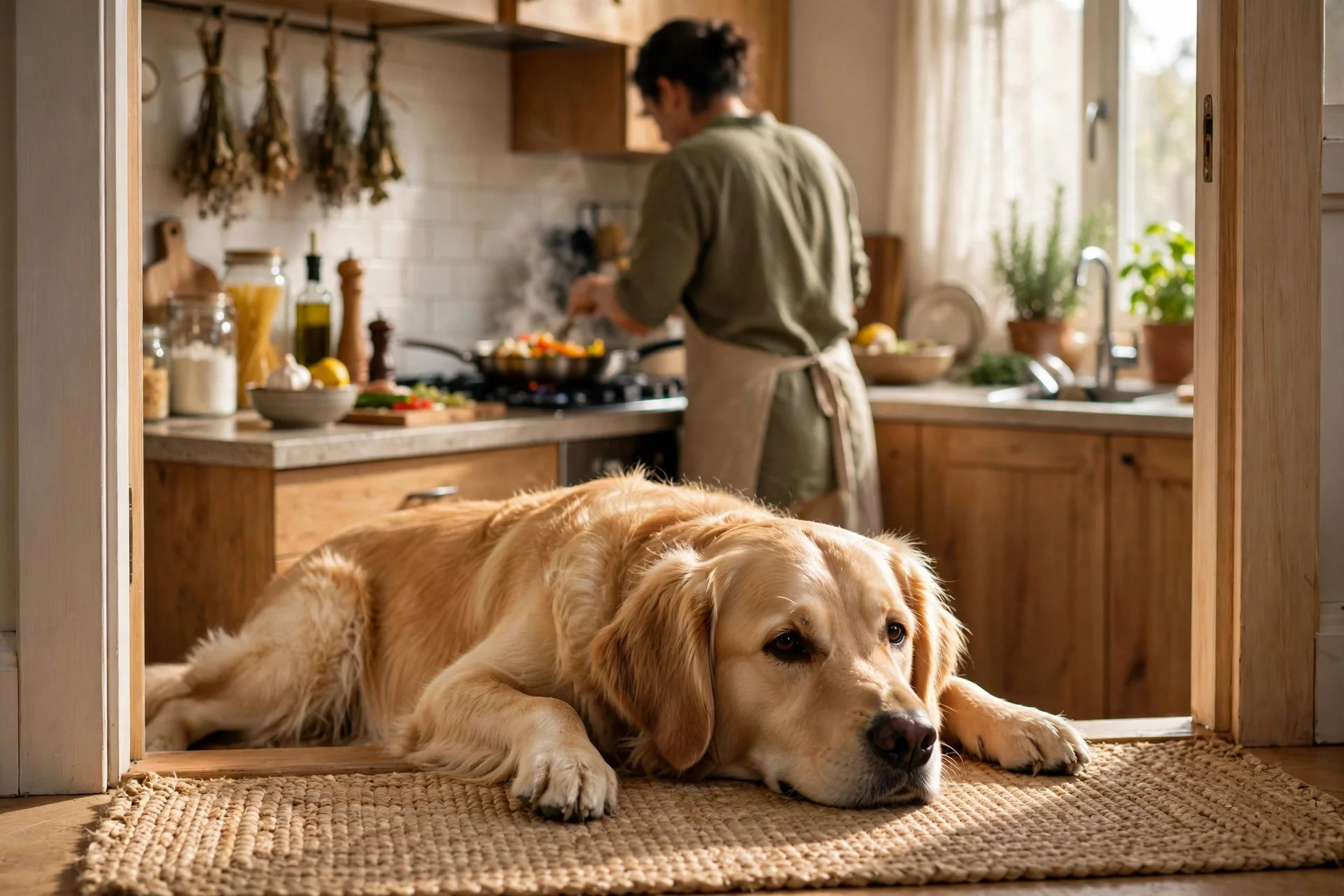
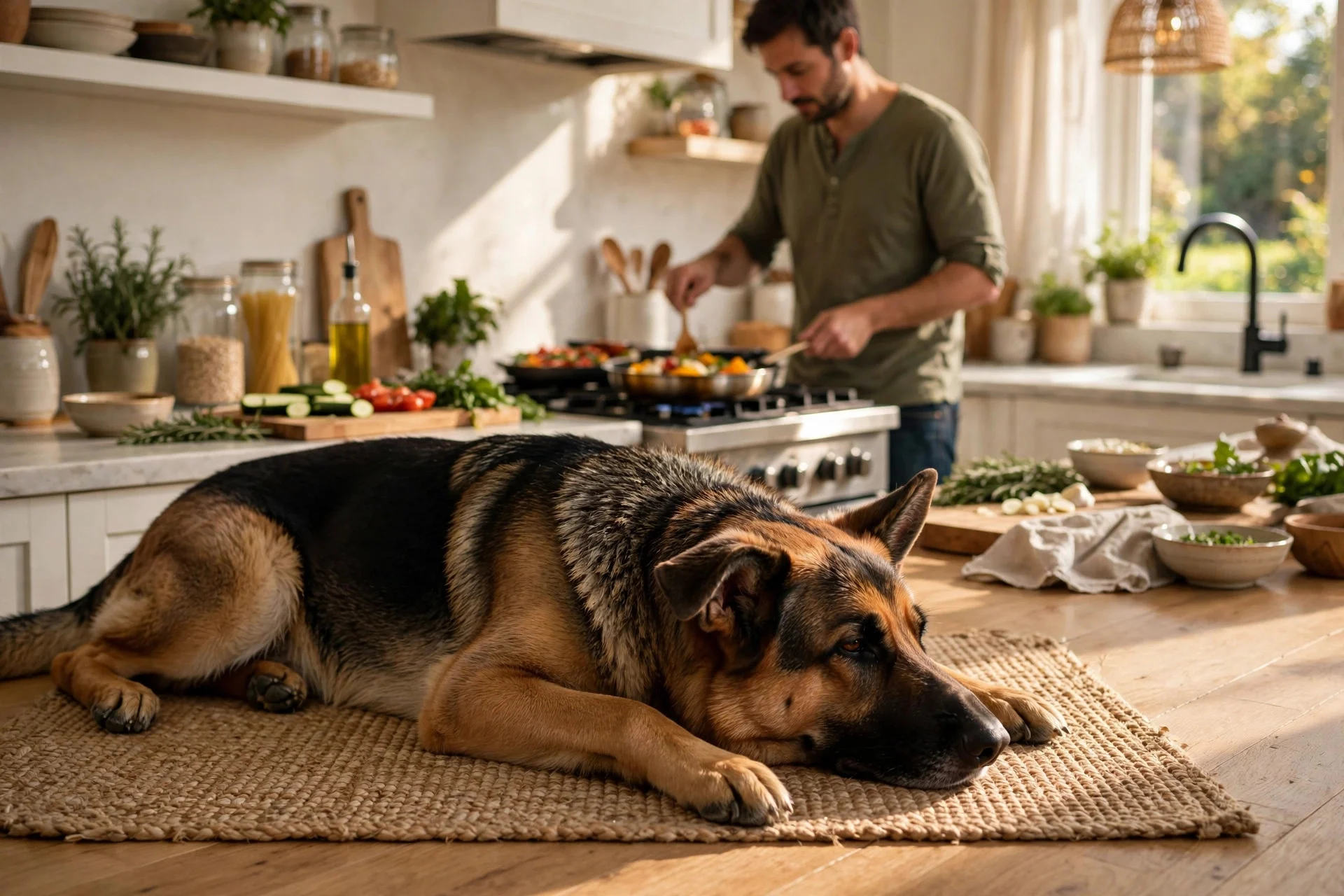
Give him a job to do instead of surfing. A mat or bed near (but not in) the kitchen becomes his station during food prep and mealtimes. Train it the same way you’d train any stay: go to mat, lie down, get rewarded — with the rewards coming frequently at first. Start with thirty seconds during calm moments and build up to the full dinner-prep chaos. A dog who’s earning treats for lying on his mat isn’t scanning the counters.
4. Make the counters boring with booby traps (the harmless kind)
For persistent surfers, a little environmental feedback helps. Cookie sheets balanced on the counter edge that clatter down (startling but harmless), or double-sided tape strips on the counter edge — dogs hate the sticky feeling on their paws. These aren’t punishments from you; they’re just the counter being an unpleasant place. The key is that the feedback comes from the environment, not from you yelling. He learns “counters are weird and unrewarding” rather than “my human gets scary near counters.”
5. Never feed from the counter or table
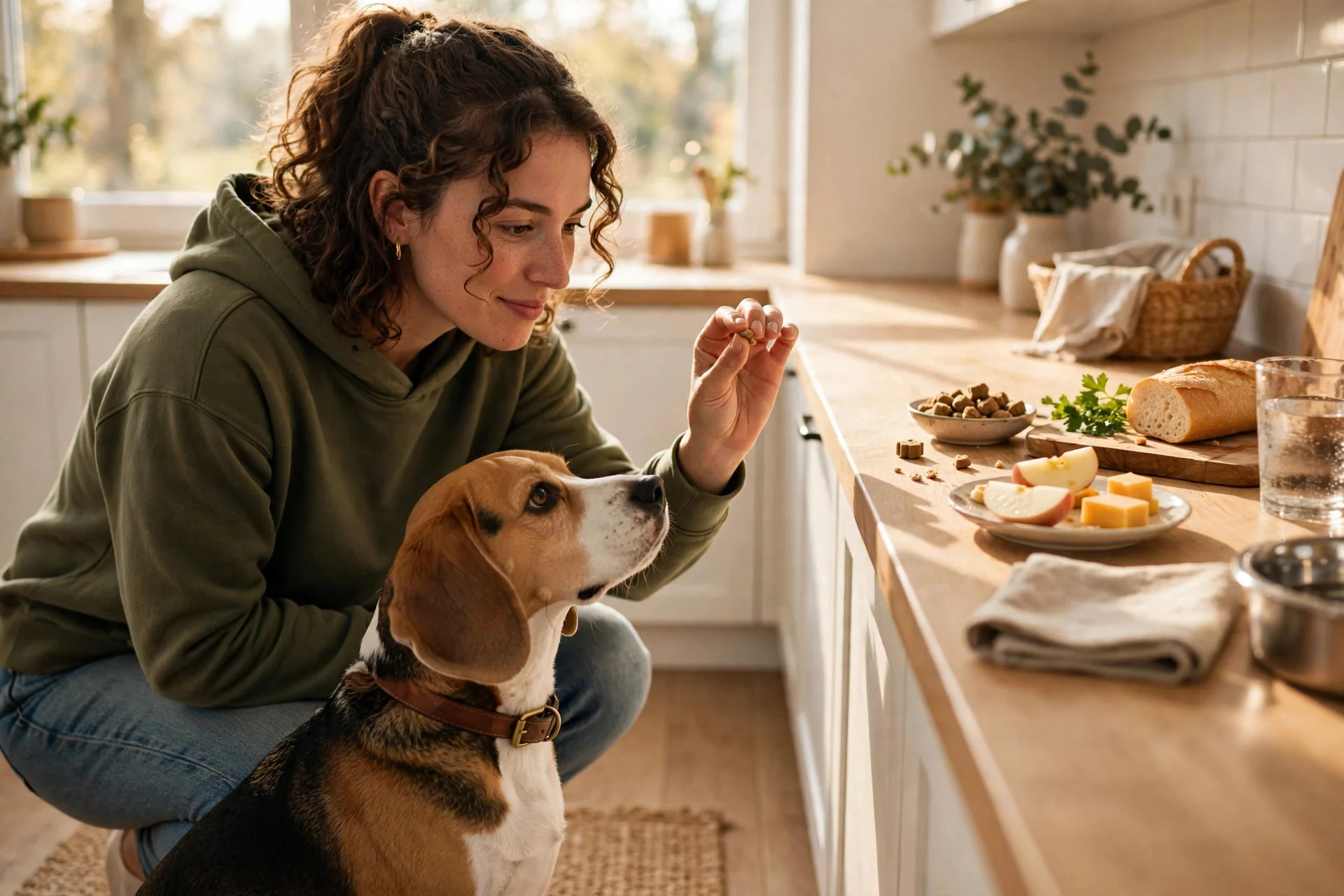
Audit your own habits. Do you ever hand him a scrap while you’re cooking? Toss him something from the table? Every handout from counter height teaches him that good things come from up there, so it’s worth checking. All treats and food should come from his bowl, your hand at his level, or training rewards — never from the counter or table. This one change alone fixes a surprising number of surfing cases.
6. Exercise and feed on a schedule
Hungry, bored dogs surf more. It’s that simple. Make sure he’s getting enough food (a dog who’s genuinely hungry will be far more motivated to steal), fed at consistent times so he’s not anxiously anticipating, and getting enough physical and mental exercise. A dog who’s just had a good walk and a puzzle feeder is dramatically less interested in patrolling your kitchen. Management of the basics prevents a huge percentage of problem behaviors.
Practical Tips That Make It Stick
Get everyone in the household on board. Counter surfing training fails more often from human inconsistency than from dog stubbornness. If one family member leaves pizza on the counter “just for a minute,” the dog’s education continues on schedule. One house meeting, one set of rules.
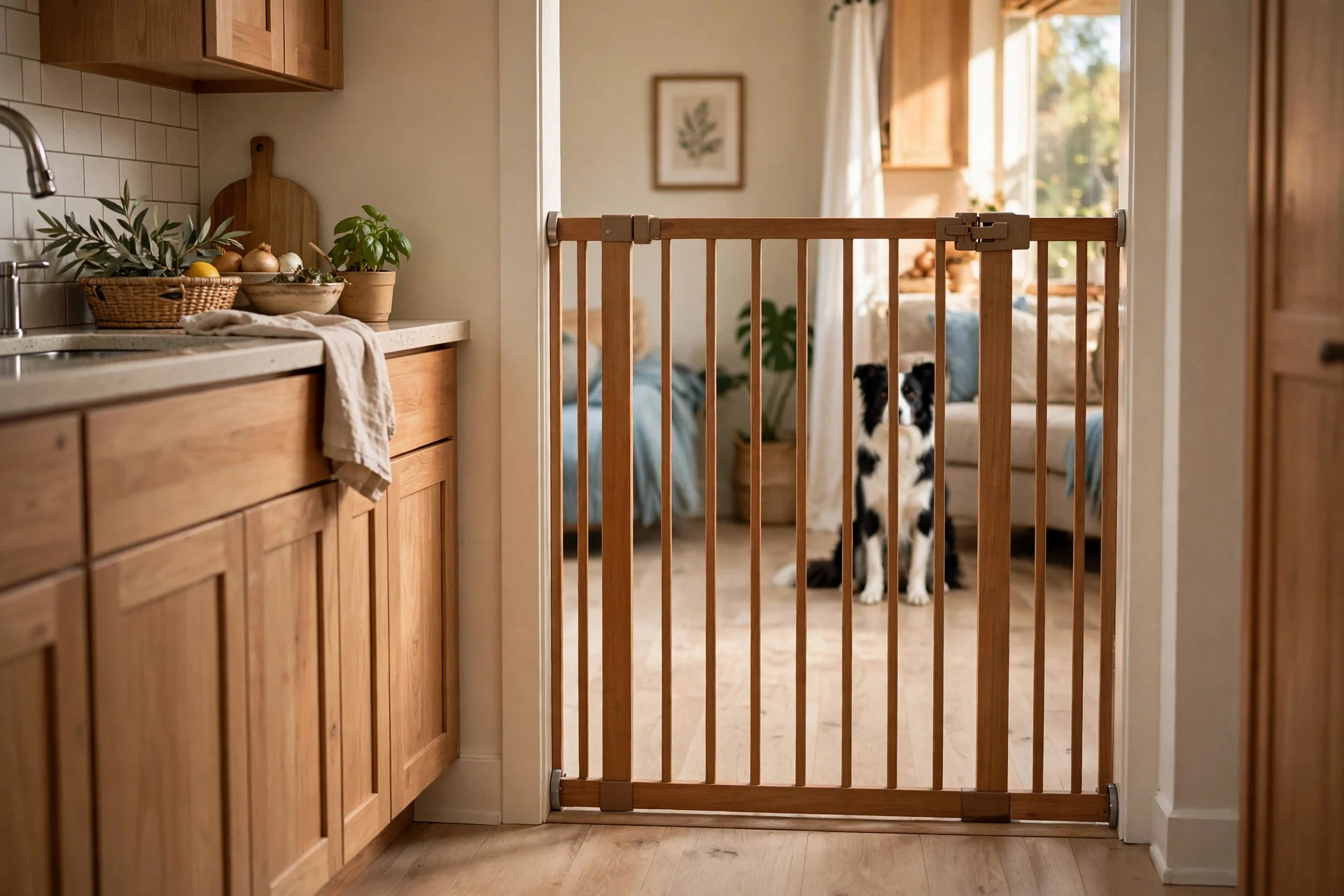
Use baby gates during the retraining phase if needed. There’s no shame in management. A gate across the kitchen doorway for a few weeks while you build the mat behavior and the leave-it cue is just smart training.
Reward the alternative constantly at first. Every time you catch him lying calmly on his mat while you cook, drop a treat between his paws. You’re building a competing habit, and competing habits need heavy reinforcement early on.
For tall dogs and low counters, the math is brutal — some dogs can surf without even stretching. If your counters are genuinely within easy reach, management (clear counters, gates) matters even more than training. Don’t fight physics.
Mistakes That Make Surfing Worse
Yelling after the fact. You walk in, the trash is everywhere, you explode. He learns nothing about counters and everything about the fact that you sometimes become frightening for mysterious reasons. If you didn’t catch it happening, just clean up silently and manage better.
Chasing him to get the food back. Congratulations, you’ve invented the most exciting game in his life: steal food, get chased. He’ll surf more, not less, just to trigger the chase. Trade for it calmly if you must, but better yet, prevent the opportunity.
Assuming “leave it” works without proofing. A “leave it” trained in the living room with kibble does not transfer to a steak on the counter. You have to practice specifically around real food, at real counters, with gradually increasing difficulty. Unproofed cues fail exactly when you need them.
And the slow killer: getting lazy about clearing counters after two good weeks. The habit isn’t dead after fourteen days — it’s just dormant. One successful surf can resurrect months of progress. Stay airtight for a full month minimum, ideally two.
FAQs
Will my dog ever be trustworthy around food on counters?
Honestly? Maybe, eventually, with most dogs — but never test it with something dangerous. Many well-trained dogs learn to ignore counters reliably after a few months of consistent management and training. But smart owners still don’t leave a chocolate cake unattended. Trust, but verify — permanently.
My dog only surfs when I’m not home. What do I do?
Close the kitchen off when you’re gone — baby gate, closed door, whatever works. You can’t train a behavior you can’t supervise, and every solo surfing session is practice. This is a management problem, not a training problem, until the habit is truly dead.
Does breed matter for counter surfing?
Height matters more than breed. Tall dogs and dogs who can stand on hind legs to reach counters will surf more simply because the opportunity is constant. Food-motivated breeds (labs, beagles, the usual suspects) are also more persistent. But any dog will surf if the counters keep paying out — it’s economics, not genetics.
Is it okay to use a scat mat or e-collar for counter surfing?
Skip the electronic deterrents. They can create fear and anxiety that generalizes badly — a dog who’s been zapped near the kitchen may become afraid of the whole room, or of you. The management-plus-training approach works without those risks. There’s no behavior problem that justifies trading one issue for a fear problem.
Counter surfing is a math problem: opportunity times reward equals habit. Zero out the opportunity with clear counters, zero out the reward by never letting a surf pay off, and build the alternative with mat training and a solid leave-it. Your groceries will thank you.