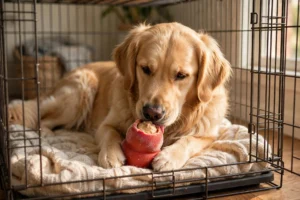
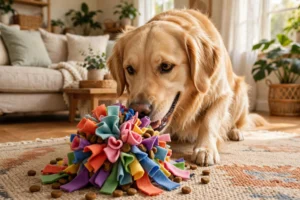
Your dog growls when you walk near his food bowl. Or he freezes over a stolen sock, whale-eyes you, and suddenly mealtime feels tense. If that sounds familiar, you’re dealing with resource guarding dogs behavior — and the first thing you need to hear is this: your dog is not being dominant, spiteful, or “bad.” He’s scared. Resource guarding is anxiety about losing something valuable, and it responds beautifully to the right approach. It responds terribly to the wrong one.
The wrong approach — and it’s still depressingly common advice — is to “show him who’s boss”: take his food away repeatedly, punish the growl. Every one of those tactics makes guarding worse, because they confirm his fear that people near his stuff mean trouble. The right approach does the opposite: it teaches him that people approaching his treasures predict even better things.
8 Training Steps for Resource Guarding
1. Stop punishing the growl — immediately and forever
This is the foundation everything else is built on. If you punish the growl — scold, swat, intimidate — you don’t remove the fear, you just remove the warning system. Now you have a dog who’s still scared but no longer tells you. That’s how “he bit without warning” happens.
2. Manage the environment to prevent rehearsal
While you’re training, set him up to succeed. Feed him in a quiet spot where nobody walks past. If he guards the couch, manage couch access for now. Every guarding episode he practices strengthens the habit.
3. Learn his body language
Guarding escalates through a predictable ladder: freezing, hard staring, whale eye, lip lifting, growling, snapping, biting. Learn to read the freeze and the hard stare — those are your cues to back off. The earlier you respond, the less rehearsal the intense behaviors get.
4. Start trade-up games with low-value items
Offer him something boring — a dry biscuit, a dull toy. When he has it, produce something amazing: real chicken, cheese. Say “trade!” cheerfully and swap. Start with items he barely cares about. You’re building a history of great trades before you ever touch the high-value stuff.
5. Practice the approach-and-toss
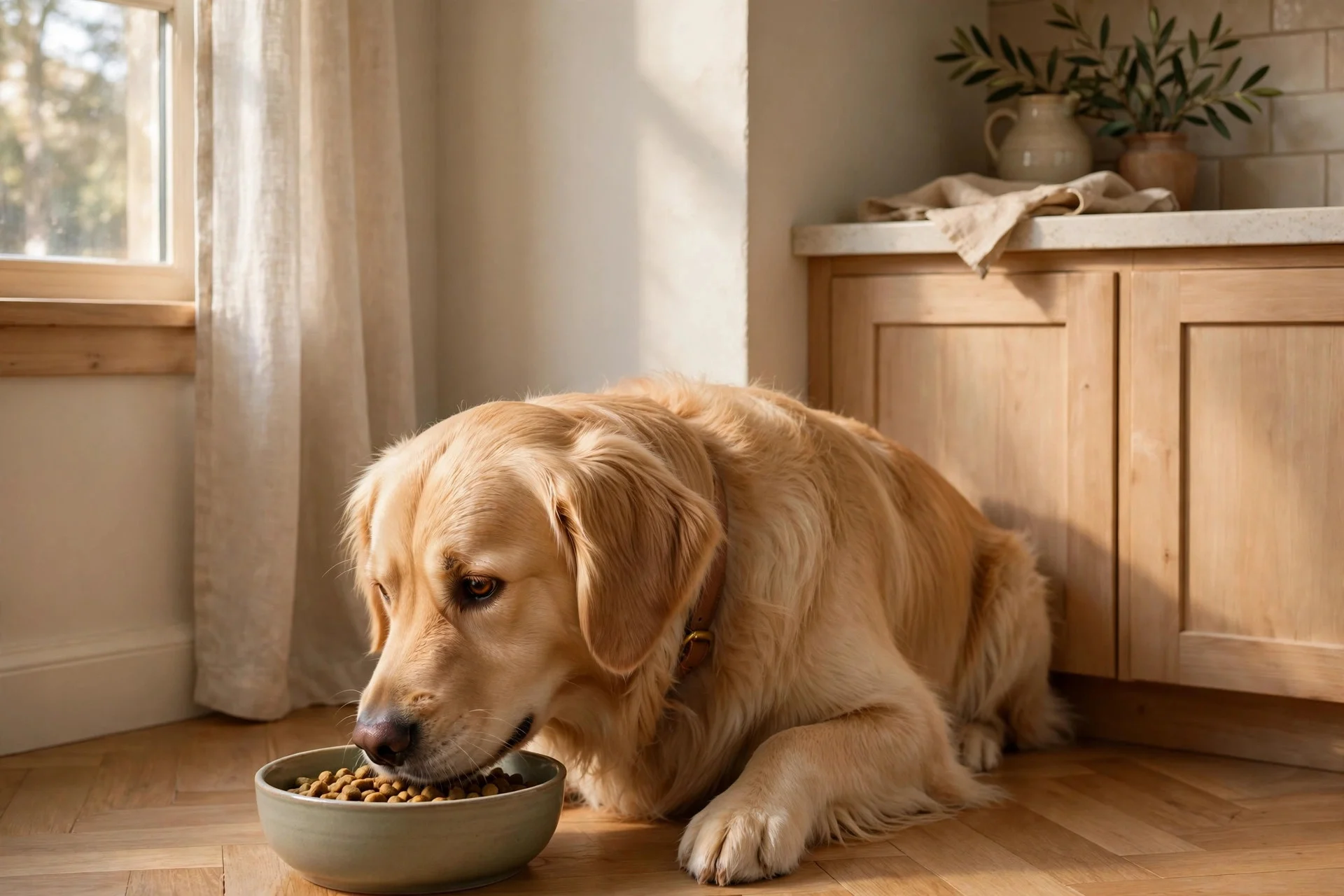
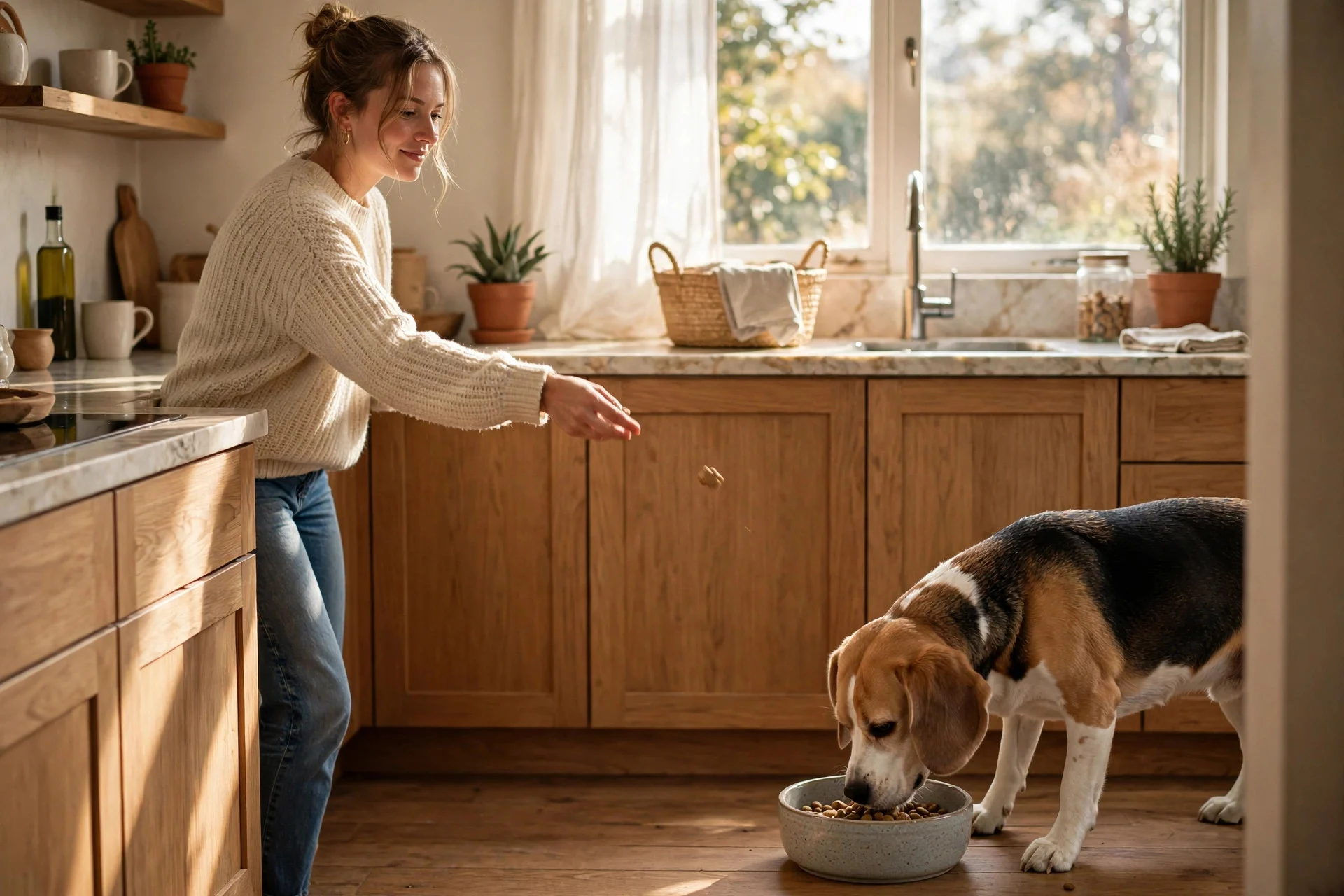
For food bowl guarders: while he’s eating, walk past at a comfortable distance and toss a high-value treat near his bowl, then keep walking. Don’t stop, don’t reach, don’t linger. Over days, gradually decrease the distance — but only as long as he stays relaxed.
6. Teach “drop it” as a fun game, never as a confrontation
“Drop it” should be the best deal in his life, not a command barked during a standoff. Train it with boring objects and jackpot rewards. The rule: the trade must always be worth it. If you sometimes trade fairly and sometimes just take, he’ll stop trusting the game.
7. Add handling to mealtimes gradually
Once the approach-and-toss is going well, you can start adding brief, positive contact: walk up, drop the bonus treat in the bowl, walk away. Later: touch the bowl while adding the treat. The sequence is always the same — your presence makes things better, never worse. This is slow work measured in weeks. Rushing it by grabbing the bowl “to test him” undoes everything. There are no tests. Only training.
8. Know when to call a professional
Be honest about severity. If your dog has bitten, guards from kids, or isn’t improving after a few weeks of consistent work — get professional help. Look for a certified professional dog trainer (CPDT-KA) or a veterinary behaviorist (DACVB), not anyone who talks about dominance. There’s no shame in expert help; it’s the responsible move.
Practical Tips That Make It Stick
Feed meals, don’t free-feed. A dog with food available all day has more opportunities to guard and less motivation to trade. Scheduled meals in a calm spot give you control over the training context.
Keep a log. Note what he guarded, from whom, at what distance, and how intense it was. Patterns emerge fast — maybe it’s only high-value chews, only from kids, only in the evening. The log tells you exactly where to focus.
Teach the whole household the rules. Everyone backs off from a growl, everyone trades fairly, nobody “tests” the dog. One person alpha-rolling the dog while another does trade-up games will stall progress completely.
Exercise and enrichment reduce overall stress, and lower stress means less guarding intensity. A dog who’s had a good walk and a puzzle feeder is simply less on edge about his resources than a bored, pent-up one.
Mistakes That Make Guarding Worse
Punishing the growl — I’ve said it twice and I’ll say it a third time, because it’s the single most damaging thing people do. Every punishment-based approach to guarding (alpha rolls, scruff grabs, “correcting” with leash pops, taking the food away to “prove a point”) increases the dog’s fear and escalates the behavior. The science on this is settled: punishment makes aggression worse.
Sticking your hand in his bowl “to get him used to it.” This floods him — overwhelms him with the scary thing — and it doesn’t build trust, it builds a dog who eats faster and guards harder. The approach-and-toss method achieves the goal without the confrontation.
Trading unfairly. If “trade” sometimes means he gets chicken and sometimes means the thing just disappears, he’ll stop playing. Every trade must pay out. Every single one. Trust is the currency here and it’s expensive to rebuild.
And letting kids practice on a guarding dog. Children should never be part of guarding rehabilitation exercises. Manage kids and the dog separately around resources until a professional says otherwise. This is a safety non-negotiable.
FAQs
Is resource guarding normal, or is my dog aggressive?
Mild resource guarding is extremely common and normal — a huge percentage of dogs will guard a high-value chew at some point. It becomes a problem when it’s intense, frequent, or directed at people (especially kids). “Aggressive dog” is a label; resource guarding is a specific, treatable behavior. Most cases improve dramatically with the right approach.
Will my dog grow out of it?
Not on its own. Unguarded guarding (sorry) tends to intensify over time, because every successful guard — every time the scary person backs off — rewards the behavior. It needs active training, but the prognosis with proper counter-conditioning is genuinely good.
Should I just take away everything he guards?
Removing the specific high-value triggers during training is smart management. But permanently stripping his life of all good things isn’t a solution — it’s avoidance that leaves the underlying fear untouched. The goal is a dog who doesn’t feel the need to guard, not a dog with nothing worth guarding.
Can resource guarding be completely fixed?
Many dogs improve to the point where guarding is a non-issue in daily life. Some dogs with severe histories will always need some management around their biggest triggers — and that’s okay. Success isn’t always zero guarding; it’s a dog who’s relaxed, a household that knows the plan, and everyone safe.
Resource guarding feels scary, but it’s one of the most responsive behavior problems to humane training. Stop punishing the growl, start the trade-up games, manage the environment, and get help if it’s serious. Your dog isn’t giving you a hard time — he’s having a hard time. Meet him there, and you’ll both come out better.