Doing puppy grooming at home is not about saving money, although it does save a shocking amount. It is about turning handling into something your puppy actually enjoys — which makes every vet visit, every walk past a burr patch, and every future grooming appointment ten times easier.
Here is the secret the pros know: grooming a puppy is 90 percent handling practice and 10 percent actual grooming. Puppies barely need grooming. What they need is to learn that hands on their paws, ears, tail, and belly predict good things. Start puppy grooming basics now and you are building a dog who holds still instead of a dog who needs wrestling.
Puppy Grooming at Home: 10 Basics
1. Brushing (Even When They Do Not Need It)
Most puppies do not have coats that mat or shed much, but brush them anyway, two or three times a week. Use a soft brush and gentle strokes. The point is the ritual: being held, being touched, having tools near their body. Keep sessions to two minutes at first and end with treats. By the time their adult coat comes in and brushing actually matters, they will already be pros.
2. Nail Trims (See the Fear-Free Guide Below)
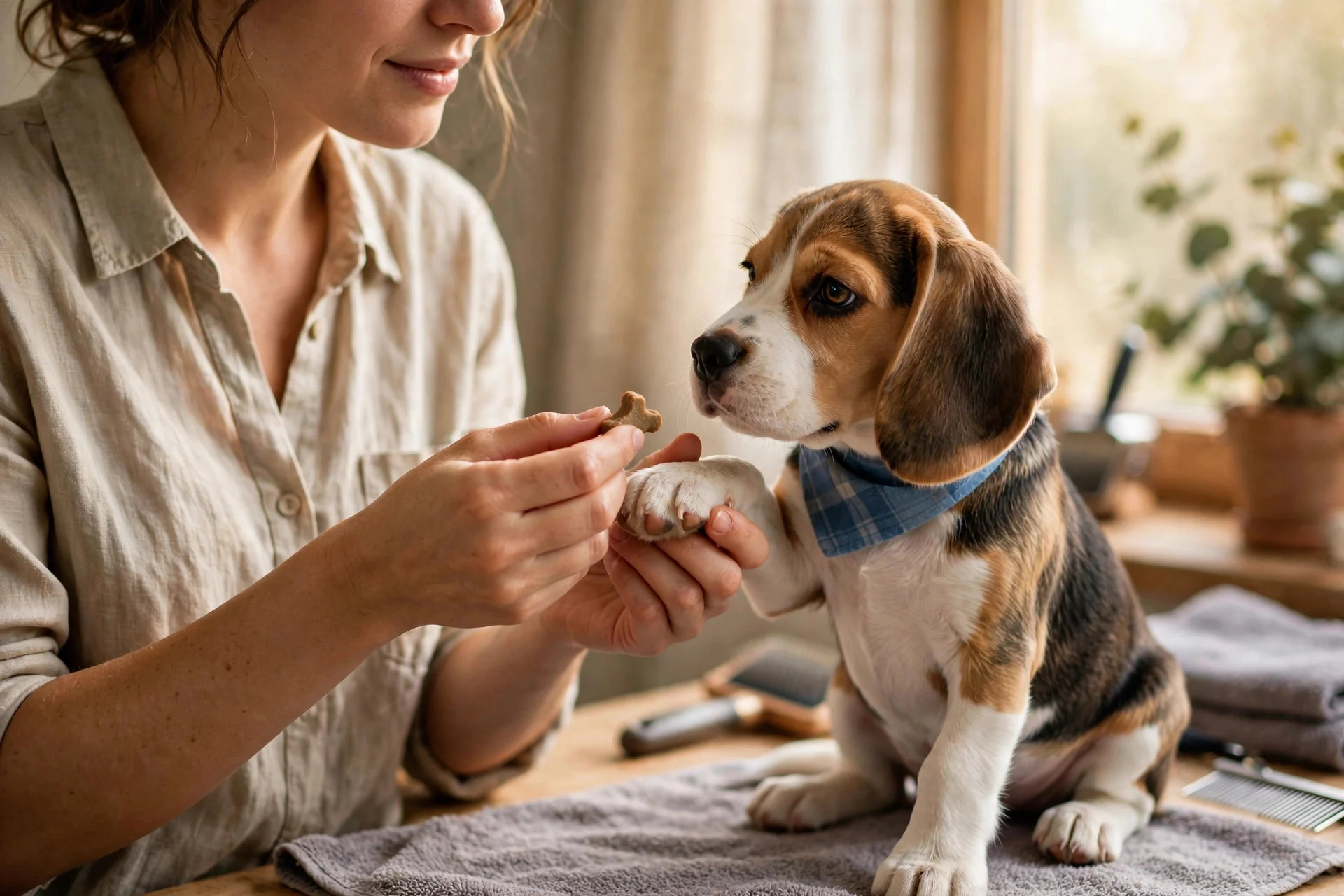
Touching paws daily matters more than trimming perfectly. Handle the paws, spread the toes, touch the nails — then treat. When you do trim, take tiny slivers off the tips. For puppies with light nails, you can see the pink quick; stay well away from it. For dark nails, take off a sliver and check the cross-section: stop when you see a grayish oval. If your puppy freezes or pulls away, stop. Come back tomorrow. One nail done happily beats ten done with a fight.
3. Ear Checks
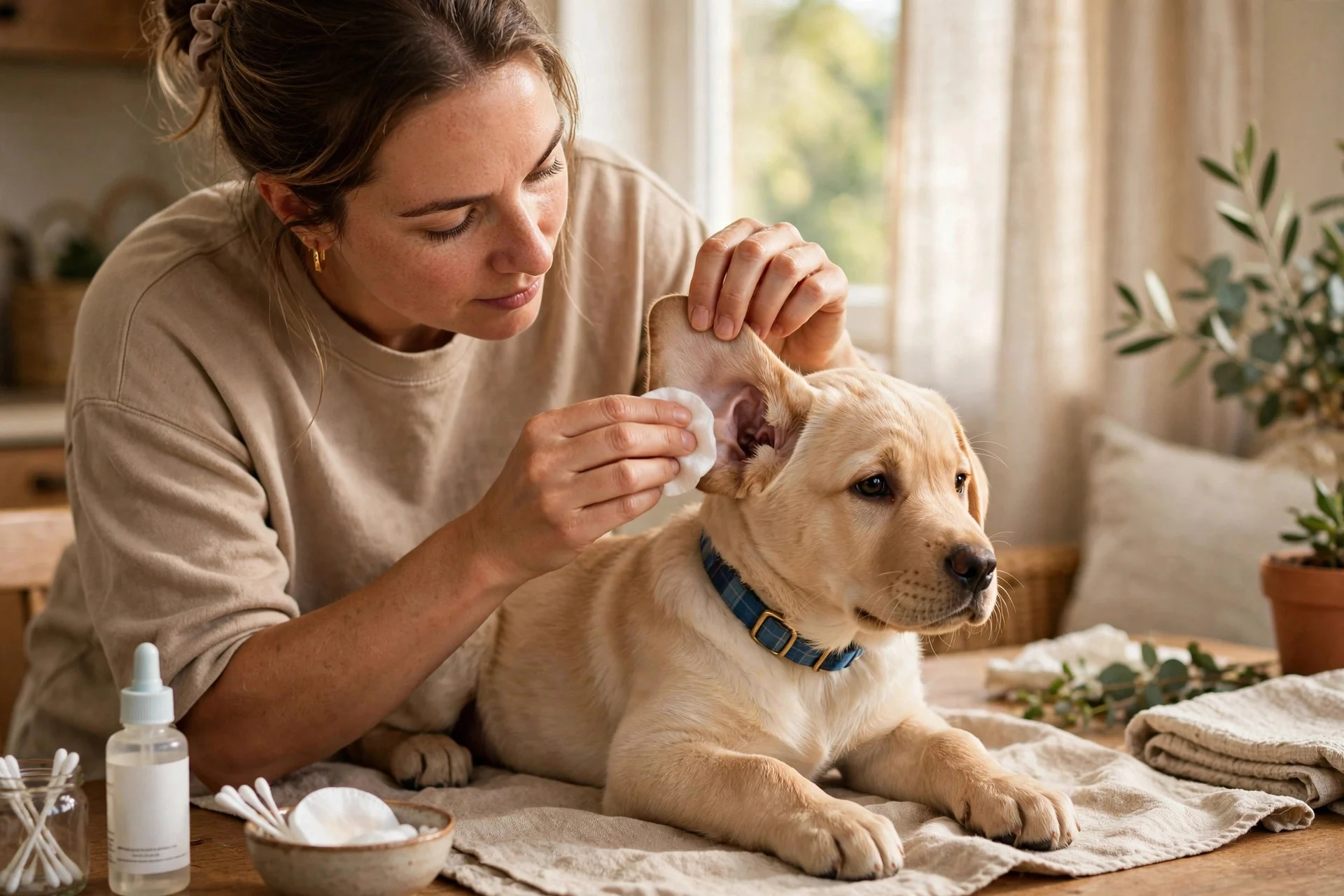
Once a week, lift the ear flaps and look inside. Healthy ears are pale pink and clean with no strong smell. Gently wipe the visible outer ear with a damp cloth or dog ear wipe — never stick anything down the canal. This weekly peek is how you catch infections early, when they are easy. Puppies with floppy ears and swimmers need extra vigilance.
4. Teeth and Mouth Handling
Lift the lips, touch the gums, run a finger along the teeth. Reward each time. Puppies are teething and their mouths are sensitive, so keep it brief and positive. This groundwork is what makes tooth brushing possible later — and brushing your dog’s teeth is genuinely one of the highest-value health habits you can build. Start with a finger, graduate to a puppy toothbrush with dog-safe paste.
5. Bathing Basics
Baths every 4 to 6 weeks with puppy shampoo, lukewarm water, non-slip mat — and always end on a high note. But here is the grooming secret: bathe less than you think. Over-bathing dries out puppy skin and causes the exact itchiness people try to wash away. Between baths, a damp cloth handles most messes.
6. Drying Without Drama
After baths or wet walks, towel dry thoroughly. If you use a blow dryer, keep it on the coolest, lowest setting and hold it at least a foot away — and desensitize to it first with treats, the same way you would any scary object. Most puppies do fine with towel drying alone. Never let a wet puppy lie in a draft or on a cold floor.
7. Sanitary Trims
Puppies, especially fluffy ones, get stuff stuck in the fur around their rear and belly. Carefully trim the hair around the sanitary areas with blunt-tipped scissors so they can do their business cleanly. This is a hygiene thing, not a style choice. Work with a helper holding the puppy and treats flowing.
8. Paw Pad Care
Check paw pads weekly for cracks, cuts, or stuck debris. In winter, wipe paws after walks to remove salt and ice-melt chemicals. A little coconut oil on dry pads helps in dry climates. And get your puppy walking on different surfaces — grass, pavement, gravel — which naturally toughens pads and reduces future sensitivity.
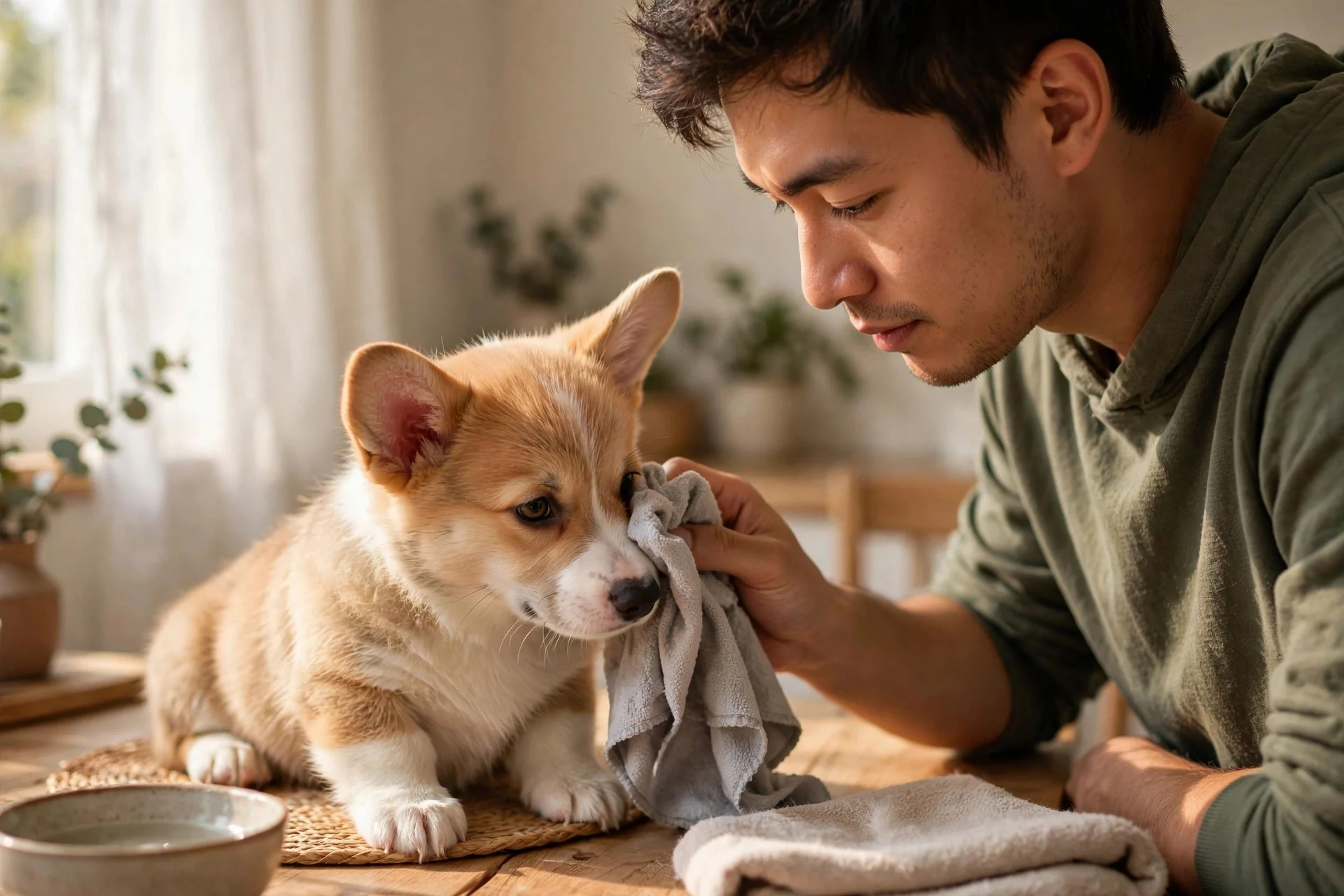
9. Eye Area Cleaning
Wipe away eye gunk with a damp cloth, gently, in the morning. Breeds with prominent eyes or lots of facial folds need this daily. Red or green discharge, constant tearing, or squinting is a vet visit, not a grooming task. This thirty-second habit prevents most tear staining and minor infections.
10. The Handling Jackpot Game
This is the meta-skill that ties everything together. Every day, randomly touch a paw, an ear, the tail — and produce a treat. Two minutes. No tools. You are teaching your puppy that unexpected handling predicts rewards. This single game is why some dogs stand relaxed at the vet while others need sedation. It is the highest-return investment in all of puppy grooming.
Practical Tips for Home Grooming
Keep sessions short — two to five minutes for young puppies — and always end before they get squirmy. Groom after exercise when they are tired. Keep treats in your pocket, not on a table across the room. And buy decent tools: a good slicker brush and a quiet nail clipper make everything easier. Cheap tools that snag fur or crush nails teach your puppy that grooming hurts.
Mistakes to Avoid
Do not punish squirming — it is information, not disobedience. A squirming puppy is telling you the session is too long or something hurts. Do not chase a struggling puppy to finish a nail; you just taught them that escape attempts work sometimes, which makes the next attempt worse. Do not use human products — wrong pH, wrong ingredients. And do not skip grooming because your puppy “does not need it yet.” The puppy coat is irrelevant. The handling education is everything.
FAQs About Puppy Grooming
How often should I groom my puppy?
Light grooming — brushing, handling, paw checks — two to three times a week. Baths every 4 to 6 weeks. Nail trims every 2 to 3 weeks. Ear checks weekly. The schedule matters less than the consistency.
When can puppies go to a professional groomer?
After their core vaccinations, usually around 12 to 16 weeks. But do home grooming from day one — a puppy who arrives at their first salon visit already comfortable being handled has a completely different experience.
My puppy hates being brushed. What do I do?
Shorten the session to 30 seconds and pair every stroke with a treat. Build up slowly. Check your tools too — a brush that pulls will make any puppy hate brushing.
Should I cut the hair between my puppy’s paw pads?
Trimming long tufts between the pads helps with traction on slippery floors, especially in winter. Use blunt-tipped scissors, go slow, and stop if your puppy objects — it is optional, not urgent.
Ten basics, five minutes a day, and you will raise a dog who treats grooming like a spa appointment instead of a wrestling match. Start tonight with the handling jackpot game.