You planted those flower beds in April. By June, they look like a construction site. If your dog digging yard craters are multiplying faster than you can fill them, take a breath — this is one of the most normal dog behaviors there is, and it’s also one of the most fixable. Dogs dig for reasons that make perfect sense to them: to cool off, to bury treasure, to hunt the mole that’s been taunting them, or simply because digging is ridiculously fun.
The key insight is that you can’t train a dog to never dig. You can, however, decide where the digging happens and make everywhere else boring by comparison. These five strategies work because they address the actual motivation behind the digging, not just the holes.
5 Ways to Stop Your Dog Digging Up the Yard
1. Figure out WHY he’s digging first
Watch the pattern before you fix anything. Digging along the fence line? He’s probably trying to get out (or get to something on the other side). Shallow pits in shady spots on hot days? He’s making a cool bed — totally sensible. Random craters all over? That’s usually boredom or excess energy. Digging in one specific spot repeatedly? There might be a smell down there — a buried bone, a mole, last year’s lost tennis ball. The fix depends entirely on the motive, so spend a few days observing before you act.
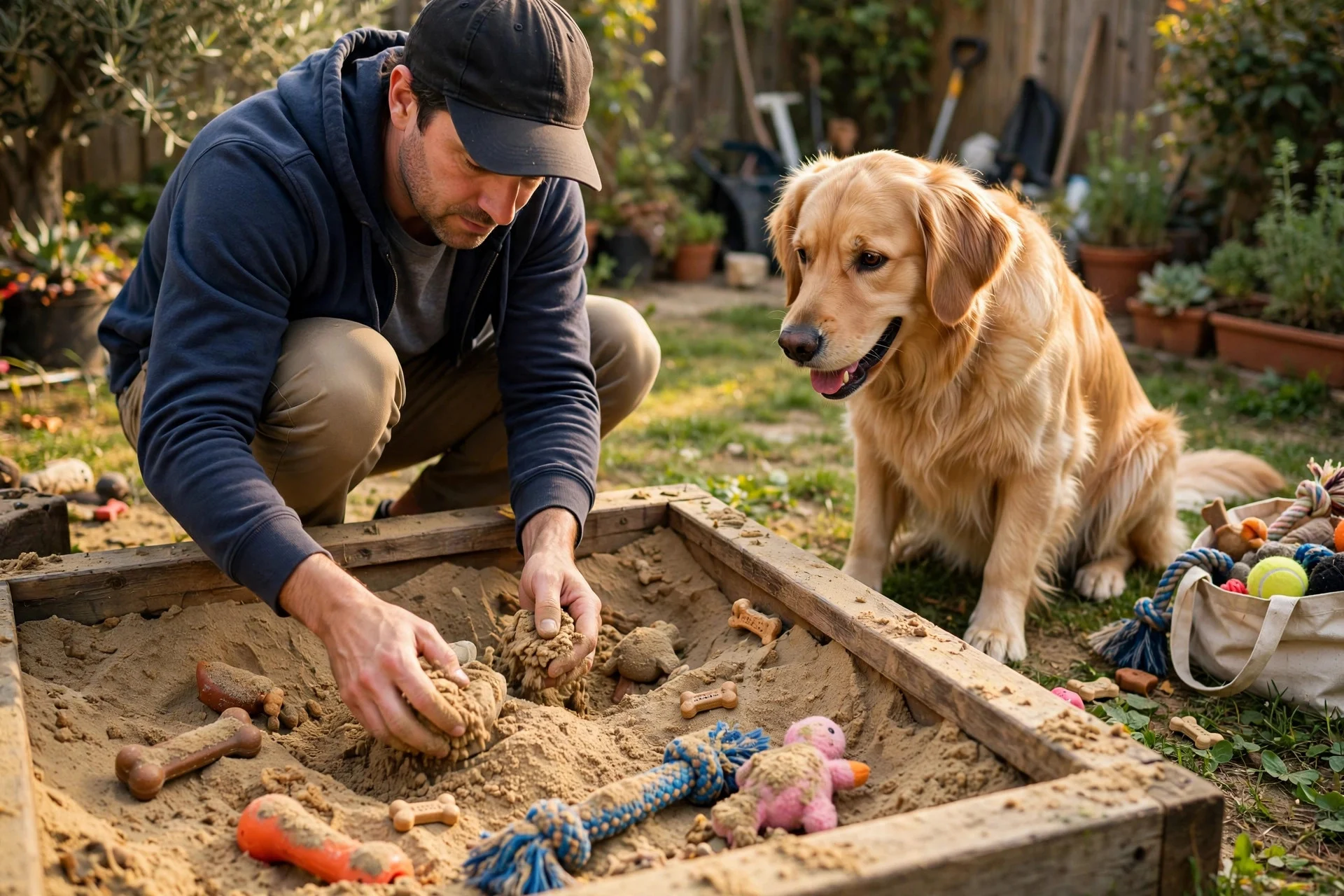
2. Build him a legal digging pit
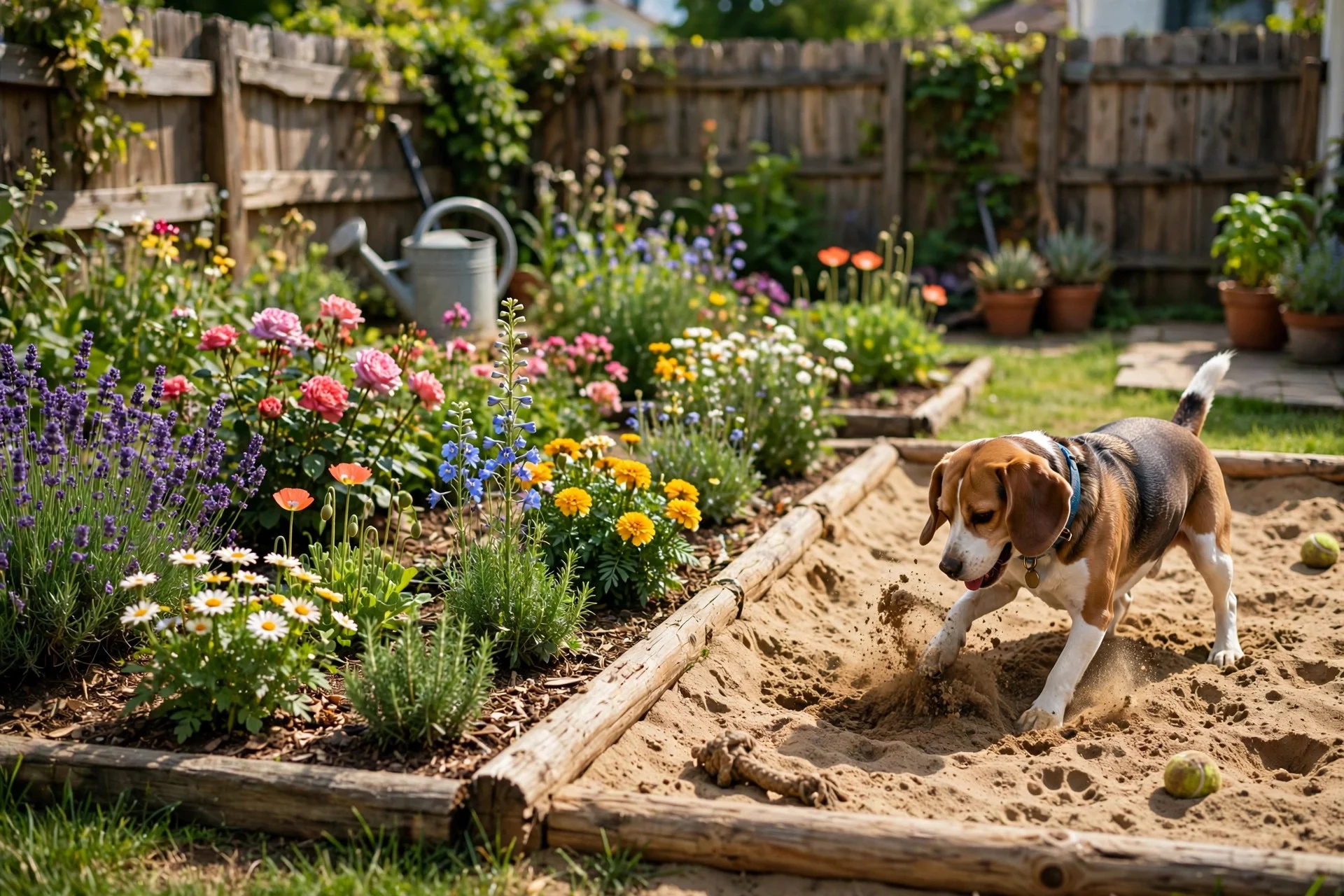
This sounds counterintuitive, but it’s the single most effective strategy for recreational diggers. Designate a corner of the yard as the digging zone — a raised sandbox or a patch of loose soil works perfectly. Bury toys and treats in it, then bring him over and let him discover them. Praise him like crazy when he digs there. Most dogs take to a dig pit within a week because it gives them an outlet for an urge you’re otherwise just suppressing. A dog with a legal place to dig is dramatically less interested in your petunias.
3. Make the forbidden spots unappealing
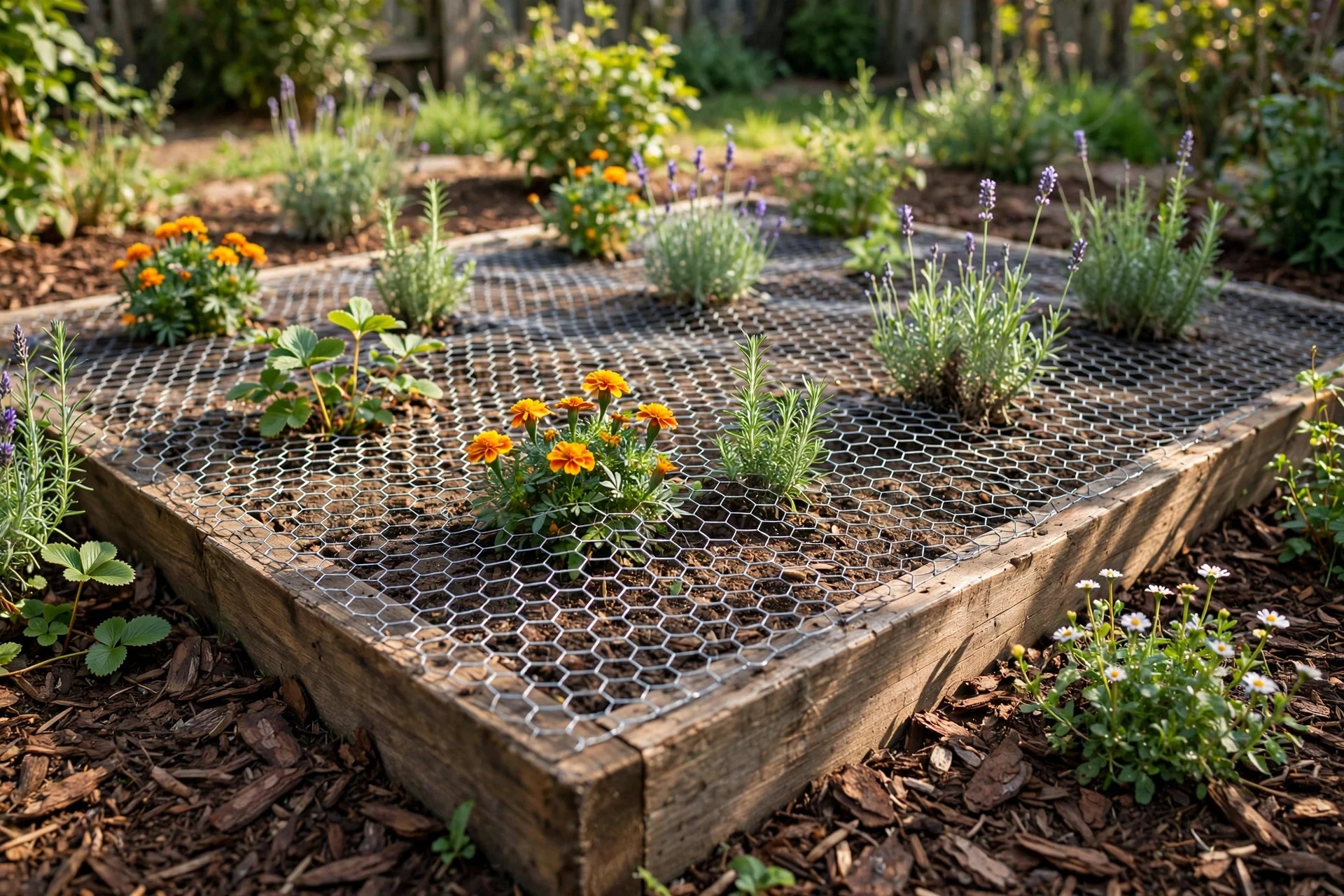
While the dig pit becomes the best place on earth, the rest of the yard needs to become boring. Fill existing holes and cover them with something unpleasant underfoot — chicken wire laid flat just under the soil surface works well (dogs hate the feel on their paws), or large flat stones over favorite spots. Citrus peels scattered in garden beds deter some dogs. The goal isn’t punishment; it’s making those spots less rewarding than the dig pit. Every time he chooses the pit over the flower bed, the habit gets stronger.
4. Tire him out — especially the brain
Boredom digging is the most common kind, and it’s also the most straightforward to fix. A dog who spends all day alone in the yard with nothing to do will invent entertainment, and digging is premium entertainment. Add a solid walk or play session before yard time, plus mental work: scatter feeding, puzzle toys, a frozen stuffed toy left in the yard. A dog who’s physically tired and mentally satisfied digs far less. If the digging happens mostly when you’re gone, the real problem might be too much unsupervised alone time, not a digging problem at all.
5. Address the escape artists and cool-seekers specifically
Fence-line digging needs a structural fix, not a training fix. Bury chicken wire or concrete pavers along the fence base, or install an L-shaped footer of wire fencing that extends into the yard. No amount of training reliably stops a determined escape digger — manage the environment instead. For hot-weather cool-pit diggers, provide shade and a kiddie pool or cooling mat. He’s digging for air conditioning; give him a better version and the craters stop.
Practical Tips That Make It Stick
Supervise yard time during the retraining period. You can’t redirect digging you don’t see. For a few weeks, be out there with him — the moment he heads for a forbidden spot, redirect him cheerfully to the dig pit. Catching it in the moment is everything.
Make the dig pit irresistible at first. Bury high-value stuff — not just kibble, but bits of cheese, a favorite toy, a frozen treat. You want him thinking the pit is a treasure chest. Once the habit is established, you can bury things less often.
Don’t fill holes with his own poop — the old folk remedy. It doesn’t work reliably, it’s gross, and some dogs just dig next to it. Stick with the strategies above.
For garden beds specifically, raised beds with low fencing are worth the investment. A two-foot barrier around your vegetables solves the problem permanently for most dogs, no training required.
Mistakes That Make Digging Worse
Punishing after the fact does nothing. You find the hole, you yell, he looks guilty — he’s not guilty, he’s reading your angry body language. He has no idea which of the forty things he did today you’re upset about. Punishment after the fact just makes him dig when you’re not looking.
Filling the hole while he watches and expecting him to learn. He doesn’t connect “human fills hole” with “I shouldn’t dig.” He just waits for you to go inside and starts a new one. Management and redirection, not demonstrations.
Ignoring the underlying need. If he’s digging to escape because he’s lonely, or digging to cool off because he’s hot, no training plan works until you fix the root cause. Always ask “what is he getting out of this?” before you ask “how do I stop it?”
And the big one: giving up on the dig pit after three days because he “isn’t interested.” It takes a week or two of consistent treasure-burying to build the habit. Most people quit right before it would have worked.
FAQs
Will neutering stop my dog from digging?
Unlikely to make much difference. Digging is rarely hormonal — it’s about boredom, comfort, prey drive, or fun. Neutering won’t hurt, but don’t expect it to fill the craters. Address the motivation instead.
My dog only digs when I’m not home. What do I do?
That’s usually boredom or mild separation distress. Limit unsupervised yard access during the retraining period — use a smaller penned area or keep him inside with enrichment when you’re gone. Leave puzzle feeders and frozen toys. And consider whether he’s getting enough exercise and company overall; solo yard time isn’t a substitute for either.
Are there breeds that just dig no matter what?
Terriers, dachshunds, and other earth-dog breeds were literally bred to dig — it’s in their DNA. You won’t train it out of a Jack Russell, but you absolutely can channel it. These breeds are actually the best candidates for a dig pit, because the urge is so strong that giving it a legal outlet works beautifully.
Is it safe to let my dog dig in a sandbox?
Yes, with two precautions: use clean play sand (not construction sand, which can contain who-knows-what), and cover the pit when not in use so neighborhood cats don’t adopt it as a litter box. Check it periodically for anything sharp that might have been buried.
Your yard doesn’t have to be a moonscape. Figure out the why, build the legal pit, make the flower beds boring, and give him enough to do. Most digging problems look dramatically better within two to three weeks — and you’ll have a dog who’s happily excavating his own corner while your garden stays intact. Everybody wins.