“You can’t teach an old dog new tricks.” Whoever coined that phrase never met a senior dog with a treat in front of him. Older dogs can absolutely learn new things — often faster than puppies, because they already understand how training works. Senior dog training isn’t about turning back the clock. It’s about adjusting the game: shorter sessions, softer surfaces, more patience, same fun.
Biscuit is ten now, with a graying muzzle and a slight hitch in his morning step. He learned “spin” last year at nine years old. The old-dogs-can’t-learn myth needs to retire. What needs adjusting is how you train. These twelve tips cover exactly that.

12 Tips for Training Your Senior Dog
1. Get a vet check before you start anything new
Behavior changes in seniors — reluctance to do known cues, snapping when touched, “stubbornness” about stairs — are very often pain, not attitude. A vet visit first means you’re not training through pain. Rule out the medical, then train.
2. Keep sessions short — really short
Three to five minutes, max. Senior dogs tire faster, and a tired senior doesn’t just get sloppy — he can get sore. Two or three micro-sessions a day beats one long one. Always end while he’s still enjoying it.
3. Go low-impact with everything
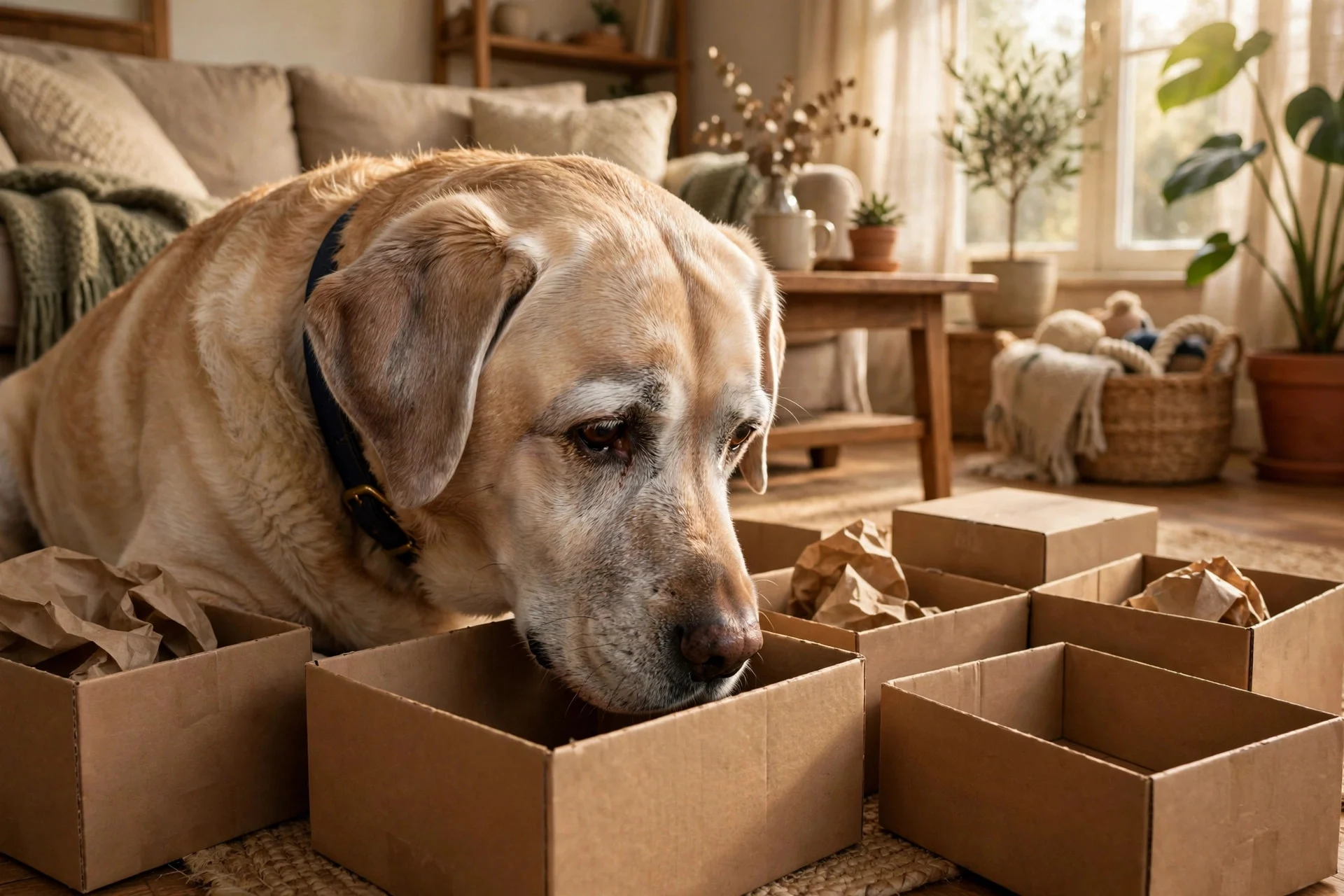
Skip the jumping, fast spins, and repeated sit-to-stand drills that pound arthritic joints. Choose gentle behaviors: nose work, “touch,” chin rests, “find it” games. If a behavior requires movement that looks stiff, adapt it or drop it. Training should never hurt.
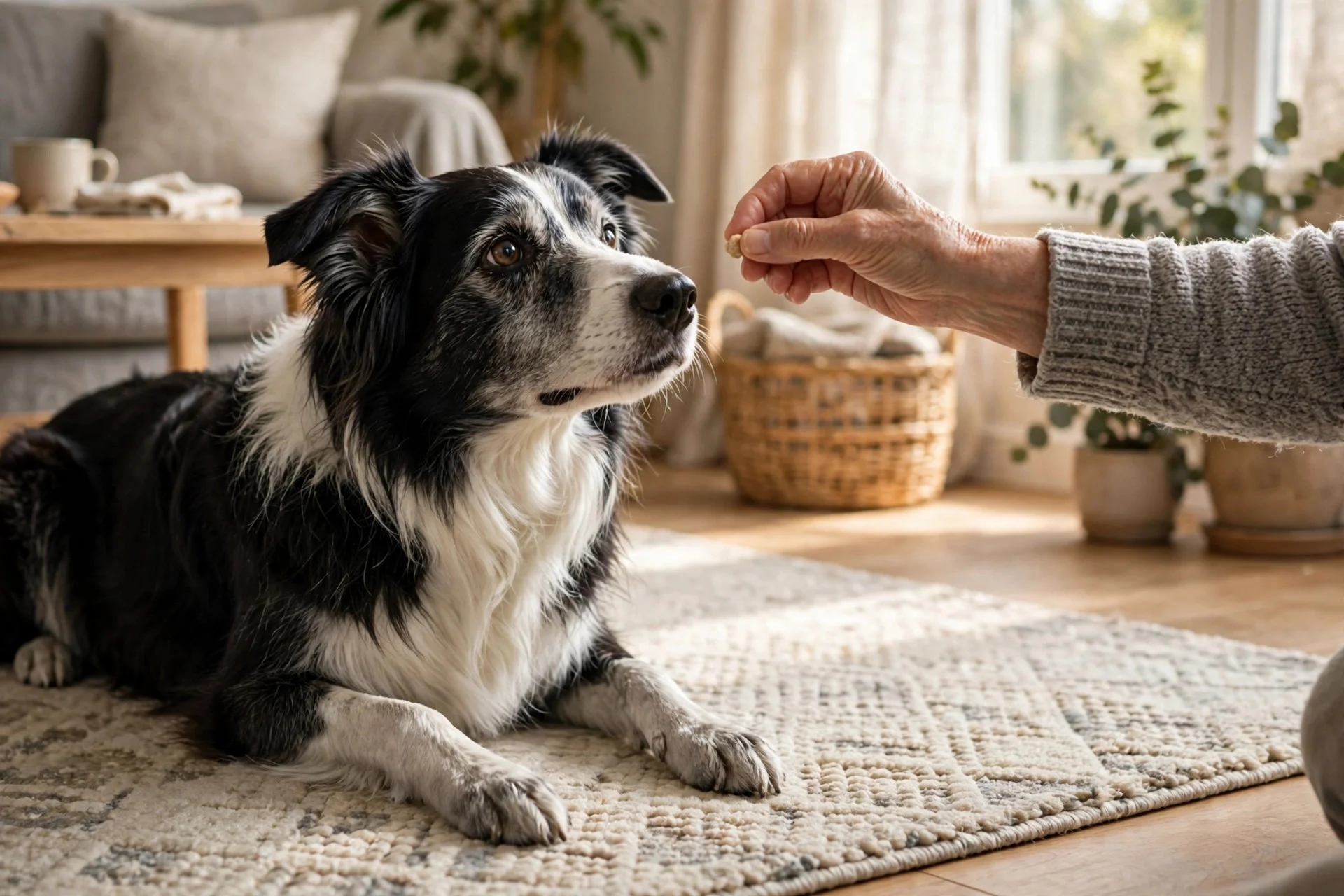
4. Use softer, smellier rewards
Senior dogs often have dental issues that make hard biscuits painful. Switch to soft, aromatic treats — small bits of real meat or soft training treats. The reward has to be worth the effort.
5. Train on forgiving surfaces
Cold tile and slick hardwood are hard on old joints. Train on carpet, rugs, or grass. A ten-dollar non-slip mat can transform a reluctant senior into a willing one.
6. Refresh old cues before teaching new ones
Run through the cues he already knows first. Some have gotten rusty — a week of refreshing sit, down, stay, and recall usually brings them back. This also tells you where his physical limits are now.
7. Account for hearing and vision changes
If he’s “ignoring” verbal cues he used to know, try hand signals. Switch to visual or touch cues where needed, and don’t mistake sensory decline for stubbornness.
8. Use training as enrichment, not just obedience
For seniors, training is less about perfect obedience and more about mental stimulation and confidence. Trick training is perfect — low-pressure, fun, and gives an older dog a job. You’ll see it in his whole body: brighter eyes, bouncier step.
9. Be patient with slower processing
He might take a beat longer to respond than he used to. That’s normal aging, not defiance. Give him an extra second after the cue. Rushing him just creates pressure.
10. Watch for cognitive changes (and adapt)
Signs include disorientation, disrupted sleep, and house soiling in a previously trained dog. If you notice these, talk to your vet — there are diets, supplements, and medications that can help. Keep everything simple, consistent, and positive.
11. Let him set the pace
Some days he’ll be bright and eager; other days he’ll want to nap. Respect that. If he’s not feeling it, skip the session without guilt. The fastest way to keep an old dog engaged is to always quit while he’s ahead.
12. Celebrate the small stuff
Lower the bar and raise the praise. A wobbly sit from a fourteen-year-old with arthritis deserves the same jackpot celebration a puppy’s perfect sit gets. Adjust your criteria to the dog in front of you, not the dog he was at three. Every rep he offers willingly is a gift. Treat it like one, and he’ll keep offering.
Practical Tips That Make It Stick
Warm him up first. A gentle five-minute walk or some easy sniffing before training loosens stiff joints, just like warming up before exercise. Cold-starting a senior into training is asking for reluctance.
Time sessions for his best hours — most seniors are brightest in the morning. Keep a simple log of what works: which treats, which surfaces, what time of day. Needs shift gradually, and notes help you adapt.
Mistakes to Avoid With Senior Dogs
The biggest mistake is comparing him to his younger self. “He used to do this perfectly” is a sentence that leads nowhere good. Train the dog in front of you, today, with today’s body and today’s brain. Nostalgia is not a training plan.
Don’t mistake pain for stubbornness — the most common and most harmful error. The dog who suddenly won’t do stairs or snaps when handled is almost always hurting. Vet first, training second. Always.
Don’t drill. Five reps of a physical behavior is plenty — spread practice across days, not within one session.
And don’t stop training altogether because “he’s too old.” Mental stimulation is one of the best things for aging brains. A senior with nothing to do declines faster — cognitively and emotionally — than one with a daily training game. The research on enrichment and cognitive aging in dogs is genuinely encouraging. Keep him thinking.
FAQs
At what age is a dog considered a senior for training purposes?
It varies by size: large breeds around six to seven, medium breeds around eight to nine, small breeds around ten to eleven. But it’s really about the individual — some nine-year-old labs are creaky, some twelve-year-old terriers are indestructible. Watch your dog, not the calendar.
Can you really teach an old dog new tricks?
Yes — and there’s no trick to it beyond adjusting for the body. Older dogs often learn faster than puppies because they understand the training game already: do the thing, get the treat. The learning machinery works fine well into old age. It’s the physical package that needs accommodation.
My senior dog seems confused by cues he used to know. Is that normal?
Some rust is normal after years without practice — refresh and it usually comes back. But if he’s confused in ways that are new and worsening — getting stuck in corners, forgetting house training, staring blankly — that’s worth a vet visit to discuss cognitive dysfunction. Early intervention helps.
Should I still train if my dog has arthritis?
Absolutely, with vet guidance on what’s comfortable. Focus on mental exercises over physical ones: nose work, “find it,” chin rests, touch games. Keep sessions short, surfaces soft, and pain managed per your vet’s plan. A dog in well-managed pain can still enjoy learning enormously.
The gray muzzle years are some of the best. Your senior dog has spent a lifetime learning how the world works — now he gets to enjoy the fun part, learning just for the joy of it, at his own pace, with his favorite human. Short sessions, soft treats, endless patience. It’s never too late. Biscuit’s spin at age nine remains one of my proudest training moments, creaky hips and all.