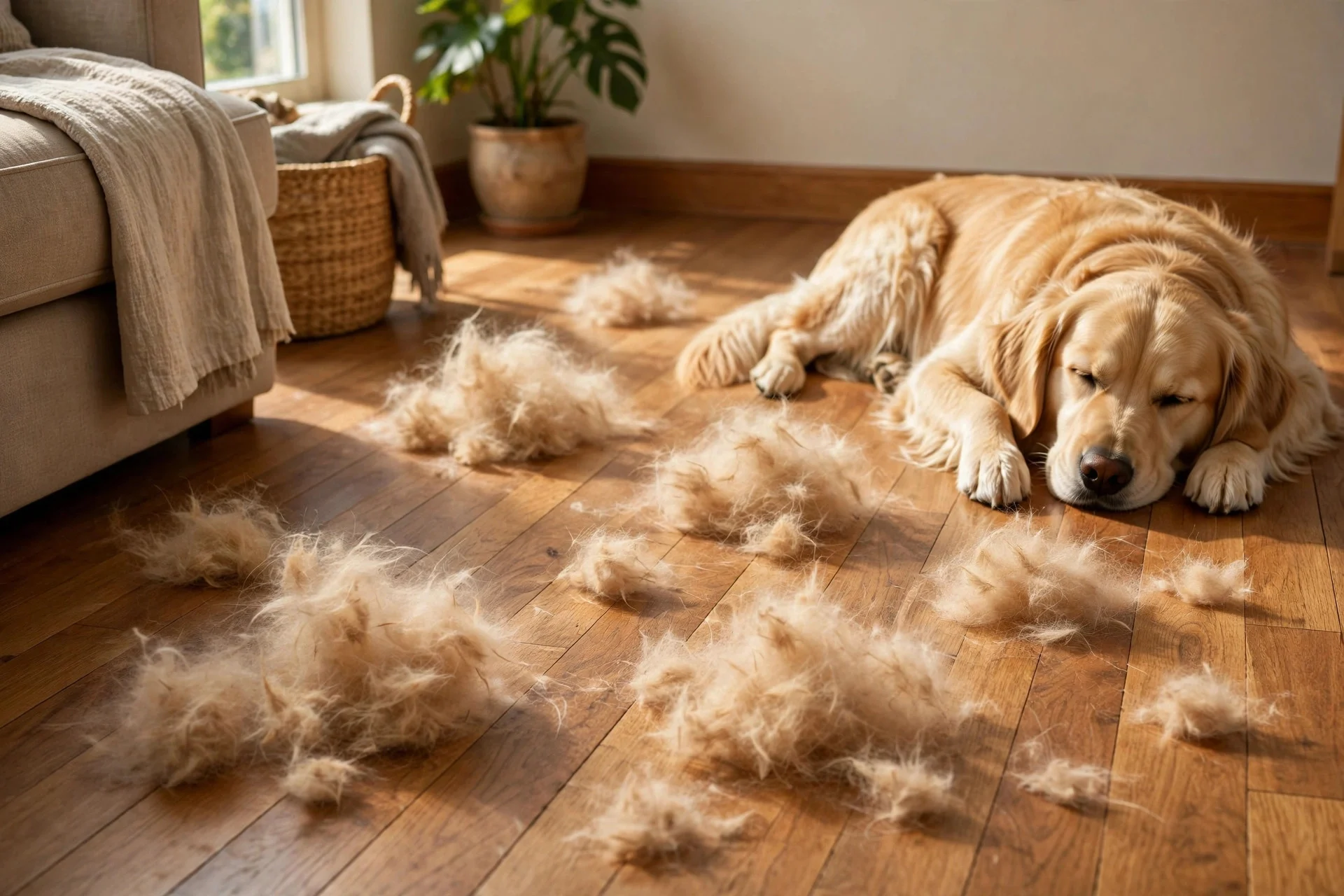
The tumbleweeds of fur rolling across your hardwood floor. The black pants that are now permanently gray. The car seat that will never be clean again. If you’re wondering how to reduce dog shedding, welcome — you’re in the largest club in dog ownership. Every dog sheds. Some just do it with more enthusiasm than others.
Here’s the honest truth up front: you cannot stop shedding. It’s a biological process — old hair falls out, new hair grows in. Anyone selling you a “stop shedding” miracle is selling something. But you can reduce it dramatically, manage it better, and stop finding fur in your coffee. I’ve lived with heavy shedders for years, and the difference between “doing nothing” and “doing the right things” is enormous.
10 Proven Ways to Reduce Dog Shedding
1. Brush Regularly (The Big One)
This is 80% of the battle. Regular brushing removes loose undercoat before it ends up on your couch. For heavy shedders, 2–3 times a week minimum; during seasonal coat blows, daily. The right brush matters more than the frequency — a slicker brush or undercoat rake for double-coated breeds, a rubber curry for short coats. Five minutes of brushing beats an hour of vacuuming.
2. Use a Deshedding Tool Correctly
Tools like the Furminator work brilliantly on double-coated breeds — but only when used correctly. Light pressure, short strokes, once or twice a week max. Press too hard or use it too often and you’ll damage the topcoat, which actually makes shedding worse long-term. It’s a precision instrument, not a shovel.
3. Bathe Strategically, Not Constantly
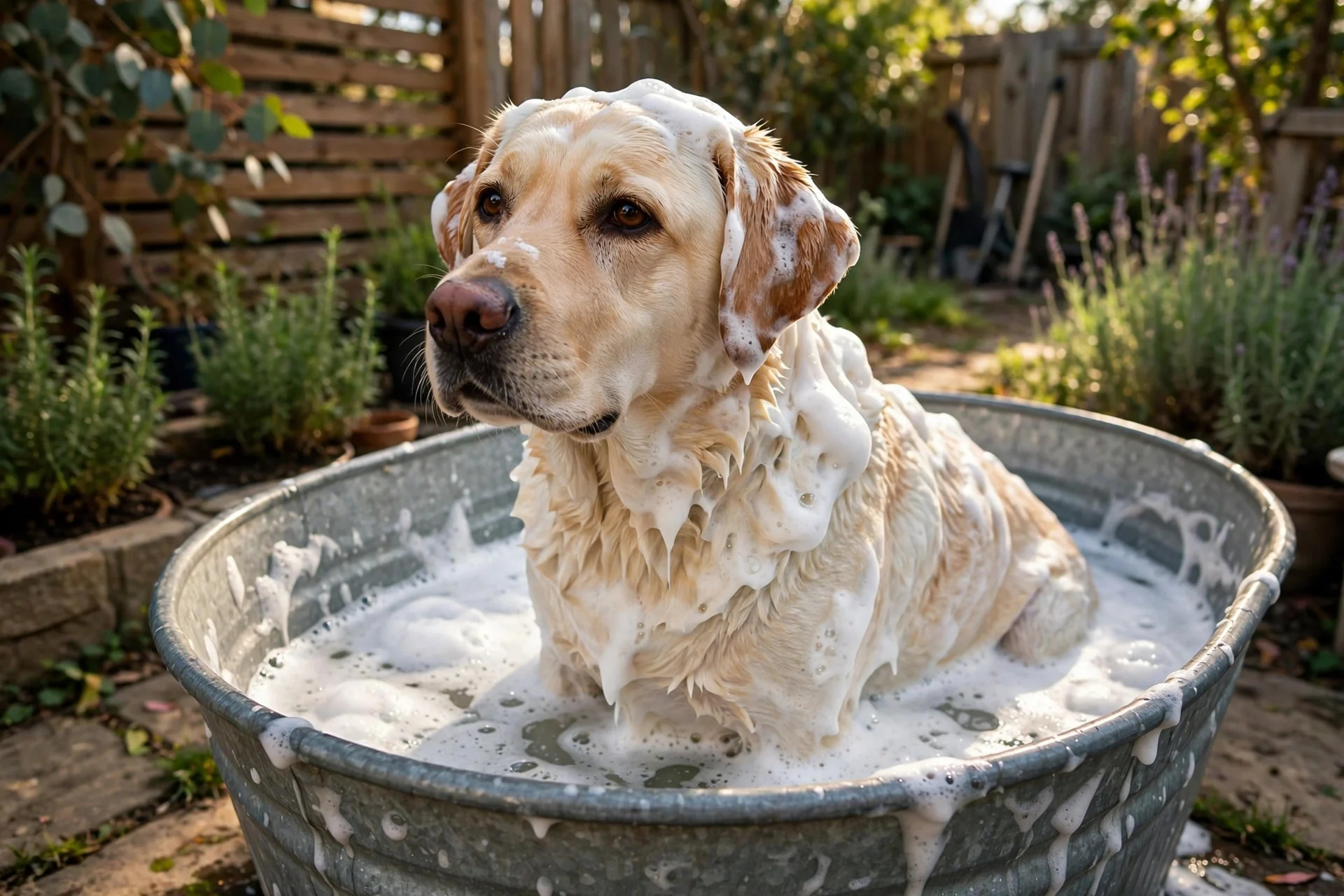
A good bath with a deshedding shampoo loosens an impressive amount of dead coat — follow it with thorough brushing while the coat is drying and you’ll remove a week’s worth of fur in one session. But don’t over-bathe; too-frequent washing dries the skin, and dry skin sheds more. Every 4–8 weeks is plenty for most dogs.
4. Feed a Quality Diet With Omega Fatty Acids
Coat health starts from the inside. Dogs on poor-quality food often shed more and have duller coats. Omega-3 and omega-6 fatty acids — from fish oil supplements or quality food — genuinely improve coat condition and can reduce excessive shedding. It takes 6–8 weeks to see the difference, so be patient. Ask your vet about the right fish oil dose for your dog’s size.
5. Keep Your Dog Hydrated
Dehydrated skin = flaky, dry coat = more shedding. Make sure fresh water is always available, and consider adding moisture to the diet (wet food mixed with kibble, or water added to meals). It’s a small thing that contributes to overall skin health.
6. Manage Stress
Stressed dogs shed more — it’s a real physiological response. If shedding spikes during a move, a new pet, or a routine change, the fur is telling you about the stress. Address the cause, keep routines stable, and the coat usually settles back down. Telogen effluvium (stress shedding) is temporary but dramatic.
7. Control Fleas and Allergies
Itchy dogs shed more — scratching and chewing pull out extra hair, and inflamed skin doesn’t hold coat well. If shedding comes with scratching, red skin, or bald patches, you’re not dealing with normal shedding anymore. Get the fleas and allergies under control and the coat usually follows.
8. Never Shave a Double-Coated Dog
This deserves its own entry because people keep doing it. Shaving a Husky, Golden, or similar double-coated breed does NOT reduce shedding — it destroys the coat’s insulation system, risks sunburn, and the shaved hair still falls out, just in shorter, pricklier pieces. The undercoat grows back wrong. Just don’t.
9. Try a High-Velocity Dryer
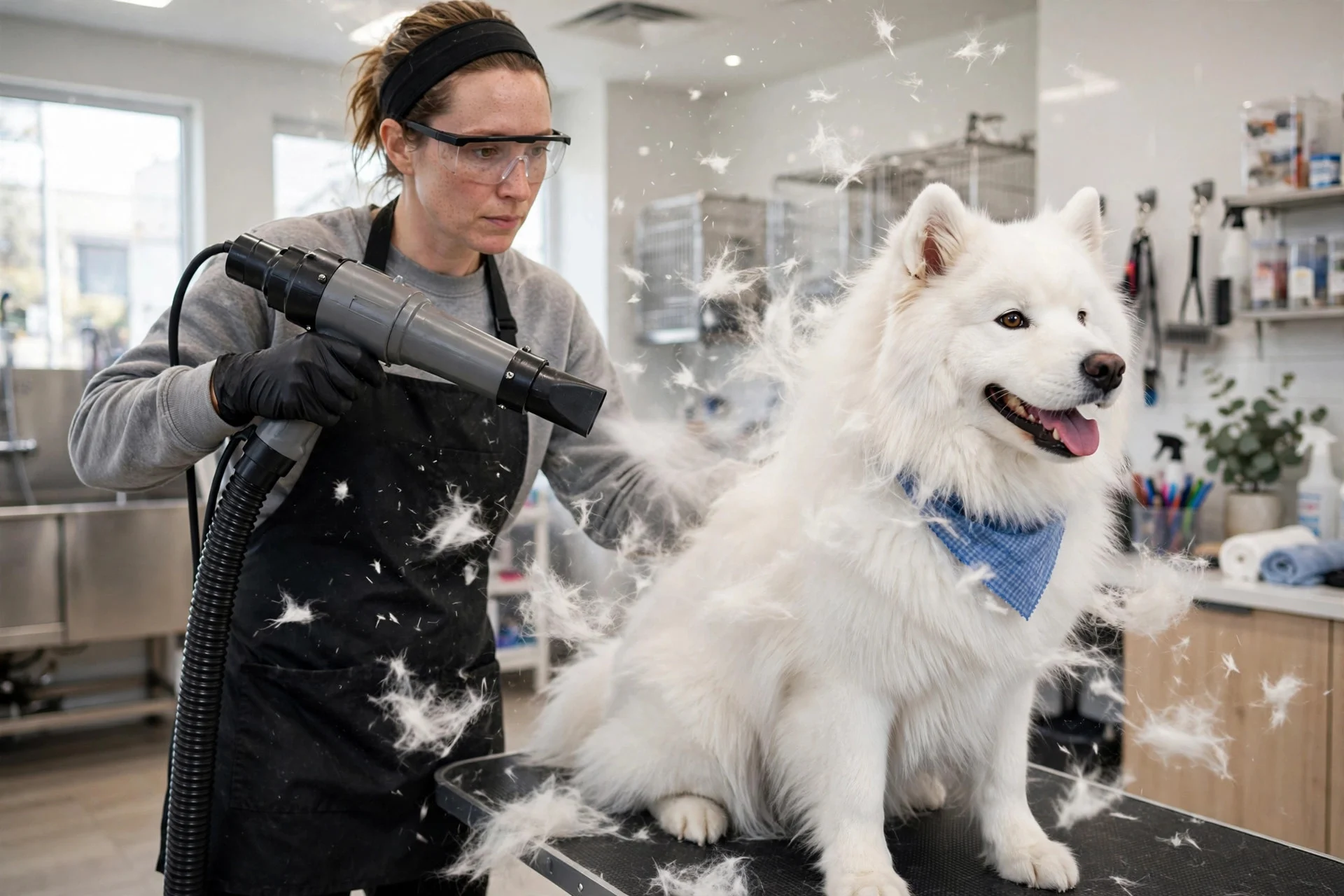
After baths, a high-velocity dryer (not a hot hair dryer — cool or warm air only) blasts loose undercoat out spectacularly. Groomers use these for a reason. Used carefully at home, it’s the single most effective shedding-reduction tool I own. Introduce it gradually — the noise startles some dogs at first.
10. Accept the Seasonal Coat Blow
Twice a year, double-coated breeds “blow” their undercoat — and no strategy prevents it. During a coat blow, increase brushing to daily, bathe once, and just ride it out. It lasts 2–3 weeks. Fighting it is futile; managing it is very possible. This too shall pass.
When Shedding Isn’t Normal: Warning Signs
Normal shedding is diffuse and even — fur everywhere, but the coat itself looks full. Abnormal shedding has a pattern: bald patches, thinning in specific areas, flaky or greasy skin, sores, or hair that comes out in clumps with the skin attached. Those suggest thyroid issues, Cushing’s disease, allergies, or skin infections.
Sudden, dramatic increases in shedding without a seasonal explanation also deserve a vet check, especially in older dogs. Hypothyroidism is a classic cause — very treatable with daily medication, but it needs blood work to diagnose. Don’t try to brush your way out of a medical problem.
Practical Tips: Living With a Shedder
Beyond reducing shedding, manage what remains. A good vacuum with a pet-hair attachment is worth every penny — I resisted for years and regret the delay. Washable furniture covers, a lint roller in every room and the car, and grooming the dog outside when weather allows all help.
Robot vacuums are genuinely life-changing for shedding households. Run it daily and the ambient fur level drops dramatically. And embrace dark clothing in dog-hair-camouflage colors, or accept that your wardrobe now has a permanent fur lining. Both are valid lifestyles.
Mistakes to Avoid
Don’t shave the dog (covered above, but it bears repeating). Don’t bathe weekly thinking more baths equal less fur — you’ll dry the skin and make it worse. Don’t ignore sudden changes in shedding patterns; that’s the coat trying to tell you something.
And don’t buy every “anti-shedding” supplement on the internet. Omega fatty acids have real evidence behind them. Most other shedding supplements have marketing behind them. If a product promises to “stop shedding,” it’s promising something biologically impossible.
FAQs
Which dogs shed the least?
Poodles, Bichons, Portuguese Water Dogs, and similar curly or hair-type coats shed minimally (though they need regular grooming instead). But no dog is truly non-shedding — even “hypoallergenic” breeds lose some hair.
Does diet really affect shedding?
Yes, noticeably. Dogs on low-quality food often have dull coats and shed more. Omega fatty acids, adequate protein, and proper hydration all contribute to a healthier coat that holds onto hair better. Give dietary changes 6–8 weeks to show results.
How often should I brush a heavy shedder?
Two to three times a week normally, daily during seasonal coat blows. Short, consistent sessions beat occasional marathon grooming. Five minutes with the right brush, most days, transforms the fur situation.
Is it normal for my dog to shed more in spring and fall?
Completely normal. Most double-coated breeds blow their undercoat twice a year as daylight changes trigger coat cycles. Indoor dogs with constant light and temperature may shed moderately year-round instead of in dramatic seasonal bursts.
Shedding is the price of admission for most dogs, and it’s a price worth paying. Brush smart, feed well, manage the environment, and save your energy for enjoying the dog instead of fighting the fur. The tumbleweeds never fully disappear — but they get a lot smaller.