Knowing how to bathe a puppy without turning your bathroom into a splash zone — and without traumatizing the little guy — is one of those skills nobody teaches you until you are already soaked. Your puppy’s first bath sets the tone for every bath after it, so it is worth doing right.
I will be honest: I messed up the first bath with one of my puppies. Too much water, too fast, and he screamed like I was ending the world. He was suspicious of the tub for months after that. The steps below are what I learned the slow way — the patient way that actually builds a dog who trots to the bath instead of running from it.
How to Bathe a Puppy: 7 Stress-Free Steps
Step 1: Pick the Right Time (Tired, Not Wired)
Bathe your puppy after a walk or play session, never right after an exciting event. A tired puppy is a tolerant puppy. Also feed them a normal meal an hour or so beforehand — not right before, because nervous tummies and baths do not mix. Aim for a calm window in your day. Rushing a bath because you have somewhere to be in 20 minutes is how bath phobias are born. Give yourself 30 unhurried minutes.
Step 2: Set Up Before the Puppy Gets Wet
Get everything ready first: puppy-safe shampoo, a cup or gentle sprayer, a non-slip mat for the tub or sink, towels within arm’s reach, and a pile of small treats. The non-slip mat is non-negotiable. Puppies panic when their feet slide, and one scary slip can make them dread baths for years. Lukewarm water only — test it on your wrist the way you would for a baby. If it feels warm to you, it is probably perfect.
Step 3: Let Them Explore the Bath Area Dry First
Put your puppy in the dry tub with some treats and let them sniff around for a few minutes. Feed treats. Let them hop in and out a couple of times. This step feels silly and slow, and it is the single most important part of the whole process. You are teaching them that the tub is just a weird floor, not a torture chamber. Skip this and every future bath is twice as hard.
Step 4: Start With the Body, Save the Head for Last
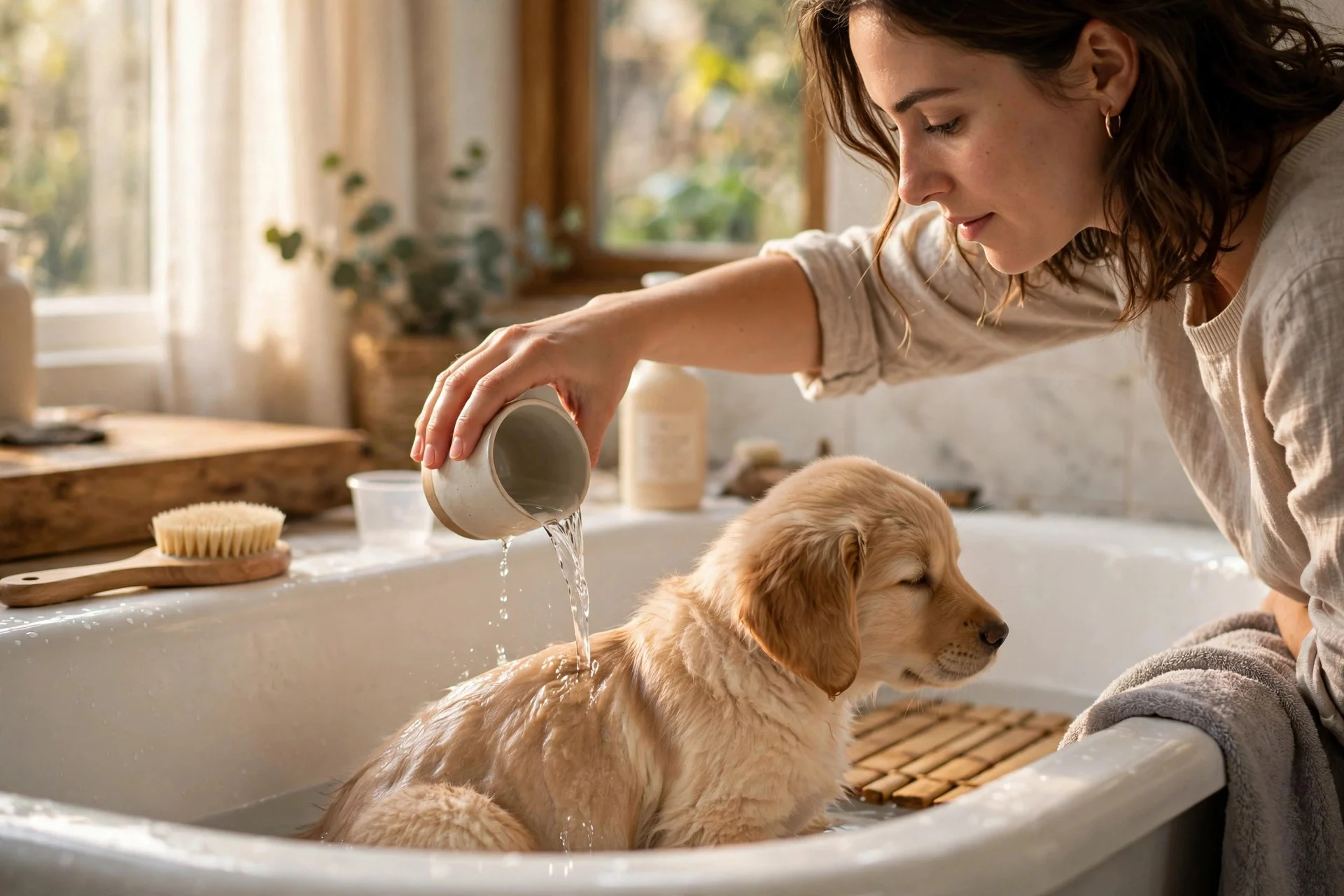
Wet your puppy gently with the cup or low-pressure sprayer, starting at the shoulders and working down the body. Keep it slow and quiet. Most puppies hate water running over their heads, so save the face for the very end — or skip it entirely and use a damp cloth on the face instead. Wetting from the neck down first is also how you avoid the dramatic head shake that launches water into every corner of your bathroom.
Step 5: Lather Gently With Puppy Shampoo
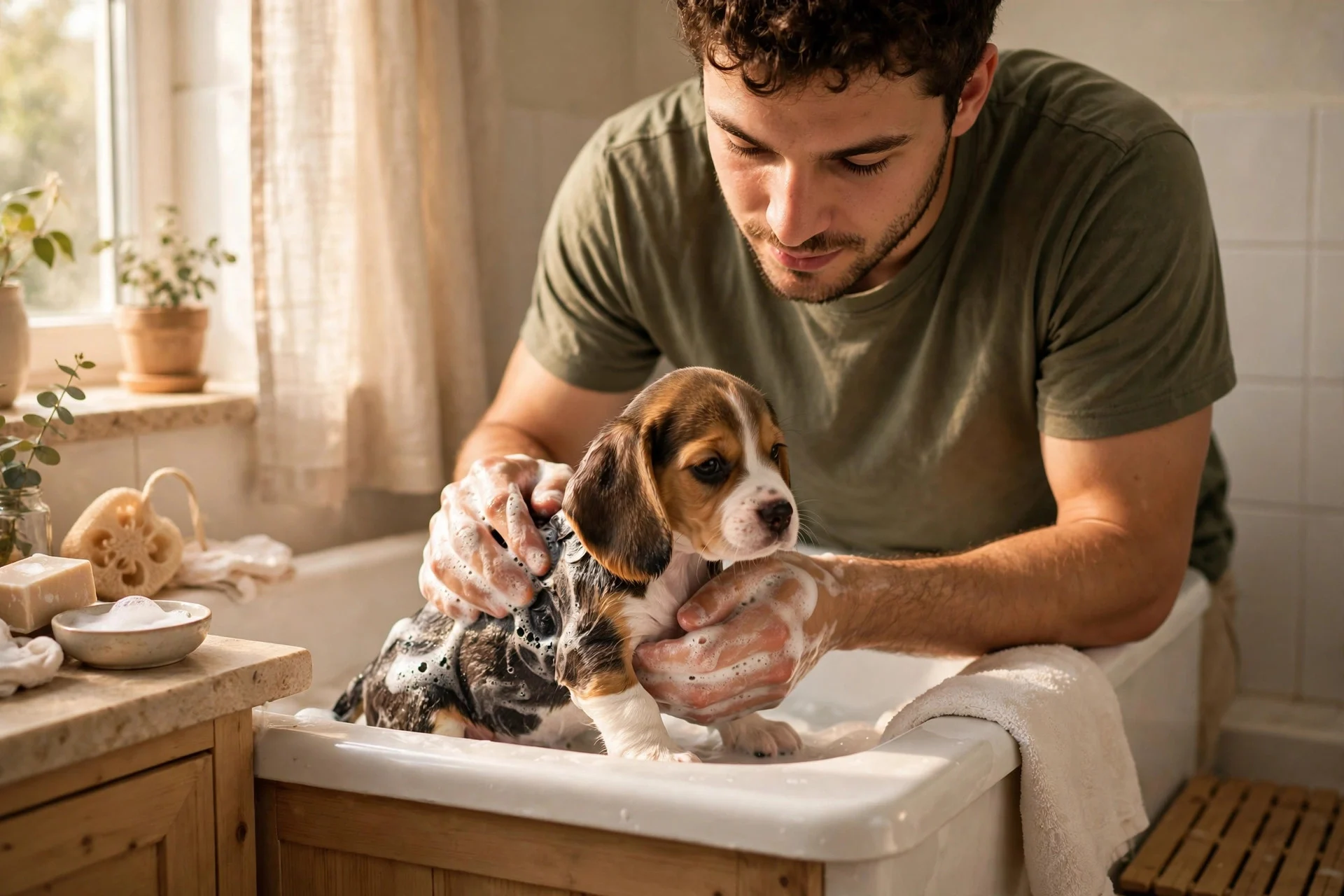
Use a shampoo made for puppies or dogs — human shampoo is the wrong pH and dries out their skin. A little goes a long way. Massage it in with your fingertips in the direction of the fur. This is a good moment to keep talking in a calm, silly voice and slip in a treat or two. You are not scrubbing a grill. You are giving a massage that happens to involve soap. Most puppies start to relax here if you are relaxed.
Step 6: Rinse Thoroughly — Then Rinse Again
Leftover shampoo is the number one cause of itchy post-bath skin, so rinse more than you think you need to. Work from neck to tail, getting the belly and legs where shampoo hides. When the water runs completely clear and the fur feels squeaky-clean, you are done. Then one more quick rinse for good measure. Seriously. Most owners stop too early and wonder why their puppy is scratching all evening.
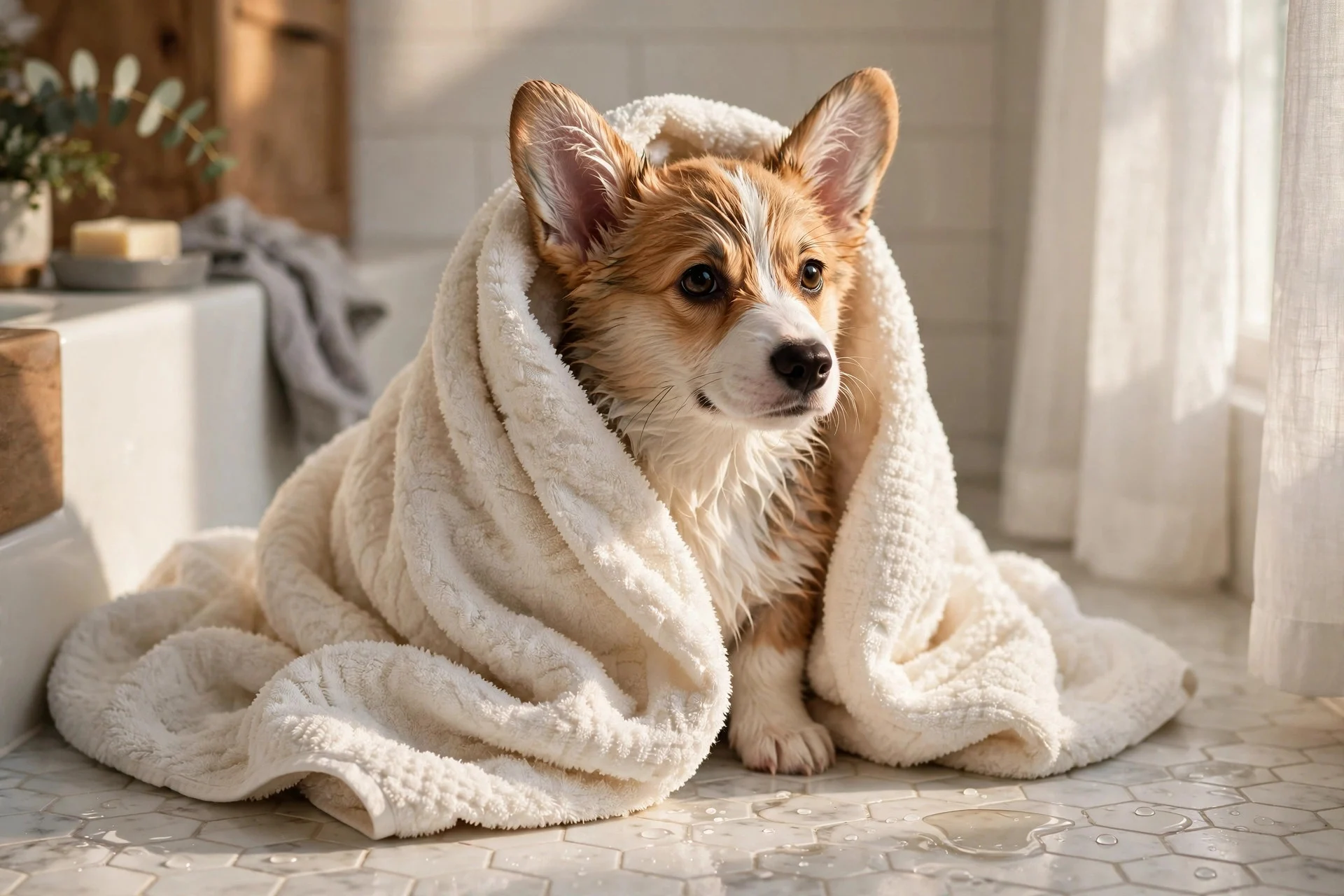
Step 7: Towel Dry and Reward the Win
Wrap your puppy in a big towel and rub them down gently. Some puppies love this part and some hate it — read your dog. If they enjoy it, great, make it a game. If they do not, keep it quick and efficient. Follow with the mother of all rewards: a jackpot of treats, playtime, and a walk if the weather cooperates. You want them to walk away thinking, “Bath equals amazing things.” End the memory on a high.
Practical Tips for Easier Puppy Baths
Smear a little peanut butter (xylitol-free, always) on the tub wall and let your puppy lick while you wash — it buys you a solid five minutes of cooperation. Baths should be rare: every 4 to 6 weeks is plenty for most puppies unless they get into something gross. Brush before the bath, not after, because wet tangles tighten. And keep the room warm — wet puppies chill fast, and shivering dogs remember baths badly.
Mistakes That Make Baths Miserable
Do not use hot water — puppies overheat faster than you think. Do not pour water over their face or ears; water in the ear canal invites infection. Do not scold a puppy who shakes or tries to climb out — fear plus punishment equals a dog who hides under the bed at the word “bath.” And do not use a high-pressure sprayer or a blow dryer on hot. Gentle beats thorough every time when the dog is under four months old.
FAQs About Bathing a Puppy
When can I give my puppy their first bath?
You can bathe a puppy at home from about 8 weeks old using warm water and gentle puppy shampoo. Before that, a damp cloth handles most messes. Most vets are fine with an early bath as long as you keep the puppy warm and dry afterward.
How often should I bathe my puppy?
Every 4 to 6 weeks for most puppies. More often only if they roll in something foul. Over-bathing strips their skin oils and causes dryness and itching.
Can I use human shampoo on my puppy?
No. Human shampoo is formulated for a different skin pH and will dry out and irritate your puppy’s skin. Use a puppy-specific or gentle dog shampoo.
My puppy is terrified of the bath. What now?
Go back to dry-tub treat parties for a week or two — no water at all. Rebuild the association from zero. If the fear is severe, a fear-free groomer or a trainer who specializes in cooperative care can help.
Take it slow, keep it positive, and your puppy will learn that bath time is just another weird human ritual that ends with treats. That is a win worth the wet socks.