Figuring out how much exercise puppy joints can safely handle feels like walking a tightrope. Too little and you get a land shark chewing your baseboards. Too much and you risk damaging growing joints. The internet will happily give you twenty contradictory answers, so let me give you the framework that actually works.
Here is the short version before we get into the rules: most puppies need less forced exercise and more sleep than new owners think. I used to take my first puppy on long walks to “tire him out,” and he got more wired, not less. Understanding the right puppy exercise guidelines by age changed everything. Five rules, one chart, and your sanity intact.
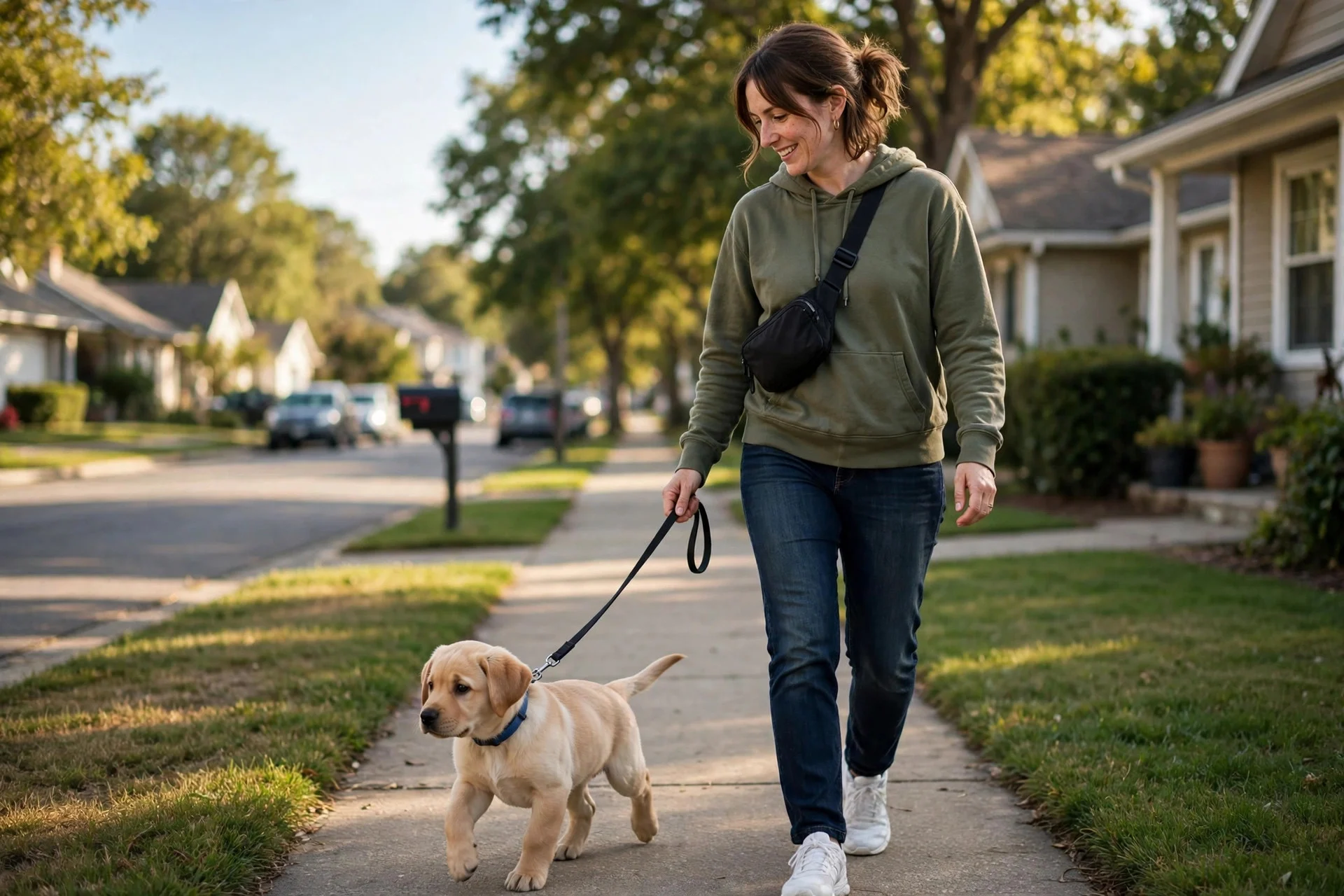
Puppy Exercise: How Much by Age (5 Rules)
| Age | Structured Exercise per Session | Sessions per Day |
|---|---|---|
| 8–12 weeks | 5–10 minutes | 2–3 short play/walk sessions |
| 3–4 months | 10–15 minutes | 2–3 sessions |
| 4–6 months | 15–20 minutes | 2–3 sessions |
| 6–9 months | 20–30 minutes | 2 sessions |
| 9–12 months | 30–45 minutes | 2 sessions (breed-dependent) |
Rule 1: Follow the Five-Minute Rule (Roughly)
The classic guideline is five minutes of structured exercise per month of age, up to twice a day. A three-month-old gets about 15 minutes. A six-month-old gets about 30. Is it scientifically precise? No — vets will tell you it is a rough starting point, not gospel. But as a ceiling, it keeps you from overdoing it. Free play on grass, where the puppy sets the pace and rests when tired, does not count the same as a forced march on pavement. Let the puppy choose the intensity.
Rule 2: Protect the Growth Plates
Puppy bones have soft growth plates that do not fully close until 12 to 18 months (later in large breeds). Until then, avoid repetitive high-impact exercise: no jogging on pavement, no long hikes, no repeated ball-chasing on hard surfaces, no jumping off furniture or agility equipment. This is the rule people break most often, usually with the best intentions. Free play on soft surfaces with other puppies is fine. Structured pounding is not.
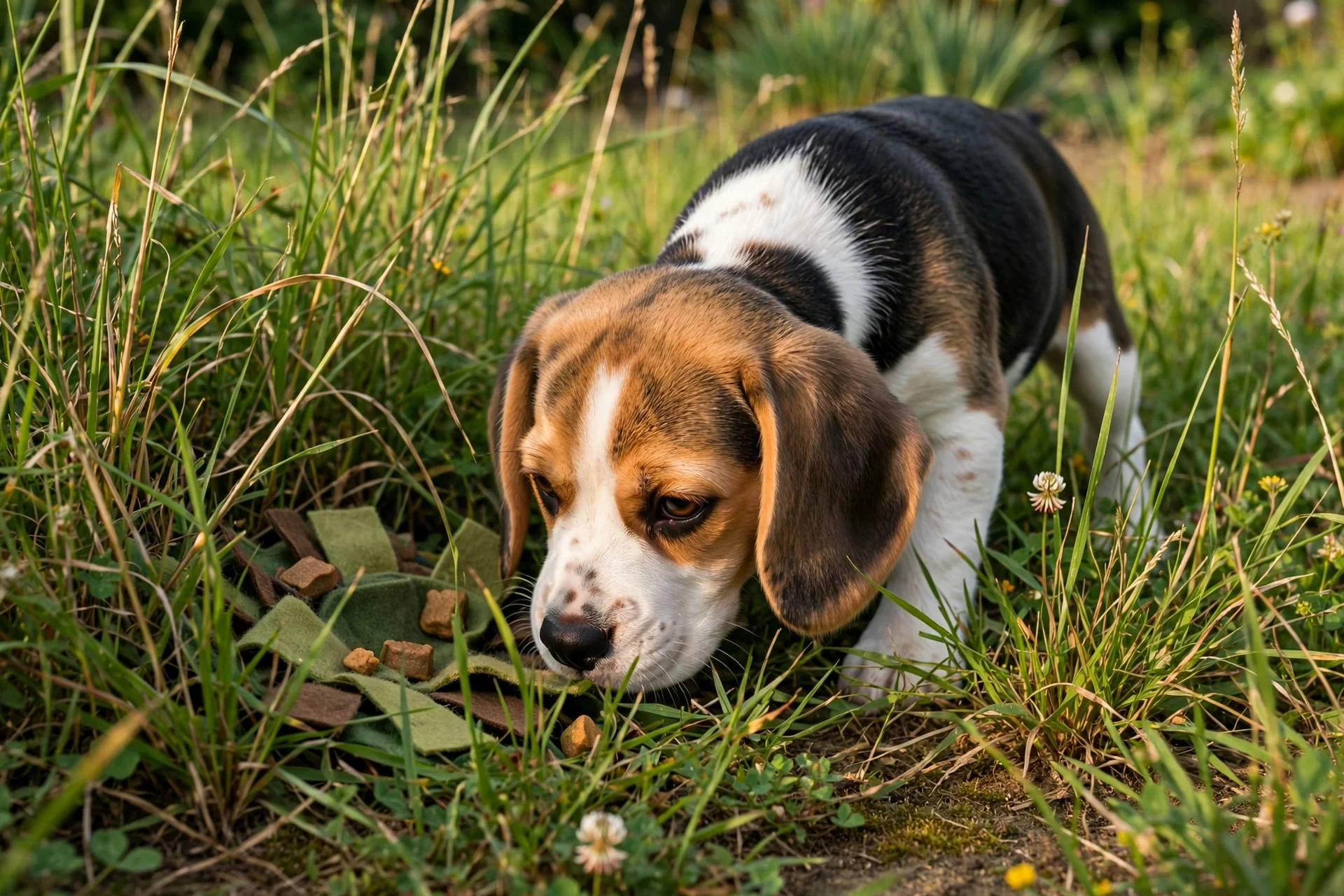
Rule 3: Mental Exercise Counts Double
A tired brain beats tired legs. Ten minutes of training, sniff games, or puzzle feeders will settle a puppy faster than a thirty-minute walk — without stressing joints. Scatter feeding in the yard, snuffle mats, “find it” games with treats, and short training sessions all burn mental energy. When my puppy was bouncing off the walls, I learned that five minutes of nose work did what an hour walk could not.
Rule 4: Let the Puppy Set the Pace
The golden rule of puppy exercise: watch the puppy, not the clock. A puppy who lies down, lags behind, or starts getting clumsy is done — carry them or head home. This is especially true on walks. Puppies do not have adult stamina or heat tolerance. Forced exercise, where the puppy cannot stop because you keep moving, is the danger zone. Off-leash roaming in a safe area, where they sprint and flop on their own schedule, is the gold standard.
Rule 5: Breed Size Changes Everything
Large and giant breed puppies need the most restraint — their growth plates close last, and joint problems from over-exercise can last a lifetime. Small breeds mature faster and can usually handle a bit more, sooner. Working breeds need more mental work to be satisfied even as puppies. Know your breed’s trajectory and ask your vet for breed-specific guidance at your puppy visits. The chart above is a starting point; your vet knows your puppy.
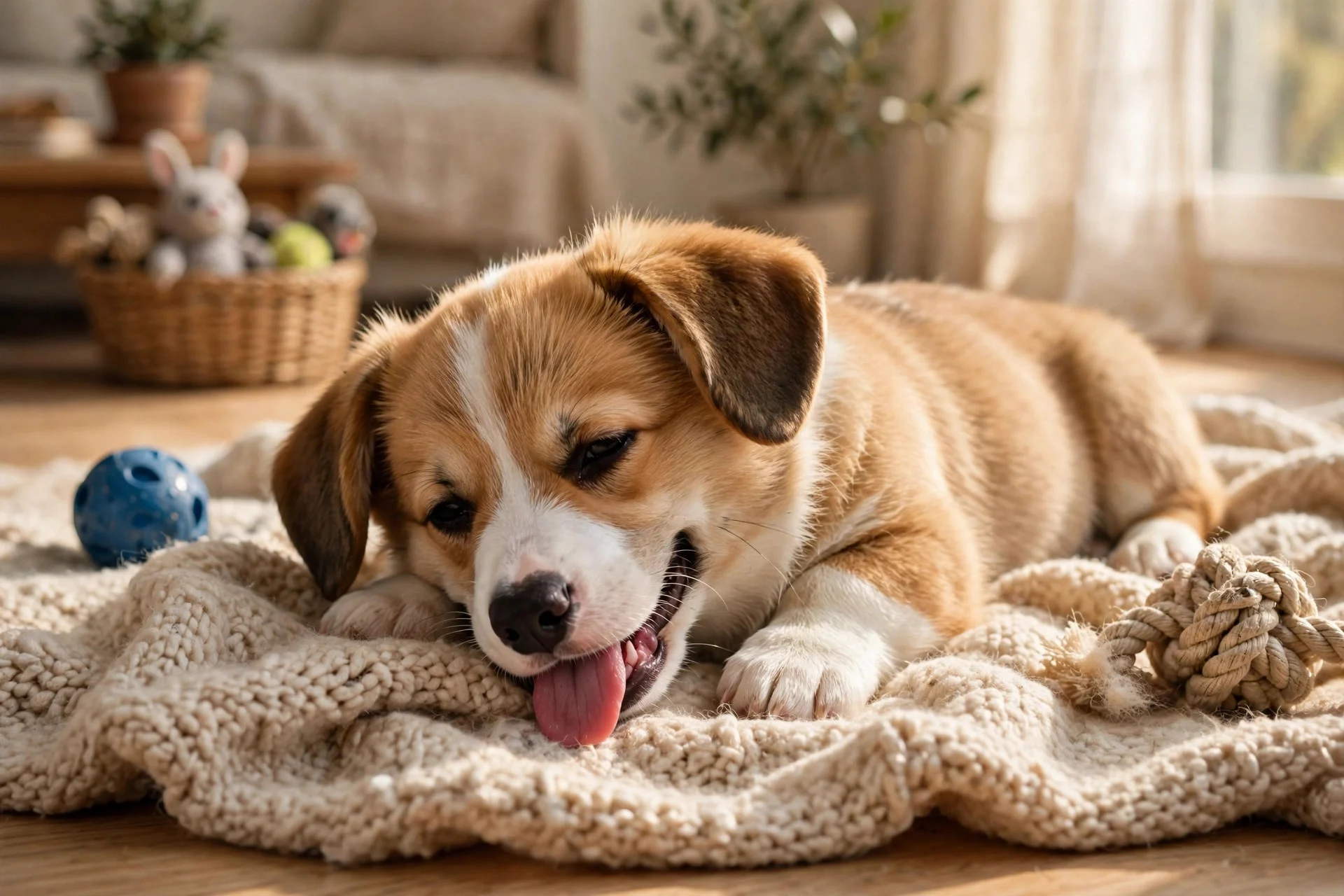
Practical Tips for Exercising Your Puppy
Short walks in new places beat long walks on the same route — novelty is mental exercise. Carry water and take shade breaks in warm weather; puppies overheat fast. Socialization outings count as exercise: a trip to a pet-friendly store or sitting on a park bench watching the world go by is tiring in the best way. And end every session before your puppy is exhausted. You want them walking home happily, not dragging.
Mistakes That Hurt Growing Puppies
Do not jog or run with a puppy under a year old — wait until growth plates close, and confirm with your vet. Do not do marathon fetch sessions; the stop-start sprinting is brutal on young joints. Do not exercise right after meals — bloat risk is real, especially in large breeds, so wait at least an hour. Do not mistake a hyper puppy for an under-exercised puppy; most of the time, a wild puppy is an overtired puppy who needs a nap, not a run.

FAQs About Puppy Exercise
Can I take my 8-week-old puppy for walks?
Short ones in safe areas, yes — five to ten minutes on soft surfaces. Avoid dog parks and high-traffic dog areas until vaccinations are complete. Carry your puppy through risky areas if needed.
Is playing fetch bad for puppies?
Gentle, short fetch on grass is fine. The problem is marathon sessions with hard stops and sharp turns on hard ground. Keep it to a few throws, on soft surfaces, and stop while they still want more.
How do I know if my puppy is over-exercised?
Watch for lagging behind, lying down mid-walk, excessive panting that does not resolve quickly, limping, or being unusually sore or reluctant to move the next day. When in doubt, do less.
When can my puppy start running with me?
Most vets say to wait until growth plates close — around 12 months for small breeds, 14 to 18 months for large and giant breeds. Get your vet’s clearance first. It is worth the wait.
Less forced exercise, more free play, lots of naps, and a heavy dose of mental games. That is the recipe. Your puppy’s joints will thank you for the restraint — and your furniture will thank you for the mental work.