
So your puppy is growing up, and the bag of puppy food is running low. One of the most common questions I get: when switch puppy to adult food? The answer depends on your dog’s size — but the how matters just as much as the when. Do it wrong and you get digestive chaos. Do it right and nobody notices a thing.
The two most common mistakes: switching too early, and switching cold turkey. Both lead to the same place — a dog with an upset stomach and an owner wondering what went wrong. The 7-day puppy food transition plan below avoids all of it. Slow, boring, and completely drama-free, which is exactly what you want.
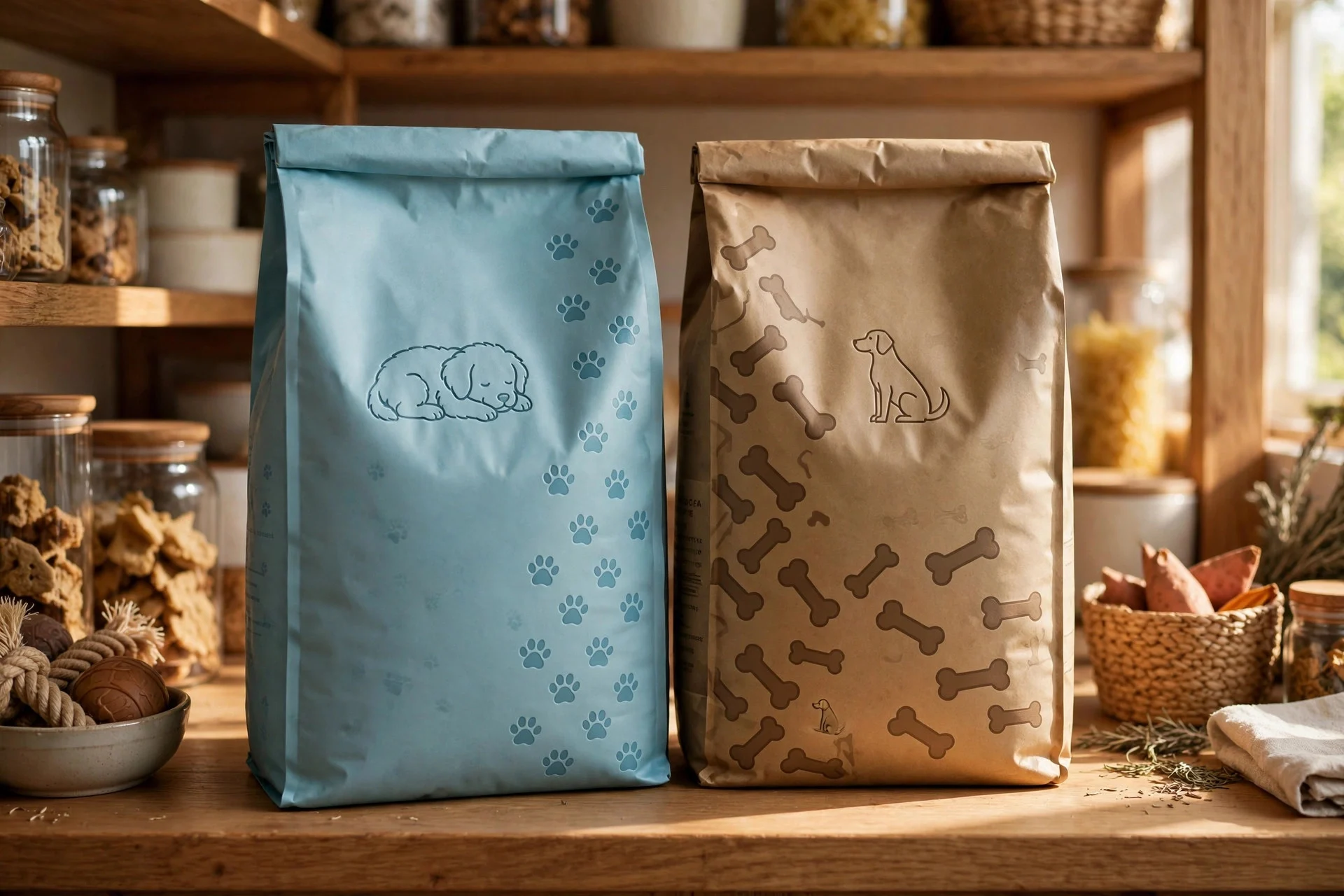
Switching to Adult Food: 7-Day Transition Plan
First: When to Switch
Most puppies switch to adult food between 12 and 16 months, but it depends on size. Small breeds mature faster and can switch around 9 to 12 months. Medium breeds are usually ready at 12 months. Large and giant breeds should stay on puppy food — ideally large-breed puppy food — until 18 to 24 months, because their growth is slower and their nutritional needs are specific. When in doubt, ask your vet at a checkup. Switching too early can shortchange a still-growing dog on the calories and minerals they need.
Day 1–2: 75% Old Food, 25% New Food
Start with mostly the old food and just a quarter of the new. Mix it well so your dog cannot pick around it. Watch their stool — it should stay firm. A little softness is normal during any food change, but full diarrhea means slow down. Most dogs handle this phase without noticing anything changed, which is the point.
Day 3–4: 50/50 Split
Half and half. This is where you will see if the new food agrees with your dog. Firm stool, normal energy, good appetite — all signs to continue. If things get loose, hold at this ratio for an extra day or two before moving on. There is no prize for finishing on schedule. The schedule serves the dog, not the other way around.
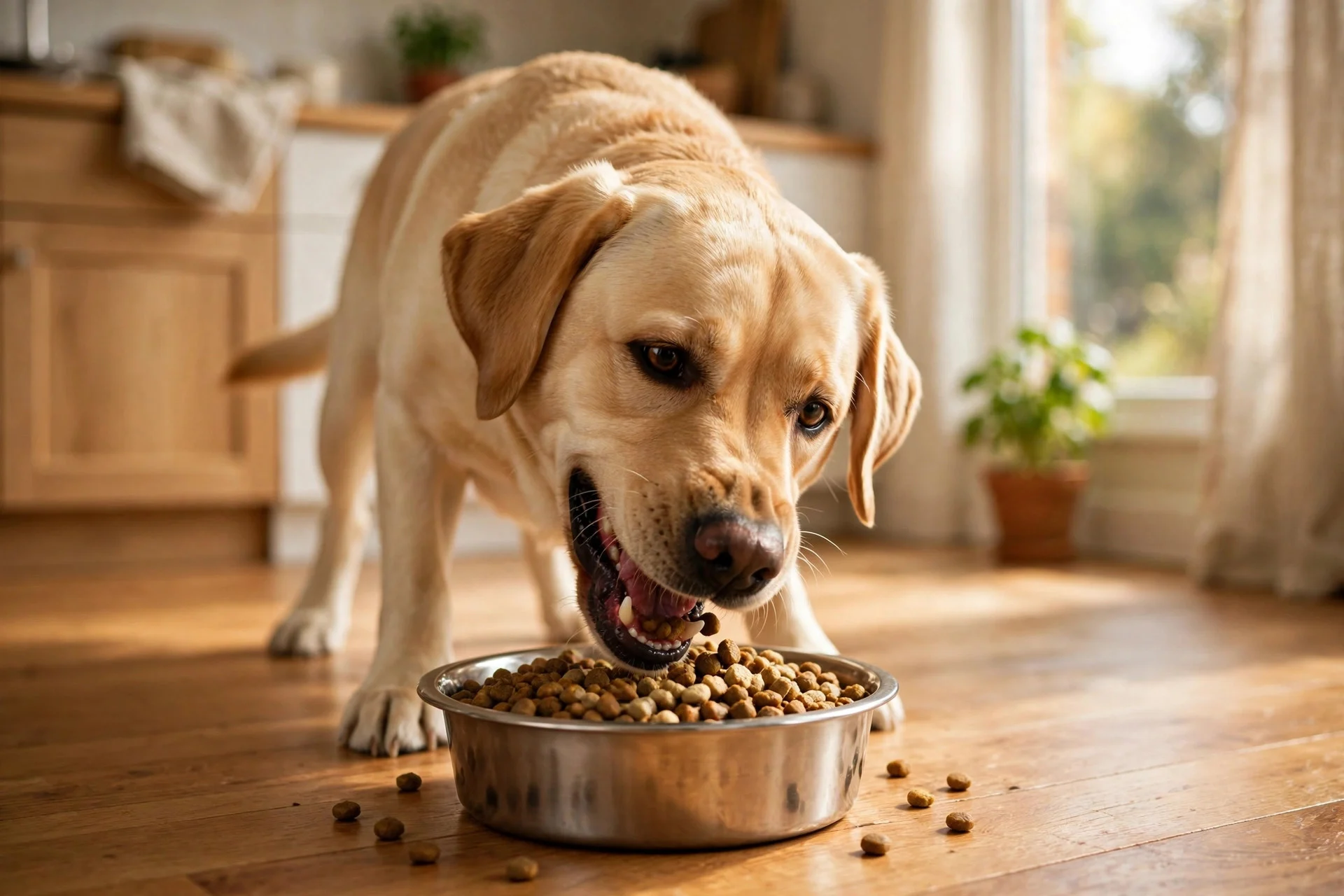
Day 5–6: 25% Old Food, 75% New Food
Now the new food is dominant. By this point most dogs are fully adjusted. Keep an eye on appetite and energy — a dog who suddenly seems less enthusiastic about meals might not love the new food, and that is useful information. Palatability matters. The best food in the world is useless if your dog will not eat it.
Day 7: 100% New Food
Full switch. Congratulations — the most boring milestone in dog ownership, and that is exactly how it should be. Keep monitoring for a week or two: stool quality, coat condition, energy levels, and weight. A good food keeps your dog’s weight stable, their coat shiny, and their digestion predictable.
What If It Goes Wrong?
If your dog gets diarrhea, vomiting, or refuses to eat at any stage, slow down or step back a phase. Persistent issues beyond a few days warrant a vet call — it could be the food, or it could be something unrelated that the timing is masking. Also, if your dog has a sensitive stomach, stretch the whole plan to 10 to 14 days. Sensitive dogs do not care about your schedule.
Practical Tips for the Switch
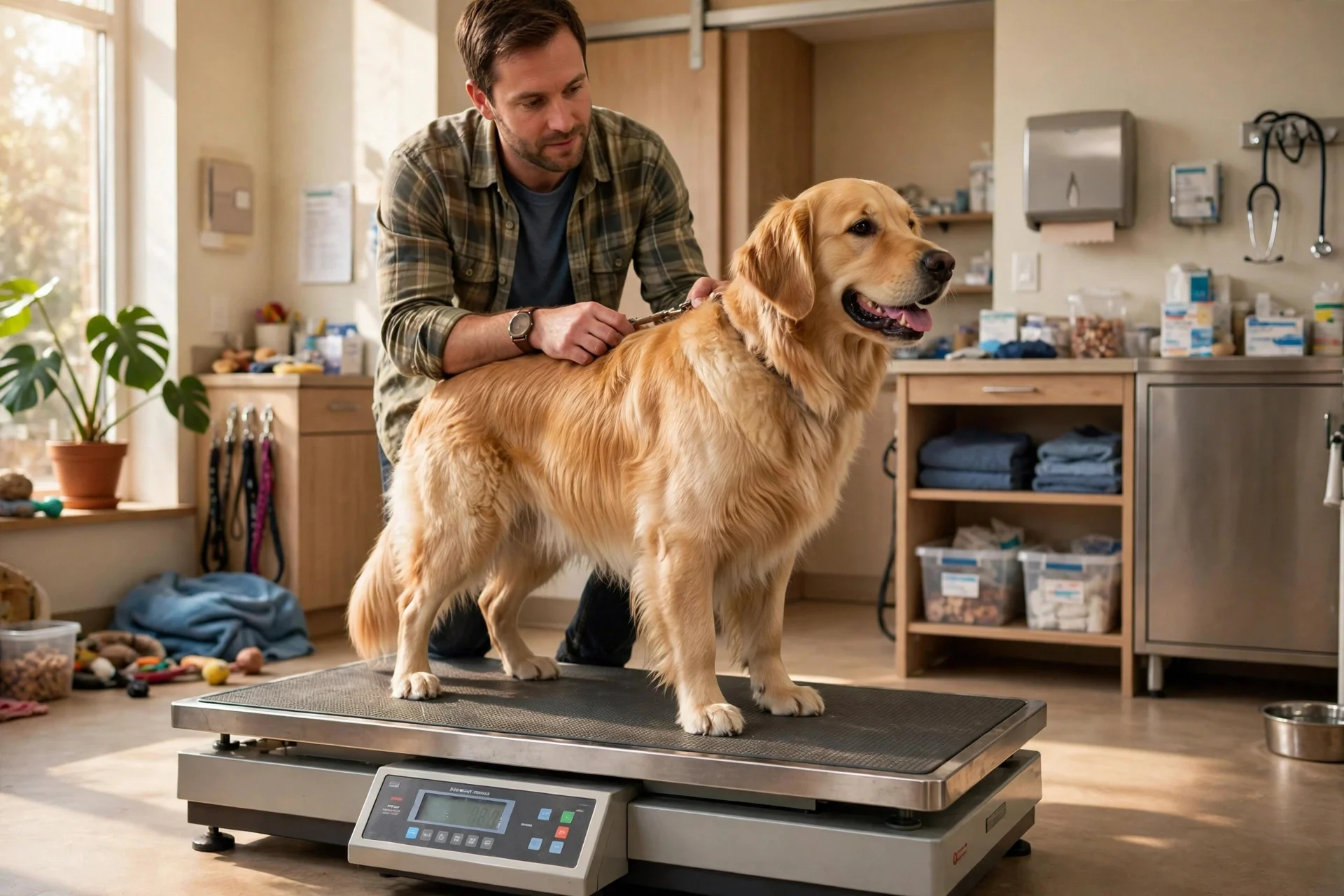
Buy the new food before the old bag runs out — transitioning requires both foods on hand. Stick with the same protein family if you can (chicken-based to chicken-based), because switching proteins and life stages at once doubles the variables. Keep meal times and portions consistent during the transition; change one thing at a time. And weigh your dog monthly for the first few months on adult food — the calorie density is different, and portions may need adjusting.
Mistakes to Avoid
Do not switch cold turkey — the sudden change is what causes most digestive blowups. Do not switch during another stressful event like moving, boarding, or right after vaccinations; stacked stressors multiply. Do not choose adult food based on price or marketing alone — look for an AAFCO statement confirming it is formulated for adult maintenance. And do not keep feeding puppy food indefinitely “because they like it.” Puppy food is calorie-dense and mineral-rich; long-term overfeeding of it contributes to obesity and, in large breeds, skeletal problems.
FAQs About Switching to Adult Food
Can I switch my puppy to adult food early?
It is not recommended. Puppy food has higher calories, protein, and specific minerals for growth. Switching early can leave a growing dog undernourished. Wait for the right age for your dog’s size.
What if my dog will not eat the new food?
Try a different protein or brand — palatability is personal. Warm the food slightly to release aroma, or mix in a spoonful of wet food. If refusal lasts more than a day or two, check with your vet.
Do I need large-breed adult food for a big dog?
Large-breed formulas have controlled calcium and phosphorus levels and appropriate calorie density for big dogs’ joints and metabolisms. They are worth it for dogs over 50 pounds expected adult weight.
How long should the transition take?
Seven days for most dogs, 10 to 14 for sensitive stomachs. There is no benefit to rushing and real risk in it. Slow and steady wins.
Pick the right time, mix gradually, watch the dog in front of you. That is the whole plan. Boring? Absolutely. And your dog’s stomach will thank you for it.

























