
The first time you leave your puppy alone is genuinely nerve-wracking. You will picture every disaster: chewed furniture, accidents everywhere, a puppy howling the building down. Most of the time, it goes better than you fear — if you prepare right.
I still remember leaving my first puppy alone for the first time. I set up a camera, drove around the block, and watched him sniff the couch, circle twice, and fall asleep. Twenty minutes of worrying for a puppy who napped. The secret to leaving puppy alone successfully is not luck. It is preparation, short durations, and building up gradually. Here are 8 first-time tips that actually work.
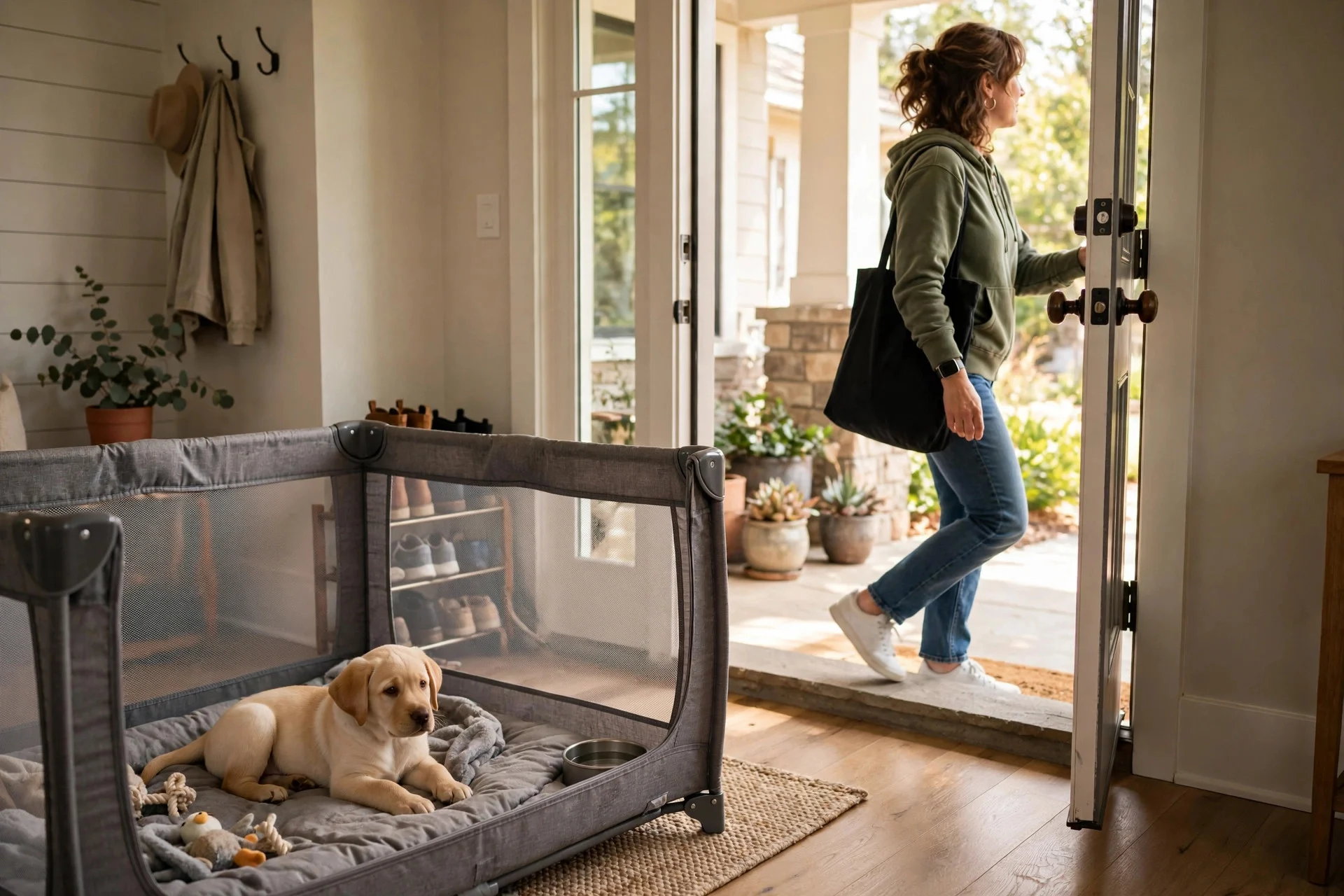
Leaving Your Puppy Alone: 8 First-Time Tips
1. Start With Seconds, Not Hours
Before the first real departure, practice micro-absences. Step out of the room for ten seconds, come back. Then thirty seconds. Then a minute. Then out the front door and back in. You are teaching your puppy that departures are boring and you always return. Do a dozen of these in a day and your puppy learns the pattern before the stakes are real. The first actual alone time should feel like just another rep.
2. Keep the First Outing Short
Fifteen to twenty minutes for the first real departure. Seriously. Drive around the block, grab coffee, come home. Success at short durations builds confidence for longer ones. Jumping straight to a four-hour absence is how separation anxiety starts — the puppy panics, learns that alone equals panic, and now you have a real problem. Boring, gradual, successful. That is the whole formula.
3. Tire Them Out First
A puppy who has played, trained, and pottied is a puppy who naps when you leave. A puppy who is wired and full of energy is a puppy who redecorates. Time your departures after a good play session and a potty break, not before. This single tip prevents more alone-time disasters than everything else combined.
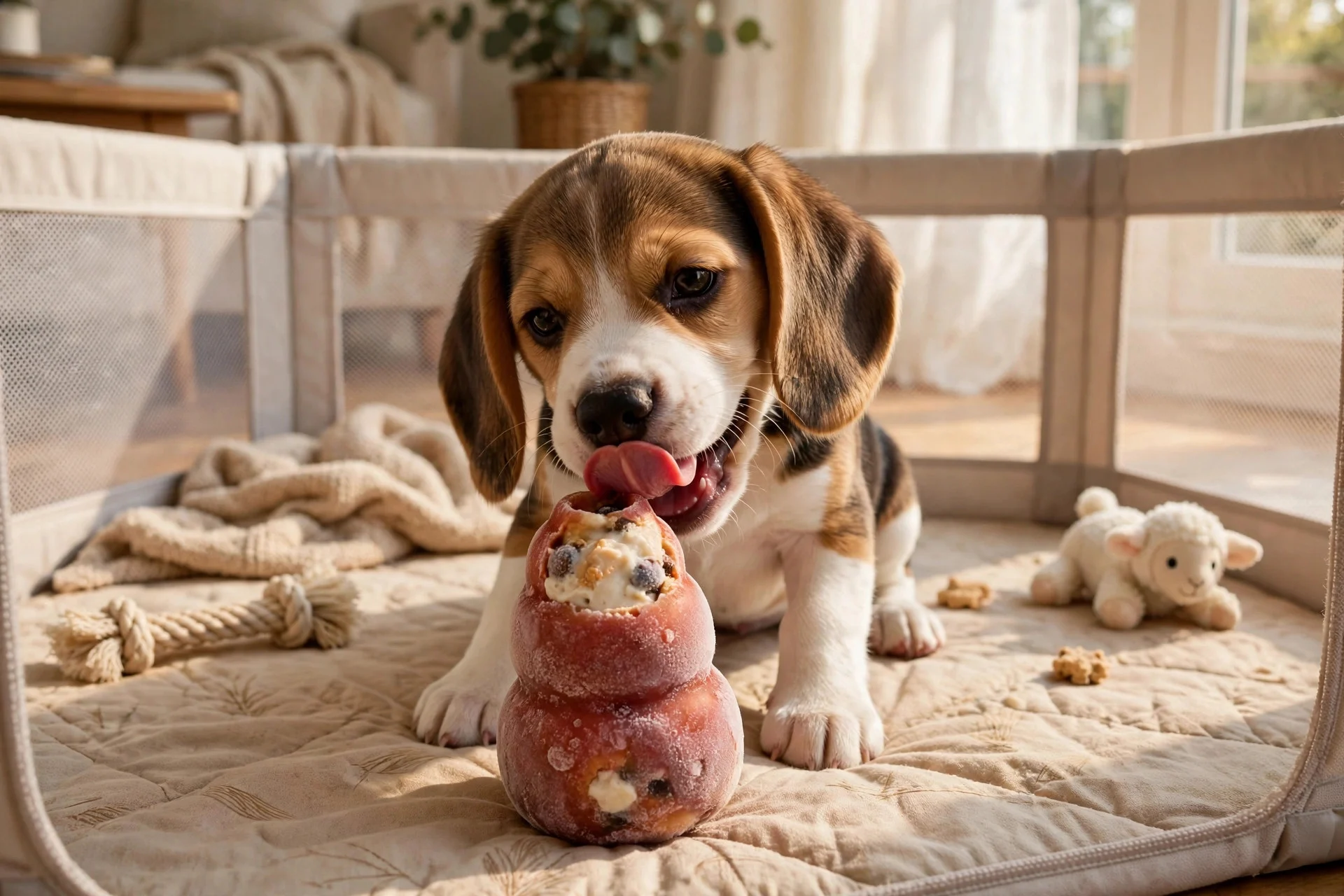
4. Set Up a Safe, Boring Space
Do not give a young puppy the run of the house. Use a crate, a playpen, or one puppy-proofed room. Remove anything chewable, dangerous, or valuable. Leave water, a safe chew, and a frozen Kong. The space should be small enough to feel den-like and boring enough that napping is the most interesting option. Freedom is earned over months, not granted on day one.
5. Make Departures Boring
No dramatic goodbyes. No “Mommy will miss you sooooo much, be a good boy, I love you, okay?” That performance tells your puppy that departures are a big deal — and big deals are scary. Just leave. Quietly, casually, like you are going to check the mail. The less ceremony, the less anxiety. I know it feels cold. It is actually kind.
6. Make Arrivals Boring Too
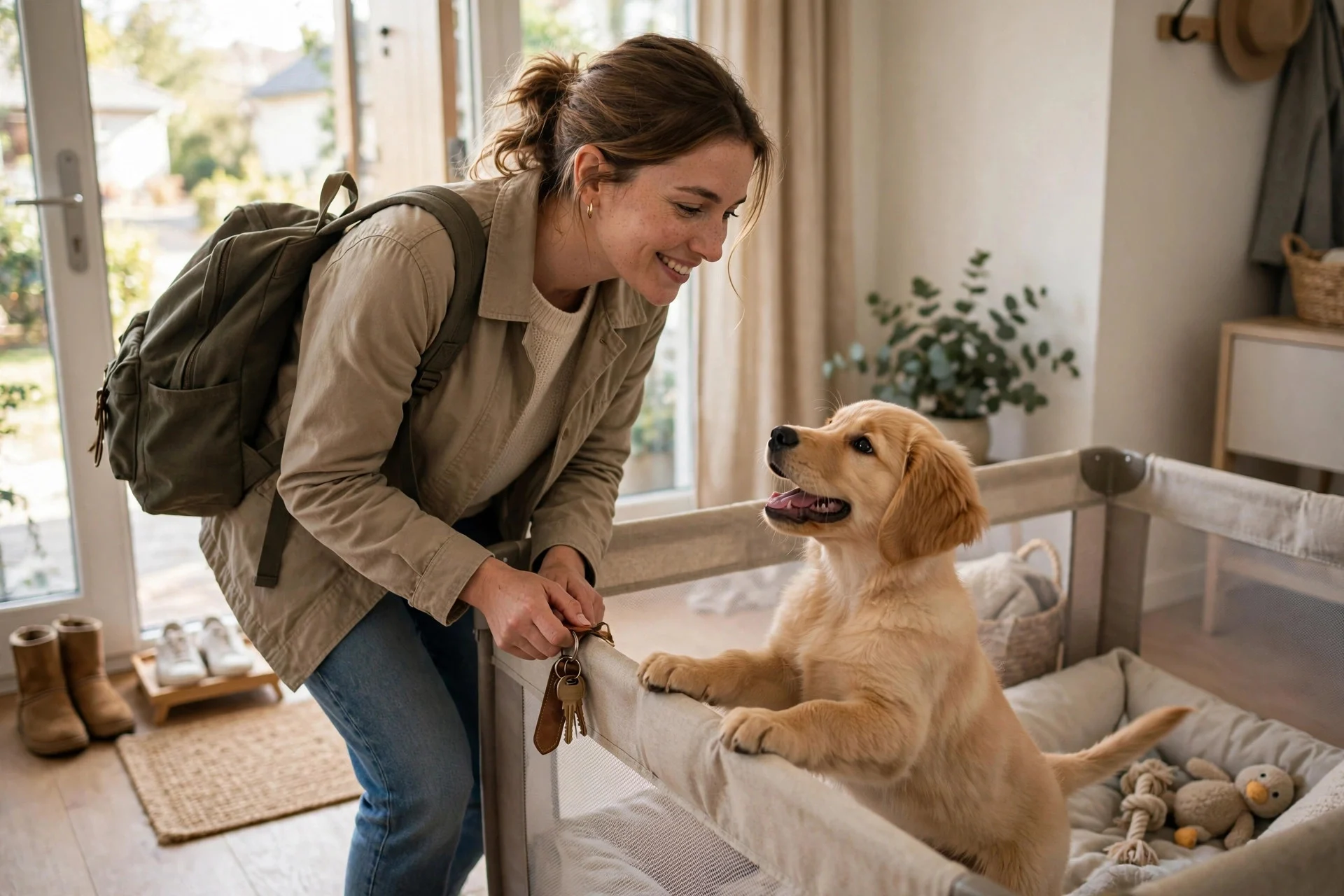
When you come home, do not throw a welcome-home party. Walk in calmly, put your stuff down, and greet your puppy quietly after a minute or two. Wild reunions teach your puppy that your return is the highlight of their existence — which makes your absence feel like the lowlight. Calm hellos build a calm dog.
7. Use Food Puzzles and Long-Lasting Chews
A frozen Kong stuffed with peanut butter and kibble, a snuffle mat with treats hidden in it, a safe long-lasting chew — these give your puppy a job while you are gone. The goal is for them to be happily occupied for the first twenty minutes, because most puppies settle into a nap after that initial period. Rotate the puzzles so they stay interesting.
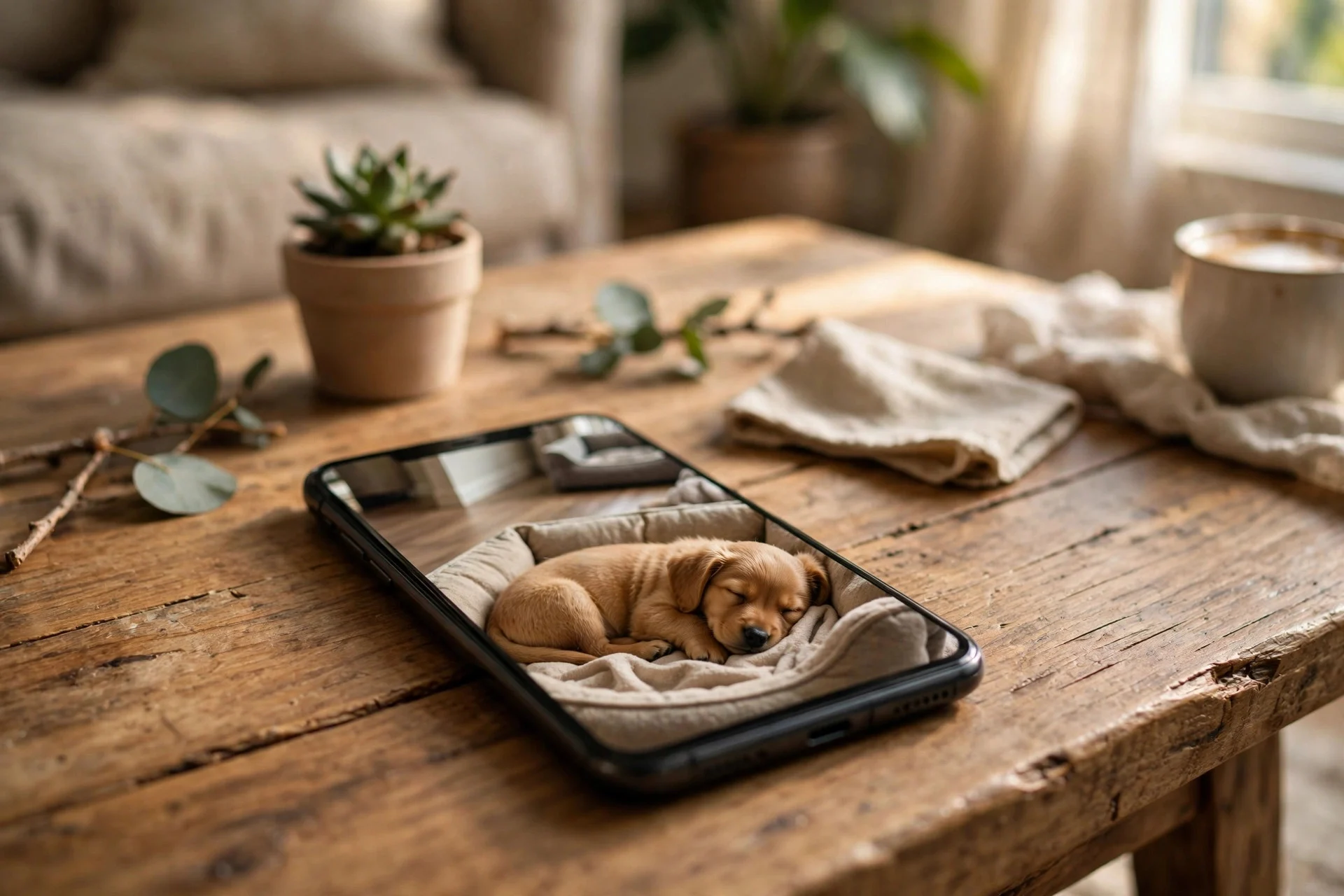
8. Consider a Camera (For You, Mostly)
A cheap pet camera lets you check in without driving home in a panic. Here is what you will usually see: sniffing, circling, napping. Knowing that is worth every penny for your own anxiety. But set a rule for yourself: only check twice. Obsessive watching turns you into the anxious one, and puppies read your energy when you walk back in.
Practical Tips for Alone Time
Build duration gradually: 20 minutes, then 45, then 90, then a couple of hours over a few weeks. A good rule of thumb for maximum alone time is about one hour per month of age, up to around four to five hours for young puppies — and even adult dogs should not regularly be alone for more than six to eight hours. Leave a worn t-shirt with your scent in their space. Keep a consistent departure routine so it becomes background noise. And always potty right before you leave.
Mistakes That Create Separation Problems
Do not crate a puppy for marathon stretches — a young puppy physically cannot hold their bladder for eight hours, and forcing it creates anxiety and house-training setbacks. Do not sneak out; it teaches your puppy that you might vanish at any moment, which is more anxiety-producing than a calm, visible departure. Do not punish destruction you find when you get home — your puppy cannot connect the punishment to the crime, and you just become scary. And do not ignore real distress: if your puppy drools excessively, injures themselves trying to escape, or panics every time, that is separation anxiety, not bad behavior. Get professional help early.
FAQs About Leaving a Puppy Alone
How long can I leave my 8-week-old puppy alone?
About 30 to 60 minutes at first, building up gradually. Young puppies need frequent potty breaks and cannot self-soothe for long. Plan your schedule around the puppy for the first few weeks, not the other way around.
Should I leave the TV or music on?
It can help — calm background noise makes the house feel less empty. Classical music or talk radio at low volume works. It is not magic, but it takes the edge off silence.
Is it okay to leave my puppy in a crate while I am at work?
Not for a full workday, no. A young puppy needs a midday break at minimum — a dog walker, a neighbor, or coming home at lunch. Eight-plus hours crated is too long for any puppy under six months.
How do I know if my puppy has separation anxiety?
True separation anxiety shows as panic: drooling, self-injury, escape attempts, destruction focused on doors and windows, and distress that starts the moment you leave. Mild whining that resolves in a few minutes is normal. Panic is not — talk to your vet or a certified behaviorist.
Short, boring, gradual. That is the whole philosophy. Do it right and leaving the house becomes just another non-event in your puppy’s happy, well-rested life.

























