
Raising a large breed puppy is like raising a toddler who will weigh 80 pounds by their first birthday. Everything is bigger, faster, and slightly more destructive — including the mistakes. Large breed puppy care has real differences from raising a small dog, and getting them right early prevents problems that last a lifetime.
I fostered a Great Dane puppy once. At four months he was the size of a full-grown Lab and had the coordination of a baby giraffe. That experience taught me more about large breed puppy tips than any book. Here are the 12 essentials, starting with the one that matters most.
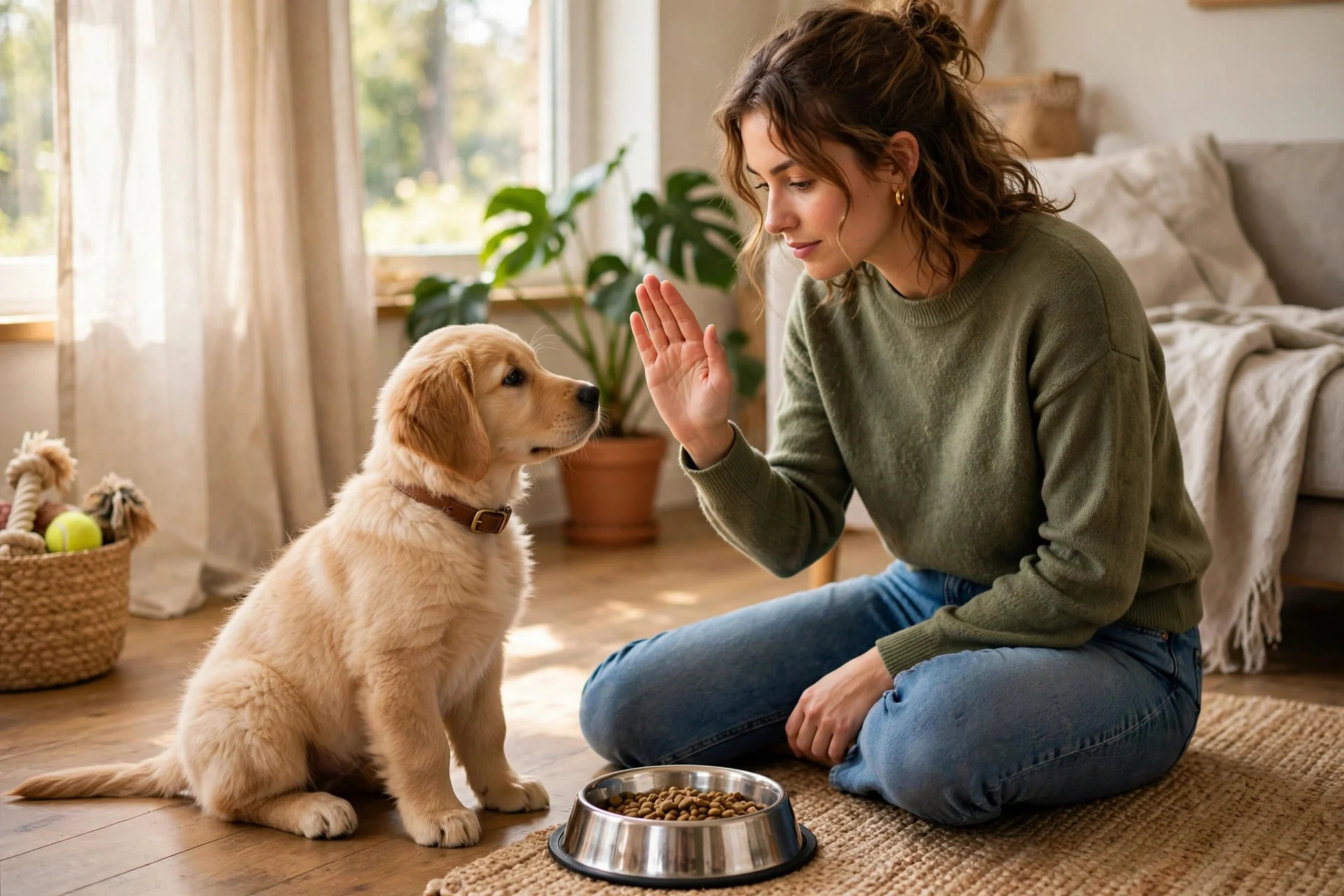
Large Breed Puppy Care: 12 Essential Tips
1. Feed Large-Breed Puppy Food (Not Regular Puppy Food)
This is the big one. Large-breed puppy formulas have controlled calcium and phosphorus levels and moderate calorie density to prevent too-rapid growth. Growing too fast is the primary driver of developmental orthopedic diseases — hip dysplasia, elbow dysplasia, OCD lesions. Regular puppy food is too rich for big puppies. Feed large-breed puppy food until 18 to 24 months, and ask your vet about the right time to switch.
2. Keep Them Lean
You should be able to feel your puppy’s ribs easily with a visible waist from above. A slightly lean large-breed puppy grows into a healthier adult than a chubby one — studies consistently show lean puppies have fewer joint problems. It feels wrong to keep a growing puppy lean. It is right. Overfeeding a large breed puppy is one of the most common and most damaging mistakes owners make.
3. Restrict High-Impact Exercise Until Growth Plates Close
No jogging, no long hikes, no repetitive fetch on hard surfaces, no jumping — until your vet confirms growth plates are closed, usually 14 to 18 months for large breeds, up to 24 for giants. Free play on grass where the puppy sets the pace is fine. Forced, repetitive pounding is not. This single rule prevents more orthopedic damage than anything else on this list.
4. Train Early Because They Get Big Fast
A 20-pound puppy who jumps on people is cute. A 90-pound adolescent who jumps on people is a liability. Teach loose-leash walking, sit for greetings, and a solid recall before your puppy outweighs you. Training a large breed is not optional enrichment — it is safety equipment. Start the day they come home.
5. Socialize Heavily and Thoughtfully
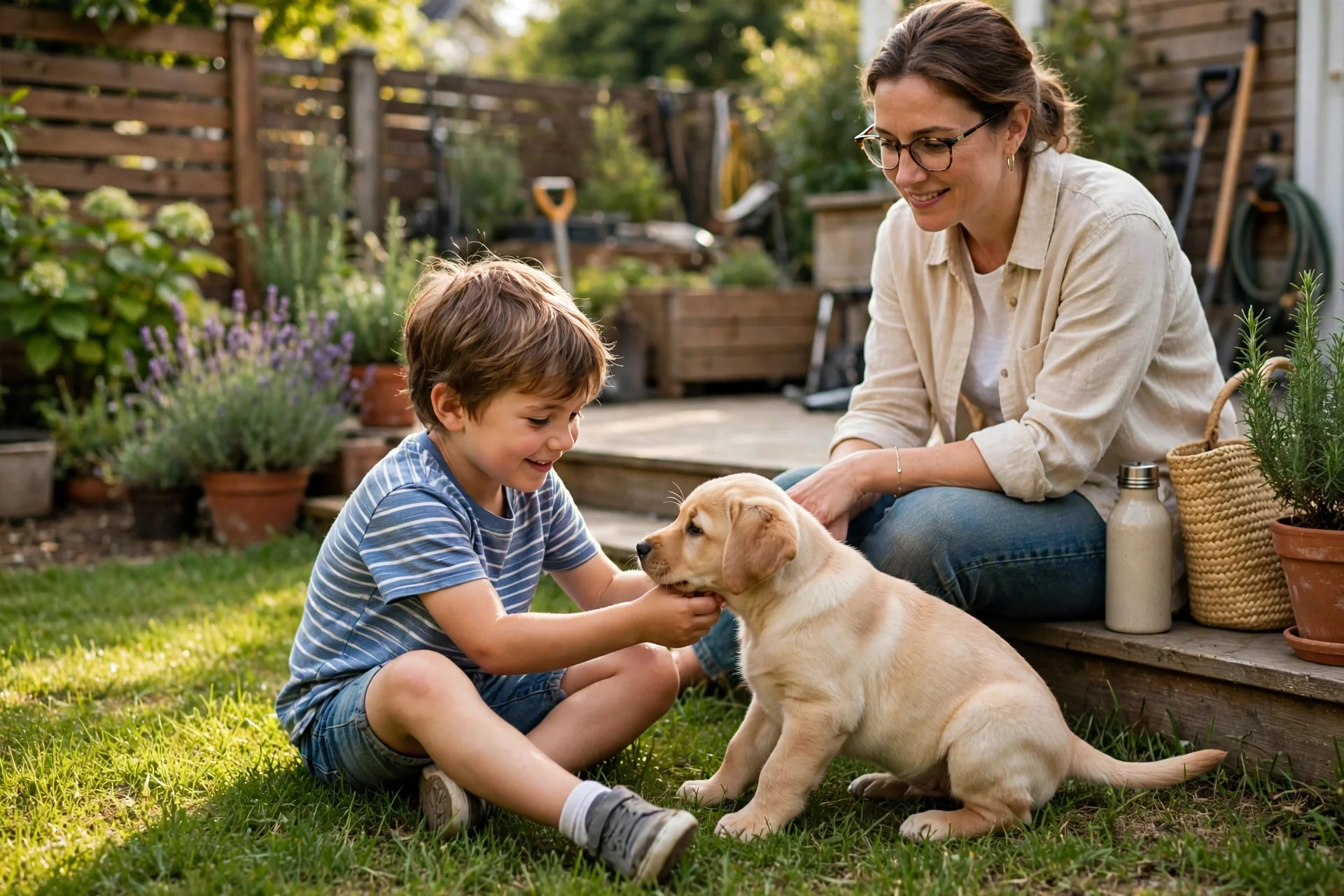
A large dog who is fearful is dangerous in a way a fearful Chihuahua is not. Expose your puppy to people, dogs, sounds, surfaces, and situations during the critical socialization window (up to 16 weeks). Keep experiences positive and controlled. A confident, well-socialized large dog is a joy. An under-socialized one is a management project for life.
6. Crate Train for Safety and Sanity
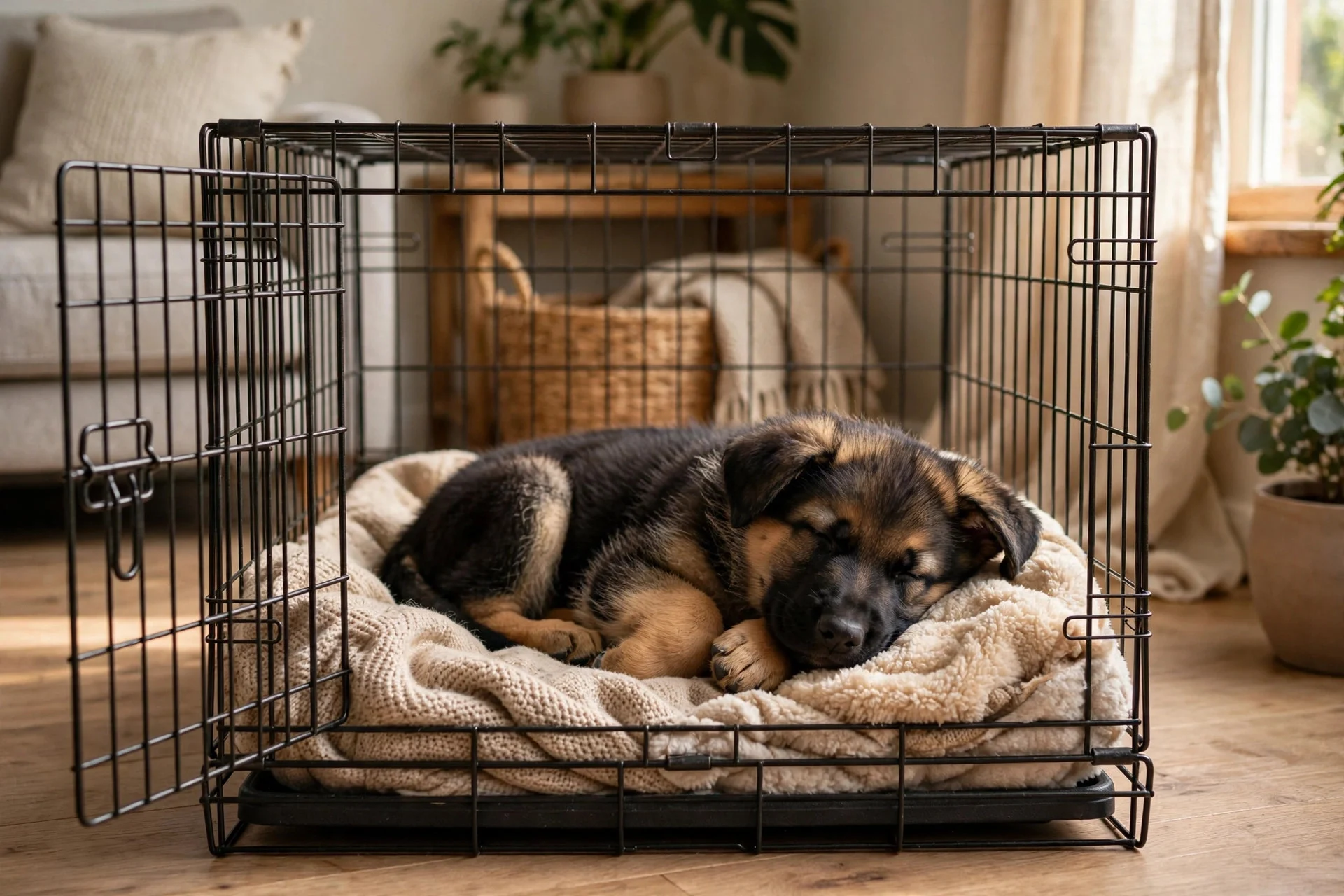
Get an appropriately sized crate — big enough to stand, turn, and lie down, ideally with a divider to adjust as they grow. A large puppy loose in the house unsupervised will destroy things and possibly hurt themselves. Crate training also teaches the settling skills that keep a giant adolescent manageable. It is not cruel. It is containment with treats.
7. Watch for Bloat Risk Factors
Large, deep-chested breeds are prone to gastric dilatation-volvulus (bloat), which is a life-threatening emergency. Feed two to three smaller meals instead of one large one. Wait at least an hour after meals before exercise, and avoid vigorous play right before eating. Know the signs — restlessness, drooling, a distended abdomen, unproductive retching — and know that it is a rush-to-the-emergency-vet situation, always.
8. Invest in Proper Gear Early
A front-clip harness, a sturdy six-foot leash, and chew-proof toys sized for big jaws. Cheap gear breaks, and broken gear with a 70-pound puppy attached is how dogs end up in traffic. Buy for the adult size where it makes sense — crates, gates, car restraints. Your wallet will thank you for buying once.
9. Teach Calmness as a Skill
Large breeds need an off switch. Practice settle-on-mat exercises, reward calm behavior in the house, and enforce naps. A big dog who cannot settle is exhausting and eventually ends up under-exercised and over-crated because nobody wants to deal with them. Calmness is trained, not innate. Train it deliberately.
10. Plan for the Vet Bills
Everything costs more with a big dog: food, medication doses, surgery, boarding. Large breeds also have shorter lifespans and higher rates of certain conditions. Budget accordingly, and seriously consider pet insurance while they are young and healthy. The time to think about the cost of a cruciate surgery is before you need one.
11. Mind the Stairs and Slippery Floors
Repeated stair climbing and slipping on hard floors stress growing joints. Carry young large-breed puppies up and down stairs when practical, use rugs or runners on slippery floors, and consider ramps for cars and furniture. It feels overprotective. Their joints disagree.
12. Enjoy the Gentle Giant Phase
Here is the payoff: well-raised large breeds are famously gentle, goofy, and devoted. The work you put in during the first year and a half — the feeding discipline, the training, the exercise restraint — buys you a decade with one of the best companions on earth. It is worth every bit of effort.
Practical Tips for Daily Life
Weigh your puppy monthly and adjust food to keep them lean — growth charts for your breed help. Keep training sessions short and fun; big puppies tire mentally fast. Puppy-proof at their future height, not their current one — that counter will be nose-level sooner than you think. And find a vet experienced with large breeds; their growth, dosing, and orthopedic screening needs are genuinely different.
Mistakes to Avoid
Do not overfeed “because they are growing” — controlled growth is the goal. Do not let them jump on people “while they are small” — habits formed at 20 pounds persist at 90. Do not skip socialization because your puppy seems confident already; confidence at 10 weeks means nothing at 10 months without continued exposure. Do not neuter or spay without discussing timing with your vet — for large breeds, the timing question is more nuanced than the old six-month standard. And do not assume a big puppy can handle adult exercise — their skeleton is still under construction.
FAQs About Large Breed Puppies
When is a large breed puppy fully grown?
Physically, most large breeds reach full size around 18 months, with giants taking up to 24 months. Mentally, expect puppy behavior well into year two — sometimes three.
How much should I feed my large breed puppy?
Follow the feeding guide on your large-breed puppy food, then adjust to keep your puppy lean. Your vet can help you find the right amount — it varies enormously by individual.
Are large breed puppies harder to train?
Not harder — just higher stakes. The training itself is the same. But an untrained large dog is a much bigger problem than an untrained small one, so consistency matters more.
When can my large breed puppy go on long walks?
Build up gradually after growth plates close — usually 14 to 18 months. Before that, keep walks short and let free play on soft surfaces do the work.
Big puppy, big responsibility, big reward. Get the feeding, exercise, and training right in the first 18 months and you will have a gentle giant worth every chewed shoe along the way.

























