Bringing a puppy home is equal parts joy and mild panic. The house gets baby-proofed in about an afternoon, but then the puppy goes outside — and suddenly your yard looks like a hazard course designed by a supervillain. That is exactly why a puppy proofing yard checklist matters before the first outdoor play session.
I learned this the hard way when my beagle mix found a three-inch gap under our back gate at eight weeks old. Eight weeks! I found him two doors down, chewing a neighbor’s garden hose, looking extremely proud of himself. Do this checklist before the puppy finds the weak spots. They always do.
Puppy-Proofing Your Yard: The 15-Point Checklist
1. Walk the Fence Line for Gaps
Get on your hands and knees and crawl the full perimeter. Puppies squeeze through gaps as small as three or four inches. Check where the fence meets the gate, where boards have warped, and where soil has eroded. If you can fit your fist through it, a puppy can fit their whole body through it.
2. Block the Under-Fence Escape Route
Digging under is the second classic jailbreak. A determined eight-week-old can tunnel under a fence in an afternoon. Bury chicken wire 12 to 18 inches down along the fence line, angled outward in an L-shape — or lay flat paving stones along the base for a quicker fix.
3. Check Every Gate Latch
That little hook-and-eye your contractor installed? A smart puppy nudges it open with their nose; a bouncy one bounces it open by accident. Upgrade to a self-closing, self-latching gate lock — about $15 to $30 at any hardware store. Push each gate from the inside to test it.
4. Remove Toxic Plants
Sago palm, azalea, oleander, foxglove, and lilies are all genuinely dangerous to dogs, and puppies chew everything. Sago palm seeds can be fatal in small amounts. Cross-check your yard against the ASPCA toxic plant list — it takes ten minutes — and dig out or fence off anything risky.
5. Ditch the Cocoa Mulch
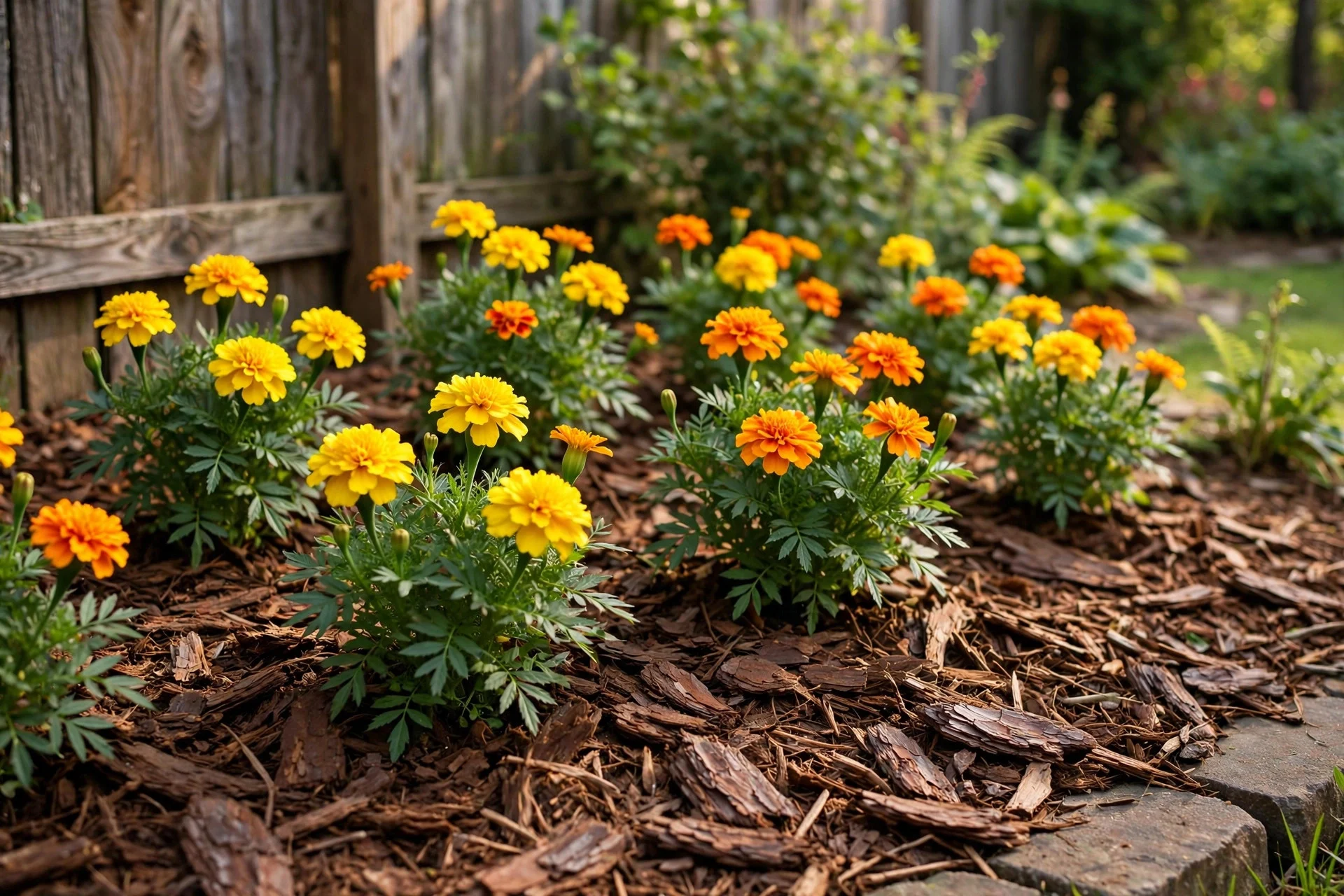
Cocoa mulch smells like chocolate and looks great in flower beds. It also contains theobromine, the same compound that makes chocolate toxic to dogs. Puppies will absolutely eat it. Switch to pine bark or cedar mulch, which are much safer and still look decent.
6. Mind Fertilizer and Pesticide Timing
Most lawn products need 24 to 48 hours before pets should be on the grass, and granular fertilizers stay risky longer if a puppy eats the pellets. Switch to pet-safe products where you can, and after any application keep the puppy off the lawn for the label time — then double it.
7. Dump Standing Water
Mosquitoes breed in standing water, and puppies drink from anything. Tip over the saucers under plant pots, empty the kids’ buckets, and check that wheelbarrow that has been sitting since October. A small habit that cuts mosquito bites and gross-drink incidents alike.
8. Secure the Pool (If You Have One)
Puppies fall into pools more often than people think, and a small puppy can panic and drown fast even in shallow water. If the pool is not fenced with a self-closing gate, it needs to be. Until then, never let the puppy near it unsupervised — not for one minute.
9. Lock Up Tools and Chemicals
The garage-adjacent corner is a danger zone: motor oil, antifreeze (sweet-tasting and lethal), rat poison, insecticides. Lock chemicals in a shed or high cabinet, and sweep for screws, nails, and broken glass. A five-minute sweep with a magnetic pickup tool can save a very expensive vet visit.
10. Secure Trash and Compost
Puppies are garbage goblins. Open trash and compost hold chicken bones, coffee grounds, corn cobs, and moldy leftovers. Get cans with locking lids and bungee them shut if needed. Moldy compost can contain toxins that trigger seizures — a $500 emergency vet word you never want to learn firsthand.
11. Watch for Wildlife
Snakes, hawks, and owls are real risks for small puppies — a hawk can take a puppy under about ten pounds. Coyotes can clear a six-foot fence in some areas. Know your local wildlife, keep grass short in snake country, and supervise accordingly.
12. Provide Shade and Fresh Water
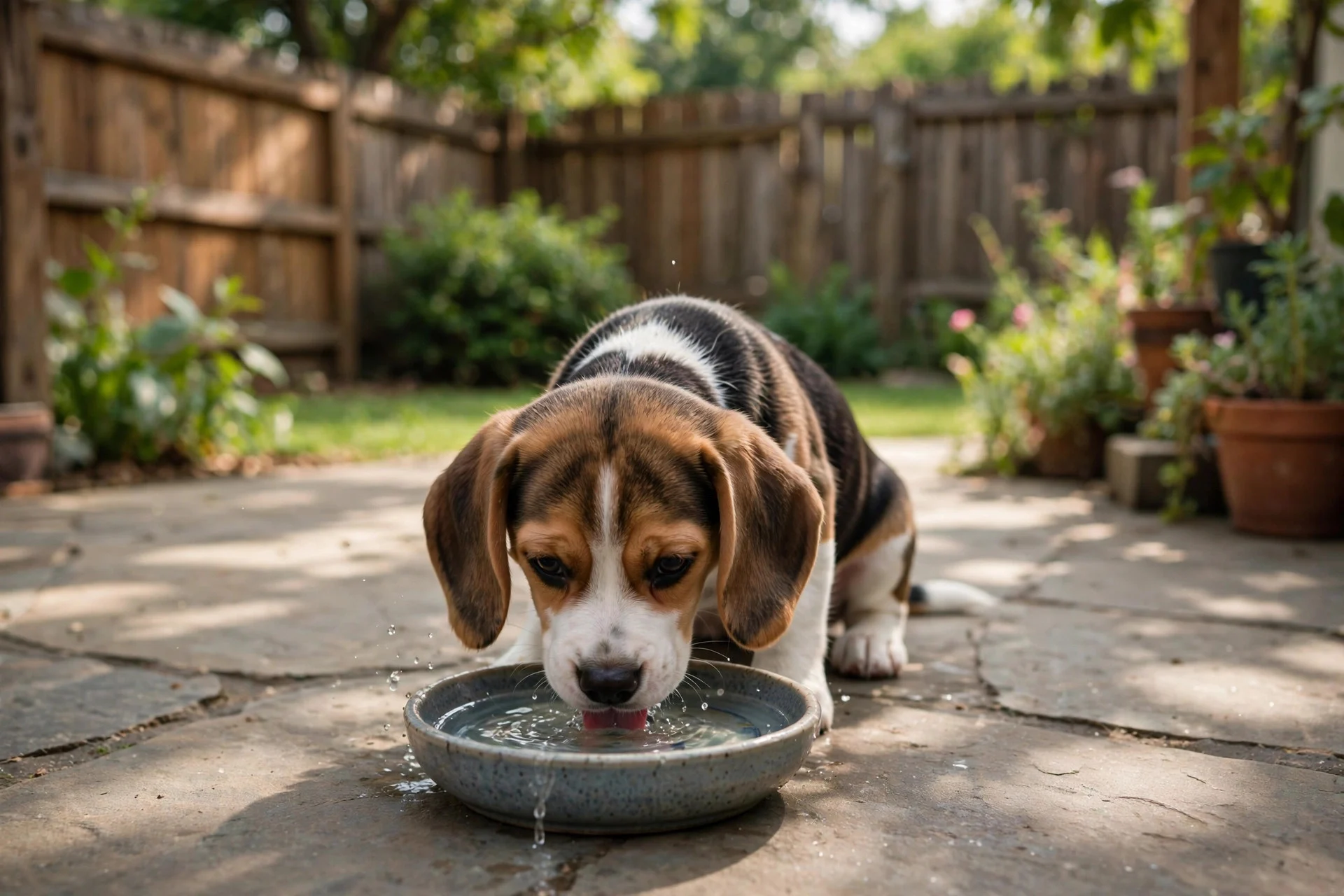
Puppies overheat faster than adult dogs, especially flat-faced breeds. Make sure the yard has a shady spot and always leave a bowl of fresh water outside. On days over 85 degrees, keep sessions under 15 to 20 minutes. Hard panting that will not settle means bring them in — that is heat stress, not drama.
13. Pick Up Chewable Hoses and Cords
Garden hoses, extension cords, string lights — puppies chew them all, and a chewed electrical cord is an emergency. Coil hoses on a wall hook and unplug or cover outdoor cords when not in use. If it is long and chewable, assume the puppy will chew it.
14. Clean the Grill Grease Trap
That little cup under the grill is full of old grease, and to a puppy it smells like heaven. Old grill grease can cause anything from stomach upset to pancreatitis. Empty the trap after every cookout, and keep charcoal and lighter fluid locked away.
15. Trim Thorny Bushes and Check for Debris
Rose bushes, holly, blackberry brambles — all fun to run into at full puppy speed, all terrible. Trim thorns to above puppy height or fence off the beds. Then do one last walk-through for sharp debris: broken pots, rusty stakes, the rake leaning against the fence. Puppies will still find something you missed. That is just the job now.
Quick Practical Tips for the First Week Outside
Do the fence walk first — escapes ruin your day fastest. Then handle the toxic stuff: plants, chemicals, mulch. And start a two-minute yard scan every morning before the puppy goes out. Wind blows things in overnight. My morning scan once caught a dead squirrel, a plastic bag, and a neighbor’s tennis ball within 30 seconds of each other.
Mistakes That Send Puppies to the Vet
The biggest one is assuming “they will be fine, I am right here.” A puppy eats a sago seed or a chunk of cocoa mulch in about four seconds — faster than you can check your phone. The second is thinking a young puppy cannot jump, climb, or squeeze through something. They can, and they will test it the moment you stop watching.
FAQs About Puppy-Proofing a Yard
How often should I re-check the yard?
Do a full walk-through monthly and a quick scan every morning. Fences shift, boards warp, gates loosen, storms knock branches down. And puppies get bigger and bolder — a gap that was fine at eight weeks can be an escape route at sixteen.
Can my puppy be in the yard before vaccinations are complete?
Your own yard is generally safer than a dog park, but the ground can still carry parvovirus from other animals. Most vets say a private yard is fine with basic precautions — ask yours, since it depends on your area’s parvo risk.
What is the cheapest way to stop digging under a fence?
Cheap paving stones laid flat along the fence base. No digging required, under $30 for a typical run, works immediately. Burying hardware cloth is more permanent, but stones buy you time today.
Your yard will never be 100% puppy-proof — that is not the goal. The goal is a yard where a curious, fast, mouth-first creature can play while you actually relax a little. Do the checklist once, keep up the morning scans, and you will spend a lot less time sprinting across the grass shouting “drop it.”