
Small breed puppies look like toys and get treated like toys — carried everywhere, never trained, fed from the table. And then they grow into tiny tyrants who bark at everything, bite ankles, and run the household. It does not have to go that way. Small breed puppy care has its own quirks, and most of them are about taking your little dog seriously.
Here is my core philosophy: train the dog in front of you, not the size. A Chihuahua deserves the same training, boundaries, and respect as a Labrador — just in a smaller package. These 10 small breed puppy tips cover what is genuinely different about raising a little one.
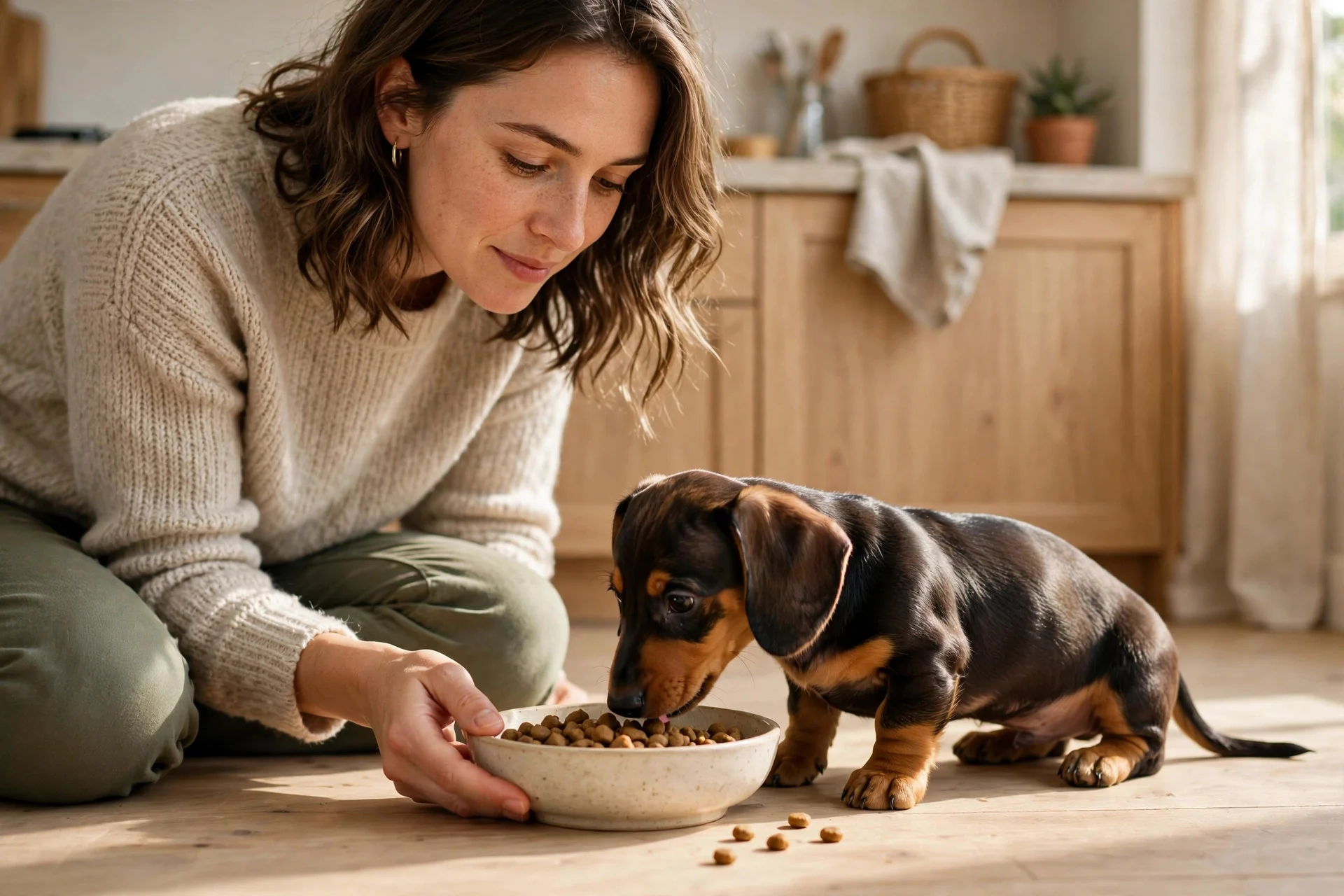
Small Breed Puppy Care: 10 Tips
1. Train Them Like a Big Dog
This is the most important tip on the list. Small dogs get away with jumping, barking, pulling, and snapping because it is “cute” or “not dangerous.” The result is small dog syndrome — not a real syndrome, just an undertrained dog. Teach sit, down, stay, recall, and loose-leash walking exactly as you would for a large breed. Your five-pound puppy is a real dog. Treat them like one.
2. Watch the Blood Sugar
Tiny puppies, especially toy breeds under 8 weeks to a few months old, are prone to hypoglycemia — dangerously low blood sugar. Signs include wobbliness, lethargy, and glassy eyes. Prevent it with frequent small meals (three to four a day for young puppies) and keep a vet-approved glucose supplement on hand for emergencies. If your tiny puppy seems suddenly weak or disoriented, it is a vet call, not a wait-and-see.
3. Feed Small-Breed Puppy Food
Small breeds have faster metabolisms and smaller stomachs, so they need calorie-dense food in smaller kibble they can actually chew. Small-breed puppy formulas are designed for exactly this. Feed three to four small meals a day for young puppies, dropping to two to three as they grow. And measure — it is shockingly easy to overfeed a dog who eats a quarter cup per meal.
4. Protect Them From Themselves
Small puppies are fragile in ways big puppies are not. A fall off the couch that a Lab puppy shrugs off can break a Yorkie’s leg. Use ramps or steps for furniture, carry them down stairs until they are coordinated, and supervise around larger dogs and small children. This is not overprotectiveness — it is physics.
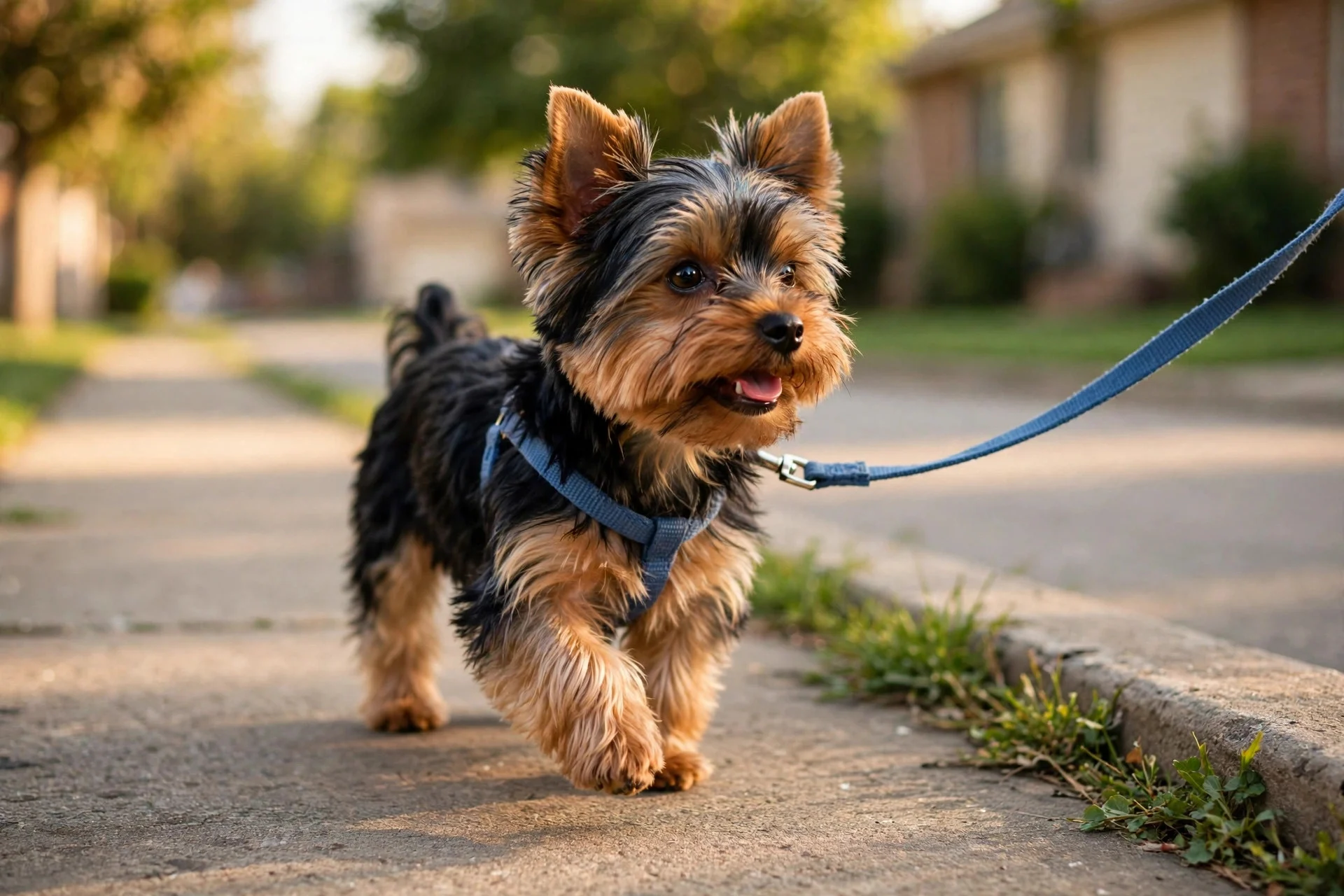
5. Do Not Carry Them Everywhere
It is tempting. They are portable. But a puppy who is always carried never learns to walk on a leash, navigate the world, or be independent. They also learn that the world is scary and only your arms are safe — hello, anxiety. Let them walk. Let them explore. Carry them only when safety demands it: across busy streets, through crowds, past big off-leash dogs.
6. Socialize With Big Dogs (Carefully)
Small puppies need exposure to large dogs just as much as the reverse — a small dog who is terrified of big dogs is a bite risk and a stress case. Arrange controlled introductions with known calm, gentle large dogs. Avoid dog parks with unknown big dogs until your puppy is confident and you can read the room. Size-appropriate playmates are great, but the world has big dogs in it. Prepare for that.
7. House-Train With the Same Rigor
Small dogs are notoriously harder to house-train, partly because their bladders are tiny and partly because owners are lax — a tiny accident on tile feels less urgent than a big one on carpet. It is not. Same schedule, same supervision, same celebration for outdoor success. Small bladders mean more frequent trips: every hour or two for young puppies. Consistency beats square footage.
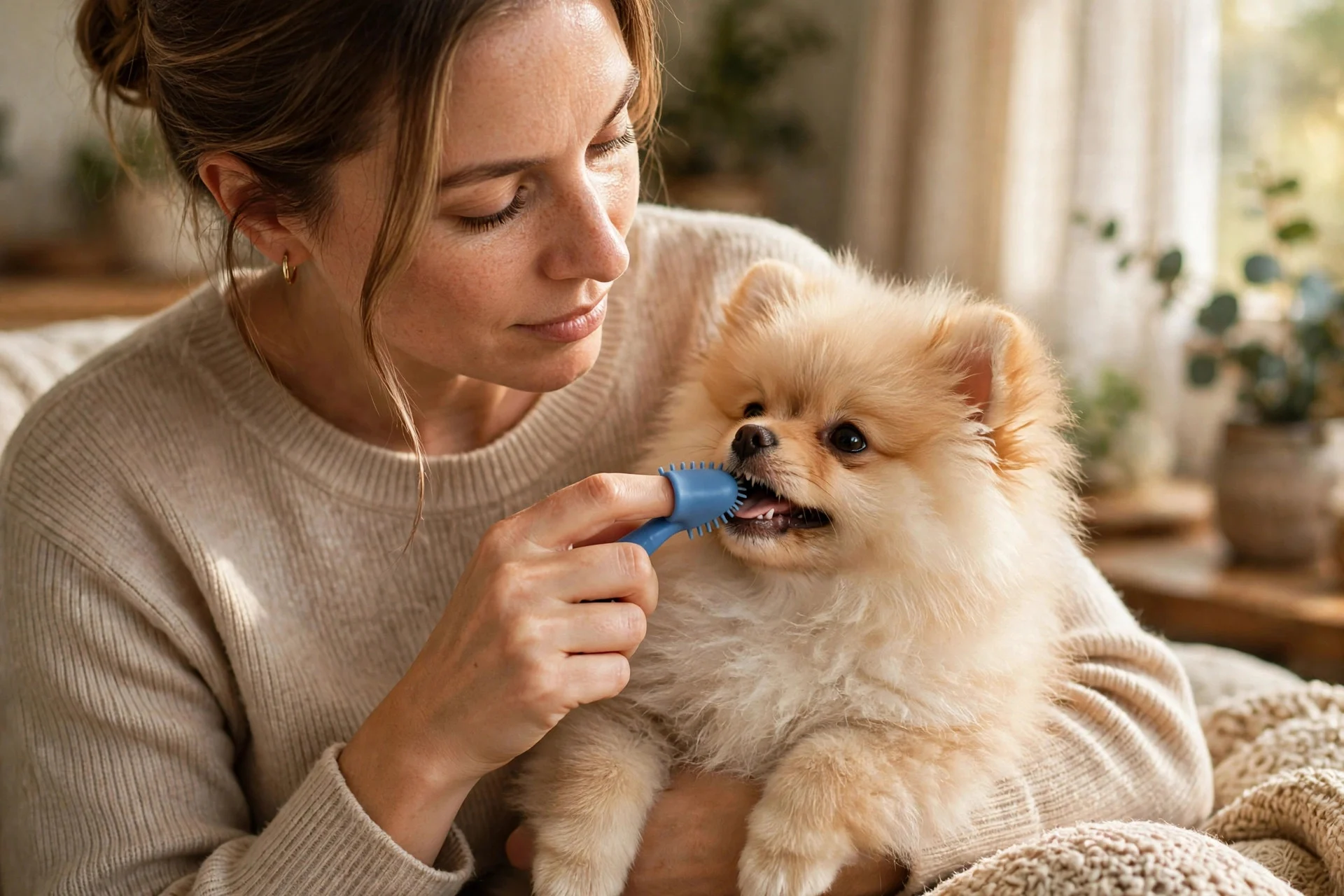
8. Dental Care Starts Now
Small breeds are prone to dental disease — crowded teeth, faster tartar buildup, earlier tooth loss. Start brushing early, while they are puppies and adaptable. Use dog-safe toothpaste and a small brush or finger brush. Daily brushing is the gold standard. Dental disease is not cosmetic; it causes pain and can seed infections elsewhere in the body.
9. Mind the Cold
Small puppies lose heat fast and chill easily. In cold weather, a sweater or coat is not a fashion statement — it is welfare. Keep walks short in winter, dry them off after wet outings, and watch for shivering. A shivering puppy is a cold puppy, not a nervous one. Warm them up.
10. Enjoy the Advantages
Here is the good news: small puppies mature faster, cost less to feed and medicate, live longer on average, and can get meaningful exercise indoors. They travel easily, fit in apartments, and make phenomenal lap dogs once trained. The small-dog life has real perks — you just have to put in the same training work to unlock them.
Practical Tips for Daily Life
Use a harness instead of a collar for walks — tiny tracheas are vulnerable to collapse from collar pressure. Keep training sessions short and high-energy; small puppies learn fast but bore faster. Puppy-proof at their level: they can squeeze into smaller spaces and chew things you would never expect. And find a vet comfortable with toy breeds — dosing, anesthesia, and dental needs are genuinely different at small scale.
Mistakes to Avoid
Do not skip training because they are small — an untrained small dog is still an untrained dog, just louder about it. Do not feed them like a big dog in miniature; their metabolism and blood sugar needs are different. Do not let them jump off high furniture — invest in ramps. Do not ignore dental care until there is a problem; by then it is expensive. And do not treat them as accessories. They are dogs with dog needs: training, exercise, boundaries, and respect.
FAQs About Small Breed Puppies
When do small breed puppies stop growing?
Most small breeds reach full size by 9 to 12 months — much faster than large breeds. Mentally, expect some puppy behavior into the second year.
How much exercise does a small breed puppy need?
Less than you think for their energy level. Short walks, indoor play, and training games are usually plenty. Follow the same five-minute-per-month guideline as other puppies, adjusted for their faster maturity.
Are small dogs harder to house-train?
They can be, mostly due to tiny bladders and owner inconsistency. More frequent trips and strict supervision solve most of it. It is a management challenge, not a breed flaw.
Should my small puppy wear a coat in winter?
Yes, in cold weather. Small puppies lose body heat quickly. A well-fitting coat or sweater makes winter walks comfortable instead of miserable.
Small dog, full-sized training, and a fraction of the food bill. Raise them like real dogs — because they are — and you will have a confident little companion instead of a tiny tyrant. Totally worth it.

























