Here’s the thing about puppies and winter: they don’t know they’re cold. Your eight-week-old Lab mix will happily chase a leaf across a frozen yard until his paws are red, then look at you with total betrayal when you pick him up. Puppies are terrible at self-regulating in the cold — young bodies lose heat fast and their immune systems are still figuring things out. So winter puppy care falls on you.
I’ve raised two winter puppies (a Golden and a Beagle, because I apparently enjoy chaos). Here are the ten winter puppy care tips that actually matter — the stuff nobody warns you about before your pup’s first snow.
Winter Puppy Care Tips
1. Keep Potty Trips Short and Businesslike
Puppies need to go out constantly, but in freezing weather those trips must be quick. Go to the same spot, give your cue word, praise immediately, and head straight back inside. Carry tiny puppies to and from the door so only their paws touch the ground. Set a timer: five minutes max below 30°F. If they don’t go, come in, wait ten minutes, and try again. Lingering outside “just in case” is how ears and paws get cold.
2. Protect Those Tiny Paws from Salt and Ice
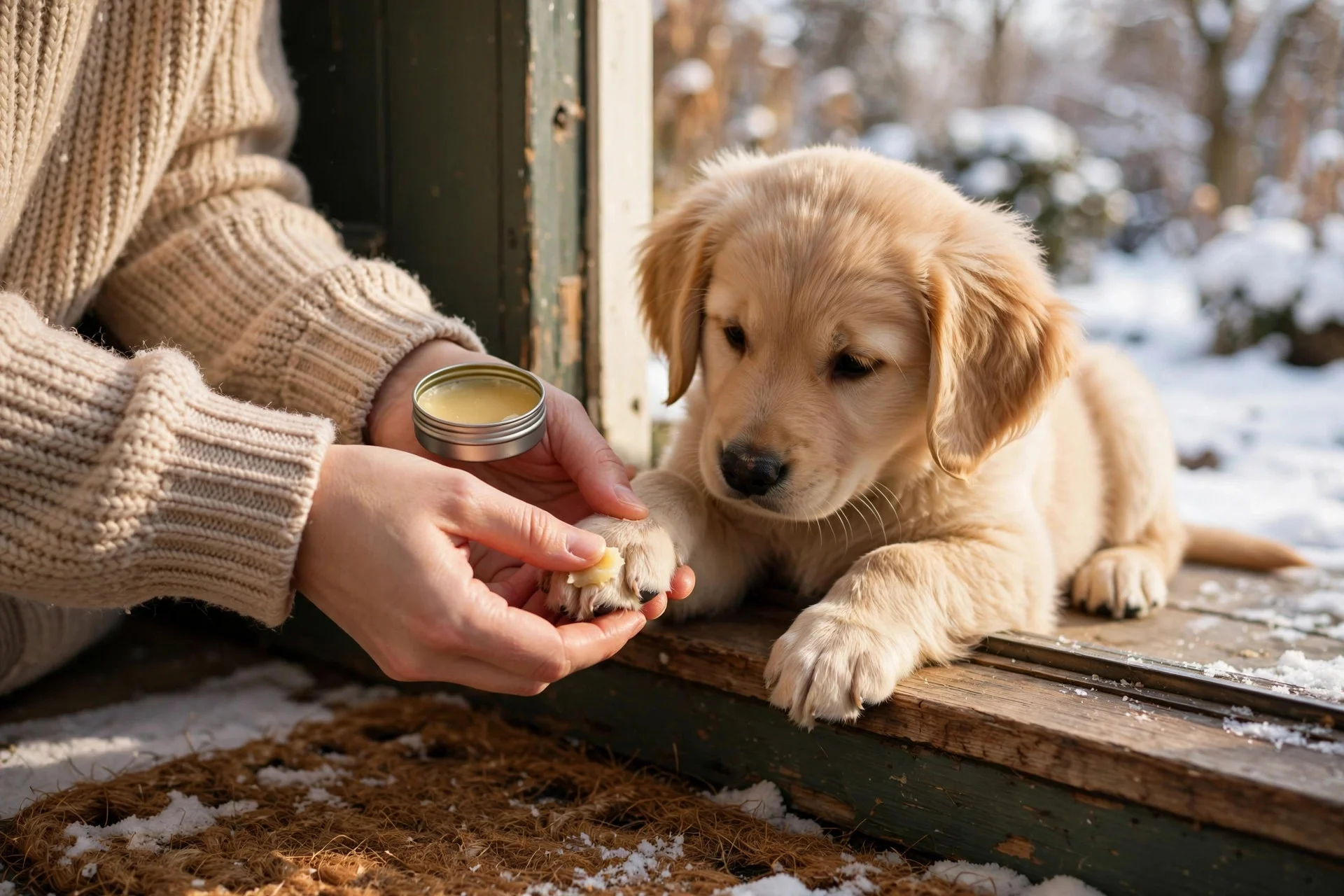
Road salt burns puppy pads, dries them out, and puppies lick it off — bad news. Before every winter walk, massage a thin layer of paw balm (or plain coconut oil) into each paw as a waxy barrier. Afterward, wipe paws with a warm damp cloth. Here’s the warning nobody gives you: once pads crack, healing takes weeks and every step hurts. If your puppy keeps chewing at their paws after walks, that’s the salt talking — rinse and re-balm.
3. Buy the Coat — Seriously, Just Buy the Coat
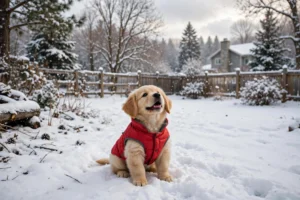
Yes, puppy clothes look ridiculous. But puppies under six months have almost no body fat and thin, immature coats. A simple fleece or quilted coat covering chest and belly makes a real difference. Pick one that runs neck to tail base, fits snugly without rubbing behind the front legs, and doesn’t bunch when they move. Small and short-haired breeds need coats around 45°F and below. Bigger thick-coated puppies can hold out longer — watch for shivering.
4. Burn Energy Indoors Before It Burns You
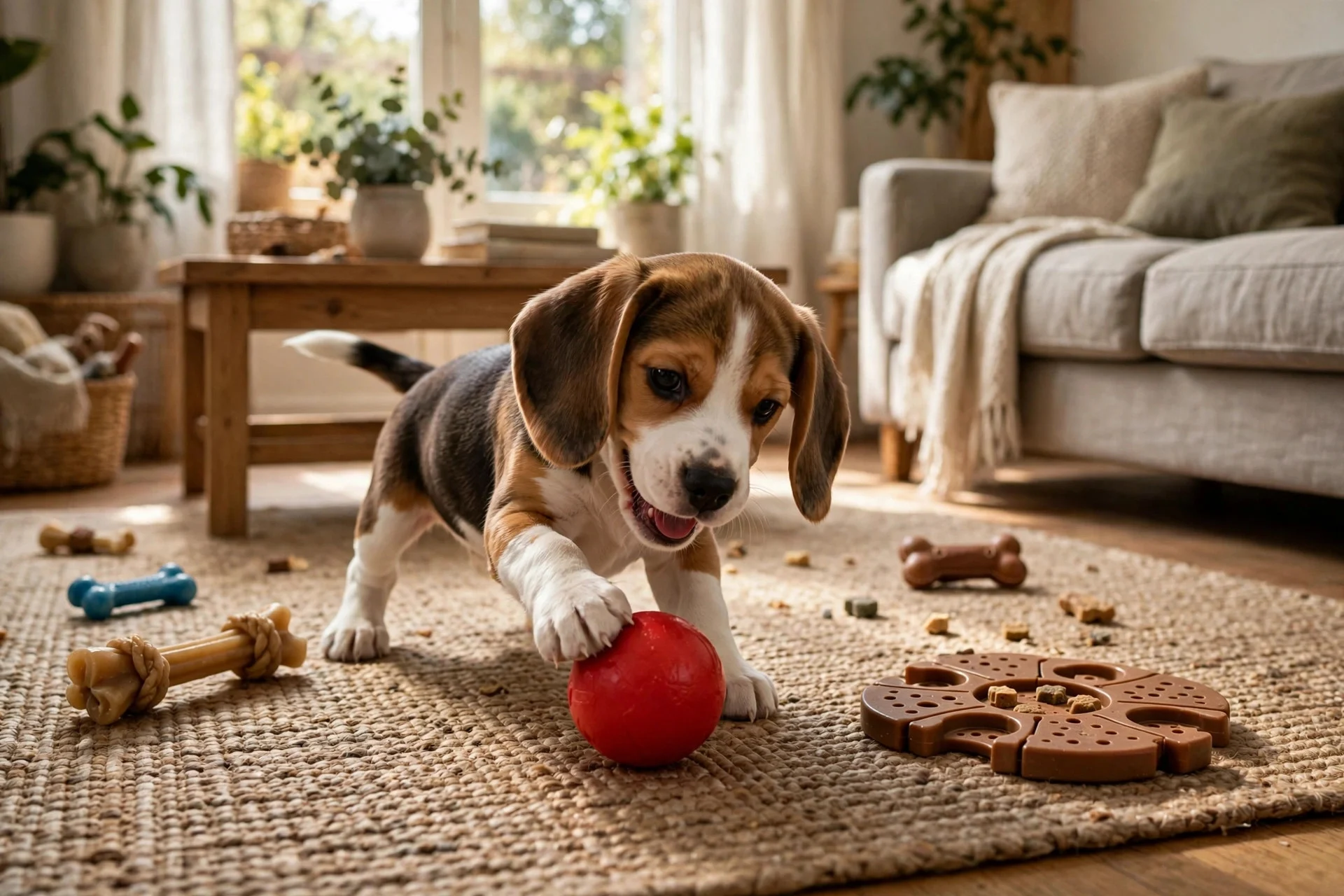
A puppy that can’t go outside is a puppy that will redecorate your house with its teeth. When it’s too cold for long walks, indoor exercise isn’t optional — it’s survival. Do three short play sessions a day: 10-15 minutes of hallway fetch, tug-of-war, or treat hide-and-seek. Puzzle toys and stuffed Kongs count too — mental work tires puppies out faster than physical play. My Golden at four months was settled by 15 minutes of hallway fetch plus a frozen Kong.
5. Don’t Neglect the Water Bowl
Keep fresh water available at all times. If you leave a bowl outside, check it: water freezes surprisingly fast below freezing. Use a wide, shallow bowl (less likely to ice over) or bring the outdoor bowl inside between trips. Watch for dark urine or dry gums — early dehydration signs even in winter.
6. Antifreeze: The Killer in Your Driveway
The most important tip on this list — read it twice. Antifreeze tastes sweet, and a few tablespoons can kill a puppy. It pools under cars and in puddles near driveways — exactly where curious puppies sniff. Keep your puppy leashed, steer clear of puddles and gutters, wipe paws after every outing, and store bottles sealed. Suspect licking — drooling, wobbling, vomiting — and get to an emergency vet immediately. Minutes matter. “Wait and see” can be fatal here.
7. Make the Crate Warm, Not Hot
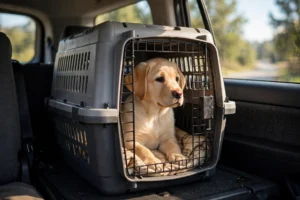
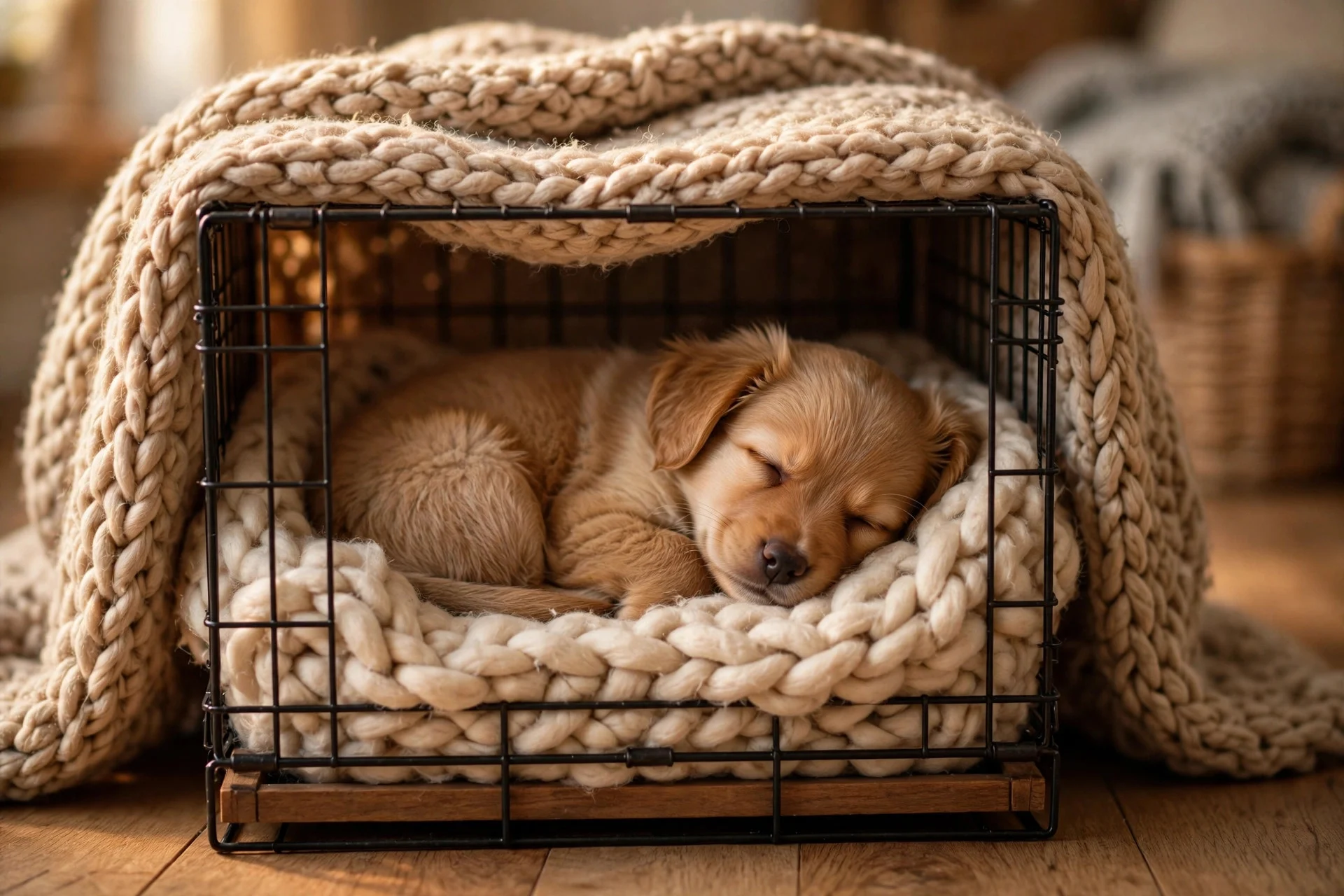
Puppies sleep 18-20 hours a day, and a cold crate in a drafty room means restless nights. Move the crate away from windows and exterior doors, add a thick blanket, and drape a blanket over the top and three sides to block drafts (leave the door side open for airflow). Skip heating pads and electric blankets — puppies chew, and a chewed cord is a disaster. A self-warming mat that reflects body heat is the safe option if the room is cold.
8. Keep Socializing — Winter Doesn’t Pause It
The socialization window (roughly 3-14 weeks) doesn’t care about the weather. Isolate your puppy until spring and you’ll miss the most important developmental period of their life. Invite vaccinated, friendly dogs over. Take your puppy to pet-friendly stores in a carrier. Drive to new places and let them watch the world from the car with the heat on. Expose them to umbrellas, hats, boots — all the weird human winter gear. Short, positive experiences beat long cold ones.
9. Make the First Snow Fun, Not Terrifying
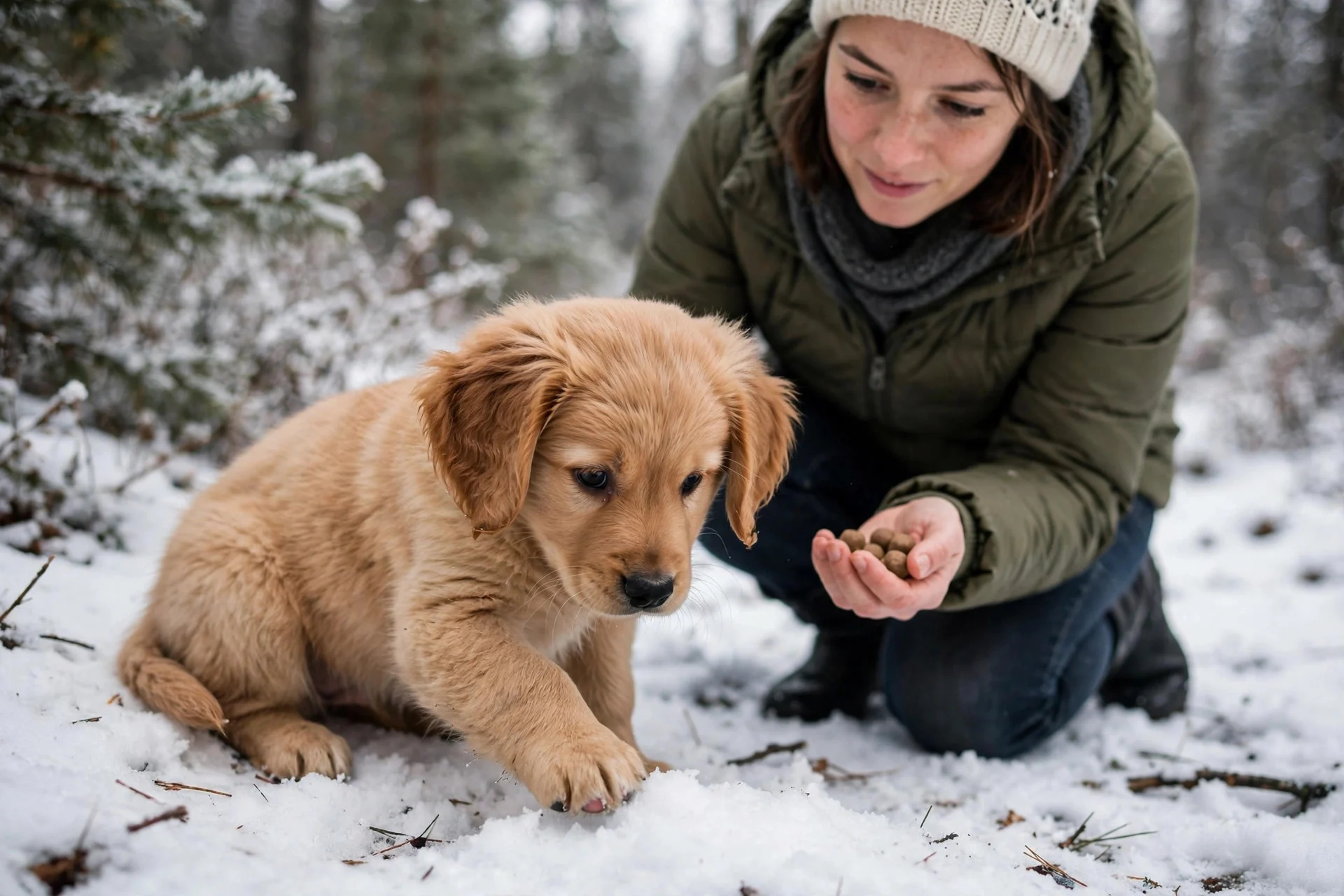
Some puppies see snow and lose their minds with joy. Others freeze, tuck their tails, and stare at you like you’ve betrayed them. Both are normal. For a nervous first-timer, let them watch from the doorway first. Toss treats into a shallow patch so they link snow with good things. Keep the first session to five minutes and end on a high note. My Beagle touched snow with one paw, jumped back, and barked at it. By day three he was diving in headfirst. Give them time.
10. Schedule a Winter Vet Check
Before the cold sets in, get your puppy to the vet for a winter once-over. Puppies with undiagnosed issues — low weight, thin coats, early joint problems, incomplete vaccinations — handle cold worse. Your vet can confirm healthy weight and talk through breed-specific cold concerns. Our vet once told me my Golden’s thin puppy coat meant we’d need a coat earlier than most Labs — advice worth the whole visit.
Quick Practical Tips
- Towel by the door. Wipe wet paws and bellies after every outing — wet fur chills a puppy fast.
- Watch the shiver. Shivering means cold; whining or lifting paws means “take me inside now.”
- Booties take training. Practice indoors for a few days first — the high-step dance is funny, but they need to accept them before they need them.
- Adjust food to activity. Puppies playing hard in the cold may need a bit more — ask your vet, don’t guess.
Mistakes to Avoid
- Cold car “for a minute.” Cars cool down dangerously fast in winter. It doesn’t take long.
- Skipping walks entirely. Cold shortens walks; it shouldn’t cancel them. Move some exercise indoors.
- Bathing too often. Winter air dries skin out. Bathe only when necessary, with a moisturizing puppy shampoo.
FAQs
How cold is too cold for a puppy?
Below 20°F, keep it to quick potty trips only. Between 20-32°F, short supervised play is fine for most puppies with a coat. Above freezing, normal walks are okay. Watch the puppy — shivering and paw-lifting mean go inside, whatever the thermometer says.
Do puppies need boots in winter?
Not always. Paw balm plus post-walk wiping handles most situations. Where road salt is heavy or ice is sharp, boots help. Introduce them indoors first — most puppies need a few days to accept them.
Can my puppy play in the snow?
Yes, with supervision and limits. Short sessions (10-15 minutes for young puppies) are great fun and safe exercise. Dry them off thoroughly afterward and check between the toes for packed ice.
Should I feed my puppy more in winter?
Don’t cut food — puppies are growing — but don’t automatically increase it either. Active outdoor puppies may need slightly more; indoor couch puppies probably don’t. Weigh monthly and adjust based on the scale and your vet.
You’ve Got This
A puppy’s first winter feels high-stakes, but it’s mostly common sense: keep them warm, keep trips short, watch the paws, and don’t skip the fun. Watching a puppy discover snow is one of the best parts of dog ownership. Enjoy it.