That first road trip with a puppy is pure excitement — right up until mile 40, when they are carsick on your back seat and you are wondering whose idea this was. If you searched for traveling with puppy car safety tips hoping for a simple answer, here it is: with the right setup, most puppies learn to love car rides within a few trips.
My first long drive with a puppy involved a lab mix, a shredded puppy pad, and a pit stop where she tried to climb into a stranger’s truck. I have done a lot of drives since, and I have the system down now. These ten tips will get you there without the drama.
Car Travel With a Puppy: 10 Safety Tips
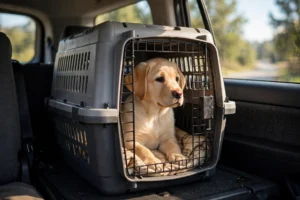
1. Use a Crash-Tested Crate or Car Seat
This is the single most important thing on this list. An unrestrained 20-pound puppy becomes a 20-pound projectile in a crash. A sturdy crate secured in the cargo area or back seat is the gold standard — look for crates that are actually crash-tested, not just labeled “travel.” For small puppies, a crash-tested car seat strapped into the seatbelt works well too. Just big enough to stand, turn, and lie down. Cozy, not roomy.
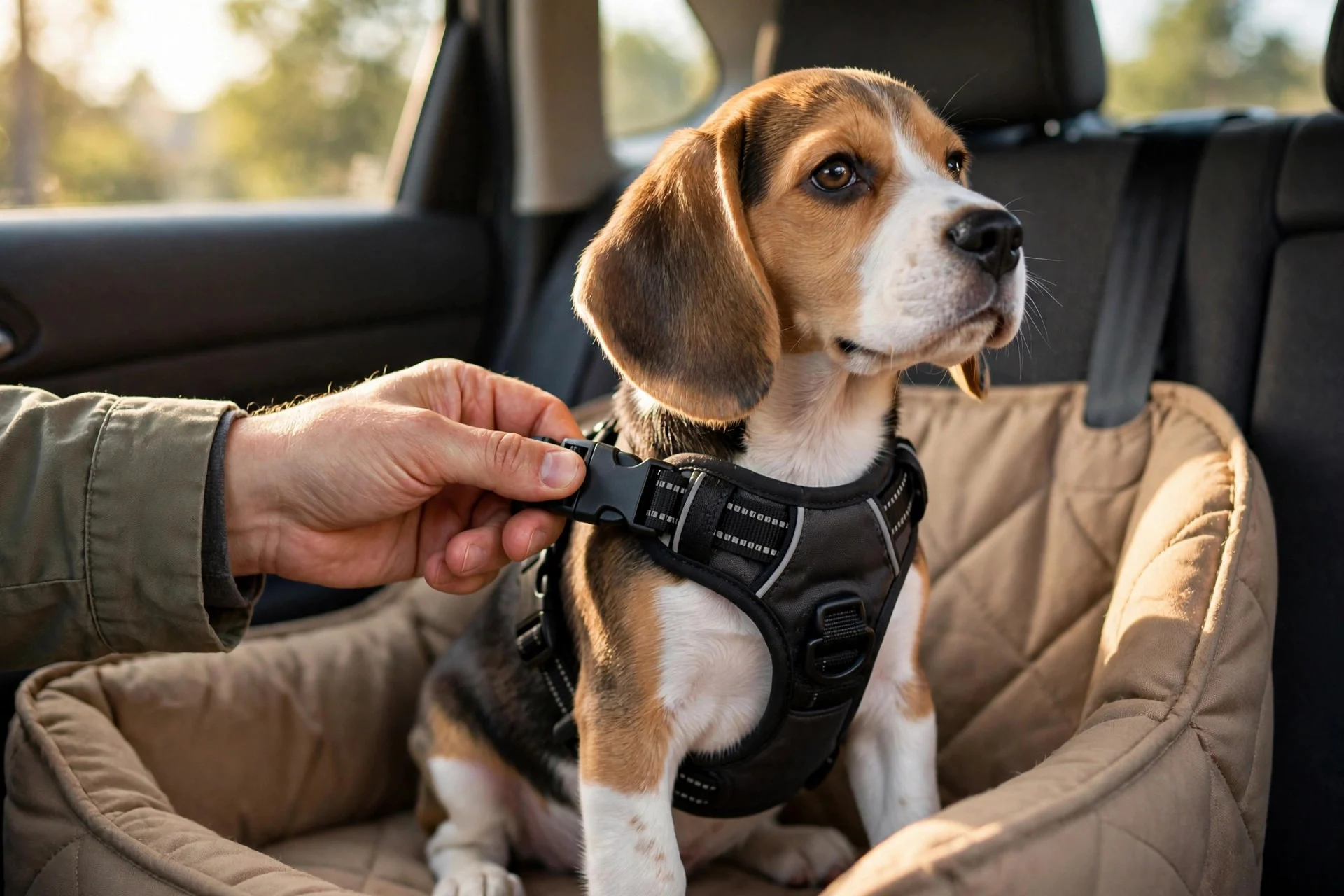
2. Or Use a Harness Clipped to the Seatbelt — in the Back Seat
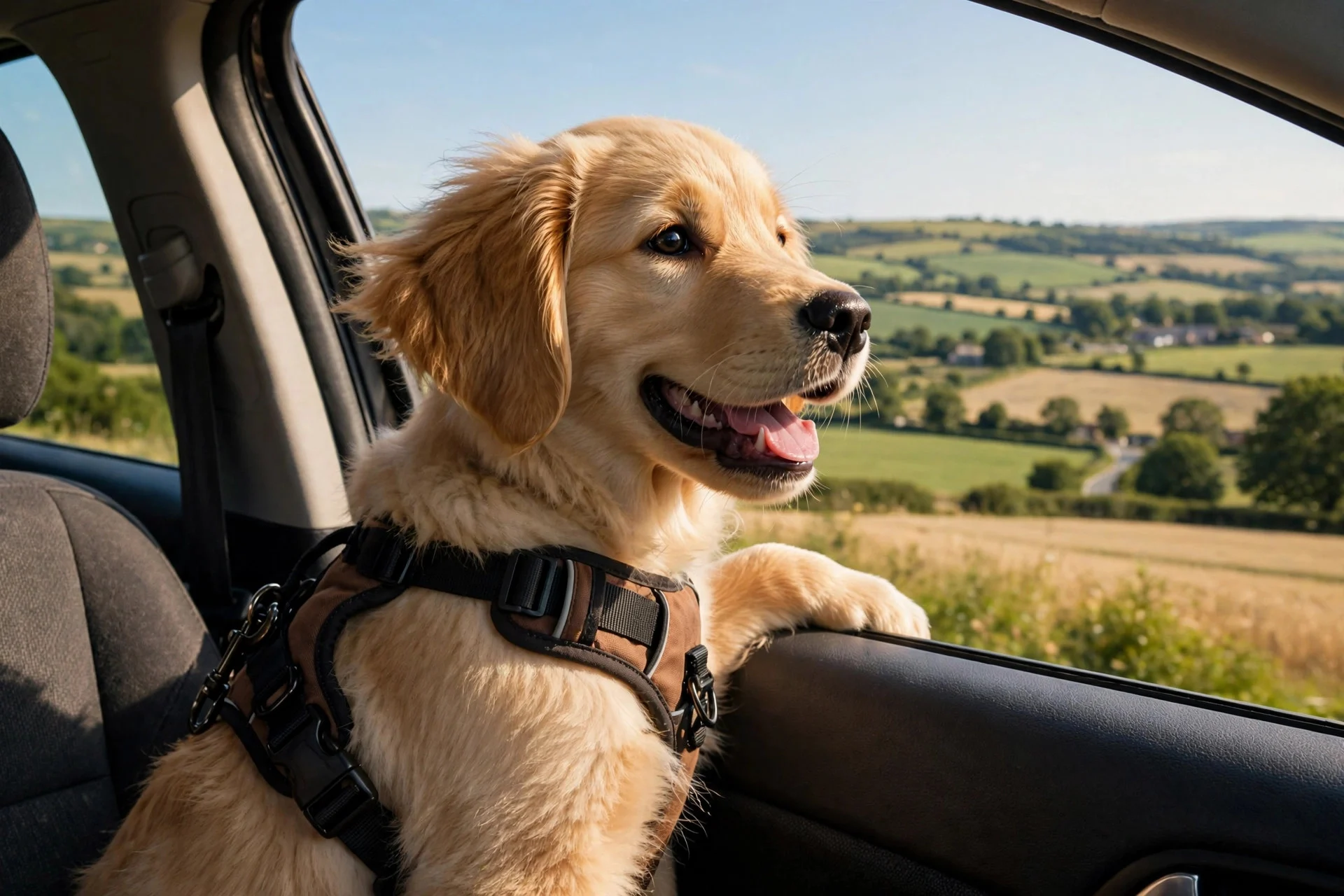
If a crate will not fit, a crash-tested harness attached to the seatbelt is a solid backup. It keeps the puppy on the seat through sudden stops. Key word: back seat. The front passenger seat is never okay — airbags deploy with enough force to kill a small dog. Always the back. No exceptions, not even for “just a quick trip.”
3. Never Let Them Ride Loose
A loose puppy climbs into the driver’s footwell, darts out the door at gas stations, and ends up on your lap at 60 miles an hour. I know it is tempting — they look so happy — but a loose puppy is how road trips turn into emergency vet visits. Restraint is not mean. It is the seatbelt equivalent, and you would not skip yours.
4. Keep Their Head Inside the Window
Dogs love hanging their heads out the window. It is also how they get hit by debris, bugs in the eyes, and ear infections from the wind — and a sudden swerve can throw them out. Crack the windows a few inches for airflow and let them sniff the breeze from inside. They get 90% of the joy and none of the emergency room.
5. Stop Every Two Hours for Water and Potty
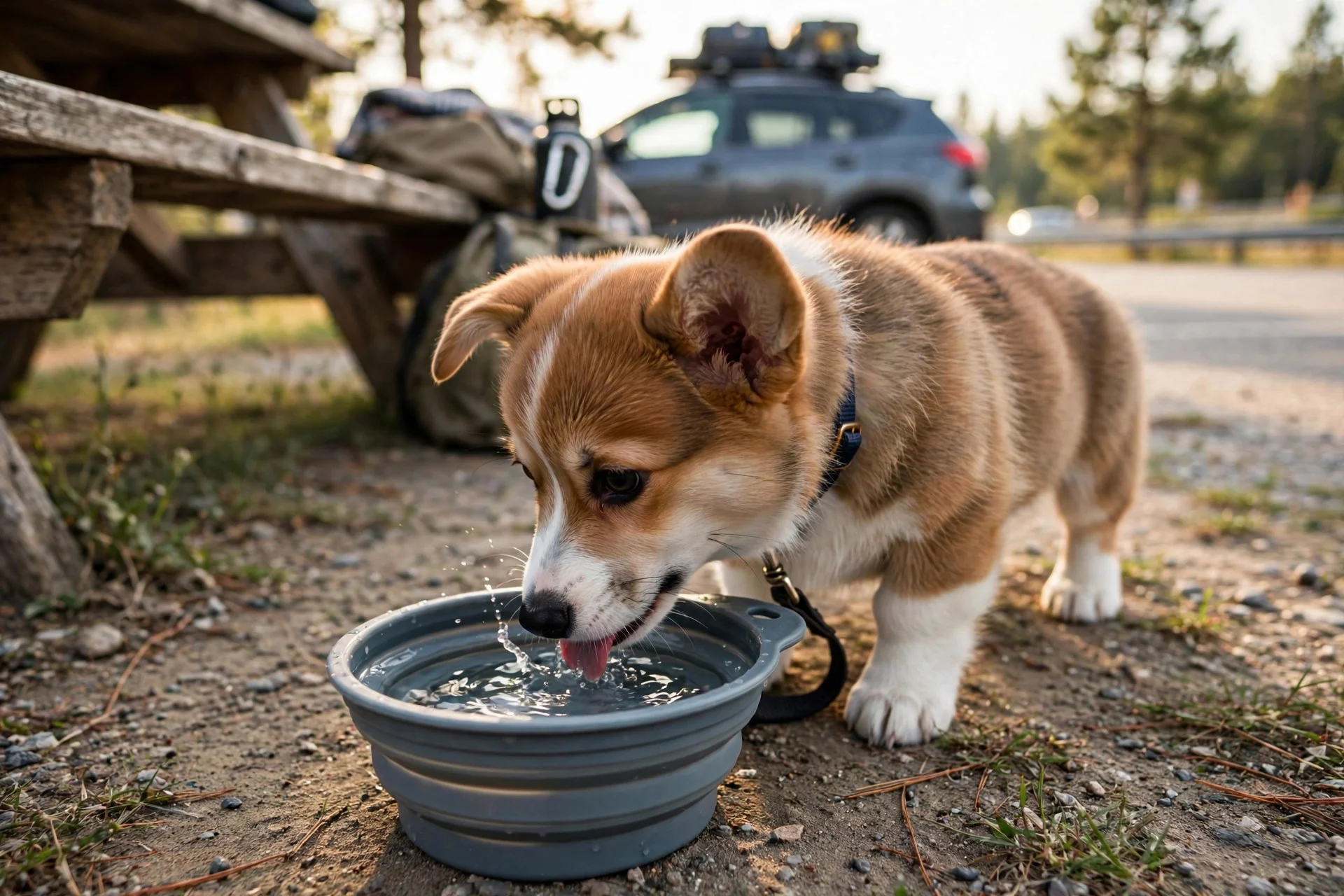
Puppies have tiny bladders and zero patience. Set a phone alarm: every two hours, water first, then a potty break on leash (always on leash at rest stops), then a few minutes to stretch and sniff. Bring more water than you think you need and a collapsible bowl. Dehydration sneaks up on small puppies fast in warm weather.
6. Manage Motion Sickness Before It Manages You
About half of puppies get carsick — their inner ears are still developing, and most outgrow it by their first birthday. Keep the car cool, face them forward (sideways makes it worse), and skip big meals for two to four hours before driving. Start with short five-minute practice drives and build up. If vomiting persists after a few weeks of practice, talk to your vet — there are safe options, but dosing is a vet call.
7. Line the Crate With Puppy Pads (Just in Case)
Even a well-rested puppy can have an accident on a long drive. Line the crate with a puppy pad under the blanket so cleanup takes two minutes instead of twenty. Pack extras — three or four for a full day — plus paper towels and a trash bag. Future you, pulled over on the shoulder, will be grateful.
8. Pack a Car Kit: First Aid, Water, the Boring Essentials
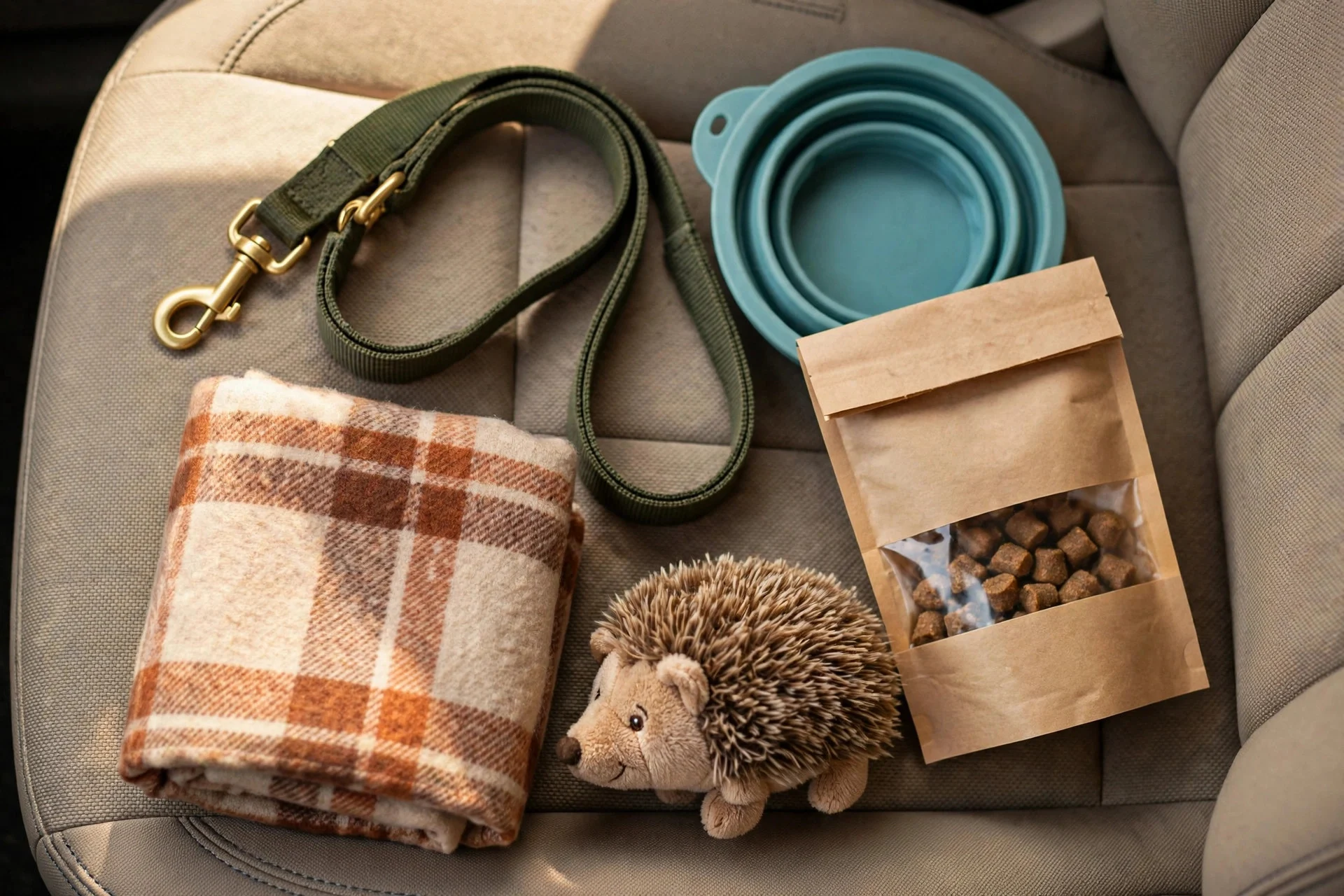
Keep a small kit in the car: a pet first-aid kit ($25 to $40), a gallon of water, a collapsible bowl, poop bags, a spare leash, a towel, treats. Add any medications and your vet’s number in your phone. I also keep a spare slip lead in the glove box — it has saved me twice when a collar slipped off at a rest stop.
9. Never Leave a Puppy Alone in a Hot Car
On an 80-degree day, a car’s interior hits 100 degrees in about ten minutes, even with windows cracked. Puppies overheat faster than adult dogs, and heatstroke can kill in under 15 minutes. If you cannot take the puppy inside, do not make the stop — drive through, or take turns with another person. “I will only be five minutes” is the sentence every vet dreads hearing.
10. Double Up on ID: Tags and Microchip
Travel multiplies the odds of a lost puppy — strange rest stops, open car doors, a slipped collar in an unfamiliar parking lot. Collar tag with your cell number (not your home number; you are not home), and confirm the microchip registration has your current number. A chip with an old number is just a very expensive piece of metal. Check both before every big trip.
Practical Tips for the Drive Itself
Feed a light meal three to four hours before leaving, then nothing until arrival — a full stomach plus a winding road is a bad combination. Put one familiar-smelling item in the crate, like the blanket from their bed. Keep the car around 68 to 72 degrees, and play calm music low — steady background sound genuinely helps anxious puppies settle. And build in one extra stop beyond what you planned. Puppies do not care about your ETA.
Mistakes That Ruin Puppy Road Trips
The classic mistake is the marathon first drive: an eight-hour trip as the puppy’s very first car experience. Start with short drives to fun places so the car means good things. The second is skipping pre-trip practice with the crate or harness. A puppy experiencing restraint for the first time, in a moving car, on a highway, is a panicking puppy. Practice in the driveway first. Boring practice now means a calm traveler later.
FAQs About Traveling by Car With a Puppy
How old should a puppy be before a long car trip?
No magic age, but most vets suggest short trips until vaccinations are further along — mainly because of rest-stop germ exposure, not the car. Eight to twelve weeks is workable for longer trips if the puppy is healthy and rest stops stay quick and on-leash. Ask your vet about your route.
Can my puppy sit on someone’s lap in the back seat?
It feels safe, but it is not. In a crash, nobody can hold onto a puppy — the forces far exceed human grip strength. A lap puppy becomes a projectile just like a loose one. Harness or crate, every time, even with a passenger holding them.
What if my puppy cries the whole drive?
Rule out the basics first: do they need to pee, are they too hot, is the crate too big? Then try shorter practice drives with high-value treats and a familiar blanket. Some puppies cry for 15 minutes and then sleep for three hours — give them a chance to settle before declaring the trip doomed.
Car travel with a puppy feels chaotic exactly twice: the first trip, and the first trip after you get lazy about the system. Set up the crate, pack the kit, stop every two hours, keep them restrained and cool. By the third trip your puppy will be asleep before you hit the highway — and you will actually enjoy the drive.