Yes — plain cooked jasmine rice is safe for dogs. It is a type of white rice that has had the outer bran layer removed, which makes it soft, easy to digest, and gentle on the stomach.
Many vets recommend plain cooked rice as part of a bland diet for dogs recovering from mild stomach upset, diarrhea, or vomiting. Jasmine rice works the same way as regular white rice for this purpose.
The important word is plain. Rice cooked with garlic, onion, butter, salt, or spices is not safe for dogs. Only plain rice cooked in water, with nothing added, should be given to your dog.

Is Jasmine Rice Safe for Dogs?
Yes. Plain cooked jasmine rice is generally safe for dogs in moderation.
It’s a type of white rice, which means it has had the outer bran layer removed. That process makes it softer and easier to digest compared to some whole grains.
That’s exactly why it often shows up in bland diets for dogs dealing with temporary stomach upset.
But the word “plain” matters here.
Dogs should only eat jasmine rice that’s fully cooked without:
- Garlic
- Onion
- Heavy oils
- Butter
- Excess salt
- Spicy seasoning
The seasoned rice sitting beside your takeout curry is not the same thing as simple cooked rice made specifically for your dog.
Why Some Vets Recommend Rice for Upset Stomachs
Rice is bland, low in fiber, and relatively easy for dogs to digest.
When dogs have mild digestive issues, vets sometimes recommend temporary bland meals because they put less stress on the stomach.
Plain jasmine rice paired with a lean protein like boiled chicken or turkey is commonly used for short-term feeding during:
- Mild diarrhea
- Temporary stomach upset
- Vomiting recovery
- Digestive sensitivity
The soft texture also helps some dogs eat when they normally would not touch food.
Jasmine Rice vs White Rice: Is There a Difference for Dogs?
Jasmine rice is technically white rice, but it has a slightly softer texture and mild aroma compared to regular long-grain white rice.
For dogs, the nutritional differences are fairly small.
Jasmine Rice
- Softer texture
- Slightly stickier when cooked
- Easy to digest
- Mild flavor
Brown Rice
- Higher fiber
- More nutrients
- Harder to digest
- Better for healthy dogs without stomach issues
If your dog has an upset stomach, white rice or jasmine rice is usually the easier option.
Brown rice works better for healthy dogs needing extra fiber, but it can sometimes feel heavier on sensitive stomachs.
How to Cook Jasmine Rice for Dogs
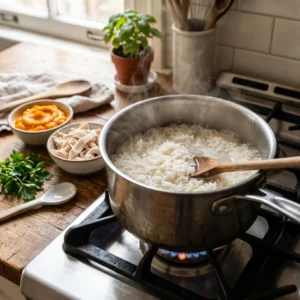
Simple is best here.
Basic Jasmine Rice for Dogs
Ingredients
- 1 cup jasmine rice
- 2 cups water
That’s it.
No seasoning. No broth cubes. No garlic powder.
Instructions
- Rinse the rice lightly under cool water.
- Add rice and water into a pot.
- Bring to a boil.
- Lower heat and cover.
- Simmer for about 15 minutes until soft.
- Let cool before serving.
The rice should be soft and slightly sticky after cooking.
If it looks dry, adding a little warm water helps soften it further.
What to Mix With Jasmine Rice
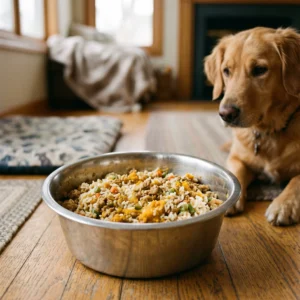
Rice alone is not nutritionally balanced enough for long-term feeding.
It works best paired with simple protein sources.
Good Options Include
- Boiled chicken breast
- Lean ground turkey
- Scrambled eggs
- Pumpkin puree
- Plain cooked carrots
A simple combination of jasmine rice, boiled turkey or chicken, and a spoonful of plain pumpkin puree is one of the most commonly recommended bland meals for dogs with mild digestive upset.
Foods You Should Never Mix Into Dog Rice
This matters more than people realize because many human rice dishes contain ingredients unsafe for dogs.
Avoid adding:
- Onion
- Garlic
- Chives
- Heavy butter
- Spicy sauces
- Soy sauce
- Excess salt
Even small amounts of onion or garlic can become dangerous over time.
How Much Jasmine Rice Can Dogs Eat?
Portion size depends on your dog’s size and why you’re feeding it.
If rice is being used temporarily during stomach upset, smaller portions spread throughout the day usually work best.
General Serving Guide
| Dog Size | Rice Amount |
|---|---|
| Small Dogs | 1 to 2 tablespoons |
| Medium Dogs | 1/4 to 1/2 cup |
| Large Dogs | 1/2 to 1 cup |
For bland diets, rice is often combined with lean protein in roughly equal amounts.
Can Dogs Eat Jasmine Rice Every Day?
Not by itself.
Rice is a carbohydrate source, not a complete diet.
Dogs need balanced nutrition including:
- Protein
- Healthy fats
- Vitamins
- Minerals
Too much rice over time can lead to excess calories without enough nutritional balance.
For healthy dogs, jasmine rice works better as:
- An occasional meal addition
- A short-term bland diet ingredient
- Part of a balanced homemade meal
Is Jasmine Rice Good for Dogs With Diarrhea?
In many mild cases, yes.
Plain white rice is often recommended because it’s easy to digest and may help firm stools temporarily.
That said, persistent diarrhea always deserves attention.
If symptoms last more than a day or two, or if your dog becomes lethargic, refuses water, or vomits repeatedly, contact your veterinarian.
Rice helps support mild digestive recovery. It is not a cure for underlying illness.
Can Puppies Eat Jasmine Rice?
Yes, in small amounts.
But puppies have different nutritional needs than adult dogs, so rice should only make up a small part of their meals unless directed otherwise by a vet.
Puppies need balanced growth nutrition, especially during rapid development stages.
Common Mistakes Dog Owners Make With Rice
Feeding Seasoned Rice
This is probably the biggest one.
Human rice dishes often contain ingredients dogs should not eat.
Plain rice only.
Feeding Too Much
Rice is filling and inexpensive, which makes it easy to overdo.
Too much can lead to weight gain over time.
Using Rice as a Long-Term Diet
Rice works best as part of a balanced meal, not the entire meal itself.
Signs Jasmine Rice May Not Agree With Your Dog
Most dogs tolerate rice well, but every dog is different.
Watch for:
- Excess gas
- Loose stool
- Vomiting
- Itching
- Digestive discomfort
Introduce new foods gradually whenever possible.
Final Thoughts
Plain cooked jasmine rice is a safe, practical option for most dogs — especially useful during temporary stomach upset when your dog needs something easy to digest.
It is not a complete meal on its own. Always pair it with a lean protein like boiled chicken or turkey, and only use it long-term as part of a properly balanced homemade diet.
Avoid any rice that has been cooked with seasonings, sauces, or additives meant for human meals. If your dog’s digestive symptoms last more than 48 hours, or if they become lethargic or stop drinking water, contact your vet rather than continuing a home bland diet.