I learned the value of a dog first aid kit the dramatic way: my dog sliced his paw pad on a broken bottle at the park, and I had nothing — no bandage, no antiseptic, just a sock and a prayer. The vet visit went fine, but the twenty minutes of improvising in a parking lot taught me a lesson I won’t forget. You don’t need to be a medic. You just need a kit.
This dog first aid kit checklist covers the 20 essentials that handle the vast majority of minor dog emergencies — cuts, stings, ticks, stomach scares — and buy you safe time until you reach the vet. Build it once, check it twice a year, and keep it where you can grab it fast.
Dog First Aid Kit Checklist: 20 Essentials
1. Gauze pads and rolls
For covering wounds and applying pressure to bleeding. Non-stick pads are best — regular gauze can stick to a healing cut. Keep several sizes. You’ll use these more than anything else in the kit.
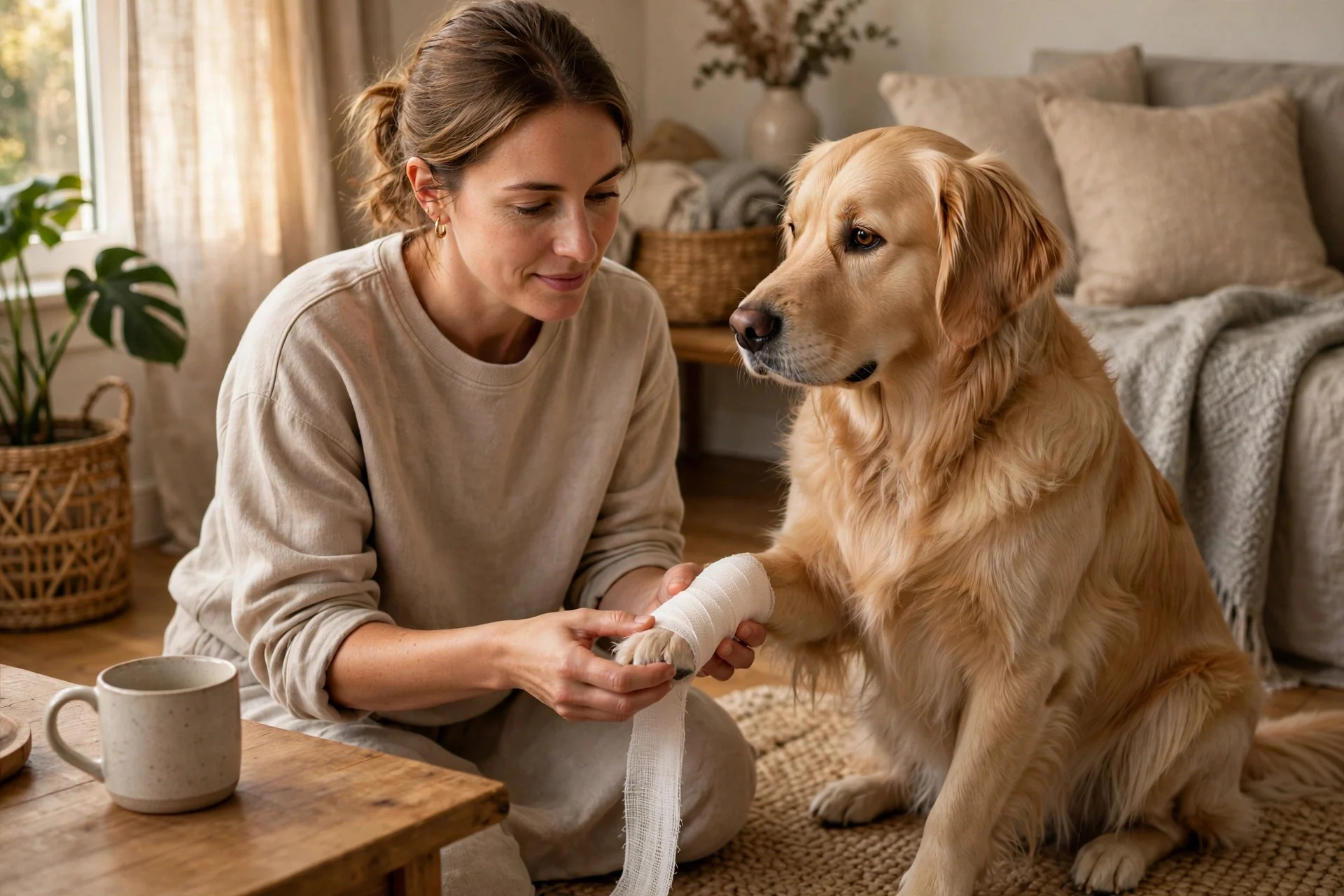
2. Self-adhesive bandage wrap
The stretchy wrap that sticks to itself (not fur) — perfect for holding gauze on paws and legs. Don’t wrap too tight; you should be able to slip a finger underneath. Temporary hold, not a cast.
3. Adhesive tape
Medical tape for securing bandages. The wrap alone sometimes needs backup on wiggly dogs.
4. Styptic powder or pencil
Stops bleeding from torn nails fast. Press firmly onto the nail for several seconds. Also useful for minor nicks.
5. Antiseptic wipes or chlorhexidine solution
For cleaning minor cuts and scrapes. Avoid alcohol-based products on open wounds — they sting and damage tissue. Chlorhexidine wipes are the vet-clinic standard for a reason.
6. Saline eye wash
Plain sterile saline for flushing debris from eyes or rinsing wounds. Not contact lens solution with additives — just plain sterile saline.
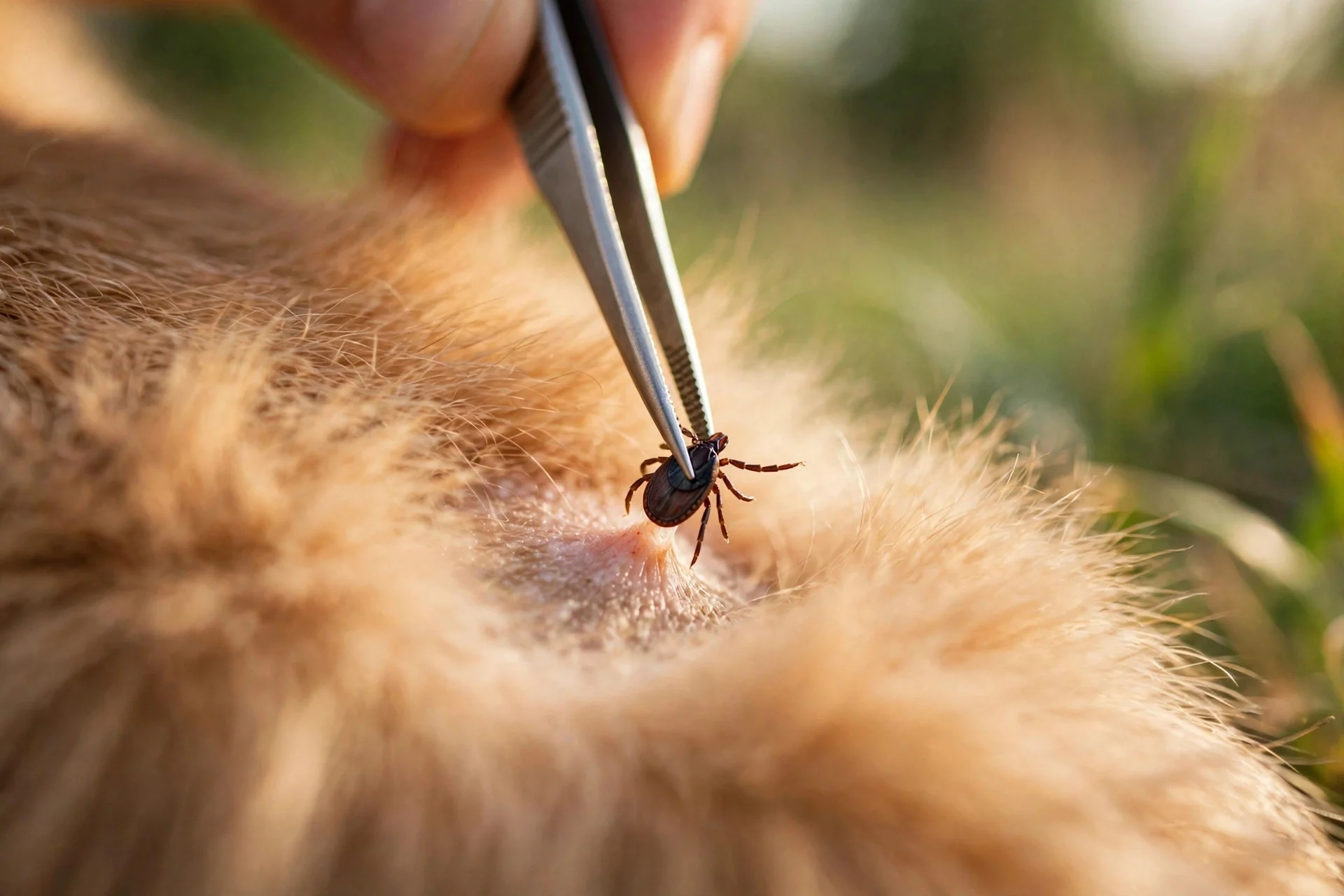
7. Tweezers and a tick remover
Fine-tipped tweezers for splinters; a forked tick remover for ticks. Grasp ticks as close to the skin as possible and pull straight out — no twisting, no burning, no nail polish. Old wives’ tales make tick removal worse, not better.
8. Blunt-tipped scissors
For cutting bandages and trimming fur away from wounds. Blunt tips mean you won’t stab a squirming dog.
9. Digital rectal thermometer + lubricant
Normal dog temperature is roughly 101–102.5°F. A thermometer tells you whether your dog actually has a fever or you’re just worrying. Mark it “dog only” — trust me on this one.
10. Hydrogen peroxide 3% (unopened)
For inducing vomiting ONLY if your vet or poison control specifically tells you to — never on your own. It doesn’t work for everything (never for caustics, sharp objects, or petroleum products), and the wrong call makes things worse. Keep it sealed; it loses potency once opened.
11. Benadryl (diphenhydramine) — vet-dosed
For mild allergic reactions like facial swelling from a bee sting. Dosing is weight-specific and formulation matters, so ask your vet in advance for your dog’s dose and write it on the box. Severe reactions (trouble breathing, collapse) mean emergency vet, not Benadryl.
12. Muzzle or emergency muzzle
Even the sweetest dog may bite when in severe pain — it’s reflex, not temperament. A basket muzzle or a strip of cloth protects you while you help them. Practice during calm times so it’s not a new scary thing during an emergency.
13. Leash and spare collar
Injured dogs bolt. A spare leash in the kit means you’re not improvising with a belt in a crisis. Slip leads are ideal — they work on any dog.
14. Blanket or emergency thermal blanket
For warmth (shock causes chilling), for carrying a small injured dog, or for covering a stretcher setup. A cheap space blanket weighs nothing and lives happily in a kit for years.
15. Gloves
Disposable gloves protect both of you — the wound from your hands, and your hands from blood and bite risk. Keep several pairs.
16. Syringe (no needle) or turkey baster
For flushing wounds with saline or giving liquid medication your vet prescribed. Pouring from a bottle is a mess; a syringe gives you control.
17. Emergency numbers card
Your vet’s number, the nearest emergency clinic, and ASPCA Poison Control (888-426-4435 — note the consultation fee). Write them on a card in the kit. In a real emergency, you won’t want to be Googling.
18. Copy of vaccination records
If you end up at an emergency clinic, having vaccination history speeds everything up. A photo on your phone works too — just make sure it’s current.
19. Treats
For keeping a stressed dog cooperative and rewarding bravery after. High-value treats — the good stuff. Emergencies are not the time for low-value kibble.
20. A sturdy bag to hold it all
A small duffel, a toolbox, even a gallon ziplock for the car version. The best kit is the one you can grab with one hand.
Practical Tips
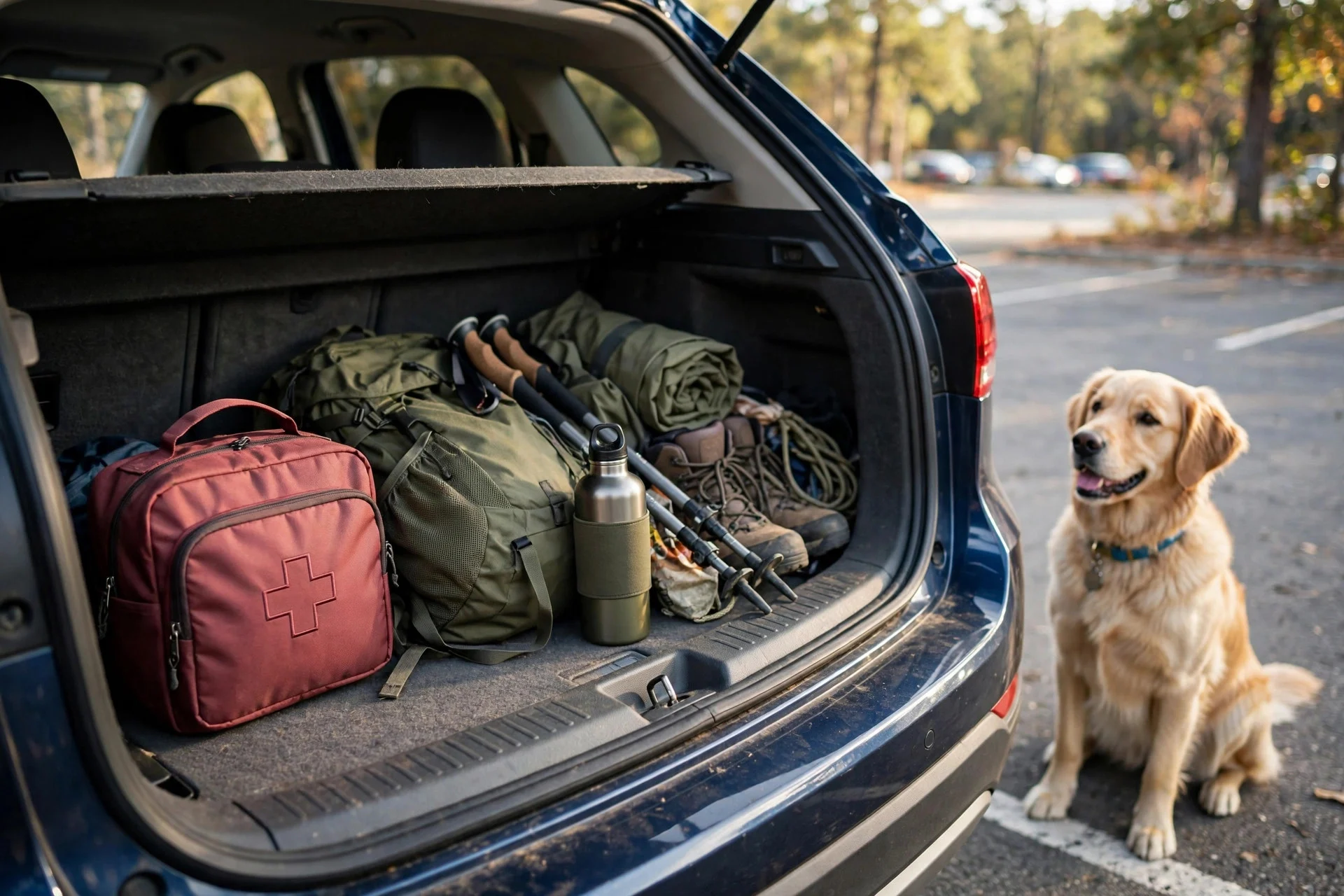
Make two kits. One for home, one for the car. The car kit handles park and hiking emergencies; the home kit can be bigger.
Check it twice a year. Hydrogen peroxide expires, wipes dry out, treats go stale, numbers change. Tie the check to daylight saving time changes.
Know your route. A kit buys time, but it’s not a vet. Know where your nearest emergency clinic is before you need it. Drive the route once.
Mistakes to Avoid
Don’t play vet with serious injuries. The kit handles minor stuff and stabilization. Deep wounds, broken bones, breathing trouble, seizures, bloating, or poisoning need a vet immediately. When in doubt, call.
Don’t induce vomiting without guidance. Hydrogen peroxide is in the kit for when a professional tells you to use it — not for freelance decision-making. The wrong substances vomited back up cause more damage.
Don’t use human medications freely. Ibuprofen and acetaminophen are toxic to dogs. Never give human pain meds unless your vet specifically directs it. What’s safe for you can be dangerous for them.
Don’t wrap bandages too tight. A bandage that’s too tight cuts off circulation — check toes for swelling beyond the wrap, and if in doubt, looser is safer for the trip to the vet.
What Counts as a Real Emergency
Call your vet or emergency clinic immediately for: difficulty breathing, uncontrolled bleeding, seizures, collapse, bloated abdomen, inability to urinate, suspected poisoning, eye injuries, heatstroke signs, or any injury where your dog can’t bear weight. The kit stabilizes; the vet treats.

FAQs
What should I do first if my dog is bleeding?
Apply firm, direct pressure with gauze — don’t keep lifting it to check, which disrupts clotting. If blood soaks through, add more gauze on top. For a paw cut, wrap snugly and head to the vet. Stay calm; your dog reads your energy.
Can I use Neosporin on my dog?
Plain triple-antibiotic ointment is generally considered safe for minor surface scrapes, but dogs lick it off, which defeats the purpose and can upset stomachs. A thin layer under a bandage is fine for minor wounds; deep wounds need a vet.
How do I safely remove a tick?
Use fine tweezers or a tick tool, grasp as close to the skin as possible, and pull straight out with steady pressure. Clean the area with antiseptic, save the tick in a baggie (in case symptoms develop later), and wash your hands.
Should I keep hydrogen peroxide even if I’m not sure when to use it?
Yes — but with the rule taped to the bottle: only use when your vet or poison control tells you to. It’s a tool for guided use, not improvisation.
Build the kit this weekend. One shopping trip, twenty minutes to assemble. You’ll probably never need most of it — and that’s exactly the point.