Fleas are one of the most frustrating problems dog owners deal with. If your dog keeps scratching, biting their skin, or seems uncomfortable, fleas may be the cause. These tiny parasites can spread quickly and make both your pet and your home miserable.
Many dog owners prefer to avoid harsh chemical treatments when possible. Natural flea remedies can help reduce flea populations, repel them, and make your dog more comfortable. While natural solutions may take a little more consistency, they can be safer for pets and households when used correctly.
In this guide, you’ll learn 7 natural ways to get rid of fleas on dogs, along with helpful tips to prevent fleas from returning.
Signs Your Dog May Have Fleas
Before starting treatment, it’s important to recognize the common signs of fleas. Fleas are small and quick, but they often leave noticeable symptoms.

Common signs include:
-
Frequent scratching or biting at the skin
-
Red bumps or irritated patches on the skin
-
Hair loss or thinning fur
-
Flea dirt (tiny black specks that look like pepper)
-
Visible fleas moving through your dog’s fur
Check areas like the base of the tail, belly, and behind the ears, as fleas often gather there.
If you notice several of these signs, your dog may have a flea problem.
Are Natural Flea Remedies Effective?
Natural flea remedies can work well when used consistently. Unlike chemical treatments that may kill fleas instantly, most natural methods repel fleas or interrupt their life cycle.
This means results may take a little longer, but many pet owners prefer these methods because they are gentler on dogs and the environment.
Often the best results come from combining several natural remedies instead of relying on only one.
1. Citrus Flea Spray
Citrus contains natural compounds such as limonene, which fleas dislike.
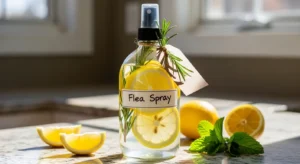
How to Use Citrus for Fleas
-
Slice a lemon or orange into thin pieces.
-
Add the slices to a pot of boiling water.
-
Let the mixture steep overnight.
-
Pour the liquid into a spray bottle.
Lightly spray the mixture on your dog’s bedding, carpets, or furniture where fleas may hide. Avoid spraying directly on your dog’s face or sensitive areas.
Citrus spray can help repel fleas naturally while leaving a fresh scent.
2. Apple Cider Vinegar Flea Spray
Fleas dislike the smell and acidity of vinegar. While vinegar does not kill fleas directly, it helps create an environment fleas avoid.
How to Use Vinegar for Fleas
Mix:
-
1 cup apple cider vinegar
-
1 cup water
Pour the mixture into a spray bottle and lightly mist your dog’s coat while avoiding the eyes and open wounds.
You can also use this mixture on bedding or areas where your dog spends time.
3. Rosemary Flea Rinse
Rosemary is a natural herb known for repelling insects and soothing irritated skin.
How to Make a Rosemary Rinse
-
Add fresh rosemary to boiling water.
-
Let it steep for about 30 minutes.
-
Strain the liquid and allow it to cool.
After bathing your dog, pour the rosemary rinse over their coat and allow it to air dry. This natural rinse may help reduce fleas and soothe itching.
4. Diatomaceous Earth (Food Grade)
Food-grade diatomaceous earth is a natural powder made from fossilized algae. It works by damaging the outer layer of fleas, causing them to dehydrate.
How to Use Diatomaceous Earth
-
Sprinkle a thin layer on carpets and pet bedding
-
Leave it for 4–8 hours
-
Vacuum thoroughly afterward
Only use food-grade diatomaceous earth and avoid letting pets inhale the dust during application.
5. Sulfur Powder for Outdoor Areas
Sulfur powder has been used for decades to control fleas and pests in outdoor environments.
Sprinkling sulfur around your yard can make the environment less hospitable for fleas.
How to Use Sulfur Safely
-
Apply lightly in shaded areas of your yard
-
Avoid letting pets ingest the powder
-
Use it mainly outdoors rather than indoors
This method works best when combined with regular cleaning and grooming.
6. Daily Vacuuming and Steam Cleaning
Cleaning your home is one of the most effective natural ways to reduce fleas.
Flea eggs and larvae often hide in carpets, furniture, and cracks in flooring.
Tips for Effective Cleaning
-
Vacuum carpets, rugs, and furniture daily
-
Pay special attention to areas where your dog sleeps
-
Empty vacuum bags immediately after cleaning
-
Use steam cleaning to kill fleas and eggs hidden deep in fabrics
Heat and suction together help eliminate fleas in the environment.
7. Flea Light Traps
Fleas are attracted to heat and light. Flea traps take advantage of this behavior.
How Flea Light Traps Work
Place a shallow bowl of soapy water under a lamp near areas where fleas are present. The light attracts fleas, and they fall into the water and cannot escape.
While traps alone won’t eliminate a full infestation, they can help reduce flea numbers and monitor activity.
Preventing Future Flea Infestations Naturally
Preventing fleas is often easier than removing them once they spread.
Simple habits can help keep fleas away from your dog and home.
Helpful Prevention Tips
-
Wash pet bedding weekly with hot water
-
Brush your dog regularly using a flea comb
-
Keep your yard trimmed and clean
-
Remove piles of leaves or debris where fleas may hide
-
Use natural repellents like cedar chips in outdoor areas
Consistent prevention helps break the flea life cycle.
When to See a Veterinarian
If your dog continues scratching heavily or develops skin infections, it’s important to consult your veterinarian.
Some flea infestations may require medical treatments, especially for:
-
puppies
-
senior dogs
-
dogs with allergies or sensitive skin
A veterinarian can recommend safe treatments if natural methods are not enough.
Frequently Asked Questions
Can essential oils help remove fleas?
Some essential oils like lavender, cedarwood, and lemongrass may help repel fleas. However, they should always be properly diluted and used cautiously, as some oils can be harmful to pets.
How often should I apply natural flea remedies?
This depends on the method. Sprays and rinses can be used every few days, while cleaning and vacuuming may be needed daily during an infestation.
Is vinegar safe for dogs?
Yes, when diluted with water. Always avoid spraying near your dog’s eyes or open wounds.
Can fleas live in the house without pets?
Yes. Fleas can survive in carpets, furniture, and bedding while waiting for a host. This is why home cleaning is an important part of flea control.
What is the fastest natural way to reduce fleas?
Daily vacuuming combined with diatomaceous earth is often the fastest natural method for reducing flea populations in the home.
Final Thoughts
Fleas can be stubborn, but natural solutions can help control them without relying heavily on chemical treatments. By combining remedies like citrus sprays, vinegar solutions, rosemary rinses, and thorough home cleaning, many dog owners successfully manage flea problems naturally.
Consistency is key. Treat your dog, clean your home regularly, and maintain good grooming habits to prevent fleas from returning.
With the right approach, you can help your dog stay comfortable and enjoy a flea-free home.