Nobody wants to hear that their dog is overweight. I sure didn’t, the day my vet said the words “he could stand to lose a few” while my Lab looked at me with total betrayal. But here’s the reality: learning how to help dog lose weight safely is one of the kindest things you can do for them. Extra pounds shorten lives — the research is pretty clear on that.
The good news? Dogs are actually easier to slim down than people. They don’t open the fridge at midnight. You control every calorie that goes in. This is a fully winnable game — but it has to be done gradually and sensibly, and it should start with a vet visit. I’m an experienced owner, not a vet, so consider this a battle plan to discuss with yours, not a DIY prescription.
10 Safe Steps to Help Your Dog Lose Weight
1. Start With a Vet Visit
Before changing anything, get a checkup. Your vet will confirm the target weight, rule out medical causes (thyroid issues can mimic simple overeating), and help set a safe calorie target. This isn’t optional fluff — it’s the foundation. A dog that needs to lose 5 pounds gets a very different plan than one that needs to lose 30.
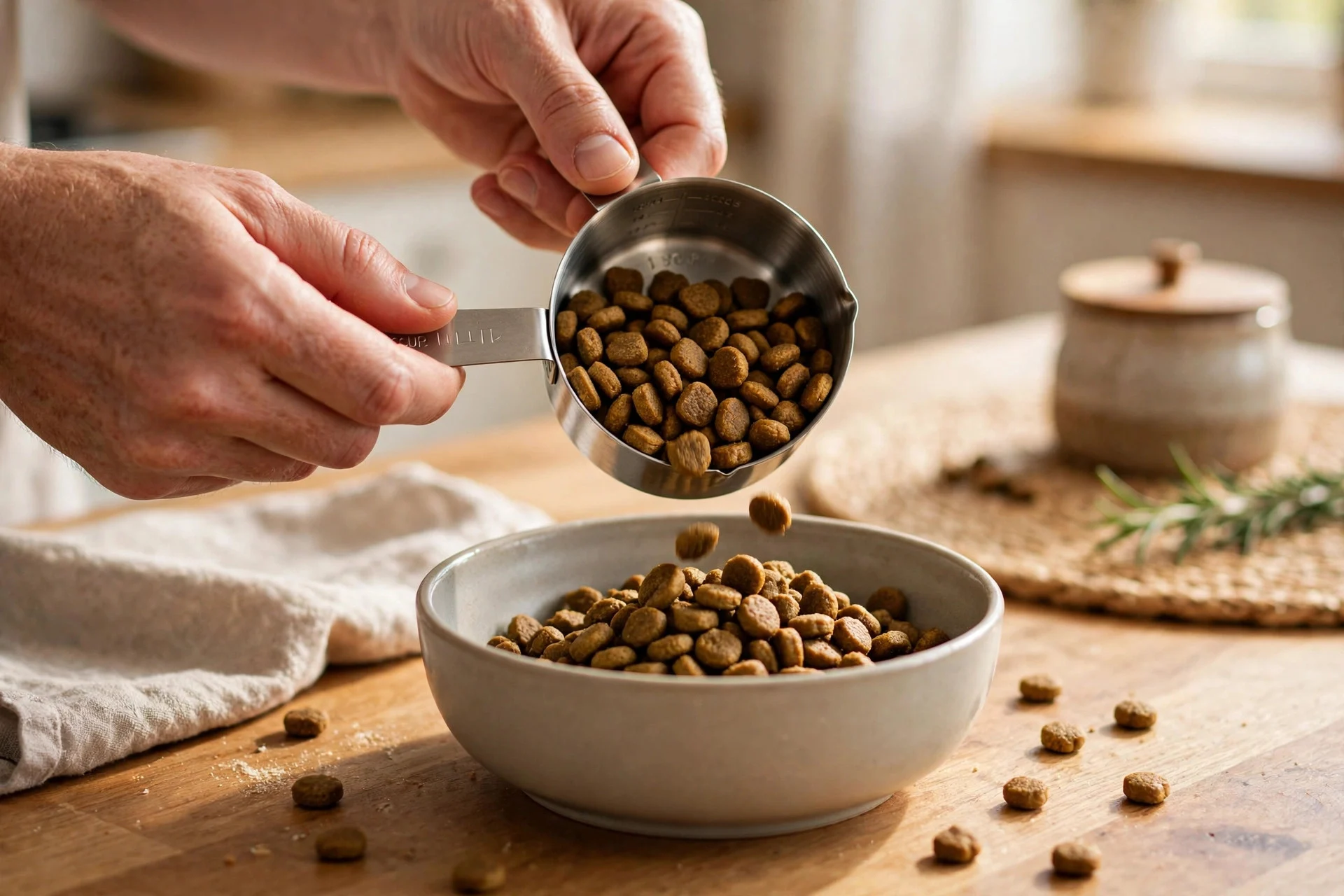
2. Measure Every Meal
The scoop-and-pour method is where most weight problems start. A “cup” from a random mug can be 30–40% more than an actual measuring cup. Get a real measuring cup, level it off, and feed exactly the amount your vet recommends. This single change fixes more overweight dogs than any fancy diet food.
3. Cut Treats (or at Least Count Them)
Treats are the silent killer of dog diets. A couple of big biscuits can add 20–30% to a small dog’s daily calories. You don’t have to eliminate treats — just budget them. Keep treats under 10% of daily calories, and break big treats into pieces. Your dog cares about the event of getting a treat, not the size.
4. Switch to a Weight-Management Food (If Needed)
If portion control alone isn’t moving the needle, ask your vet about a weight-management formula. These are higher in fiber and protein, lower in fat — so the dog feels full on fewer calories. Don’t just buy “light” food off the shelf and guess at portions; the vet’s calorie math matters more than the label.
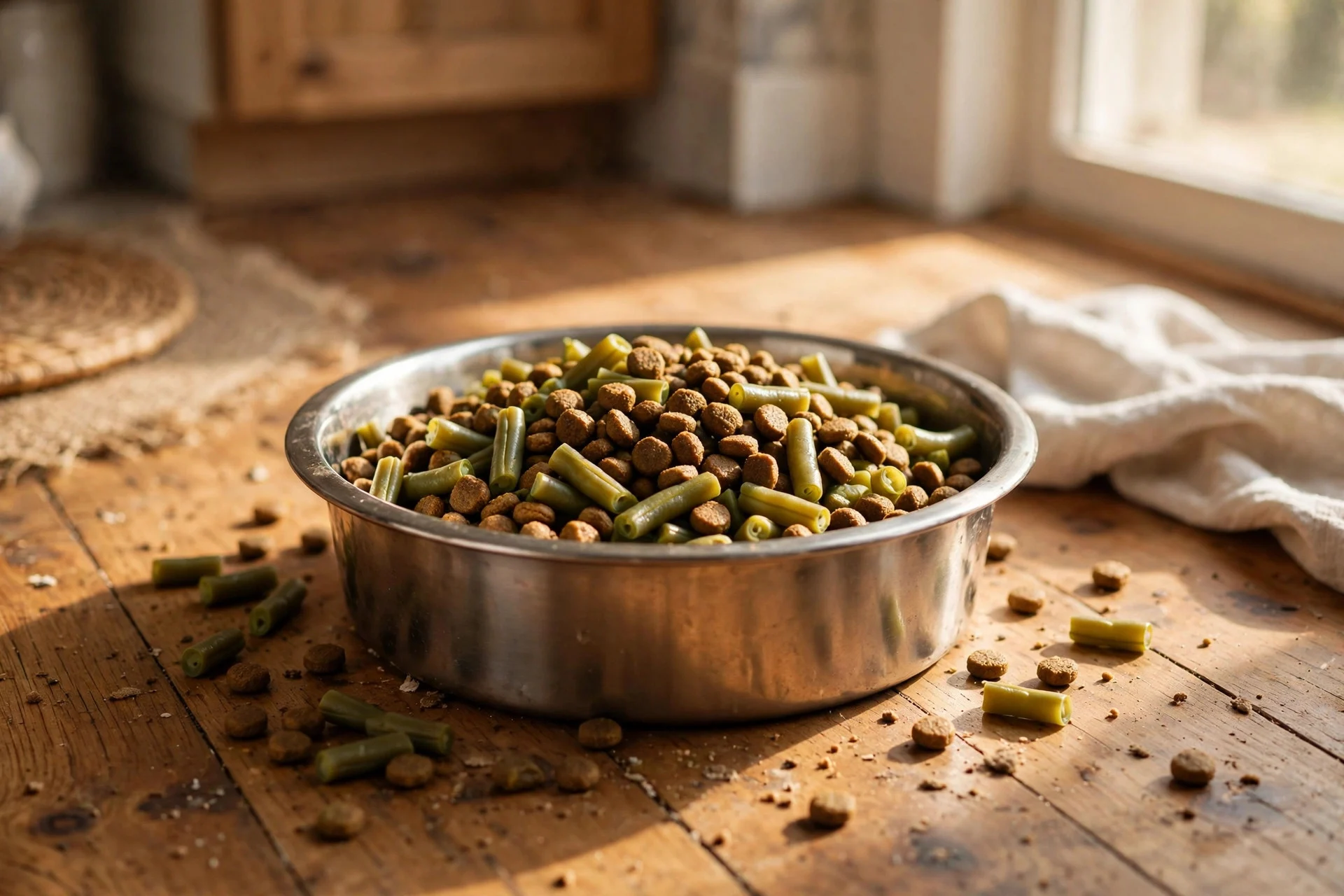
5. Add Low-Calorie Bulk
Here’s my favorite trick: replace part of the kibble with plain steamed green beans, plain canned pumpkin, or baby carrots. The bowl stays full, the dog stays satisfied, and the calories drop. My Lab never once noticed that a third of his “food” was green beans. He just knew the bowl was full.
6. Feed on a Schedule, Not Free-Choice
Free-feeding — leaving food out all day — makes portion control nearly impossible and teaches dogs to graze. Two measured meals a day (puppies need three) creates structure, makes it easy to track intake, and honestly, most dogs prefer the routine. Pick up uneaten food after 20 minutes.
7. Increase Exercise Gradually
An overweight dog can’t go from couch to 5K. Start with an extra 10-minute walk, then build up. Swimming is fantastic for heavy dogs — low impact on the joints, high calorie burn. Play sessions count too. The goal is consistency, not intensity: daily movement beats weekend heroics every time.
8. Weigh Monthly
You can’t manage what you don’t measure. Most vet clinics will let you pop in for a free weigh-in — call ahead and ask. Track it on your phone. A healthy rate of loss is about 1–2% of body weight per week. Slower than that is fine; faster than that means call the vet and adjust.
9. Get the Whole Household on Board
This is where diets go to die. If one family member is sneaking table scraps while you’re measuring kibble, the math doesn’t work. Everyone — kids, grandparents, the neighbor who “just gives one little treat” — needs to follow the plan. Put it in writing on the fridge if you have to. I did. No shame.
10. Be Patient
Safe weight loss takes months, not weeks. A dog that needs to lose 15 pounds might take 4–6 months. That’s normal and healthy. Crash dieting a dog — drastic calorie cuts — risks nutritional deficiencies and muscle loss. Slow and steady genuinely wins this race.
How Much Should Your Dog Actually Eat?
Those feeding guidelines on the bag? They’re starting points, and they tend to run generous — they’re written for active dogs, and most of ours are professional nappers. Your vet can calculate your specific dog’s resting energy requirement and set a daily target, usually 20–30% below maintenance for weight loss.
As a rough reality check: most spayed/neutered adult dogs of average activity need fewer calories than the bag suggests. But please don’t guess — get the number from your vet, then measure religiously. A kitchen scale is even better than a measuring cup if you want to be precise.
Practical Tips That Actually Work
Slow-feeder bowls and puzzle feeders do double duty: they prevent gulping and make meals last longer, which helps the dog feel satisfied. Splitting the daily ration into three smaller meals instead of two can help dogs that act starving between meals — same calories, more “events.”
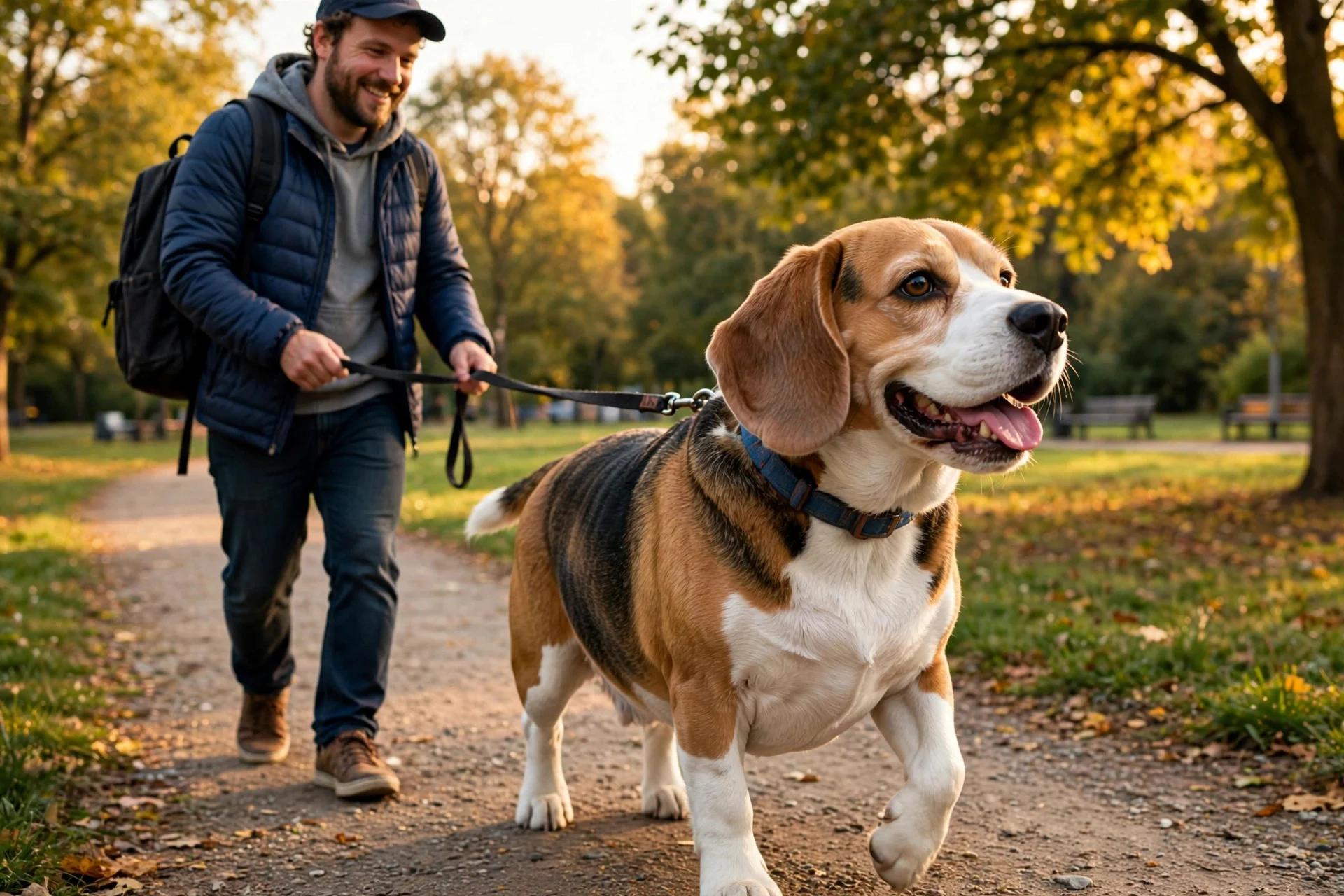
For exercise, find what your dog actually enjoys. Some dogs live for fetch; others would rather sniff every blade of grass on a slow walk. Both burn calories. The best exercise plan is the one you’ll actually do every day, so match it to your dog’s personality, not some ideal.
Mistakes to Avoid
The biggest mistake is crash dieting — cutting food in half overnight. Rapid weight loss in dogs can cause liver problems and muscle wasting, and it usually backfires when the dog starts counter-surfing out of genuine hunger. Gradual is the whole point.
Don’t skip the vet visit and self-prescribe a diet, either. Hypothyroidism, Cushing’s disease, and certain medications cause weight gain that no amount of portion control will fix. And please — no human diet pills, no “fat burner” supplements from the internet. If it sounds sketchy for you, it’s definitely sketchy for your dog.
FAQs
How fast should my dog lose weight?
Aim for 1–2% of body weight per week. A 50-pound dog losing a half to one pound per week is right on track. Faster than that consistently — check with your vet.
My dog acts like they’re starving. Is that normal?
Completely normal, especially in the first couple of weeks. Dogs are dramatic about food. The low-calorie bulk trick (green beans, pumpkin) helps a lot. If the begging is truly extreme, talk to your vet about adjusting the plan — but don’t cave to the sad eyes. They’re professionals.
Are weight-loss dog foods worth it?
They can be, especially for dogs that need to lose a lot. They’re formulated to keep the dog full on fewer calories. But the food alone doesn’t work without measured portions — the math still has to be right.
How do I know when my dog has reached a healthy weight?
You should be able to feel the ribs easily (with a thin fat layer), see a visible waist from above, and see a tucked-up belly from the side. Your vet will confirm with a body condition score. When in doubt, ask at the next checkup.
Helping your dog lose weight is one of the highest-impact things you can do for their health — more energy, healthier joints, a longer life. Start with the vet, measure the food, move a little more every day, and give it time. Your dog will thank you with extra years.