Feeding a kitten feels like it should be simple — small cat, small food, right? But kittens grow at an astonishing rate, their nutritional needs shift dramatically by the month, and getting it wrong during growth can have lasting effects. A clear kitten feeding schedule takes the guesswork out of the most important part of kitten care.
Below are five age-based schedules covering birth through the first year. They’re solid starting points based on standard veterinary guidance — but confirm portions with your vet, especially for your specific kitten’s breed, size, and health. Kittens aren’t one-size-fits-all.
5 Feeding Schedules by Age
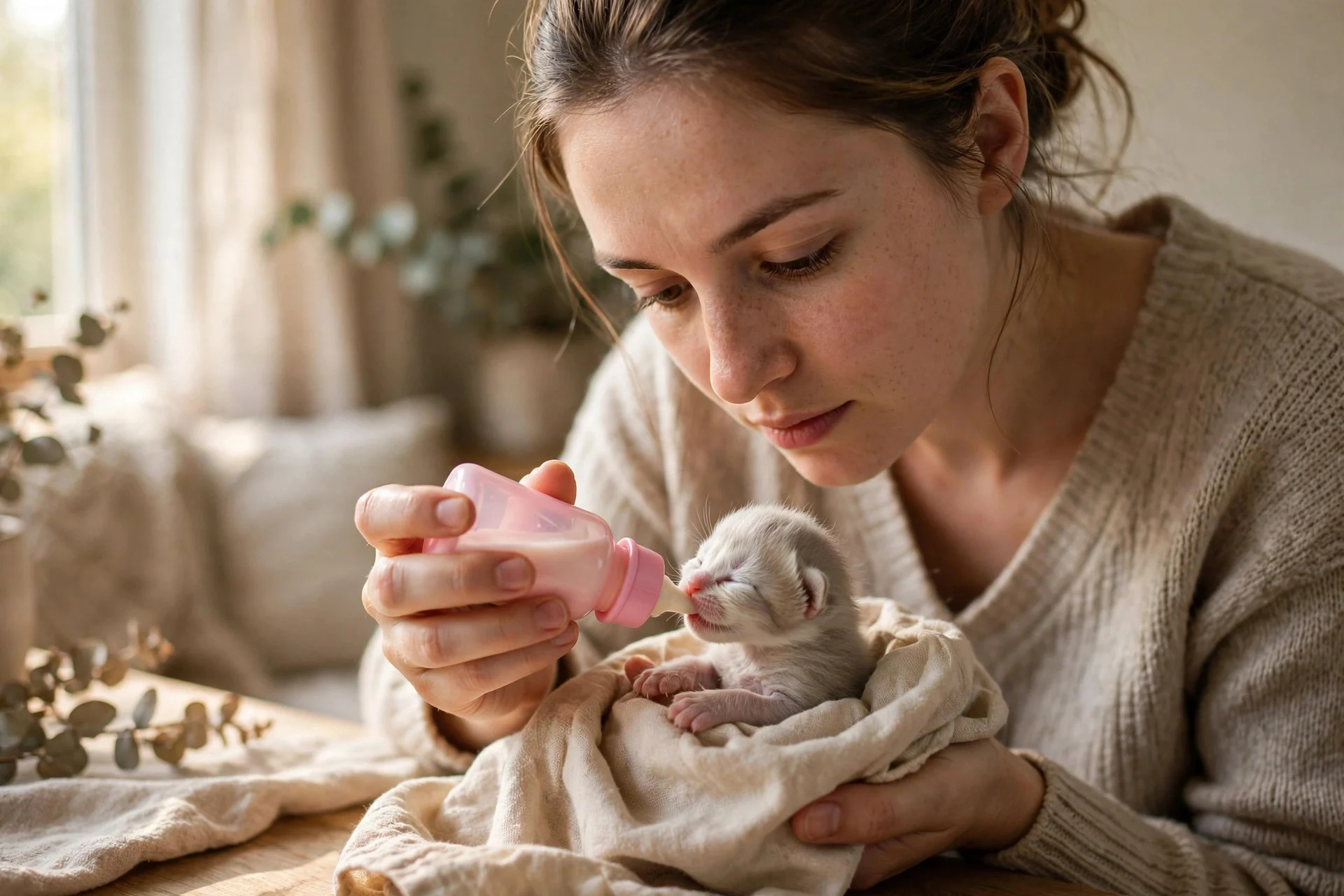
1. Newborn to 4 Weeks: Mother’s Milk or Replacer
Kittens this young should be with their mother, nursing on demand — that’s the gold standard and nothing replaces it. If you’re hand-raising an orphan, use kitten milk replacer (KMR) only — never cow’s milk, which causes diarrhea and dehydration in kittens. Feed every 2 to 3 hours around the clock, including overnight, with a kitten nursing bottle. Amounts: roughly 8 ml of formula per ounce of body weight per day, divided across feedings. They also need help urinating and defecating at this age (gentle stimulation with a warm damp cloth after each feeding). This is intensive, exhausting, wonderful work — and if you’re in over your head, call a rescue or vet for support. No shame in it.
2. 4 to 8 Weeks: Weaning Begins
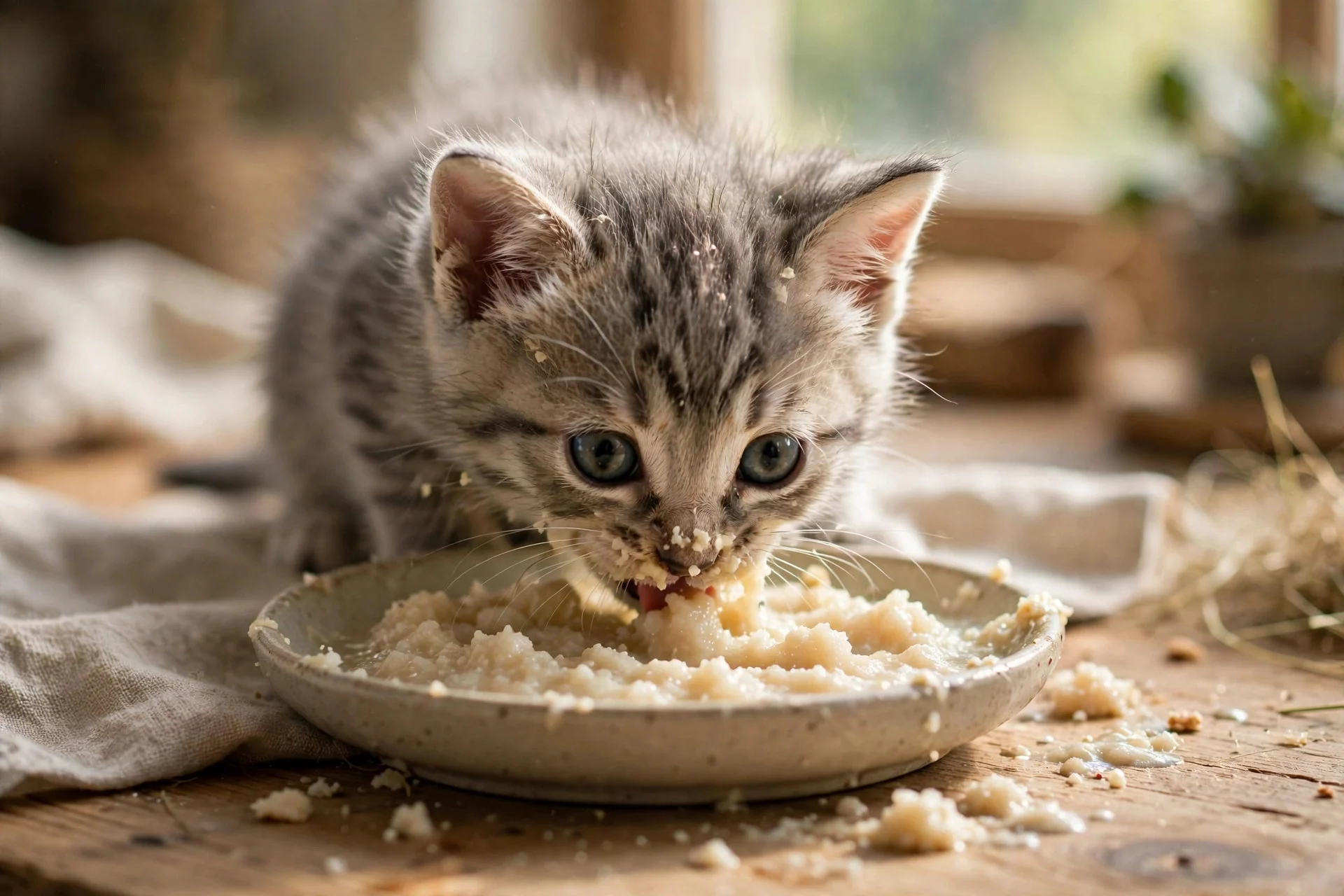
Around 4 weeks, start introducing gruel — kitten milk replacer mixed with wet kitten food into a soupy porridge. Offer it in a shallow dish several times a day; expect the kitten to walk through it, wear it, and eventually taste it. That’s normal. Gradually thicken the mixture over the next few weeks as teeth come in. By 6 to 8 weeks, most kittens are eating soft wet kitten food confidently. Feed 4 to 5 small meals daily at this stage — their stomachs are tiny and their energy needs are enormous. Keep fresh water available, though they may ignore it while still getting moisture from gruel.
3. 8 Weeks to 6 Months: The Growth Engine
This is peak growth — kittens can gain a pound a month, and they need the calories to do it. Feed kitten-formulated food (wet and dry), 3 to 4 meals per day. A general guideline: kittens this age need roughly twice the calories per pound that an adult cat needs. Don’t restrict food during this phase unless your vet specifically advises it — growing kittens self-regulate better than people assume, and underfeeding during growth causes more problems than slight overfeeding. This is also when to establish the wet-food habit: cats fed wet food early tend to accept it for life, and the hydration payoff lasts forever.
4. 6 to 12 Months: Settling Into Routine
Growth slows but doesn’t stop. Transition to 2 to 3 meals per day — most owners settle on morning and evening meals with an optional midday meal. Portions: follow the food packaging guidelines for your kitten’s weight as a starting point, then adjust based on body condition. You should be able to feel (not see) the ribs with a light touch, and there should be a visible waist when viewed from above. Around 12 months (sooner for some small breeds, later for large breeds like Maine Coons that grow for 2+ years), your vet will advise transitioning to adult food.
5. 12 Months and Beyond: Adult Transition
Switch from kitten to adult-formulated food gradually over 7 to 10 days — mix increasing amounts of adult food into the kitten food until the switch is complete. Adult cats typically eat 2 meals per day, roughly 20 to 25 calories per pound of body weight daily for an average indoor cat (less for sedentary cats, more for active ones). This is also when portion discipline starts to matter: the free-feeding approach that worked during growth can lead to obesity in adulthood. Your vet can confirm the right adult portions at the one-year checkup.
Wet vs. Dry: What Actually Matters
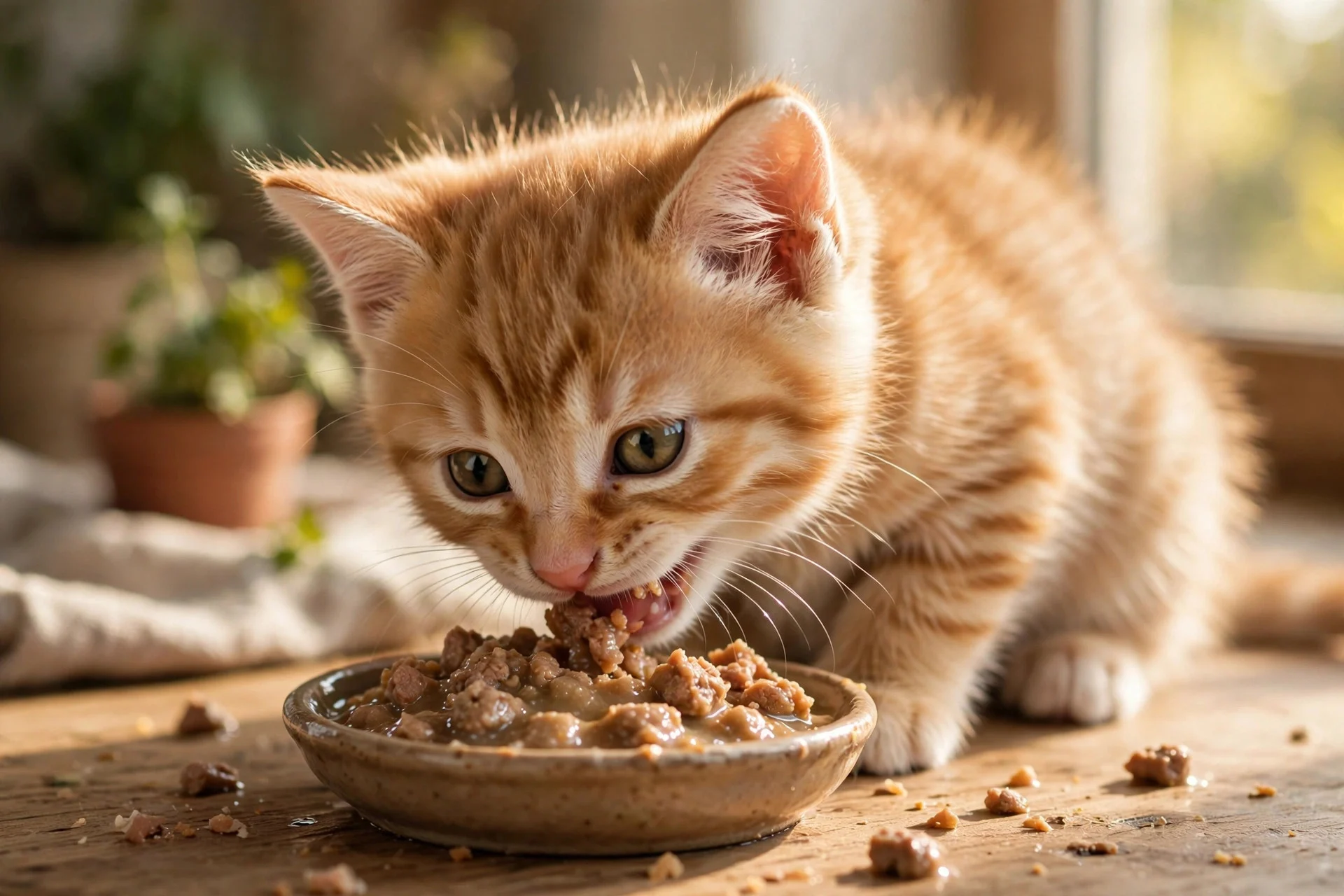
The ideal is both: wet food for hydration and dry food for convenience and dental benefits. If you have to prioritize one, prioritize wet — chronic low-level dehydration from dry-only diets is linked to urinary and kidney issues in cats later in life. A practical split many vets recommend: wet food for the main meals, a measured amount of dry available or as the third meal. Whatever you choose, make sure it’s labeled for kittens (or “all life stages”) during the first year — adult formulas don’t have the nutrient density growing kittens need.
Portion Guide by Weight
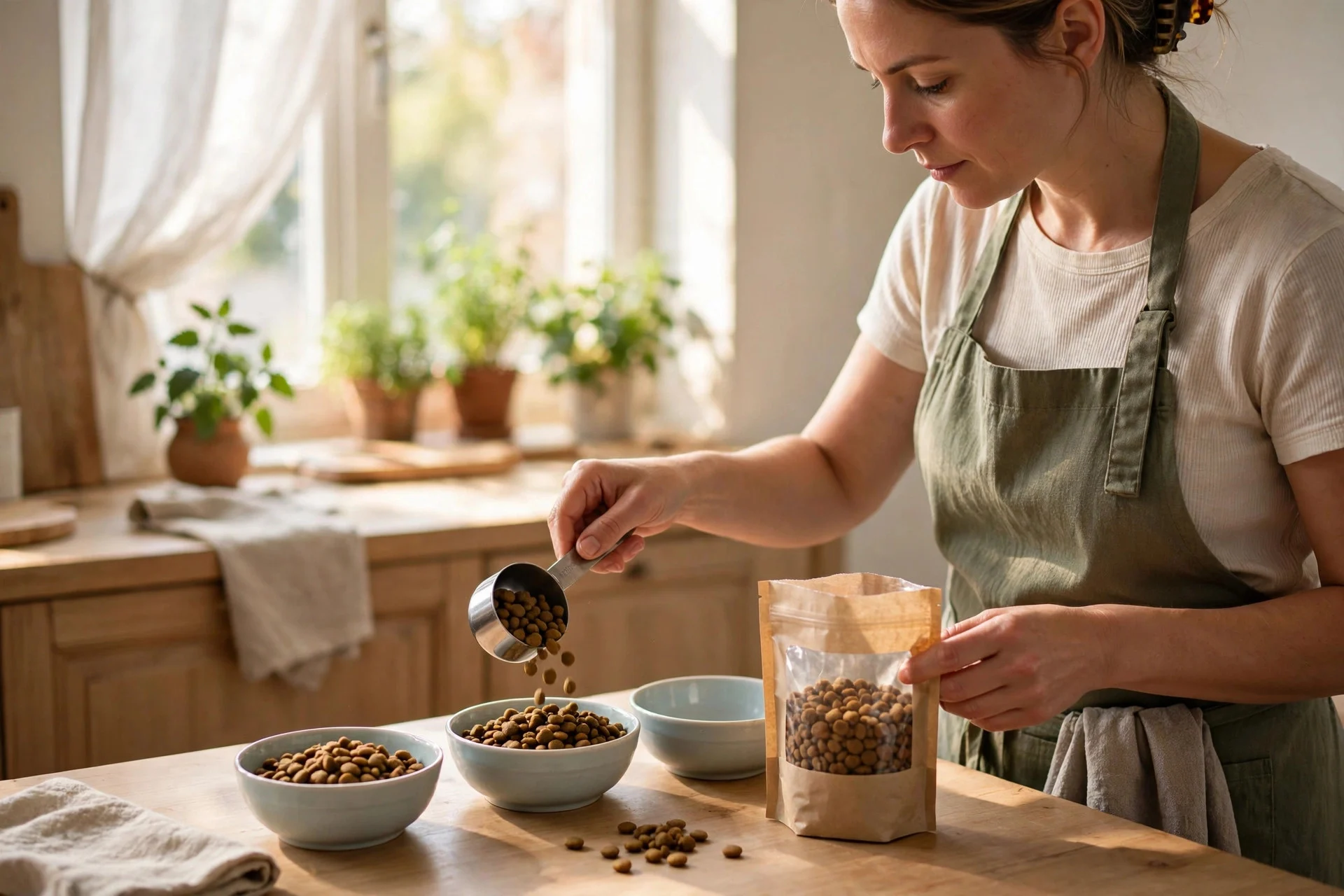
These are starting points — confirm with your vet and adjust based on body condition:
2–4 months (2–4 lbs): 4–5 small meals daily, roughly ½ to ¾ cup of kitten food total per day (or equivalent wet food). 4–6 months (4–6 lbs): 3–4 meals daily, roughly ¾ to 1 cup total. 6–12 months (6–10 lbs): 2–3 meals daily, roughly 1 to 1¼ cups total, tapering as growth slows. Wet food equivalents vary by brand — check the calorie content on your specific food and do the math for your kitten’s weight. When in doubt, your vet’s scale and body-condition assessment beat any chart.
Mistakes That Cause Problems
Feeding adult cat food to kittens (insufficient nutrients for growth); free-feeding low-quality dry food with no wet food (hydration and quality issues); giving cow’s milk (diarrhea — always); switching foods abruptly (transition over a week minimum); and ignoring body condition in favor of the chart (charts are averages — your kitten is an individual). The other big one: treats crowding out meals. Treats are fine, but they shouldn’t exceed 10% of daily calories, especially during growth when every bite should count nutritionally.
FAQs
How do I know if I’m feeding enough?
Steady weight gain (your vet tracks this at checkups), good energy, a healthy coat, and a body condition where you can feel ribs with light pressure but not see them. A kitten that’s constantly ravenous despite appropriate portions, or one that’s lethargic and not gaining, warrants a vet visit.
When should I switch from kitten to adult food?
Around 12 months for most cats — but large breeds like Maine Coons may need kitten food until 18–24 months, while some small breeds are done by 10 months. Your vet will make the call based on growth and body condition at checkups.
Is free-feeding okay for kittens?
During active growth (under 6 months), measured free-feeding of dry kitten food is generally fine — growing kittens rarely overeat significantly. After 6 months, transition toward scheduled meals to establish portion control for adulthood.
My kitten won’t eat wet food. What do I do?
Try different textures (pâté vs. chunks in gravy), warm it slightly to release aroma, and mix a tiny amount into food they already eat, increasing gradually. Persistence usually wins — but don’t let a kitten go more than 24 hours without eating at all; appetite loss in kittens needs veterinary attention quickly.
Feed for the growth phase you’re in, watch the kitten more than the chart, and check in with your vet at every visit about whether portions still make sense. Get the first year right and you’ve set up a lifetime of healthy eating habits.