Bringing home a kitten is pure joy wrapped in chaos. One minute they’re asleep in a sunbeam, the next they’re scaling your curtains like tiny mountaineers. A good new kitten checklist won’t prevent all the chaos — nothing will — but it will make sure you’re ready for it instead of making panicked pet-store runs at 9 p.m.
I’ve put together the twenty things that actually matter, in the order you should get them. Not the cute stuff first. The practical stuff that keeps a tiny new life safe, fed, and healthy from day one.
20 Kitten Essentials
1. Kitten-Formulated Food
Not adult cat food — kittens need higher protein, fat, and calories for growth, plus DHA for brain development. Buy both wet and dry kitten formulas from a reputable brand. The moisture in wet food does real work for cats, who are chronically under-hydrated. Have food ready before the kitten arrives, not after.
2. Food & Water Bowls
Shallow, wide bowls — kittens hate whisker fatigue from deep narrow bowls pressing on their whiskers. Stainless steel or ceramic; skip plastic, which harbors bacteria in scratches and can cause chin acne. Get two sets and wash daily.
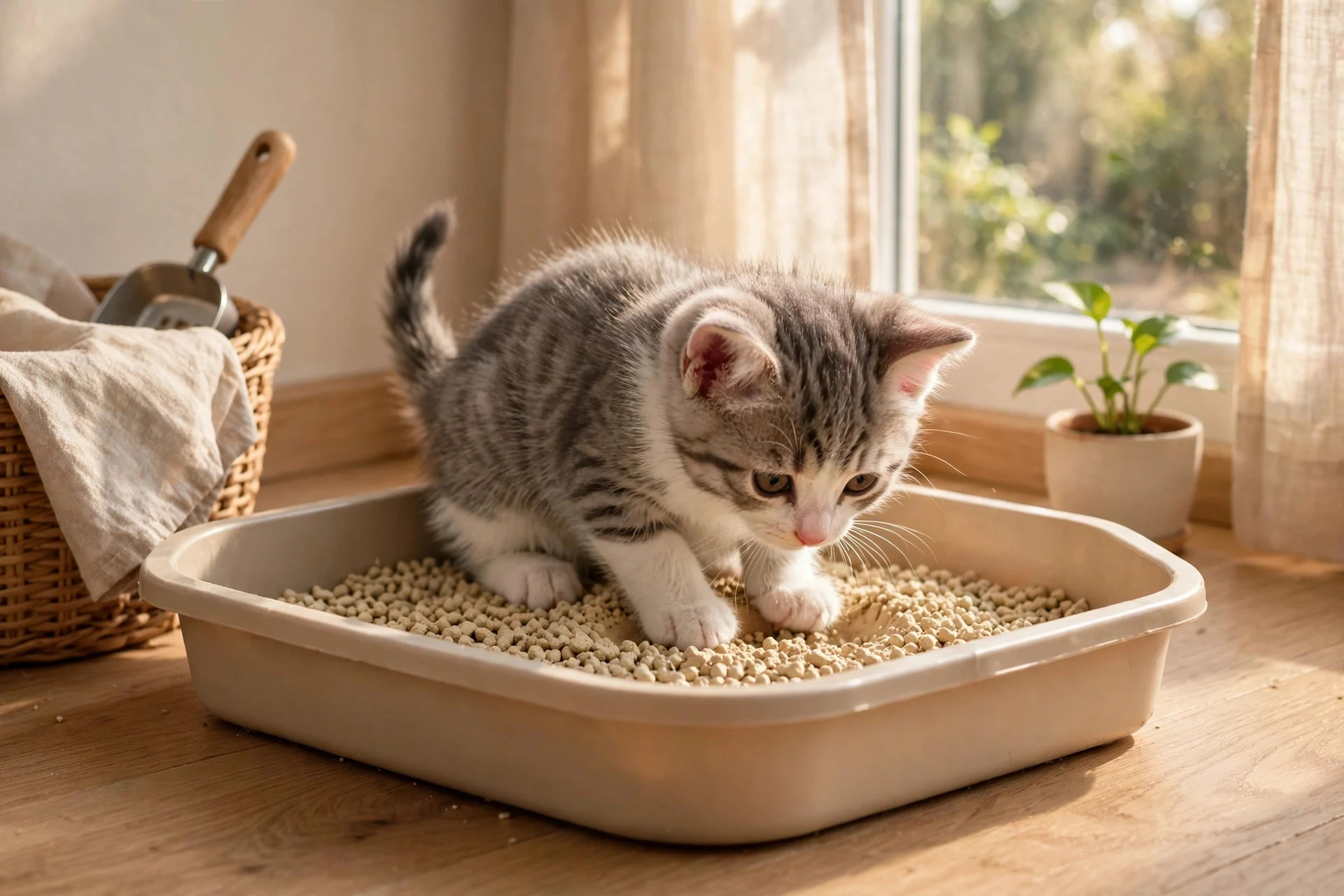
3. Litter Box (Low-Sided)
A tiny kitten can’t climb into a tall-sided box. Start with a low-entry box or even a shallow tray, and upgrade as they grow. The rule is one box per cat plus one extra — for a single kitten, that’s two boxes.
4. Unscented Clumping Litter
Unscented, always — kittens’ noses are sensitive and scented litter puts some cats off the box entirely. For very young kittens (under 8 weeks), use non-clumping litter temporarily, since tiny kittens sometimes taste-test it.
5. Litter Scoop & Mat
Scoop daily — kittens are fastidious and a dirty box is the number one reason for accidents outside it. A litter mat under and around the box catches the inevitable tracked litter. This is unglamorous but non-negotiable.
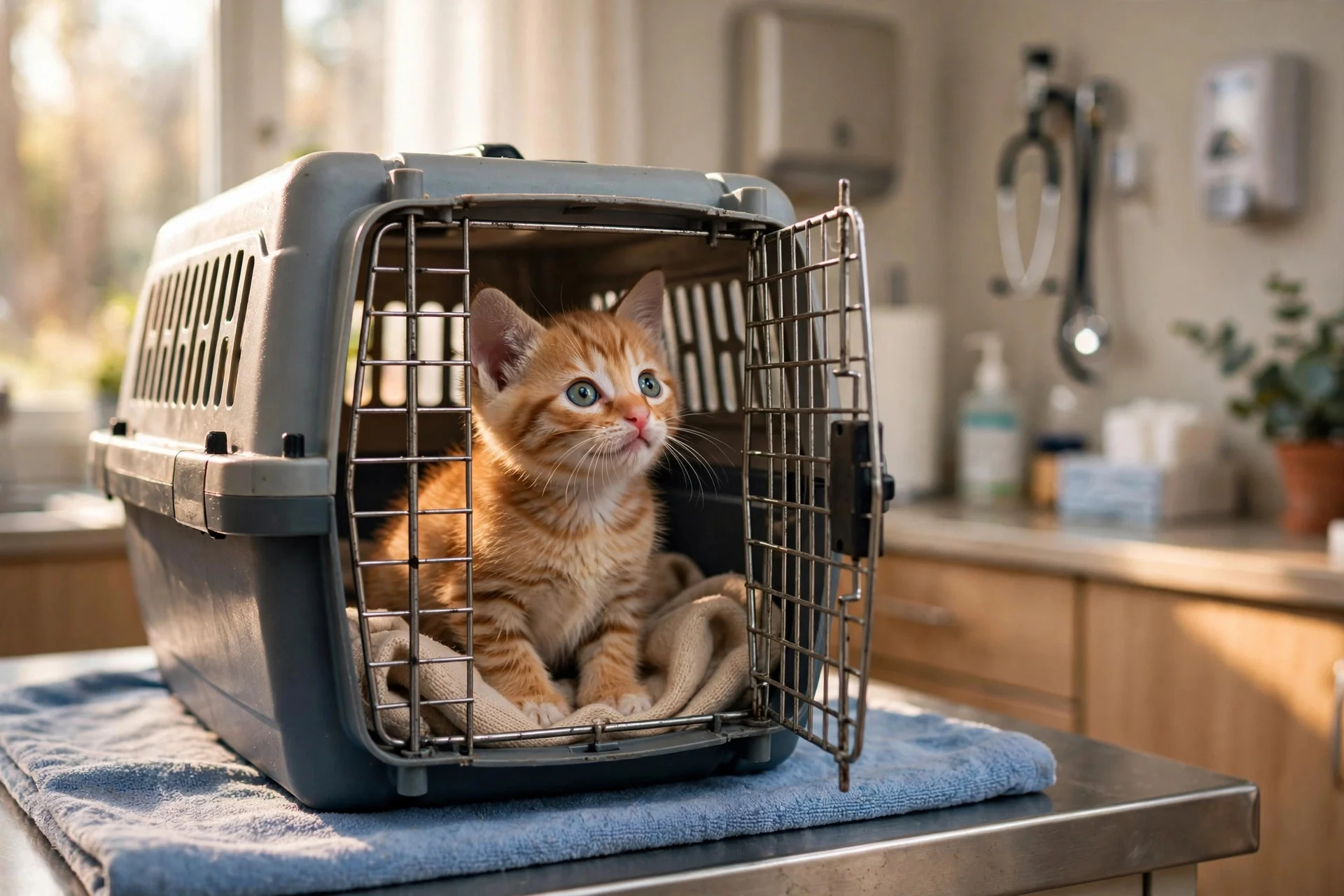
6. Cat Carrier
Hard-sided, secure, and sized for an adult cat (kittens grow fast — buy once). You’ll need it for the ride home, vet visits, and emergencies.
7. Scratching Post
Tall enough for a full stretch, sturdy enough not to wobble (a wobbling post teaches cats that posts are unreliable, and then it’s your sofa). Sisal is the gold standard material. One tall post beats three flimsy ones.
8. Cozy Bed (That They’ll Ignore)
Get a soft enclosed bed or a simple cave bed — and accept that the kitten will probably sleep in the box it came in, on your laptop, or inside your laundry instead. That’s fine. Provide the option; let the kitten choose.
9. Interactive Wand Toy
A feather or string wand toy is the single best toy for bonding and exercise. Kittens need active play — two or three sessions of 10 to 15 minutes daily. Never leave string toys out unsupervised; ingested string is a surgical emergency.
10. Small Balls & Mice Toys
A handful of lightweight balls, crinkle toys, and toy mice for solo play. Rotate them — put half away and swap weekly so they stay novel.
11. Kitten-Safe Scratcher Pads
Flat cardboard scratchers for every room the kitten uses. They’re cheap, cats love the texture, and they protect your furniture by giving scratching outlets everywhere the kitten hangs out.
12. Breakaway Collar & ID Tag
Breakaway only — regular collars can strangle a kitten that gets caught on something. Add an ID tag with your phone number even for indoor cats; doors get left open, and indoor cats that escape are the hardest to recover.
13. Grooming Brush
A soft slicker or rubber grooming brush, used gently a few times a week from day one. This isn’t really about the coat — it’s about getting the kitten comfortable being handled, which pays off enormously at vet visits later.
14. Kitten Nail Clippers
Small scissor-style clippers and the knowledge to use them: trim only the sharp tip, well clear of the pink quick. Start handling paws early so nail trims aren’t a wrestling match by month three.
15. Enzyme Cleaner
Accidents will happen. Regular cleaners mask the smell to human noses but not to cat noses — and a spot that still smells like a bathroom to the kitten becomes a repeat bathroom. Enzyme cleaners actually break down the proteins.
16. Kitten Milk Replacer (Just in Case)
If your kitten is under 8 weeks or was orphaned young, you may need kitten milk replacer (KMR) — never cow’s milk, which causes diarrhea in kittens. Your vet can advise whether your specific kitten needs it.
17. Hiding Spots & Perches
Cardboard boxes with doorways cut in them, a cat tree with a perch — kittens need places to hide when overwhelmed and places to climb when bold. A new home is a lot of new stimuli; hiding spots aren’t spoiling, they’re stress management.
18. Cord Protectors
Kittens chew. Electrical cords, phone chargers, blind cords — all of it. Cord covers or bitter-apple spray on the tempting ones, and tie up blind cords out of reach (they’re a strangulation hazard, not just a chew toy).
19. Vet Appointment (Booked in Advance)
Book the first vet visit for within a week of arrival — sooner if the kitten shows any symptoms. That visit covers a health check, deworming, vaccination scheduling, microchipping discussion, and spay/neuter timing.
20. Pet Insurance Research
Not the most exciting item, but possibly the most financially important. Kittens are accident-prone — swallowed string, broken teeth from falls, mysterious lumps that need biopsies. Insurance is cheapest when they’re young and healthy.

The First 48 Hours
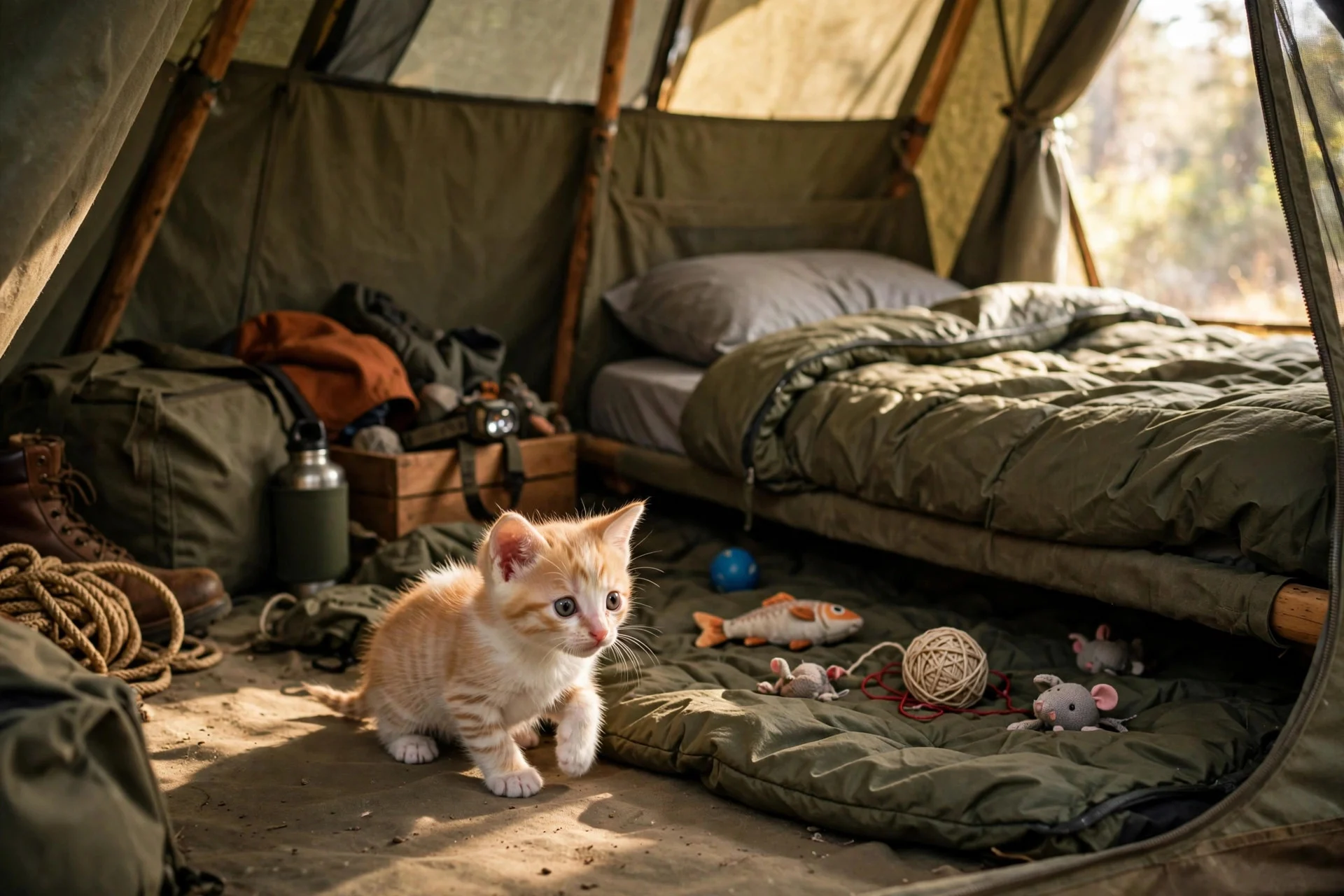
Set up a single “base camp” room with food, water, litter, bed, and hiding spots — don’t give a new kitten the run of the whole house on day one. Let them come to you; sit on the floor, read a book, and let curiosity do the work. Most kittens go from hiding to playing within a day or two if you let them set the pace.
What Not to Buy Yet
Skip the elaborate cat tree until you know your kitten’s preferences (some are climbers, some are hiders — buy for the cat you have, not the cat in the advertisement). Skip expensive beds until the chewing phase passes. And skip the giant toy multipack — a few good interactive toys beat twenty mediocre ones.
Kitten-Proofing Walk-Through
Before arrival, do one lap of your home at kitten height: secure cords, remove toxic plants (lilies are lethal to cats — check every bouquet and houseplant), lock away medications and cleaning products, close toilet lids, and check for small gaps behind appliances where a kitten could get stuck.
FAQs
What age should a kitten come home?
Twelve weeks is ideal — kittens learn critical social skills from their mother and littermates between 8 and 12 weeks.
Should I get two kittens instead of one?
It’s often easier. Two kittens entertain each other, learn bite inhibition through play, and are less likely to develop behavior problems from being alone.
When should kittens be spayed or neutered?
Most vets recommend around 5 to 6 months, before the first heat cycle. Some shelters do it earlier. Discuss timing with your vet at the first visit — it’s one of the standard agenda items.
How do I introduce a kitten to my resident cat?
Slowly and with barriers: separate rooms first, scent swapping, then supervised visual contact through a baby gate, then short supervised meetings. Rushing introductions is the number one cause of long-term cat conflict. Expect the process to take one to three weeks.
Get the practical stuff handled before arrival day, set up base camp, and then just enjoy it. The chaos is the point.