Dogs are terrible at telling us they’re hurting — and I mean that as a compliment to their toughness and a warning to us. In the wild, showing pain gets you eaten. Your dog still runs that ancient software. So learning the signs dog is in pain is less about obvious crying and more about reading subtle changes that most people miss.
I’ve missed it myself. My old Lab went two weeks with a sore shoulder before I noticed he was taking the long way around the coffee table. Dogs compensate quietly. This guide is about getting better at noticing — because catching pain early means faster relief. I’m not a vet, and nothing here diagnoses anything. Think of it as learning your dog’s language a little better.
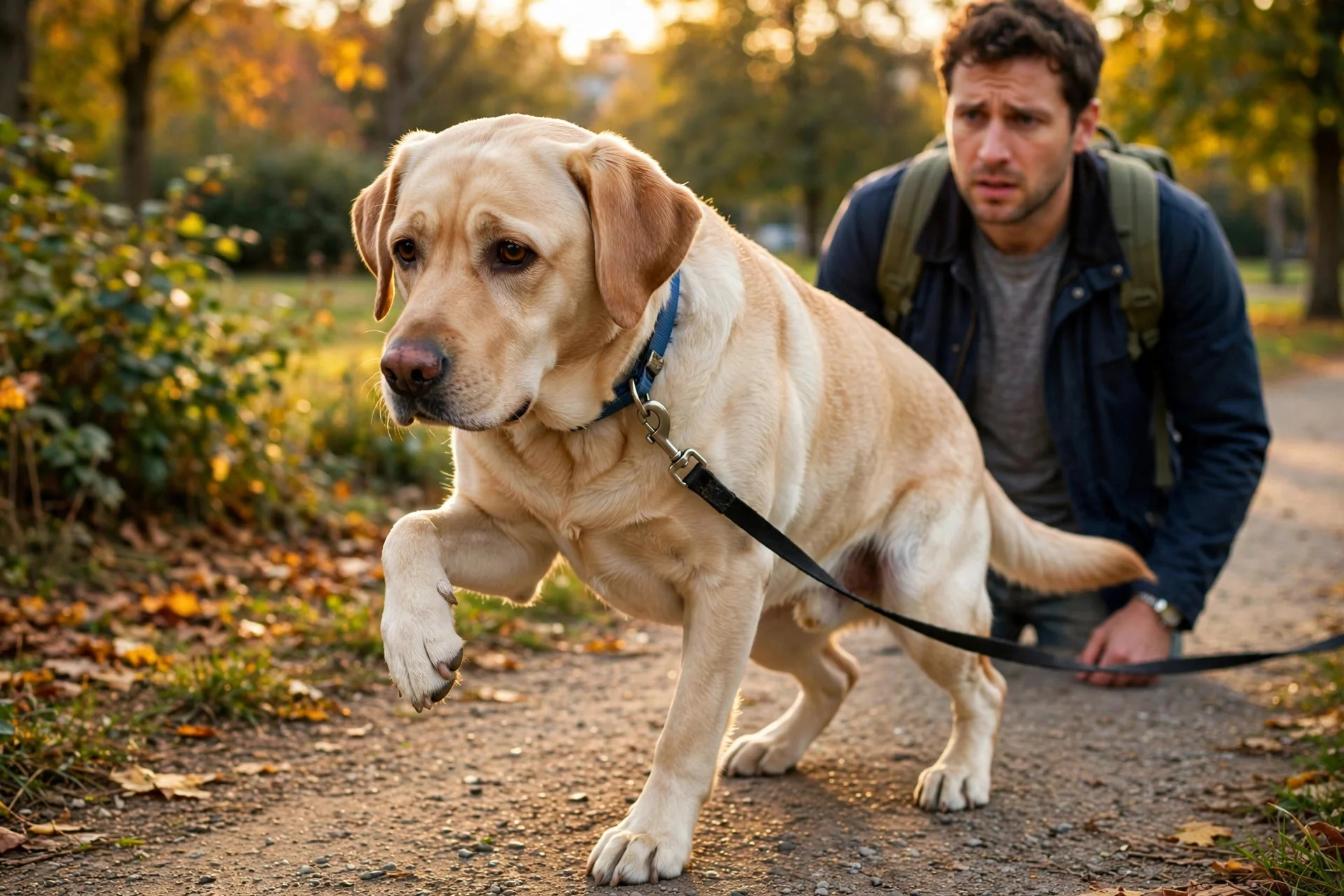
7 Signs Your Dog Is in Pain
1. Changes in Behavior or Personality
This is the big one, and it’s the easiest to dismiss. A social dog that suddenly wants to be alone. A gentle dog that snaps when touched. A playful dog that just… doesn’t. Any personality shift that lasts more than a day deserves attention. Dogs don’t have midlife crises — behavior changes almost always have a physical reason.
2. Limping, Stiffness, or Reluctance to Move
The obvious ones. A limp, trouble getting up, hesitation on stairs, or refusing walks they used to love. But watch for the subtle versions too: shifting weight off one leg while standing, sitting crooked, or being “slow to warm up” in the morning. Morning stiffness that improves with movement often points to arthritis.
3. Changes in Eating, Drinking, or Sleeping
Pain disrupts the basics. A dog that eats less, drinks more (or less), sleeps in odd positions, or can’t seem to get comfortable is communicating something. Restlessness at night — pacing, panting, unable to settle — is a classic pain signal that owners often mistake for anxiety.
4. Excessive Licking, Chewing, or Grooming One Spot
Dogs lick what hurts. A dog obsessively licking a paw, a joint, or one side of the belly is pointing you right at the problem. This can also create secondary issues — lick granulomas, hot spots — so the sooner you notice, the better. Check the spot they’re fixated on; you’ll often find swelling, a wound, or tenderness.
5. Vocalizing — Whimpering, Yelping, or Groaning
Here’s the thing: by the time a dog is audibly vocalizing about pain, it’s usually significant. Dogs don’t whimper casually. A yelp when touched in a specific spot, groaning when lying down, or whimpering for no apparent reason — take all of it seriously. This is your dog using their last-resort communication method.
6. Panting, Shaking, or a Tucked Posture
Panting when it’s not hot and the dog hasn’t been exercising is a red flag. Shaking or trembling without cold or fear, a hunched back, a tucked belly, or the “prayer position” (front down, rear up) — these are body-language billboards for abdominal or back pain. The prayer position especially warrants a prompt vet call.
7. Aggression or Withdrawal When Touched
A dog that flinches, growls, or snaps when you touch a specific area is telling you exactly where it hurts. Never punish this — it’s communication, not disobedience. Note the location and describe it precisely to your vet. “He yelps when I touch his left hip” is infinitely more useful than “he seems sore.”

How to Do a Gentle At-Home Pain Check
When you suspect something, do a calm, systematic check. Run your hands slowly over your dog’s body — head, neck, shoulders, legs, belly, hips — watching their face, not just listening for yelps. A lip lick, a look away, a freeze, or a subtle flinch all count as reactions.
Compare sides. If the left knee gets a reaction and the right doesn’t, you’ve found something. Check the paws too — thorns, cracked pads, and torn nails hide between the toes. And watch them move: walk away from you, toward you, and in a circle. Lameness that’s invisible head-on often shows up in a turn.

Practical Tips: What to Do When You Spot Pain
First, restrict activity. No fetch, no rough play, no long walks until you know what’s going on. A crate or a small room isn’t punishment — it’s protection. For a suspected sprain or strain, 24–48 hours of rest tells you a lot: improving means it was minor; not improving means vet time.
Keep a pain journal. Seriously — a few notes on your phone: when you noticed it, what the dog was doing, what helps, what makes it worse. Vets love this. “He’s been limping for three days, worse in the morning, better after moving around” is a diagnosis shortcut.
For chronic conditions like arthritis, ask your vet about joint supplements, weight management, and appropriate exercise. Keeping an arthritic dog lean is genuinely one of the most effective pain-management tools there is — every extra pound multiplies joint stress.
Mistakes to Avoid
Never give human painkillers. I can’t say this strongly enough: ibuprofen and acetaminophen can be toxic to dogs, and even dog-safe NSAIDs need vet dosing. “Just a little Advil” has killed dogs. If your dog is in pain, the vet visit is the painkiller — go get the right medication.
Don’t assume it’s “just old age” either. Yes, seniors get creaky, but pain is not a mandatory part of aging — it’s a treatable condition. I’ve seen 14-year-old dogs act like puppies again on proper arthritis management. “He’s just old” is the most expensive sentence in dog ownership, because it delays relief.
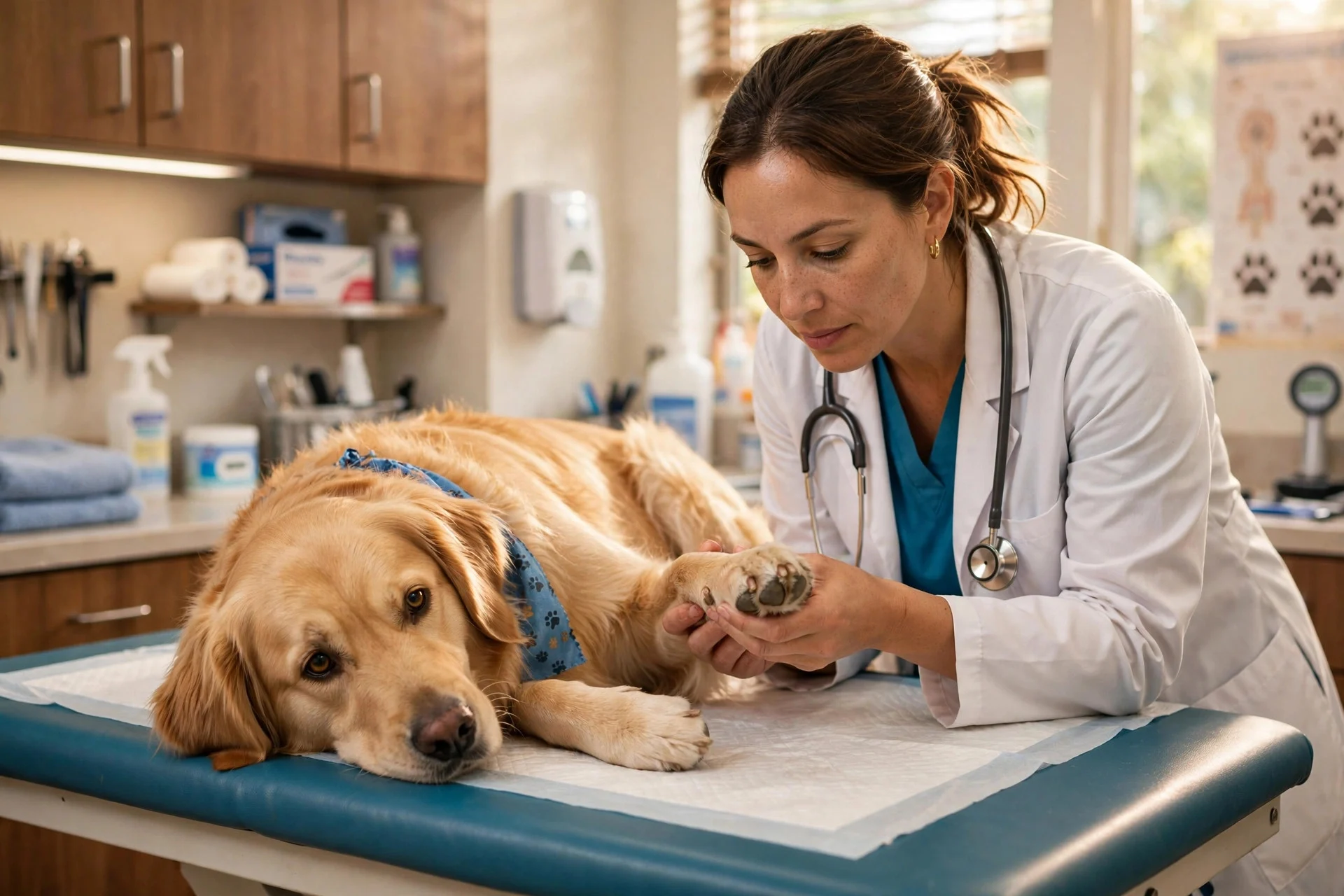
FAQs
How can I tell if my dog is in pain vs. just tired?
Tiredness resolves with rest. Pain persists or follows a pattern — worse at certain times of day, after specific activities, or when touched in specific spots. If “tired” lasts more than a day or two, suspect pain.
Do dogs hide pain from their owners?
Yes, routinely. It’s instinctive. The dogs that show pain most openly are usually the ones in the most pain. Subtle signs — behavior changes, appetite shifts, reluctance to do normal things — are the early warnings. Learn them.
When is limping an emergency?
A sudden, severe, non-weight-bearing limp — the leg dangles and the dog won’t put it down at all — warrants same-day vet attention, especially after trauma. A mild limp that improves over a day or two of rest can usually wait for a regular appointment.
Can I give my dog anything for pain at home?
Not without vet guidance. No human medications, ever, unless your vet specifically prescribed that drug at that dose for your dog. Rest, restricted activity, and a prompt vet visit are the safe home measures.
Your dog is counting on you to notice what they can’t say. Learn the signs, trust your instincts when something feels off, and never feel silly calling the vet about a hunch. The vets I know would much rather hear “I think something’s wrong but I’m not sure” than “I waited three weeks.”