

Most dog owners trust antibiotics.
And sometimes, they’re necessary. But here’s the part many people don’t realize—antibiotics are often overused for minor issues that could be managed naturally.
If your dog has ever had repeated infections, slow healing wounds, or digestive problems after medication, you’ve seen the downside.
The good news? Some natural antibiotics for dogs actually work—when used correctly.
Do Natural Antibiotics for Dogs Really Work?
Yes—but only in the right situations.
Natural remedies can help with:
-
Minor infections
-
Early-stage issues
-
Skin wounds
-
Immune support
They are not a replacement for serious infections or emergencies.
Why Overusing Antibiotics Can Be a Problem
Your dog’s immune system depends heavily on gut health.
Antibiotics don’t just kill harmful bacteria—they also remove beneficial bacteria that:
-
Support digestion
-
Regulate immunity
-
Prevent infections
Over time, this can lead to:
-
Weak immunity
-
Recurring infections
-
Digestive issues
Best Natural Antibiotics for Dogs (That Actually Work)

1. Oil of Oregano (Powerful Antibacterial)
Why It Works
Contains carvacrol, known for fighting harmful bacteria.
Best Use
Helpful for skin infections and mild ear issues (external use only).
How to Use
Mix 1–2 drops with 1 teaspoon carrier oil. Apply externally.
Important Note
Never use undiluted. Avoid internal use without guidance.
2. Manuka Honey (Wound Healing Support)
Why It Works
Has natural antibacterial properties and supports healing.
Best Use
Cuts, wounds, and skin irritation.
How to Use
Apply directly to clean wound and cover lightly.
Important Note
Avoid for diabetic dogs or puppies under 1 year.
3. Echinacea (Immune Support)
Why It Works
Supports the immune system and helps fight infections naturally.
Best Use
Respiratory issues and early-stage infections.
How to Use
Use dog-safe supplements based on weight.
4. Cranberry (For Urinary Health)
Why It Works
Prevents bacteria from sticking to the bladder walls.
Best Use
Urinary tract support and prevention.
How to Use
Use supplements with active compounds.
5. Olive Leaf Extract (Broad Support)
Why It Works
Fights bacteria, viruses, and fungi while supporting immunity.
Best Use
General infections and immune support.
How to Use
Use supplements based on weight.
How to Use Natural Antibiotics Safely
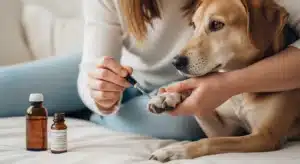
Step 1: Identify the Problem
Mild issue? Natural remedies may help. Severe symptoms? See a vet.
Step 2: Start Small
Use the lowest recommended dose first.
Step 3: Monitor Closely
Look for improvement within 48–72 hours.
Step 4: Stop if Needed
If symptoms worsen, switch to veterinary care.
When You Should NOT Use Natural Remedies
Go to a vet immediately if your dog has:
-
Fever
-
Severe swelling
-
Deep wounds
-
Lethargy
-
Loss of appetite
These require medical treatment.
Important Safety Tips
-
Always dilute essential oils
-
Use high-quality products
-
Avoid toxic oils
-
Watch for allergic reactions
-
Never guess dosages
FAQs
Can natural antibiotics replace vet treatment?
No. They help with mild issues but not serious infections.
How fast do they work?
You may see improvement in 2–3 days for minor issues.
Are natural remedies safer?
Not always. Incorrect use can be harmful.
Can I combine natural and vet treatment?
Yes. Many dog owners use both together.
Which is the safest option to start with?
Manuka honey is one of the safest for external use.
Final Thoughts
Natural antibiotics can help—but they’re not magic.
They work best for small problems, early treatment, and prevention. For serious conditions, veterinary care is still essential.
The smartest approach is balance. Use natural options when they make sense. Use medical treatment when it’s needed.
Your dog doesn’t care how they heal. They just want relief.

























