
Bringing home a puppy changes your entire routine almost overnight.
Suddenly you’re reading ingredient labels, comparing feeding charts, and wondering if your puppy is getting everything they actually need to grow properly. Once people start researching homemade puppy food online, things get confusing fast.

One article says homemade food is healthier. Another says it’s dangerous. Then somebody starts talking about calcium ratios and growth disorders, and now you’re stressed before your puppy even finishes chewing your shoelaces.
The truth is somewhere in the middle.
Puppies absolutely need balanced nutrition during growth. Their bodies develop quickly, especially during the first year. Bones, joints, muscles, brain development, and immune health all depend on proper feeding.
But homemade food is not automatically unsafe.
With the right ingredients, careful balance, and veterinary guidance, homemade puppy food can be a fresh and wholesome option that supports healthy growth without relying completely on heavily processed kibble.
This vet-approved homemade puppy food recipe focuses on:
- Simple whole ingredients
- Balanced nutrition
- Healthy fats
- Digestible carbohydrates
- Proper feeding support for growing dogs
Why Puppies Need Different Nutrition Than Adult Dogs
A puppy is not simply a smaller version of an adult dog.
Their nutritional needs are very different because their bodies are actively developing:
- Bones
- Organs
- Muscles
- Immune systems
- Brain function
That growth requires higher levels of certain nutrients.
Protein Supports Growth
Puppies require more protein than adult dogs because protein helps build muscle and support overall development.
Lean meats like chicken and turkey work especially well.
Calcium Balance Matters
This is one of the biggest nutritional differences between puppies and adult dogs.
Too little calcium can affect bone development. Too much calcium can also create growth problems, especially in large-breed puppies.
Balance matters more than excess.
Healthy Fats Support Brain Development
Omega-3 fatty acids, especially DHA, help support healthy brain and eye development during puppy growth stages.
Important Things Before Starting Homemade Puppy Food
Before switching fully to homemade meals, there are a few things every puppy owner should understand.
Talk to Your Veterinarian First
Homemade puppy diets should always be discussed with your veterinarian.
This is especially important for:
- Large breeds
- Fast-growing puppies
- Puppies with allergies
- Underweight puppies
Your vet can help monitor healthy growth and portion sizes.
Transition Slowly
Sudden food changes often upset puppy stomachs.
Always transition gradually over 7 to 10 days.
Monitor Weight Weekly
Healthy puppies should grow steadily without becoming overweight.
Rapid weight gain puts extra stress on developing joints.
Vet Approved Puppy Food Recipe
Ingredients
| Ingredient | Amount |
|---|---|
| Boneless Skinless Chicken Thighs | 2 lbs |
| Brown Rice | 1½ cups uncooked |
| Carrots | 1 cup finely chopped |
| Spinach | 1 cup chopped |
| Eggs | 2 large |
| Salmon Oil | 2 tbsp |
| Low-Sodium Chicken Broth | 3 cups |
| Eggshell Powder | 2 tsp |
Why These Ingredients Work
Each ingredient serves a purpose instead of simply filling space.
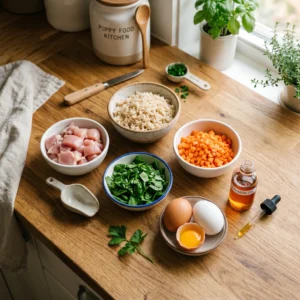
Chicken Thighs
Chicken thighs provide:
- Protein
- Healthy fats
- Calories for growth
They also stay softer and easier to chew than very lean chicken breast.
Brown Rice
Brown rice provides digestible carbohydrates and steady energy for active puppies.
Carrots and Spinach
These vegetables add:
- Fiber
- Vitamins
- Antioxidants
while helping keep the recipe balanced.
Eggs
Eggs contain protein and additional nutrients helpful for growing puppies.
Salmon Oil
Salmon oil provides omega-3 fatty acids that support:
- Brain development
- Skin health
- Coat condition
Eggshell Powder
Eggshell powder helps provide calcium support for developing bones.
This ingredient matters more than many people realize.
Step-by-Step Instructions
Step 1: Cook the Rice
Cook brown rice according to package instructions until soft.
Set aside once fully cooked.
Step 2: Prepare the Chicken
Cut chicken thighs into small pieces.
Cook thoroughly in a large pan over medium heat until fully done.
Avoid seasoning completely.
Do not use:
- Garlic
- Onions
- Excessive salt
- Oils
Step 3: Steam the Vegetables
Lightly steam the carrots and spinach until softened.
Softer vegetables are easier for puppies to digest.
Step 4: Cook the Eggs
Boil the eggs until fully cooked.
Chop into very small pieces once cooled.
Step 5: Combine Everything
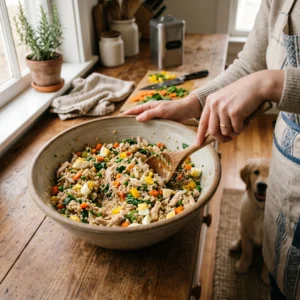
In a large bowl, combine:
- Cooked chicken
- Rice
- Vegetables
- Eggs
- Salmon oil
- Eggshell powder
Stir thoroughly so ingredients distribute evenly.
The mixture should stay moist but not watery.
Add a little chicken broth if needed.
Step 6: Cool Before Serving
Always allow homemade puppy food to cool fully before feeding.
Warm food is fine. Hot food is not.
Feeding Guidelines for Puppies
Puppies need smaller, more frequent meals than adult dogs.
Puppies Under 3 Months
Feed 4 meals daily.
Puppies 3–6 Months
Feed 3 meals daily.
Puppies Over 6 Months
Usually transition to 2 meals daily.
Portion Guide
These are general starting points only.
Small Breed Puppies
1 to 2 cups daily
Medium Breed Puppies
2 to 4 cups daily
Large Breed Puppies
4 to 6 cups daily
Adjust portions based on:
- Growth
- Activity level
- Body condition
- Veterinary advice
Signs Your Puppy Is Doing Well
Healthy puppies usually show progress quickly when nutrition is working properly.
Positive Signs Include
- Steady growth
- Healthy weight
- Shiny coat
- Consistent energy
- Healthy stools
- Strong appetite
Signs Something May Need Adjustment
Contact your veterinarian if you notice:
- Diarrhea lasting several days
- Slow growth
- Weakness
- Dull coat
- Limping
- Poor appetite
Why Supplements Matter for Homemade Puppy Food
Fresh ingredients provide excellent nutrition, but homemade puppy diets often still require additional nutritional support to stay fully balanced long term.
Especially for growing dogs.
Common Puppy Supplements Include
- Canine multivitamins
- Fish oil
- Probiotics
- Calcium support
- DHA supplements
Never guess with supplement amounts.
Too much calcium or vitamin D can become harmful during growth stages.
Storage Instructions
Refrigerator
Store food in airtight containers for up to 4 days.
Freezer
Freeze meal-sized portions for up to 2 months.
Thaw overnight in the refrigerator before feeding.
Transition Schedule From Kibble to Homemade Food
Switching too quickly often causes digestive upset.
| Day | Feeding Ratio |
|---|---|
| Day 1–2 | 75% old food / 25% homemade food |
| Day 3–4 | 50% old food / 50% homemade food |
| Day 5–6 | 25% old food / 75% homemade food |
| Day 7 | Fully homemade meals |
Slow transitions usually work much better for puppies.
Common Homemade Puppy Food Mistakes
Forgetting Calcium Balance
This is one of the biggest mistakes new puppy owners make.
Growing puppies need carefully balanced calcium support.
Feeding Too Many Treats
Even healthy treats should stay limited during growth.
Using Unsafe Ingredients
Never include:
- Onions
- Garlic
- Grapes
- Raisins
- Xylitol
- Chocolate
Frequently Asked Questions
Can Puppies Eat Homemade Food Every Day?
Yes, but only when the meals are properly balanced and approved by your veterinarian.
Is Homemade Puppy Food Better Than Kibble?
Not automatically.
Good homemade food can provide fresh ingredients and strong nutrition, but balance matters more than simply cooking at home.
Can Large Breed Puppies Eat This Recipe?
Yes, but large-breed puppies should always be monitored carefully because their growth needs are more sensitive.
Final Thoughts
Feeding your puppy homemade food can feel intimidating at first because growth nutrition matters so much during the first year.
But with balanced ingredients, proper calcium support, gradual transitions, and veterinary guidance, homemade puppy meals can absolutely become part of a healthy feeding routine.
The goal is not perfection.
The goal is consistency, balance, and giving your puppy nutritious food that supports healthy growth without overcomplicating every meal.
And honestly, most puppies are just thrilled someone put food in the bowl at all.
The first homemade meal I ever served to a puppy disappeared in under two minutes, followed immediately by zoomies around the kitchen like he had personally discovered treasure.

























