
The first time I ordered Ollie for Charlie, I honestly thought I’d finally cracked the code on feeding my dog.

The food looked fresh. Real chunks of meat. Bright vegetables. No weird smell like some kibble bags have after sitting open for a week.
And Charlie absolutely inhaled it.
Not normal eating either. I mean full-body excitement. Tail smacking the cabinets. Bowl spotless in under a minute.
Then the second monthly charge hit my card.
That’s when reality stepped into the conversation.
I sat there staring at the total thinking:
“How is this dog eating more expensive meals than I am?”
The food was great. I’m not pretending otherwise.
But paying premium subscription prices forever just wasn’t realistic for me long term. Especially once I realized the ingredient list itself wasn’t magic.
It was:
- chicken
- beef
- rice
- potatoes
- carrots
- spinach
- organ meat
- salmon oil
Normal ingredients.
So I started experimenting in my kitchen.
A few batches were terrible. One looked suspiciously like oatmeal soup. Charlie still ate it, because dogs have almost no standards, but I knew it wasn’t right.
Eventually though, I landed on two homemade recipes that come surprisingly close to Ollie’s texture, ingredient balance, and overall feel.
Close enough that Charlie reacts the exact same way when I open the fridge.
And honestly? My grocery bill feels a lot better too.
What Makes Ollie Dog Food Different?
Before copying something, it helps to understand why it works.
Ollie became popular because it focuses on:
- real meat
- fresh vegetables
- gentle cooking
- minimal fillers
- balanced nutrition
Most importantly, the recipes feel like actual food instead of processed pellets.
That’s the part dogs notice immediately.
The Key Things We’re Replicating
Real Protein First
Chicken and beef are the main ingredients.
Not “meat meal.”
Not mystery by-products.
Actual protein.
Soft, Moist Texture
Ollie recipes have a thick, soft consistency dogs seem to love.
The texture matters more than most people realize.
Organ Meats
This is the ingredient most homemade recipes skip.
But liver adds:
- iron
- vitamin A
- B vitamins
- extra flavor
And surprisingly, it’s usually cheap.
Salmon Oil
Omega-3 fats help support:
- skin
- coat
- joints
Charlie’s coat looked noticeably shinier after adding salmon oil consistently.
Recipe 1: Chicken & Rice Ollie Copycat
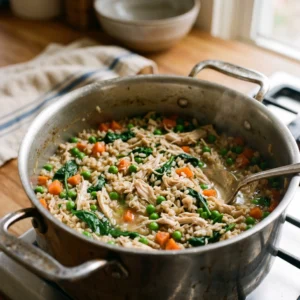
This recipe is inspired by Ollie’s chicken formula and works especially well for dogs with sensitive stomachs.
It’s soft, easy to digest, and honestly smells good enough that you’ll question why your dog is eating better than you again.
Ingredients
| Ingredient | Amount |
|---|---|
| Boneless chicken thighs | 2 lbs |
| Chicken liver | 4 oz |
| White rice | 1½ cups |
| Carrots | 2 medium |
| Frozen peas | 1 cup |
| Fresh spinach | 1 cup |
| Salmon oil | 1 tablespoon |
| Water | 5 cups |
How to Make It
Step 1: Cook the Chicken and Liver
Add chicken thighs and liver to a large pot with water.
Bring to a boil, then lower to a simmer for about 20 minutes.
The liver will soften completely while cooking.
That’s exactly what you want.
Step 2: Remove the Meat but Keep the Broth
Take the chicken and liver out carefully.
Do not throw away the broth.
That liquid becomes the flavor base for the entire recipe.
Step 3: Cook the Rice and Carrots
Add rice and diced carrots directly into the broth.
Cover and simmer until the rice becomes soft and slightly overcooked.
That softer texture helps mimic fresh subscription dog food.
Step 4: Shred and Mash
Shred the chicken into small pieces.
Mash the liver into a paste with a fork.
This step matters more than people think.
Ollie-style food works because everything blends together smoothly instead of feeling chunky and dry.
Step 5: Add Vegetables
Stir in:
- peas
- spinach
Cook just a few minutes until softened.
Do not overcook them into mush.
Step 6: Finish With Salmon Oil
Turn off the heat and mix in salmon oil.
The final consistency should look thick, moist, and slightly stew-like.
Not watery.
Not dry.
Storage Tips
Refrigerator
Store for up to 5 days.
Freezer
Freeze portions for up to 3 months.
I usually portion everything immediately after cooling so feeding during the week becomes effortless.
Recipe 2: Beef & Sweet Potato Ollie Copycat
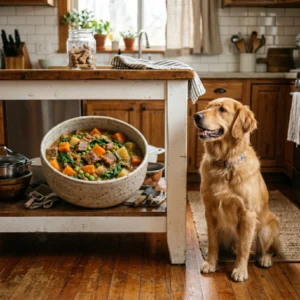
This version is richer, heartier, and slightly more filling.
Charlie gets especially dramatic when this one is cooking.
The smell alone apparently deserves emotional support-level excitement.
Ingredients
| Ingredient | Amount |
|---|---|
| Ground beef (85/15) | 2 lbs |
| Beef liver | 3 oz |
| Sweet potato | 1 large |
| Russet potato | 1 medium |
| Carrots | 2 medium |
| Frozen peas | 1 cup |
| Spinach | 1 cup |
| Chickpeas | ⅓ cup |
| Salmon oil | 1 tablespoon |
| Water | 3 cups |
How to Make It
Step 1: Cook the Liver Separately
Simmer the liver until fully cooked and soft.
Mash into a smooth paste afterward.
Yes, it smells intense while cooking.
Charlie considers this a feature, not a problem.
Step 2: Brown the Ground Beef
Cook the beef in a large pot until browned.
Leave some natural fat in the pot.
That helps create the richer Ollie-style texture.
Step 3: Add Potatoes and Carrots
Add:
- sweet potato
- regular potato
- carrots
- water
Cover and simmer until everything becomes fork tender.
Step 4: Mash Part of the Potatoes
Mash roughly half the potatoes directly in the pot.
This creates the thick, creamy consistency that fresh dog food recipes usually have.
Step 5: Add Remaining Ingredients
Mix in:
- peas
- spinach
- chickpeas
- liver paste
Cook a few more minutes until combined.
Step 6: Add Salmon Oil
Turn off heat and stir in salmon oil.
The texture should feel thick enough to scoop cleanly without running everywhere.
Why Homemade Ollie Copycats Save So Much Money
This was honestly the biggest surprise for me.
Fresh subscription dog food gets expensive fast.
Especially for medium and large dogs.
Homemade versions usually cost significantly less because:
- you skip subscription markup
- you buy ingredients directly
- frozen vegetables stretch further
- rice and potatoes cost almost nothing per serving
And dogs genuinely do not know whether their dinner arrived in a fancy insulated box.
Feeding Guidelines
These are starting points for moderately active adult dogs.
| Dog Weight | Daily Amount |
|---|---|
| 10 lbs | 1 cup |
| 15 lbs | 1½ cups |
| 20 lbs | 1¾ cups |
| 30 lbs | 2–2½ cups |
Split meals into two servings daily.
Adjust portions slowly based on your dog’s weight and energy levels.
Tips for Getting the Texture Right
Texture is honestly the secret.
Most homemade dog food fails because it’s either:
- too watery
- too dry
- too chunky
Mash Some Ingredients
Partially mashed potatoes or rice help create that smooth fresh-food consistency.
Use Cooking Broth
Cooking grains directly in broth adds flavor naturally.
Plain water tastes noticeably flatter.
Don’t Overcook Vegetables
Peas and spinach should stay soft but still visible.
Gray mush is not the goal.
Common Questions
Can I use chicken breast instead of thighs?
You can, but thighs create a softer and richer texture closer to Ollie recipes.
Breast meat tends to dry out more.
Do I really need liver?
Technically no.
But liver is one of the biggest nutritional differences between basic homemade recipes and premium fresh food brands.
Is salmon oil necessary?
It makes a real difference for:
- skin
- coat
- overall fatty acid balance
Especially for dogs with dry skin.
Can I freeze these recipes?
Absolutely.
Both recipes freeze well for up to 3 months.
Homemade Fresh Dog Food Feels Different
I still think Ollie makes genuinely good dog food.
This isn’t one of those “everything store-bought is terrible” articles.
But making it yourself changes something.
You stop looking at dog food like mysterious pellets or expensive subscriptions and start realizing it’s mostly just real ingredients prepared thoughtfully.
Charlie now hears the fridge open and comes sprinting into the kitchen like I announced free pizza.
And honestly, seeing him excited about meals made in my own kitchen feels weirdly satisfying in a way subscription boxes never quite did.
The savings are nice too.
Very nice.
Especially when your dog somehow eats like a tiny athlete training for competition.

























