Your puppy’s first summer is magical and slightly terrifying. They’re tiny, they’re fearless, they have no idea that the sidewalk is now a griddle — and they will absolutely try to nap in the one patch of sun in the yard while you’re not looking.
Puppies overheat faster than adult dogs. They’re smaller, they’re still learning to regulate, and they don’t have the sense to stop playing when they’re too hot. Good summer puppy care is mostly about thinking ahead, because by the time a puppy shows serious heat distress, you’re already in trouble. Here’s the full playbook.
12 Summer Heat Tips for Puppies
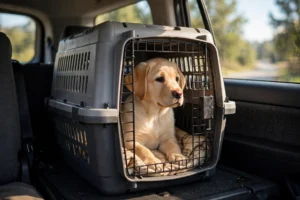
1. Never leave them in the car. Ever.
A car hits 100°F in ten minutes on a 75-degree day, and puppies go downhill terrifyingly fast. Not “just for a minute.” Not with windows cracked. If the puppy can’t come inside, the puppy stays home. Zero exceptions.
2. Walk early morning or late evening
Shift the schedule for the season. In summer, our big walk happens before 8 AM, and the evening walk waits until after 7 PM when the sun drops. Midday is for quick potty trips only — out and back in. Puppies need plenty of exercise for development, but heat changes the equation: a 20-minute walk at 7 AM does more good than a 40-minute walk at 2 PM that ends with a dangerously overheated puppy.
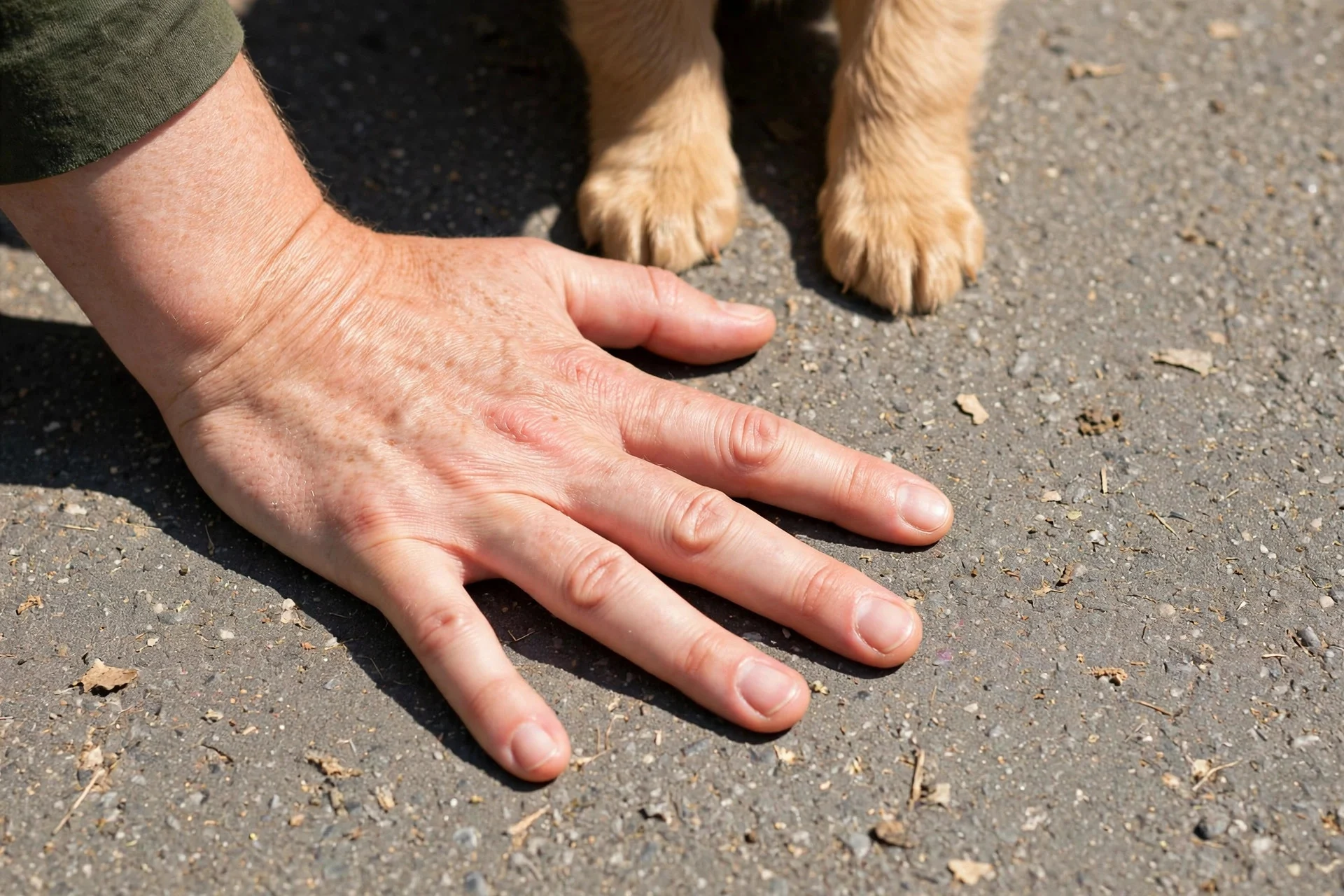
3. Test the pavement with your hand
The rule I use every single day from June through September: press the back of your hand flat on the pavement and hold it for seven seconds. If it’s too hot for you, it’s too hot for puppy paws — and puppy pads are softer and more burn-prone than adult pads. If it fails the test, walk on grass, wait for evening, or use booties. I’ve seen puppies with blistered pads from a “quick” midday walk, and it’s completely avoidable.
4. Water everywhere, all the time
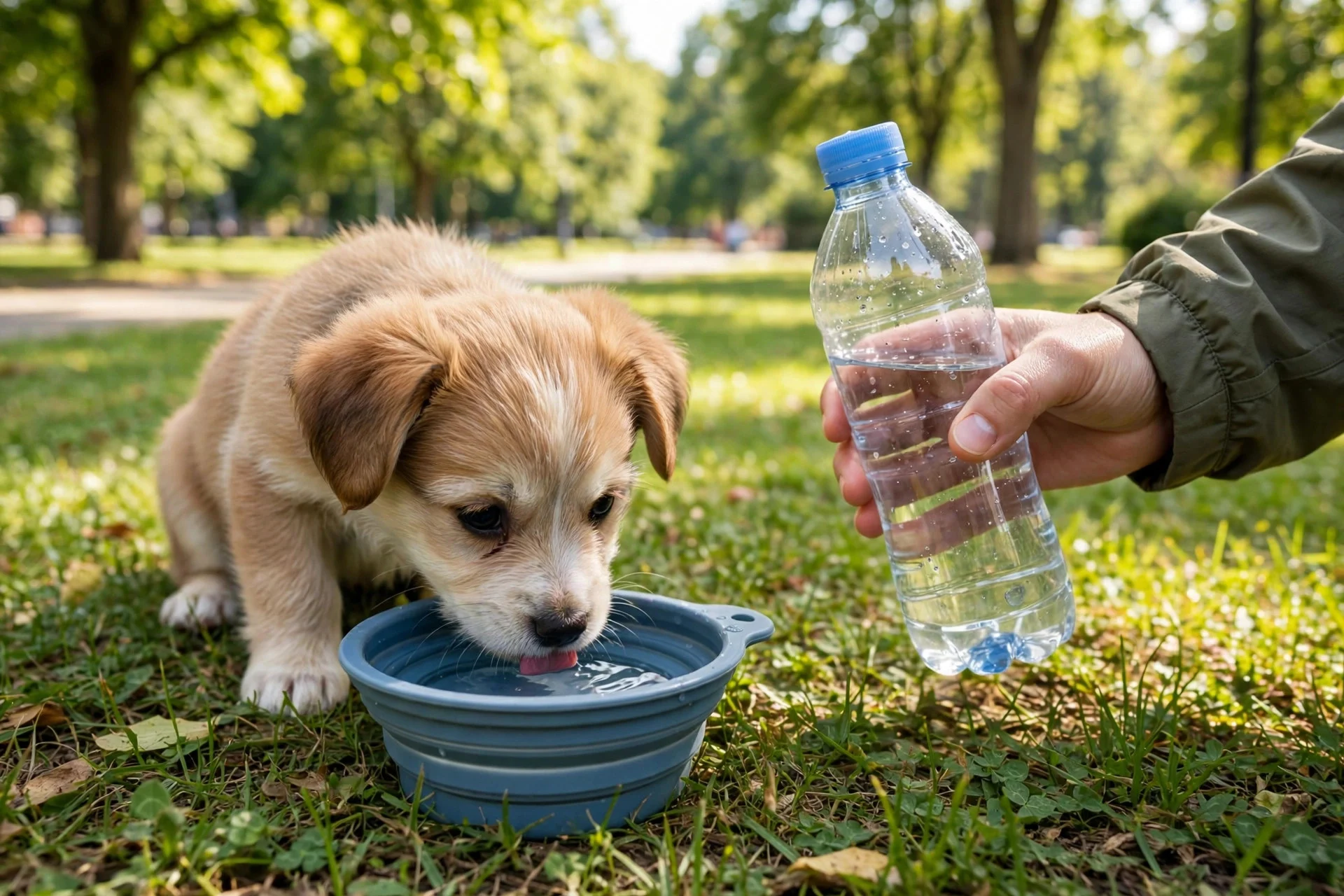
Puppies dehydrate faster than adults, full stop. Water bowl inside, water bowl in the yard, water bottle on walks — I carry a collapsible bowl everywhere from May onward. Watch for the signs of not drinking enough: dry gums, thick drool, lethargy. And here’s one people miss: puppies playing hard will forget to drink. Build water breaks into play sessions every 15–20 minutes. Don’t wait for them to ask; they won’t.
5. Enforce shade and rest breaks
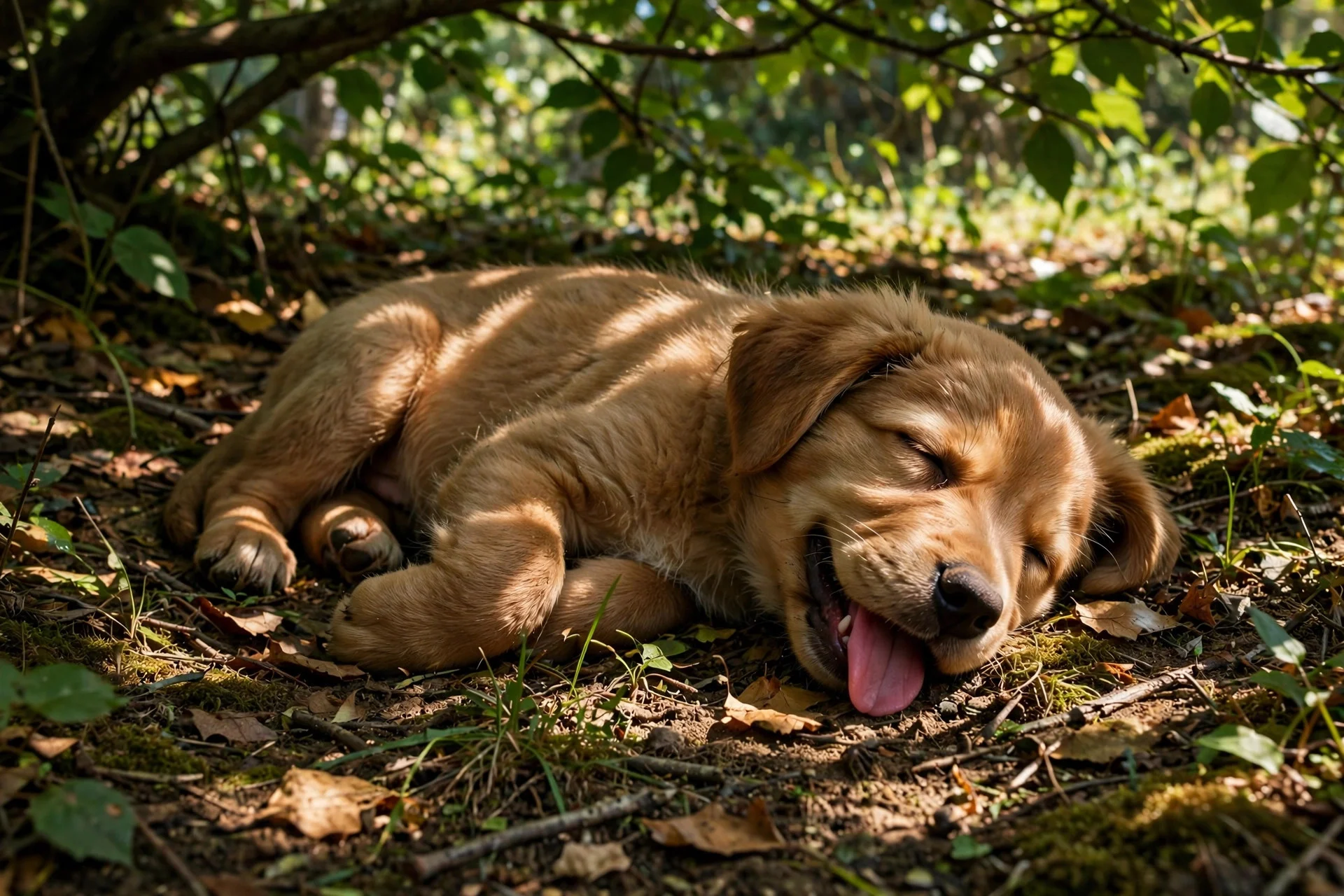
Puppies don’t self-regulate. A puppy will chase a ball until it drops — literally — because the fun switch overrides the survival switch at that age. That’s your job now. During outdoor play, call mandatory shade breaks every 15 minutes: five minutes of rest, water, calm down. I use a specific shady spot and a “settle” cue, so rest becomes part of the game routine. It feels fussy the first week. Then it becomes habit, and you’ll be glad.
6. Learn the signs of heatstroke
This one could save your puppy’s life, so read it twice. Early signs: excessive panting, drooling, bright red gums, restlessness. Escalating: vomiting, diarrhea, stumbling, glazed eyes. Emergency: collapse, seizures, gums turning purple or gray. Puppies can go from “panting a lot” to “critical” in under 15 minutes. If you see the early signs, start cooling immediately and call your vet. If you see the emergency signs, it’s a race to the clinic — cool on the way.
7. Cool them down the right way
If your puppy is overheating: move to shade, offer small amounts of cool (not ice-cold) water, and apply cool wet towels to the neck, armpits, and groin — then replace the towels every few minutes, because a warm towel traps heat. A fan helps. What’s counterintuitive: don’t use ice water or ice packs directly. Extreme cold constricts blood vessels and actually slows cooling. Lukewarm-to-cool is the sweet spot. And get vet guidance by phone while you’re doing all of this.
8. Get a puppy pool
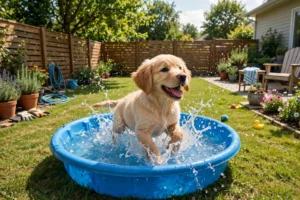
A shallow hard-plastic kiddie pool with a few inches of water gives puppies a way to cool off on their own terms. Most are suspicious for a day, then they’re splashing like toddlers. Supervise always, refill every day or two, and keep it in the shade.
9. Scale exercise to the puppy, not the plan
The standard guidance is about five minutes of structured exercise per month of age, twice a day — but in heat, cut that further. A four-month-old puppy doesn’t need a 20-minute midday walk in July; they need 10 minutes in the cool morning and indoor play the rest of the day. Watch your puppy, not the formula: heavy panting that doesn’t resolve within a few minutes of rest means you’re done for now. There’s no training goal worth heatstroke.
10. Don’t shave double-coated breeds
It seems logical — hot dog, less fur — but for Huskies, Golden Retrievers, Shepherds, and other double-coated breeds, the undercoat is insulation that works both ways. Shaving it destroys their natural temperature regulation and exposes skin to sunburn. What does help: thorough de-shedding (get that loose undercoat out), regular brushing, and keeping the coat clean. If you’re unsure about your breed’s coat type, ask your groomer before anyone takes clippers to them.
11. Extra caution for flat-faced breeds
Pugs, Bulldogs, Frenchies, Shih Tzus — brachycephalic puppies are the highest-risk group for heatstroke, by a wide margin. Their shortened airways make panting (a dog’s main cooling system) far less efficient. If you have a flat-faced puppy, treat 80°F the way other owners treat 95°F: shorter outings, more water, constant supervision, and a lower threshold for “we’re going inside now.” Talk to your vet specifically about your puppy’s heat limits. This isn’t overprotective; it’s anatomy.
12. Summer means bugs — stay on prevention
Fleas, ticks, and mosquitoes peak in summer. Keep prevention current (ask your vet what’s safe for your puppy’s age — not all products are), check for ticks after grassy walks, and remember mosquitoes transmit heartworm. Dump standing water regularly. Prevention is boring. Treatment is expensive.
Building a Summer Routine
Our summer day looks like this: out at 6:30 for the big walk while it’s cool, breakfast, indoor play and training through the heat of the day, yard time with the pool in the late afternoon, evening walk after 7:30. The puppy adapted to the rhythm within a week, and honestly, I prefer it — mornings are lovely, and nobody’s miserable.
The indoor hours are a great time for training, by the way. Ten minutes of trick training tires a puppy out as effectively as a walk, without a drop of heat risk. Summer is when my puppies have learned their best tricks, purely because we were stuck inside together.
Mistakes New Puppy Owners Make in Summer
Assuming puppies handle heat like adult dogs. They don’t. Smaller body, less efficient regulation, zero judgment about stopping. Everything needs a bigger safety margin.
Skipping the pavement test “just this once.” Pad burns are painful, slow to heal, and completely preventable. Seven seconds with your hand. Every time.
Over-bathing to “cool them down.” A cool rinse is fine, but frequent full baths dry out puppy skin. Water play and wet towels cool better with less downside.
Summer Puppy FAQs
How hot is too hot for a puppy walk?
As a rough guide: above 80°F, keep it short and shady. Above 90°F, skip the walk and play inside. Above 95°F, potty trips only. And adjust for your puppy — dark-coated, flat-faced, very young, or unconditioned puppies need even more caution. Humidity makes everything worse, so factor that in too.
Can puppies swim to cool off?
Many puppies love water, but they’re not automatically good swimmers — and they tire fast. Start in the shallow kiddie pool, always supervise, and consider a puppy life vest for anything deeper. Never leave a puppy unattended near any water, including the pool you just bought for cooling off. It takes seconds for things to go wrong.
Should I cut my puppy’s fur short for summer?
For single-coated breeds, a trim is fine. For double-coated breeds, no — brush out the undercoat instead. When in doubt, ask your groomer or vet about your specific breed. And never shave down to the skin; sunburn on dogs is real and painful.
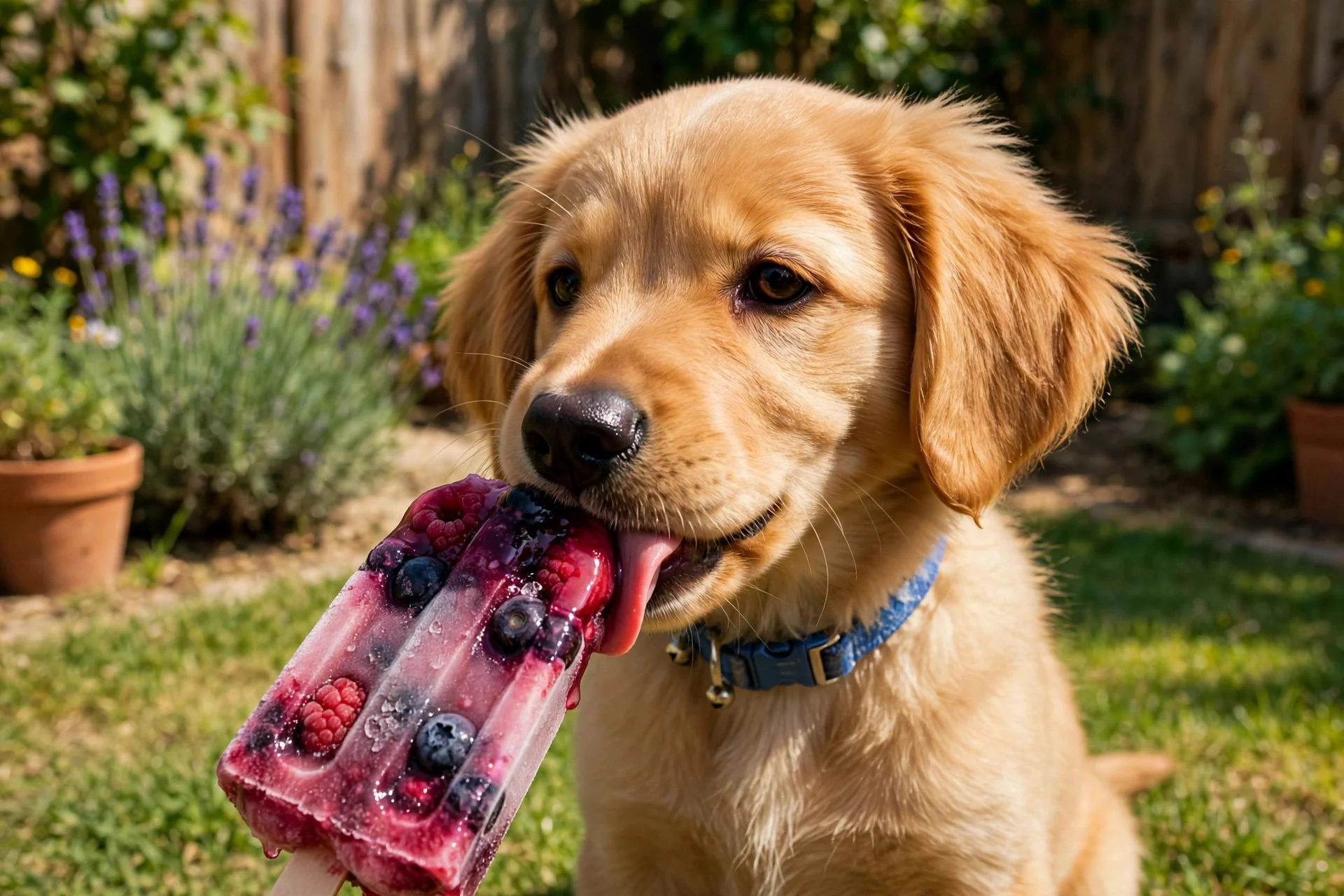
Your puppy’s first summer is a season of firsts — first pool, first popsicle, first time discovering that the sprinkler is the greatest invention in history. Keep the heat rules in the back of your mind, build the routine, and you’ll both get through it just fine. Mostly you’ll remember the wet paw prints on the kitchen floor and the way they flopped in the shade like a tiny sunbather. That’s the good stuff.