
One of the first things every new puppy owner googles at 2 a.m. is the puppy feeding chart — and for good reason. Puppies grow at a ridiculous pace, and getting portions right during those first months shapes everything from bone development to energy levels. Too much food and you’re raising a chubby puppy with stressed joints. Too little, and growth stalls out.
But here’s what nobody tells you: every puppy feeding chart is a starting point, not a rulebook. Breed, metabolism, and the food itself all shift the numbers — so use this guide for the charts and schedules, then let your vet fine-tune the portions.
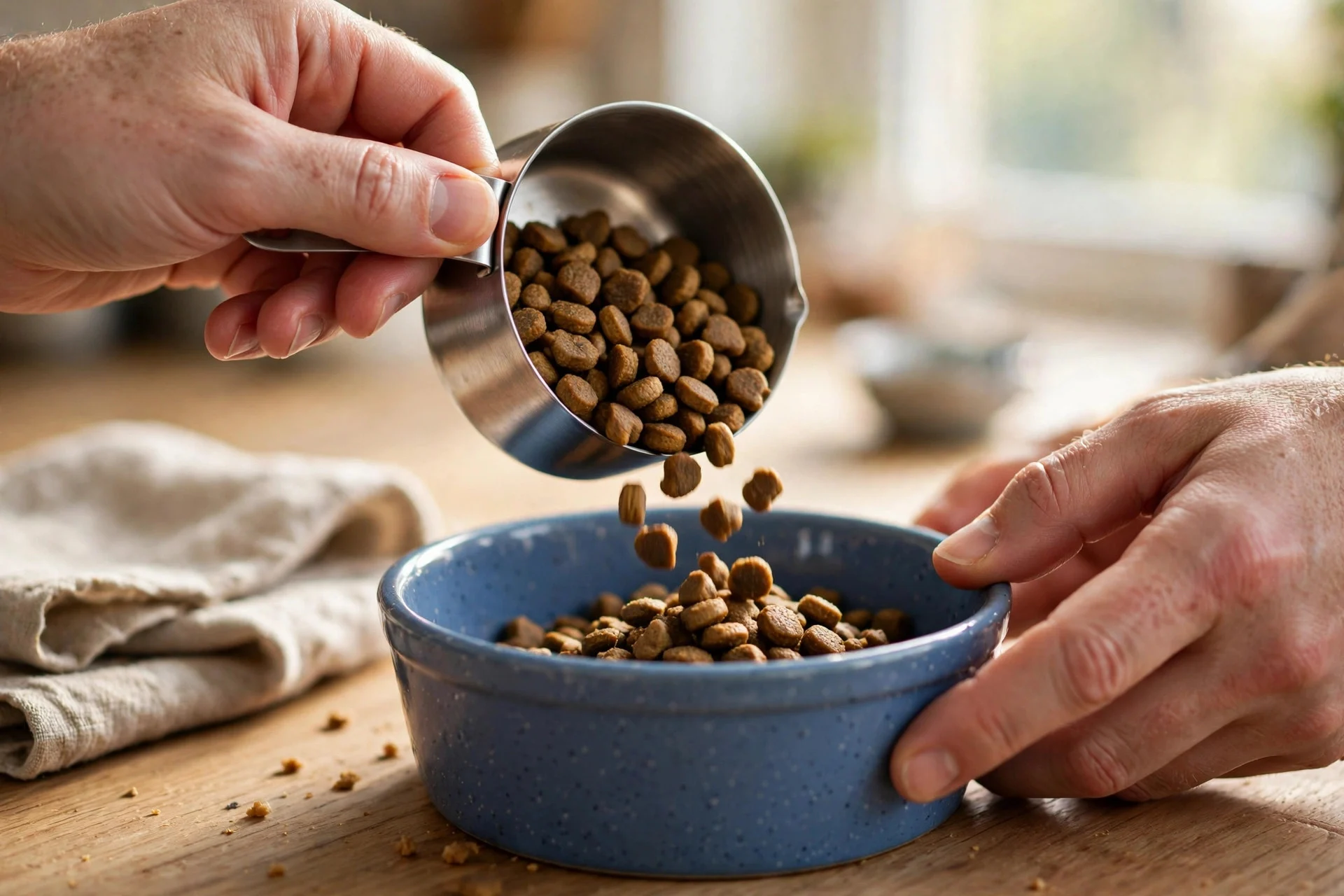
Puppy Feeding Chart by Age
How often you feed matters as much as how much. Young puppies have tiny stomachs and burn through calories fast, so they need more frequent, smaller meals. Here’s the standard breakdown most vets work from:
| Age | Meals per day | Notes |
|---|---|---|
| 6–8 weeks | 4 | Just weaned; needs frequent small meals |
| 8–12 weeks | 4 | Peak growth phase for most breeds |
| 3–6 months | 3 | Drop the midday meal gradually |
| 6–12 months | 2 | Most puppies settle into an adult rhythm |
| 12+ months | 2 | Transition to adult food (large breeds: 18–24 months) |
Those meal counts are the easy part. The trickier question is portions — and that’s where weight comes in.
Adjusting Portions by Weight and Breed Size
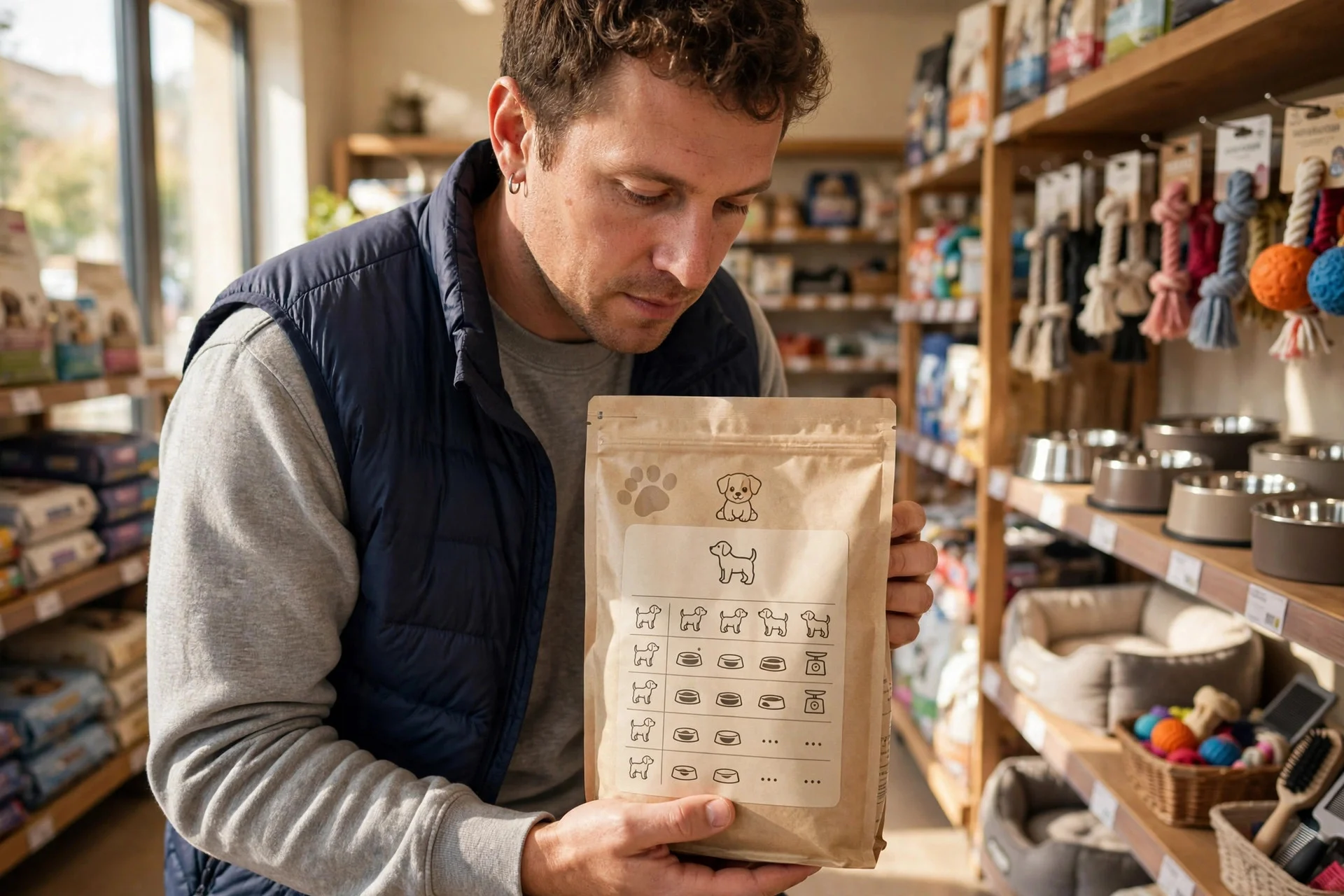
Here’s the honest truth: no chart can tell you exactly how many cups your puppy needs. The food bag’s feeding guide is your baseline (it’s calibrated to that food’s calorie density), and your vet adjusts from there. But these ranges will get you in the right neighborhood.
Small Breed Puppies (Under 20 lbs Adult Weight)
Think Chihuahuas, Yorkies, Dachshunds. These little guys need calorie-dense food in small amounts — roughly half a cup to a cup and a quarter per day, split across their meals. Small breeds are prone to low blood sugar as young puppies, so don’t skip meals. I once tried stretching a neighbor’s Yorkie pup to three meals at nine weeks to fit my schedule. Bad idea — she got shaky by afternoon, and the vet’s verdict was blunt: four meals, no negotiating, until twelve weeks.
Medium Breed Puppies (20–50 lbs Adult Weight)
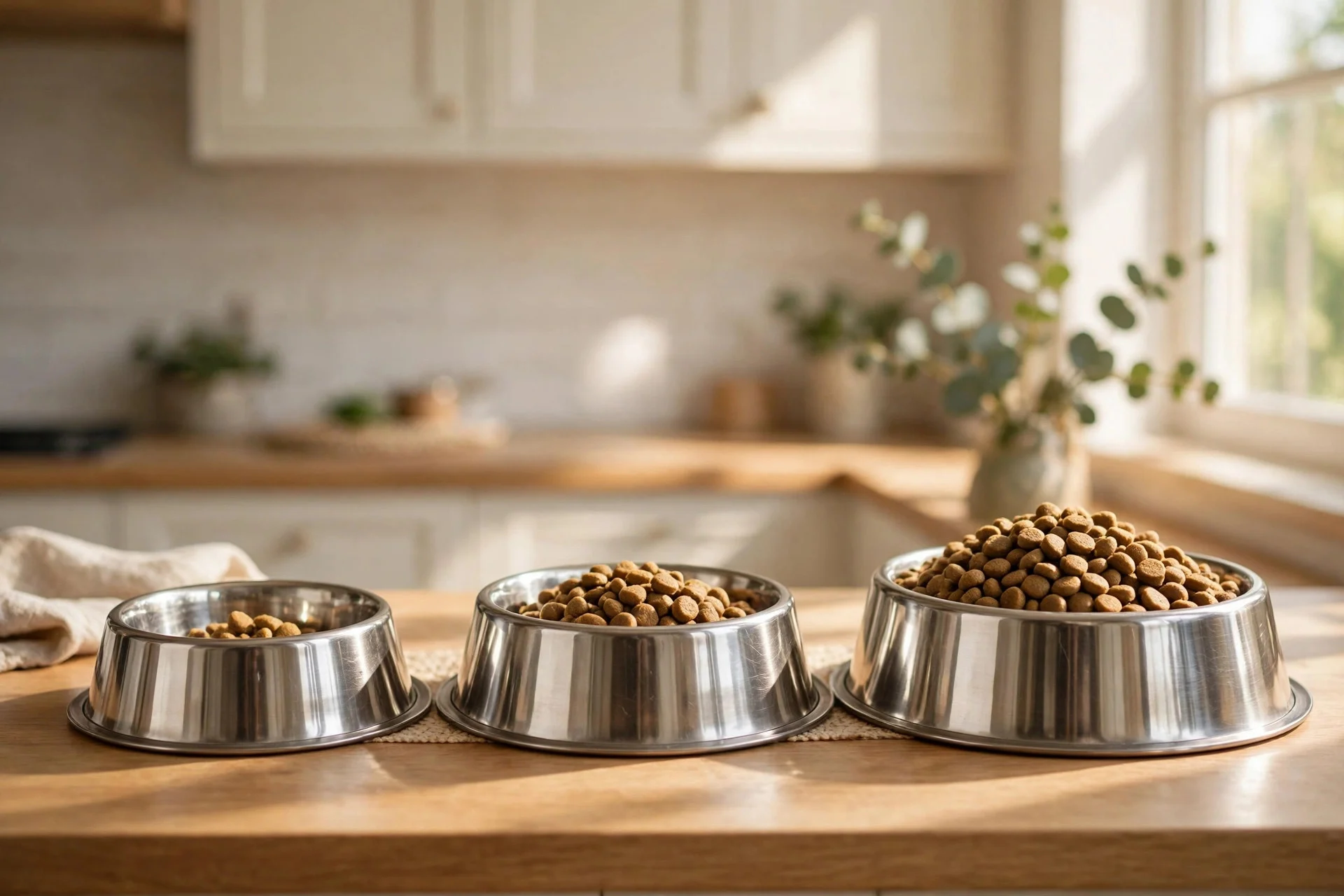
Beagles, Border Collies, Aussies — the middle of the road. Expect roughly one and a quarter to two and a half cups per day of a quality puppy food, divided into the age-appropriate number of meals. Medium breeds are the most forgiving on portions, but watch the waistline: you should feel ribs under a thin layer of fat — not see them, and not go digging for them.
Large and Giant Breed Puppies (50+ lbs Adult Weight)
Labradors, German Shepherds, Great Danes. This is where portions really matter — and where overfeeding does the most damage. Large-breed puppies should grow slowly and stay lean; rapid growth stresses developing joints. Feed a large-breed puppy formula (controlled calcium and phosphorus), roughly two and a half to four and a half cups per day, and keep them on the lean side. When in doubt, feed a little less and confirm with your vet.
Sample Puppy Feeding Schedules
Charts are nice, but what does a day actually look like? Here are three real-world schedules. Adjust the times to your life — consistency matters more than the clock.
8-Week-Old Puppy: 4 Meals a Day
7:00 a.m. — breakfast. 12:00 p.m. — lunch. 5:00 p.m. — dinner. 9:00 p.m. — small bedtime snack. Yes, four meals feels like a lot. It is a lot. Your puppy is basically a tiny athlete in a fur coat right now, and those calories vanish fast. Keep the bedtime meal small so the last potty break isn’t a midnight marathon.
4-Month-Old Puppy: 3 Meals a Day
7:00 a.m. — breakfast. 12:30 p.m. — lunch. 6:00 p.m. — dinner. By four months most puppies handle three meals comfortably. This is also when people start eyeballing portions upward because the puppy “seems hungry.” Puppies always seem hungry. That’s their factory setting. Stick to the plan unless your vet says otherwise.
8-Month-Old Puppy: 2 Meals a Day
7:00 a.m. — breakfast. 6:00 p.m. — dinner. Simple. Most puppies transition to two meals somewhere between six and nine months. If your puppy starts skipping the midday meal on their own, that’s your cue — they’re telling you they’re ready.
Practical Feeding Tips That Actually Help
Measure, don’t eyeball. A “scoop” is not a measurement. Use an actual measuring cup or, better yet, a cheap kitchen scale. You’d be amazed how far off eyeballing gets — usually by twenty percent or more, and it’s always in the too-much direction.
Pick up the bowl after 20 minutes. Free-feeding (leaving food out all day) makes it impossible to track intake, and it sabotages potty training because you can’t predict when food goes in. Put the bowl down, give them fifteen to twenty minutes, then pick it up. A healthy puppy won’t starve itself.
Transition foods slowly. Switching brands or moving to adult food? Mix the new food in over seven to ten days, gradually increasing the ratio. A sudden switch is the fastest route to a week of digestive drama.
Fresh water, always. Obvious, but worth saying: rinse the water bowl daily. Slime builds up fast, and puppies drink a lot.
Feeding Mistakes New Owners Make
Feeding adult food too early. Puppy food has more protein, fat, and key minerals for growth. Switching to adult food before twelve months (or eighteen to twenty-four for giant breeds) can shortchange development. Don’t rush it — and confirm the timing with your vet.
Overfeeding out of love. Begging eyes are a superpower. But an overweight puppy is set up for joint problems, and large breeds pay the highest price. Love them with play and training, not extra kibble.
Ignoring the food bag. Every food has different calorie density. A cup of one brand can pack 350 calories; another hits 450. When you switch foods, recheck the feeding guide — your old portions don’t transfer.
Too many treats. Training treats add up fast. Keep treats under ten percent of daily calories, and use tiny pea-sized pieces. Your puppy doesn’t care about the size. Only you do.
Puppy Feeding FAQs
How do I know if I’m feeding the right amount?
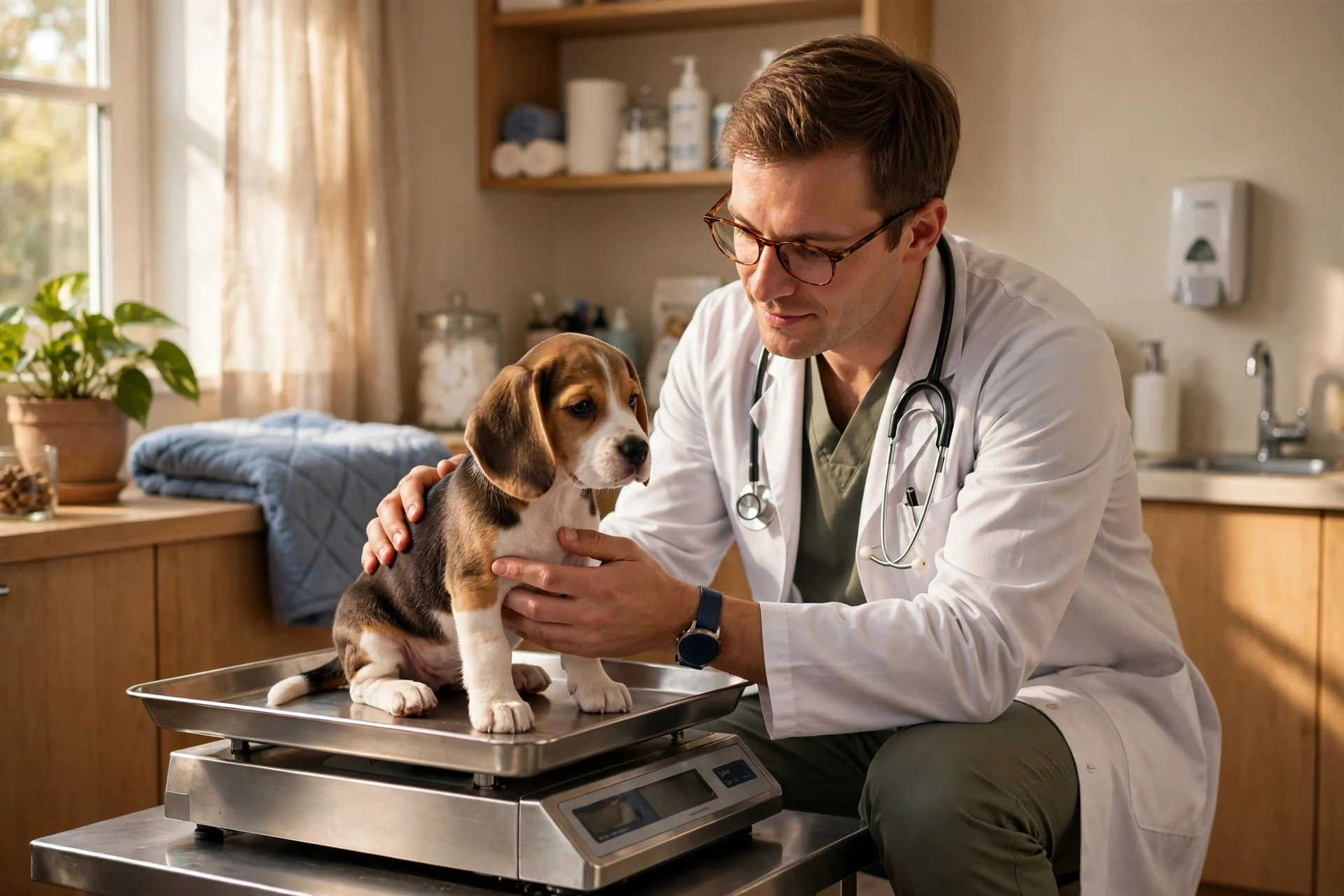
Watch the dog, not just the chart. A well-fed puppy has good energy, a shiny coat, firm stools, and a visible waist when viewed from above. Ribs should be easy to feel but not visible. If you’re unsure, ask your vet at the next visit — it takes them ten seconds to assess.
Should I feed wet food, dry food, or both?
Either works, and many owners mix. Dry kibble is convenient and helps with teeth; wet food is more palatable and hydrating. What matters most is that it’s a complete puppy formula meeting AAFCO standards. Pick one your puppy eats enthusiastically and your budget tolerates.
When should I switch from puppy to adult food?
Small and medium breeds: around twelve months. Large and giant breeds: eighteen to twenty-four months, since they keep growing longer. Transition gradually over seven to ten days. And confirm the timing with your vet, since individual growth rates vary.
My puppy eats too fast. Is that a problem?
Usually it’s just enthusiasm, but speed-eating can cause vomiting — and bloat is a real risk in deep-chested breeds. A slow-feeder bowl or spreading kibble on a lick mat fixes it cheaply. If frantic gulping is new and sudden, mention it to your vet.
Start with the chart, measure every meal, and check in with your vet at each visit. A well-fed puppy is a trainable puppy — and once the food routine is solid, everything else about puppyhood gets a little easier.

























