
Your dog’s nose has 300 million scent receptors. Yours has 6 million. Let that sink in — your dog is walking around with a supercomputer on their face, and most of us never give it a real job. These nose work games dogs love change that, and they’re the single best enrichment for rainy days, busy schedules, and dogs who need a job.
Nose work is beautifully democratic. Old dogs, young dogs, three-legged dogs, reactive dogs who can’t do group classes — every dog can play scent games. Start with game one and work your way down. Each builds on the last.
7 Beginner Nose Work Games
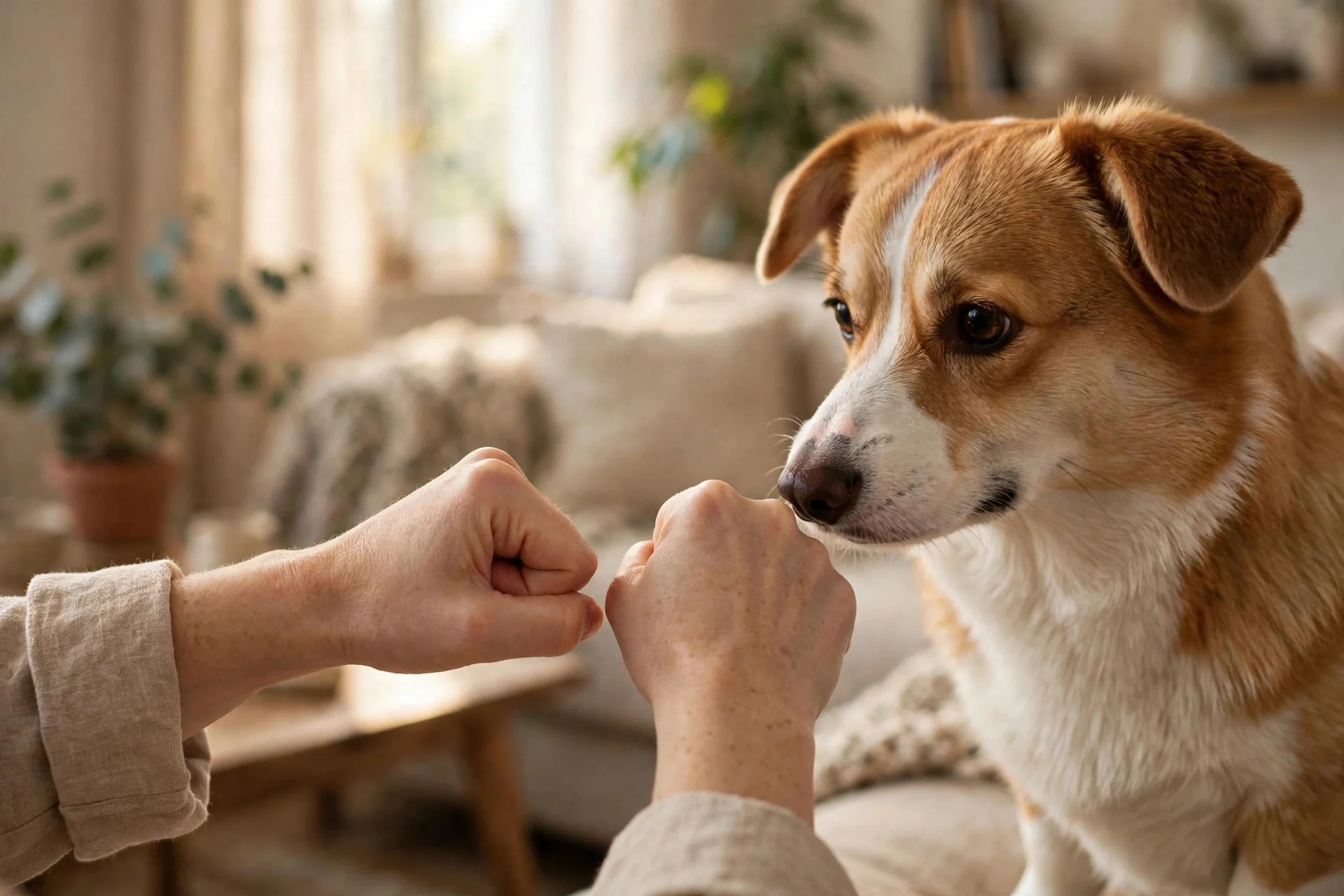
1. Which Hand?
The absolute starting point. Hide a smelly treat in one closed fist, present both fists, let your dog nose the correct one. Reward from the correct hand. Most dogs get it in three repetitions. It teaches the core concept — “use your nose to make choices” — in about two minutes. Do ten reps, then quit while you’re ahead.
2. Muffin Tin Search
Place treats in a few cups of a muffin tin (not all of them), set it on the floor, and let your dog sniff out which cups pay. This adds a search element: the dog has to check each cup and discriminate. When they master it, cover the tin with a light towel so they have to sniff through fabric. Progression without any new equipment.
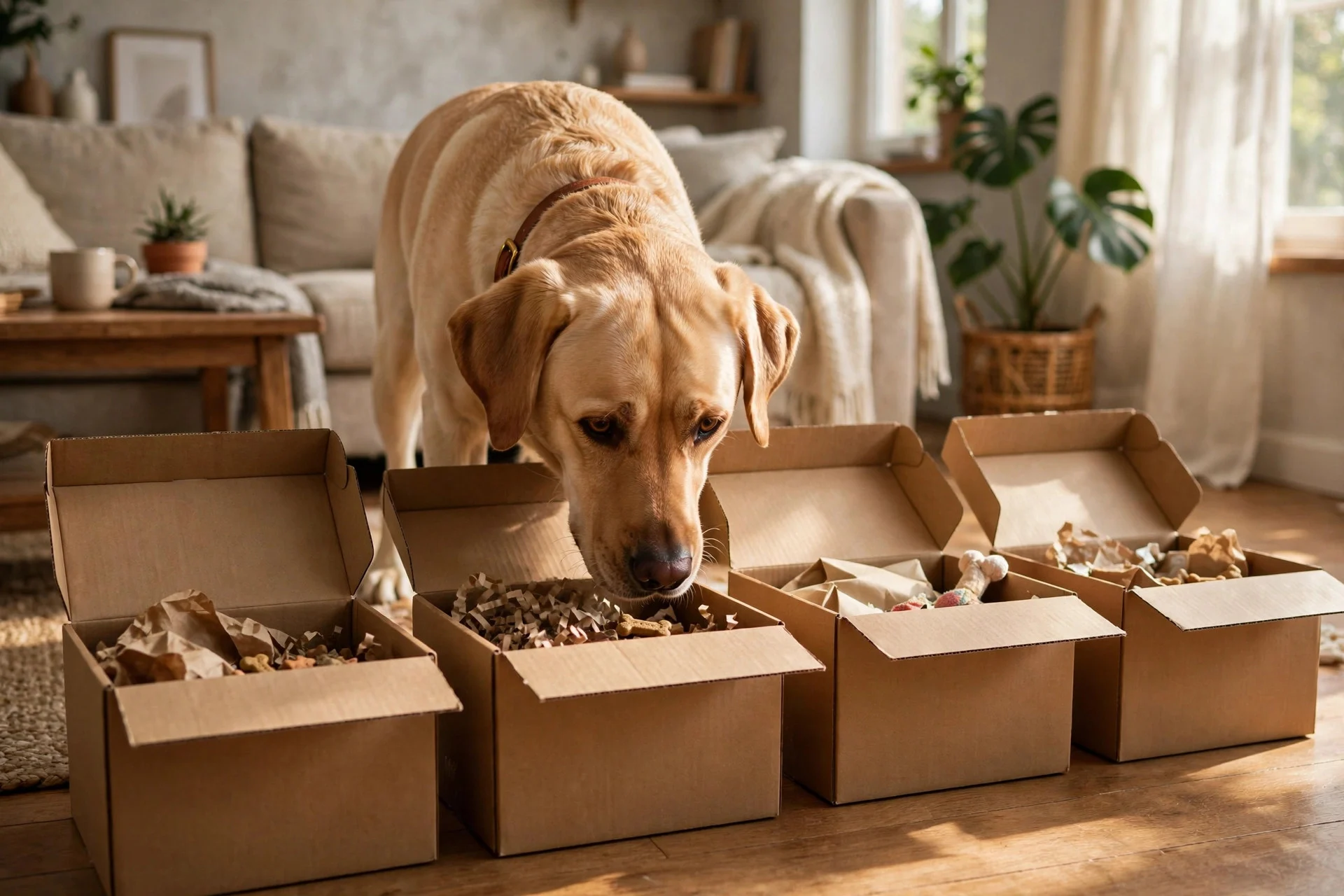
3. Box Row
Line up 4-5 open cardboard boxes. Put a treat in one box while your dog watches from a stay (or have someone hold them). Release with “find it!” and let them check boxes until they find it. Then stop letting them watch — place the treat while they’re out of the room. Now it’s a real search, not a memory test.
4. Treat Scatter Trails
Drag a treat along the ground to lay a short scent trail — start with 10 feet in a straight line on grass. Hide a jackpot (3-4 treats) at the end. Walk your dog to the start and say “find it.” The first time, they’ll look confused. The second time, something clicks. By the fifth trail, they’re tracking like a bloodhound. Extend length and add turns as they improve.
5. Room Search
Have your dog wait in one room while you hide 6-8 treats around another room — some easy (on a chair seat), some harder (behind a cushion, under a rug edge). Release and watch. Time them if you’re competitive. Most dogs clear a room in 3-5 minutes the first time, faster as they learn to work systematically. This is the game that scales forever — just make hides harder.
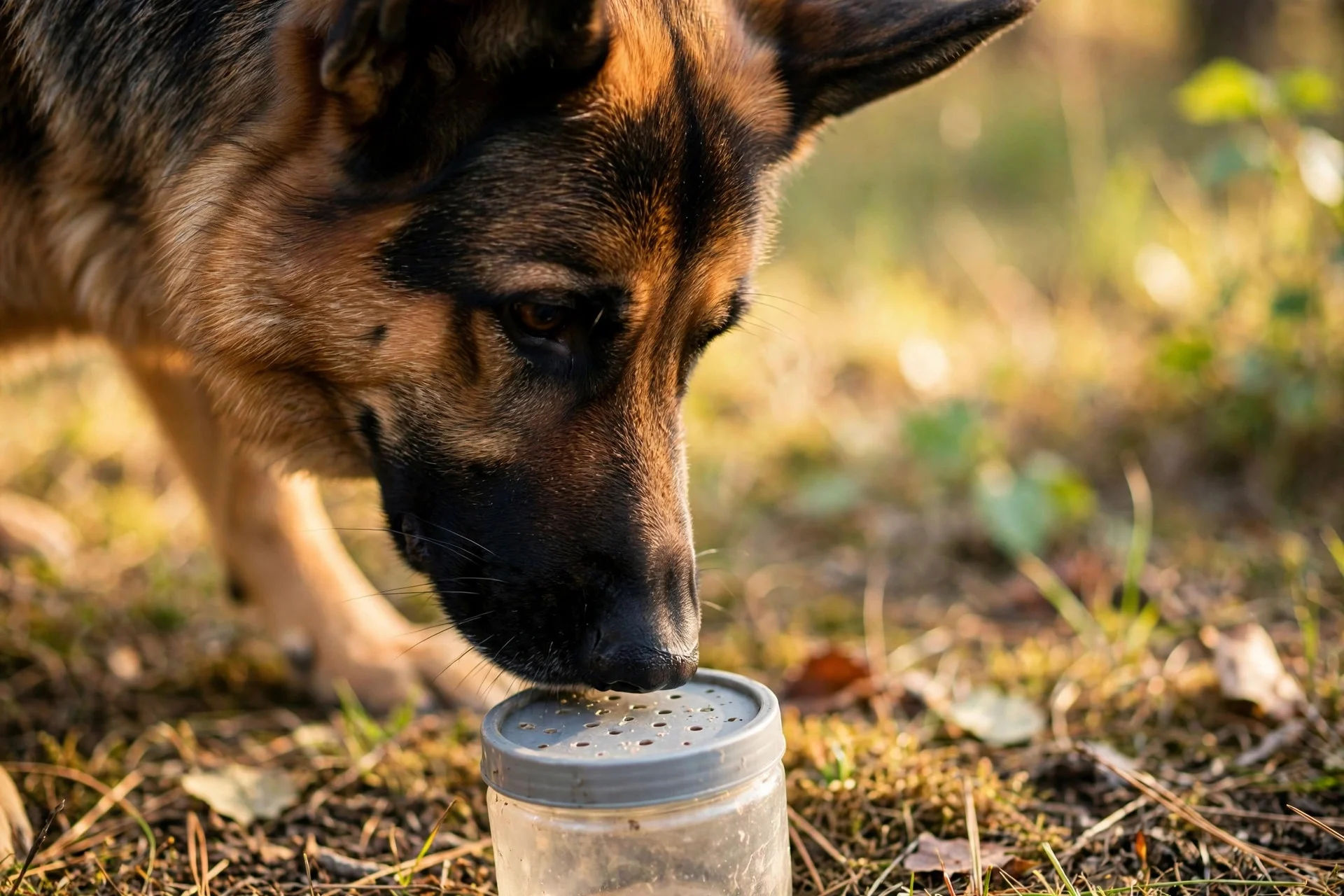
6. Scent Jars
Put a strong treat in a plastic jar with holes in the lid. Let your dog sniff it, then hide the jar in the room. The jar concentrates the scent, making it findable but challenging. This is the bridge to formal nose work — real nose work sports start with exactly this concept, just with essential oils instead of treats. Use plastic, never glass.
7. Outdoor Track
The graduate game. Lay a 30-foot trail across your yard with several turns, age it 10 minutes (scent needs time to settle), then run your dog on a long line. They’ll learn to follow the specific trail rather than wandering. This is genuinely what search-and-rescue dogs start with, scaled down. Your dog has no idea they’re doing something impressive. Let them think it’s just a game.
Practical Tips
Use the smelliest treats you have — freeze-dried liver, cheese, hot dog bits. Nose work runs on scent, and boring kibble makes for a boring game. Keep sessions short: 10-15 minutes max. A dog who’s mentally fried stops searching carefully and starts guessing, which teaches sloppy habits.
Always end with a find. If your dog is struggling, make the next hide ridiculously easy so they succeed. The emotional arc of every session should be: challenge, effort, success, jackpot. A dog who ends frustrated doesn’t want to play tomorrow.
Mistakes to Avoid
Don’t help too much. Hovering, pointing, and repeating “find it!” every three seconds teaches the dog to wait for hints instead of working independently. Place the hides, release the dog, then shut up and watch. Silence is the hardest skill in nose work — for the human.
Don’t make it too hard too fast. The number one killer of nose work enthusiasm is a hide the dog can’t find. If they search for more than a couple of minutes without success, walk them closer or “accidentally” kick the hide into the open. Protect their confidence fiercely in the early weeks. Difficulty is a dial you turn up slowly, over months, not days.
FAQs
What age can dogs start nose work?
Any age. Puppies as young as 8 weeks can play “which hand” and treat scatters. Senior dogs with limited mobility often love nose work because it’s one of the few games that doesn’t require running or jumping. If your dog has a nose, they can play.
Do I need special equipment for nose work?
No. Everything in this article uses household items. If you get hooked and want to try the formal sport (which is genuinely fun), you’ll eventually want some small tins, q-tips, and birch essential oil — but that’s months down the road, if ever. Start free.
My dog just isn’t interested. What now?
Use better treats — this fixes 90% of disinterest. If that fails, the dog might be over-aroused rather than uninterested; try after a walk when they’re calmer. True disinterest in food-based scent games is rare. But some dogs prefer toy-based searching — try hiding a favorite ball instead of treats.
Can reactive dogs do nose work?
Absolutely — it’s one of the best activities for reactive dogs because it’s solo, it’s calming (sniffing lowers arousal), and it builds confidence. Many reactive-dog trainers use nose work as a core part of behavior modification. Start at home where the dog feels safe.
Seven games, zero equipment, one very happy nose. Start with “which hand” tonight — it takes two minutes, and you’ll see the exact moment your dog realizes their nose is a superpower.

























