
The first night with a new puppy is equal parts magical and miserable. You’ve dreamed about this day for months — and then it’s 2:47 a.m., the puppy is screaming in the kitchen, and you’re wondering if you’ve made a terrible mistake. You haven’t. But you do need a plan, starting with the biggest question: where should puppy sleep first night?
Short answer: in a crate or pen right next to your bed, where they can hear you breathe. The longer answer — plus nine more survival tips — is below. Follow them and night one goes from horror movie to merely exhausting. For a first night, that counts as a win.
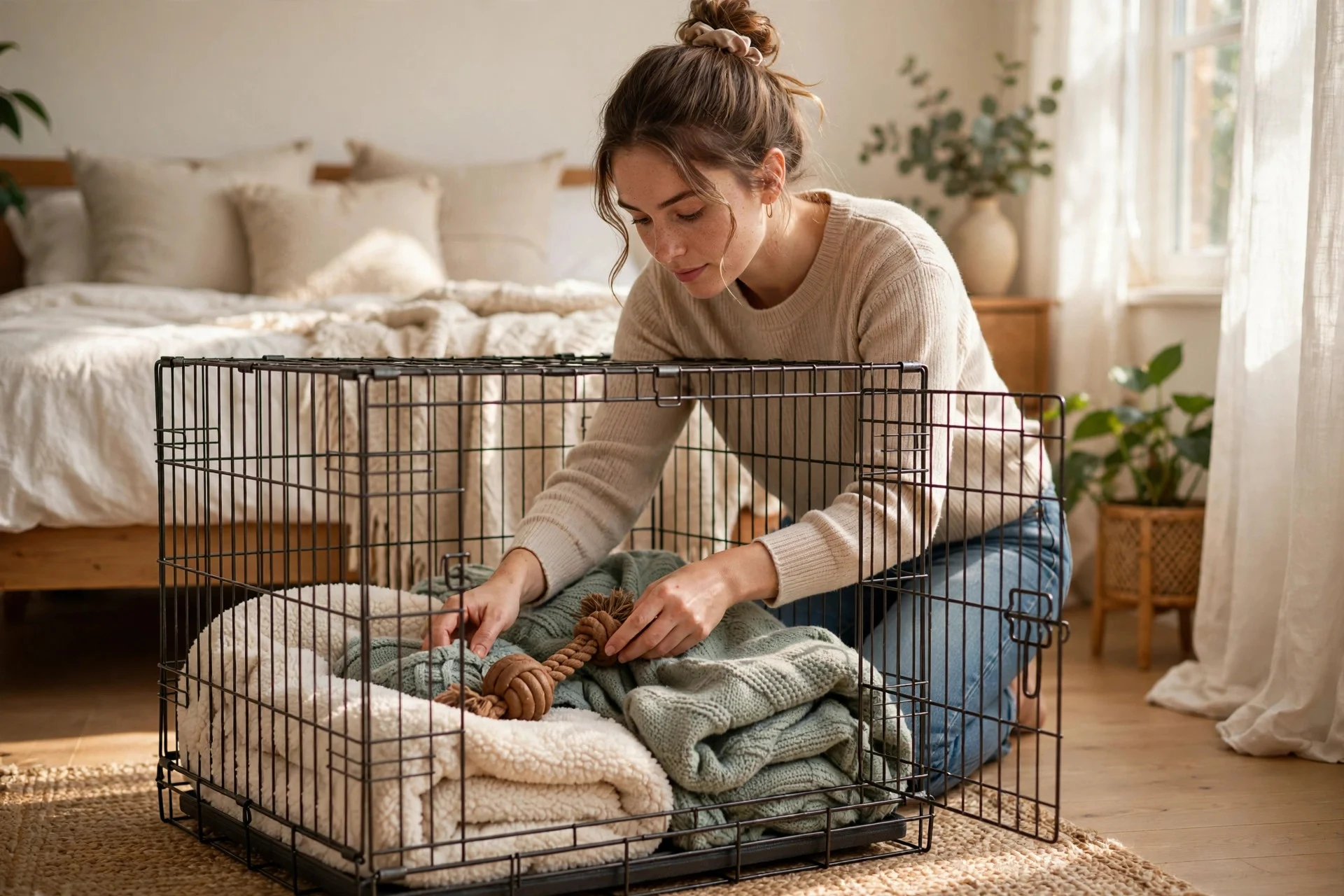
First Night With a Puppy: 10 Survival Tips
1. Set Up the Crate in Your Bedroom
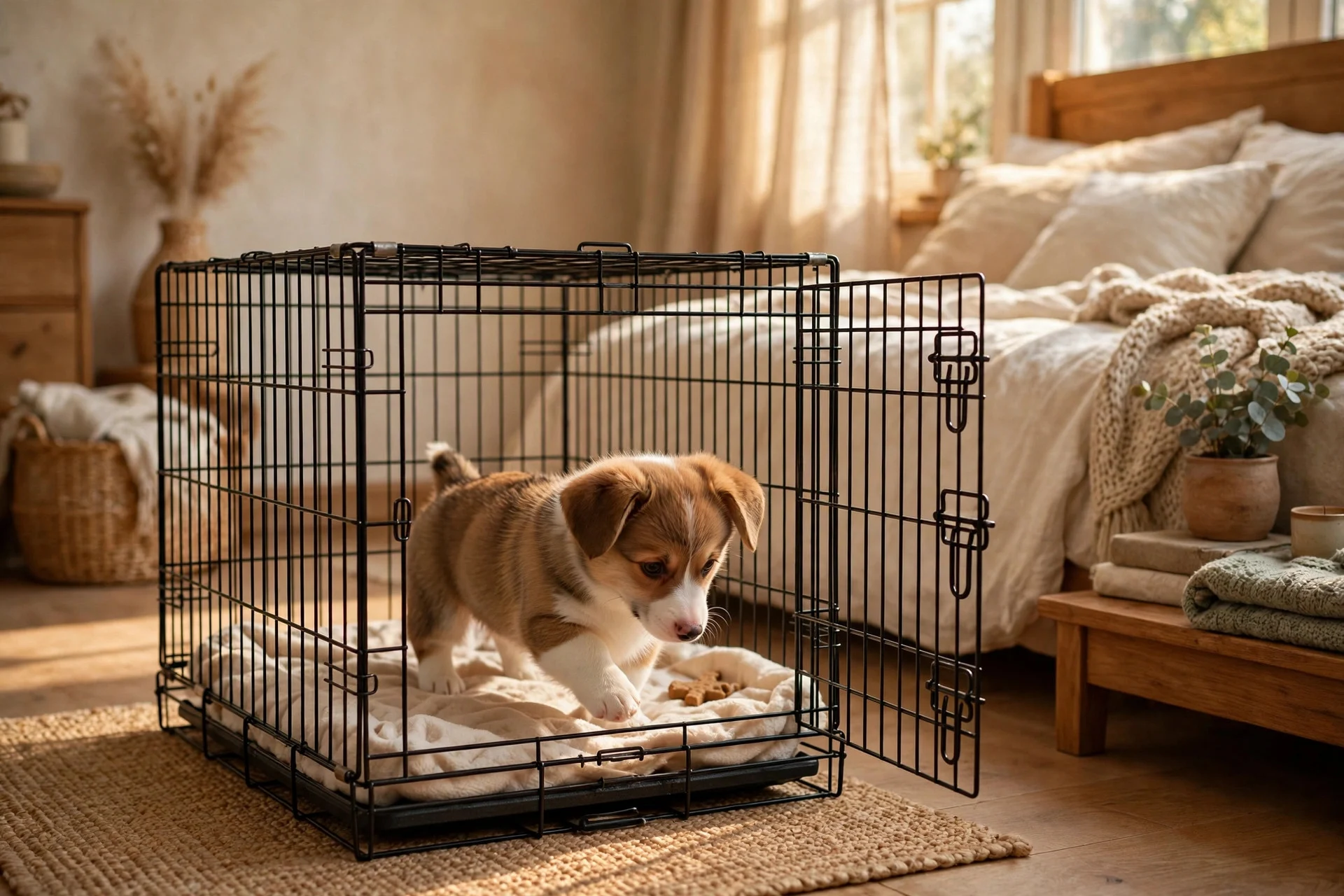
This is the answer to where your puppy should sleep the first night: in a crate, next to your bed, close enough that they can hear and smell you. Your puppy just left their mother and littermates — the only family they’ve ever known. Being alone in a strange kitchen is genuinely terrifying for them. Proximity to you is the single biggest factor in how much they cry. Not a little factor. The factor.
2. Make the Crate a Cozy Den, Not a Cell
Line the crate with soft bedding, add a safe chew toy, and drape a light blanket over the top and sides (leave the front open for airflow). Toss in a worn t-shirt that smells like you — your scent is powerful comfort for a scared puppy. Skip the heartbeat plush if you didn’t buy one; your t-shirt does the same job for free.
3. Tire Them Out Before Bed — Gently
A tired puppy sleeps. An overtired puppy turns into a screaming gremlin. Aim for gentle play and mental stimulation in the evening — a short training session, some sniffing games, a stuffed Kong — then wind down for the last thirty minutes before bed. No wild wrestling at 10 p.m. You’ll regret it at 2 a.m.
4. Do a Final Potty Break Right Before Crate Time
Take them out, wait patiently, and praise calmly when they go. Then straight into the crate — no victory lap around the house, which just wakes them back up. Most eight-week-old puppies need a potty break every two to three hours overnight, so set your expectations (and your alarm) accordingly.
5. Keep Nighttime Potty Trips Boring
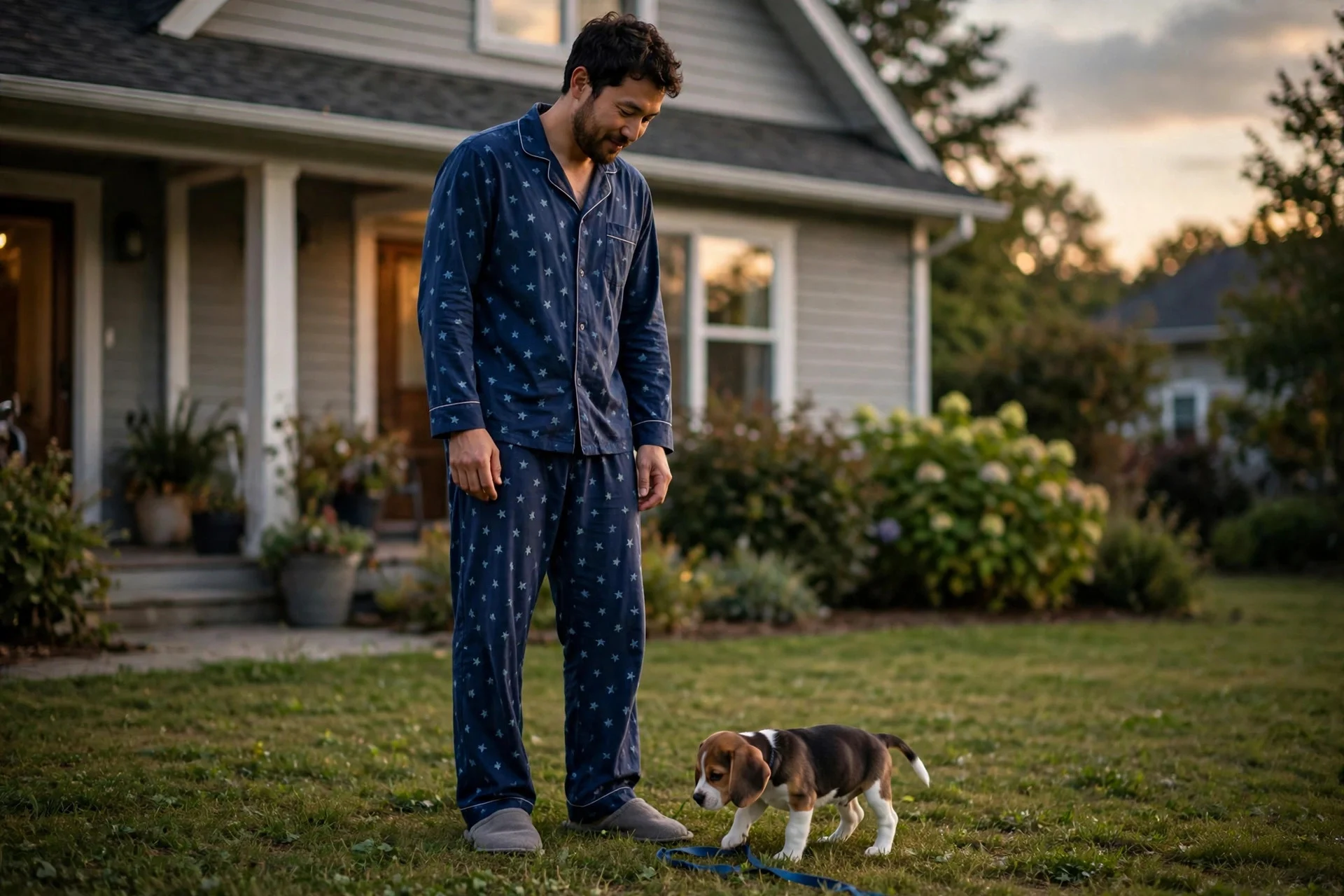
When the puppy wakes you at 1 a.m. and 4 a.m., go out, let them potty, and come straight back in. No lights, no playing, no chatting. You are a silent, boring potty robot. Any excitement teaches the puppy that midnight wake-ups are party time, and you will be throwing that party for weeks.
6. Expect Crying — and Have a Response Plan
Most puppies cry the first night. Some whimper for ten minutes; some perform a full opera. Your plan: wait for a brief pause in the crying, then softly reassure them (“you’re okay, go to sleep”) without opening the crate. If it’s been more than a few minutes of escalating panic, they may genuinely need to potty — take them out, boring trip, back in. What you don’t do: let them out because the crying worked. That teaches them that screaming gets freedom, and you’ll never un-teach it.
7. Stick to a Bedtime Routine From Night One
Same order, same time: potty, crate, treat, lights out. Puppies are pattern-recognition machines, and a predictable routine tells their brain “oh, this is the sleep part of the day.” It won’t work perfectly on night one. By night four or five, you’ll see it click. Routines are the closest thing to magic in puppy raising.
8. Don’t Start Habits You Won’t Keep
If you don’t want a seventy-pound dog in your bed in a year, don’t put the eight-week-old puppy in your bed tonight “just this once.” There is no “just this once” with puppies — there’s only “the new rule.” Decide now where this dog sleeps long-term, and start there. Future you will be grateful.
9. Prepare the House Before the Puppy Arrives
Night-one chaos is ten times worse if you’re also hunting for paper towels at midnight. Before pickup day: crate set up, bedding washed, chew toys ready, enzymatic cleaner stocked, vet appointment booked, and a potty area designated. The first night is hard enough without logistics.
10. Give Yourself Grace
You will be tired. You might cry a little. You might google “can I return a puppy” at 3 a.m. (everyone does; nobody talks about it). The first night is the hardest night. It gets better fast — usually within a week, the crying drops dramatically. You’re not failing. You’re just on night one.
What About the “Cry It Out” Debate?
You’ll hear two camps: “let them cry, they’ll learn” versus “never let them cry, you’ll traumatize them.” The sensible middle ground most trainers recommend: comfort without capitulating. Reassure with your voice, offer a finger through the crate bars, but don’t open the door in response to crying. The exception is genuine distress or a likely potty need — a puppy in full panic isn’t learning anything except fear. And if crying escalates instead of fading over several nights, talk to your vet or a trainer rather than white-knuckling it.
First-Night Mistakes to Avoid
Putting the crate in a distant room. The number one cause of marathon crying sessions. Your bedroom. Next to the bed. Non-negotiable for the first week at least.
Feeding or watering right before bed. Pick up water about two hours before bedtime and feed dinner early enough for a proper digestion window. A full bladder at midnight is nobody’s friend.
Overdoing the goodbyes. Long, emotional crate departures (“oh my sweet baby, mommy will miss you SO much!”) signal to the puppy that something scary is happening. Keep it casual: treat in the crate, “night night,” lights out. Boring is calming.
Changing the plan at 3 a.m. The plan you made at 8 p.m. while calm and rational is the plan you follow at 3 a.m. while exhausted and emotional. Decide everything in advance — where they sleep, how you handle crying, when potty breaks happen — and don’t renegotiate with yourself in the dark.

First Night FAQs
Should I sleep next to the crate on the floor?
For the first night or two, some owners do — and it can genuinely help an extremely anxious puppy settle. But it’s not required if the crate is next to your bed; your breathing and occasional voice are usually enough. Don’t make floor-sleeping a two-week habit you’ll have to break later.
How long will my puppy cry the first night?
Anywhere from a few minutes to a couple of hours, in waves. Most puppies cry hardest in the first thirty minutes, then settle into on-and-off whimpering. If it’s still full-volume screaming after two hours, check for a potty need or genuine distress.
Is it okay to comfort a crying puppy?
Yes — comfort with your voice and presence, not by opening the crate door. There’s a difference between reassurance (“I’m here, you’re safe”) and reward (opening the door teaches crying works). Calm reassurance doesn’t spoil a puppy.
What if my puppy won’t go in the crate at all?
Don’t force it on night one — a puppy pen or small puppy-proofed area next to your bed works as backup. Toss high-value treats in the crate during the day to build positive associations, and try again once it’s not a battle.
Night one is survival mode, and that’s okay. Get the crate next to your bed, keep the midnight trips boring, and remember: in a week, you’ll barely remember how hard this night was.

























