
You wake up to that unmistakable sound — the heaving, the gagging — and there it is on the rug. Your dog looks at you like they feel guilty about it. Here’s the thing: figuring out dog vomiting when to worry is one of those judgment calls every dog owner picks up eventually, usually at 2 a.m. on a Saturday.
Most vomiting episodes are nothing dramatic. Dogs eat grass, steal trash, inhale dinner too fast, and occasionally just have an off stomach the same way we do. But some vomiting is a genuine emergency, and knowing the difference matters a lot. I’m not a vet — just a long-time dog owner who’s been through this more times than I’d like — so treat this as experienced-owner guidance, not medical advice. When in doubt, call your vet. That’s always the right move.
10 Causes of Dog Vomiting (and Which Ones Actually Matter)
1. Eating Too Fast
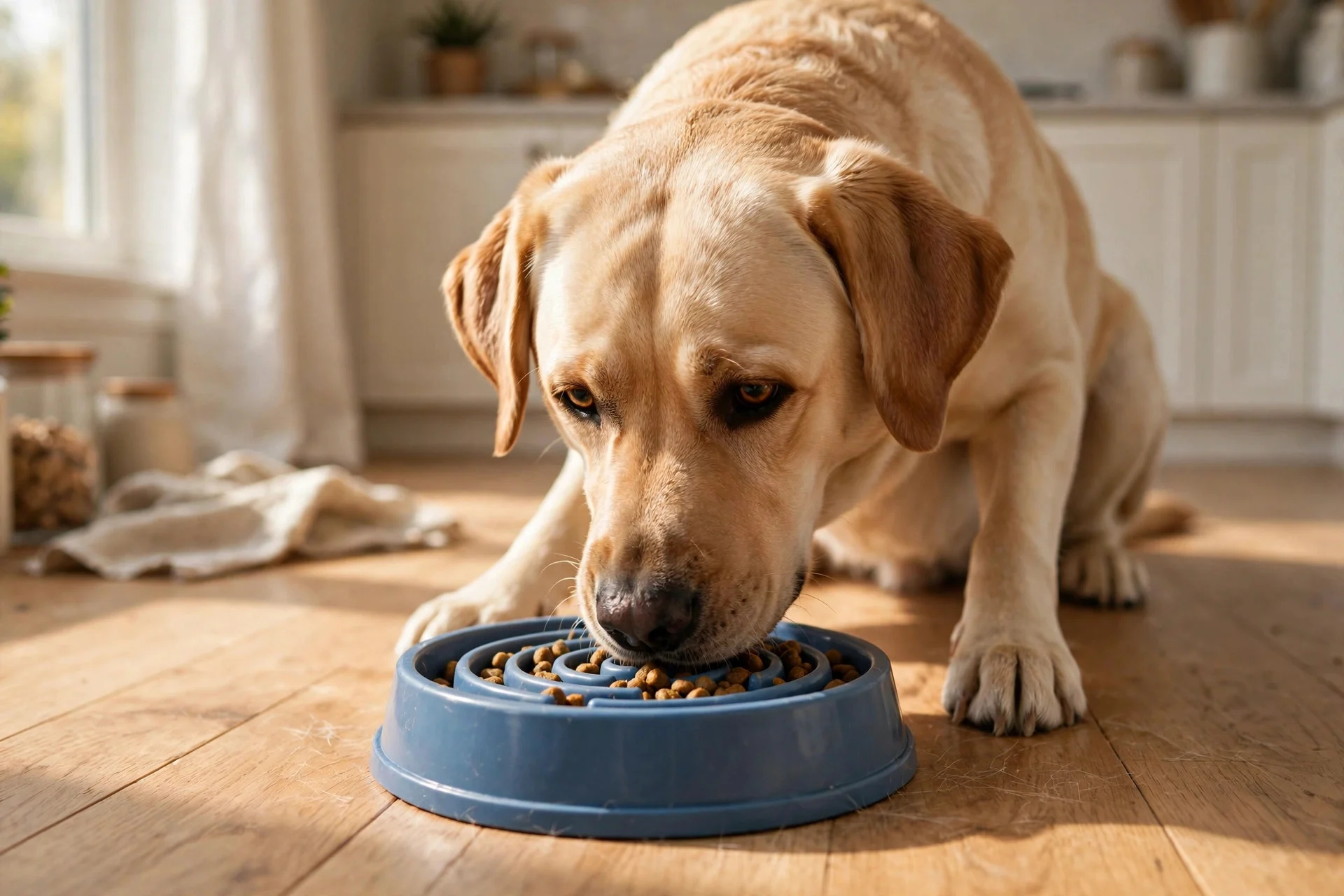
The number one cause of post-dinner vomiting in my experience. Some dogs — mine included — treat mealtime like a competitive sport. They gulp air along with the food, the stomach protests, and up it comes, usually mostly undigested and almost immediately. A slow-feeder bowl fixed this for us overnight. It’s not glamorous, but it works.
2. Dietary Indiscretion (a.k.a. Garbage Gut)
The vet term for “your dog ate something disgusting.” Trash, dead things on walks, a sock — dogs are not picky. A single episode after a known gross snack, with a dog that bounces back to normal, is usually a wait-and-see situation. Multiple episodes or lethargy afterward means the vet gets a call.
3. Grass Eating
Dogs eat grass, and sometimes it comes right back up. This is normal and usually harmless — the grass can tickle the stomach lining on the way back up. If your dog is frantically grazing and vomiting repeatedly, though, it can signal nausea from something else, so watch for patterns rather than the one-off puke-and-grass combo.
4. Sudden Diet Change
Switched foods overnight and now everyone’s regretting it? Yeah. New proteins, different fat levels, or even just a new formula can upset a dog’s stomach. Always transition over 7–10 days: 25% new food for a few days, then 50/50, then 75/25. Boring, slow, and it prevents exactly this.
5. Food Intolerance or Sensitivity
Some dogs just don’t agree with certain proteins or grains. If the vomiting happens consistently after meals — same food, same timing, same result — a food sensitivity is worth investigating. I keep a simple food log on my phone whenever something like this starts. It makes the vet visit ten times more productive.
6. Foreign Body (Swallowed Something)
This is one of the scary ones. Socks, toys, corn cobs, chewed-up plastic — if your dog swallows something that can’t pass, vomiting is often the first sign, followed by not eating, lethargy, and abdominal pain. A corn cob once put my friend’s Lab in surgery. If you suspect something was swallowed and vomiting won’t stop, this is vet-visit territory, not wait-it-out territory.
7. Parasites
Worms — especially roundworms in puppies — can cause intermittent vomiting. If you see what looks like spaghetti in the vomit, that’s almost certainly roundworms, and your vet has a simple dewormer for it. Puppies should be on a regular deworming schedule; ask your vet what’s standard in your area.
8. Pancreatitis
Repeated vomiting plus obvious belly pain, loss of appetite, and a hunched posture can point to pancreatitis — inflammation of the pancreas, often triggered by fatty foods (looking at you, Thanksgiving scraps). This one needs a vet diagnosis and can be serious. Don’t try to ride this out at home.
9. Toxin Exposure
Chocolate, xylitol, grapes, certain medications, rat poison — if vomiting comes with drooling, shaking, disorientation, or you know something toxic was eaten, skip Google and call your vet or the pet poison helpline immediately. Time genuinely matters here.
10. Motion Sickness or Stress
Some dogs puke in the car. Some puke at the groomer. Stress and motion sickness are real and usually self-resolving once the trigger is gone. For car sickness, an empty-ish stomach and good ventilation help. For chronic stress vomiting, talk to your vet about longer-term strategies.
When to Worry: The Red-Flag Checklist
This is the part worth memorizing. Call your vet or an emergency clinic right away if you see any of these:
- Blood in the vomit — bright red streaks or something that looks like coffee grounds
- Repeated vomiting — can’t keep water down for more than a few hours, or vomiting more than 3–4 times in a day
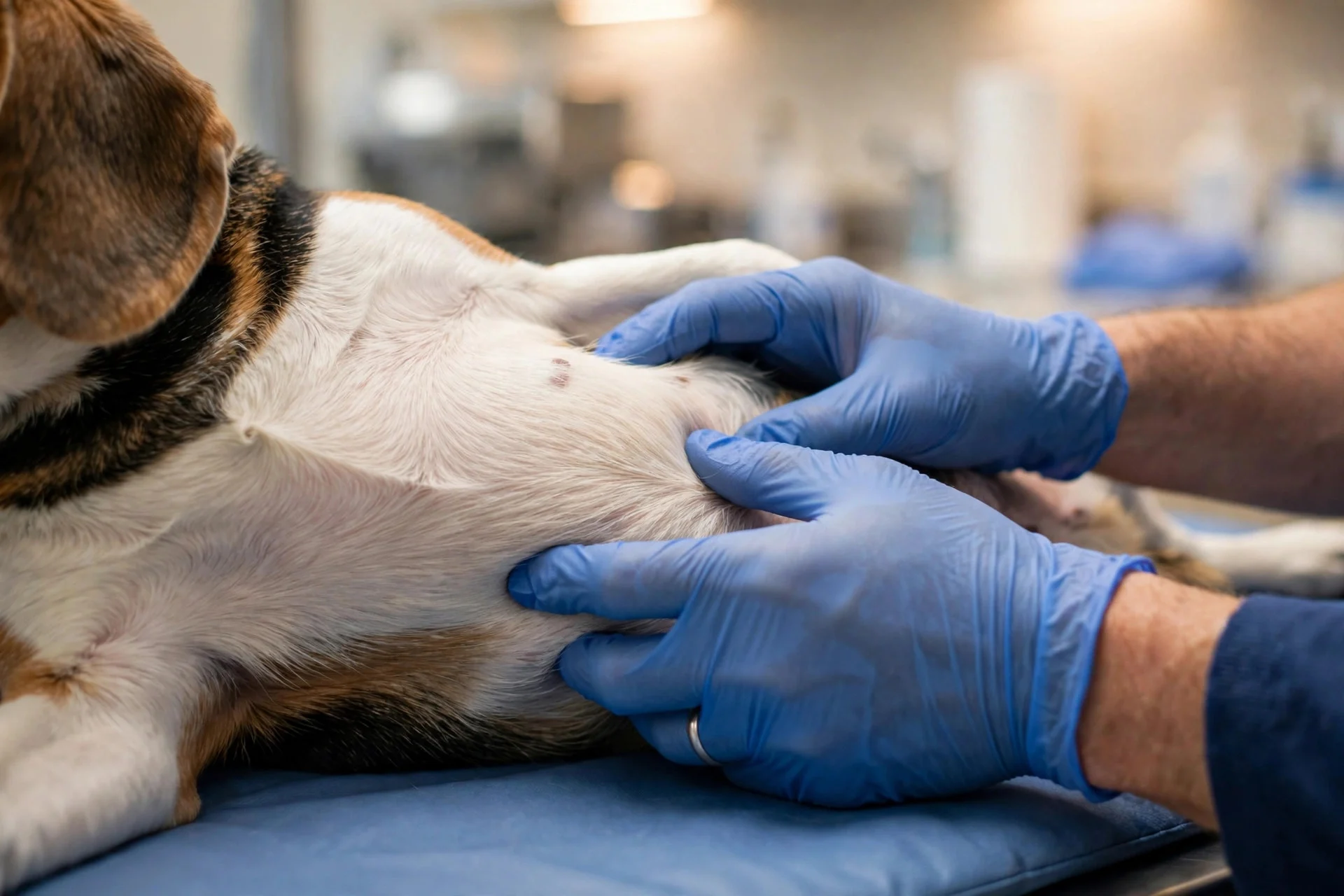
- Bloated, hard belly — especially in a large, deep-chested breed (bloat is a surgical emergency)
- Lethargy — a dog that’s too wiped out to lift its head is telling you something important
- Known toxin ingestion — don’t wait for symptoms
- Puppy under 6 months — puppies dehydrate fast and can go downhill quickly
- Unproductive retching — heaving with nothing coming up, especially with a swollen belly
Practical Tips: What to Do After a Single Vomit
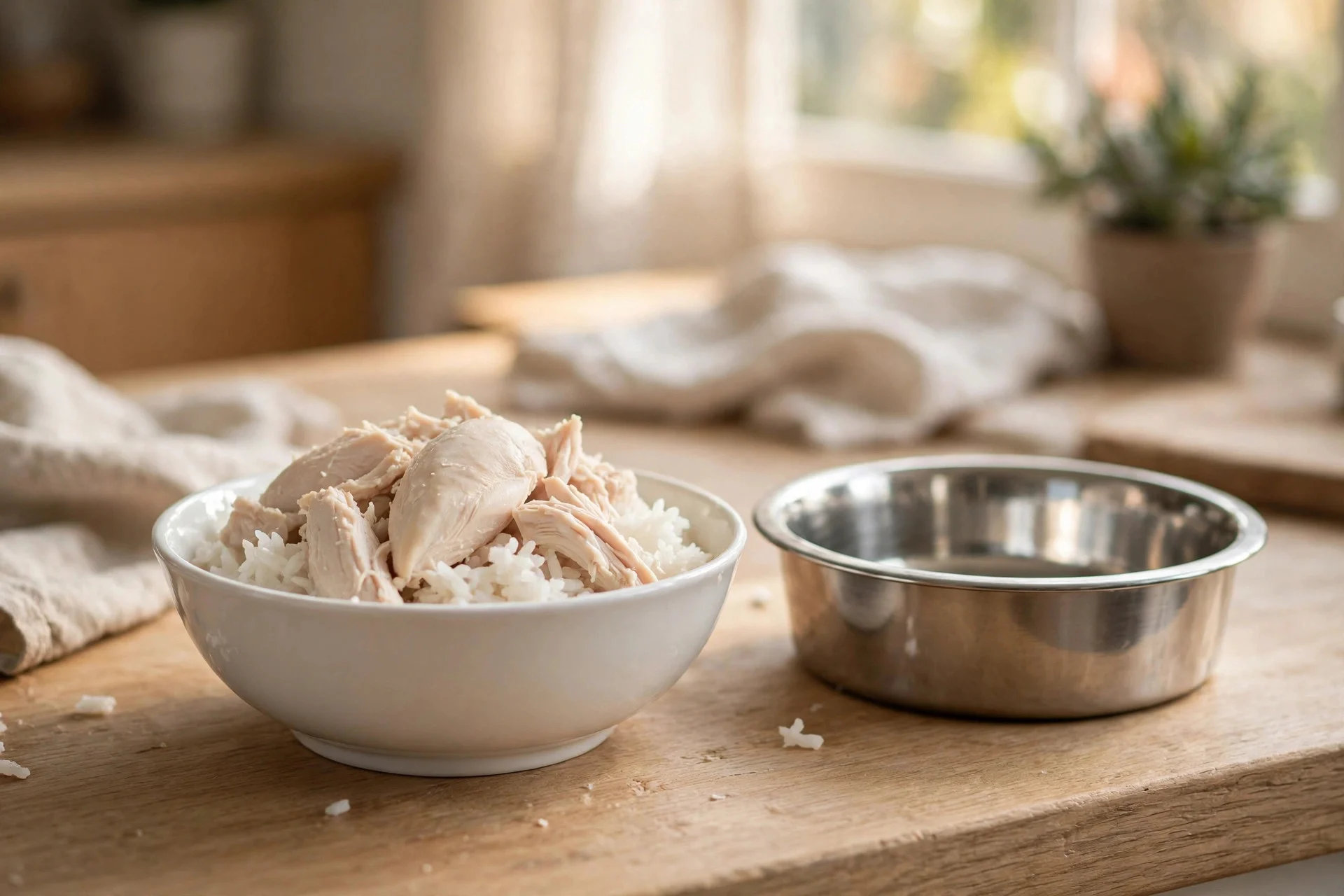
If it was one episode and your dog otherwise seems fine, here’s the standard playbook. First, withhold food for 6–12 hours (adults — not puppies, and not dogs with medical conditions). Water is fine in small amounts. If the vomiting has stopped after the rest period, offer a small bland meal — plain boiled chicken and white rice, or plain canned pumpkin. Keep portions tiny.
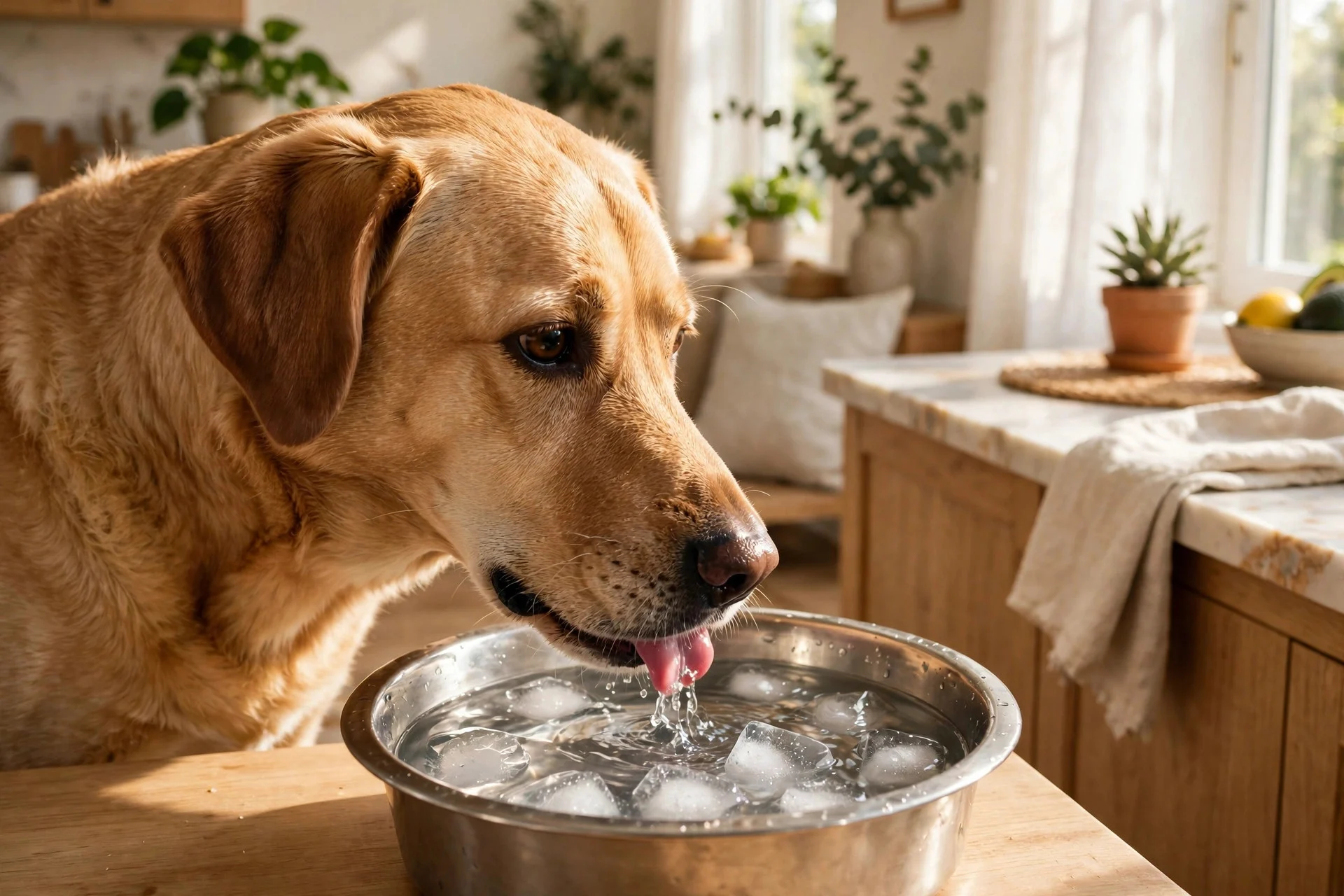
If that stays down for a few hours, repeat with another small bland meal. After 24 hours of no vomiting, gradually transition back to regular food over a day or two. And watch the water intake — small, frequent sips beat one big gulp for a queasy stomach. Ice cubes can be a good trick for dogs that want to drink too much too fast.
Mistakes to Avoid
Don’t give your dog human stomach meds — no Pepto, no antacids, no “just a little” of anything from your medicine cabinet — unless your vet specifically tells you to. Dosing dogs with human drugs is how bad situations get worse.
Don’t force-feed. A dog that won’t eat after vomiting is usually doing the right thing; the stomach needs a break. And don’t assume one bad episode means the food is bad — check what the dog got into first. Nine times out of ten, the answer is “something it shouldn’t have eaten,” not “the kibble turned evil.”
FAQs
My dog vomits yellow foam in the morning. What’s that?
Usually bile from an empty stomach. Dogs that go too long between meals sometimes vomit yellow bile in the morning. A small bedtime snack often fixes it. But if it’s happening regularly, mention it to your vet — chronic bile vomiting can point to an underlying issue.
Should I feed my dog after vomiting?
Not right away. Give the stomach a rest — 6–12 hours for a healthy adult dog — then start with tiny bland meals. If vomiting returns when food is reintroduced, call your vet.
Is grass-eating vomiting something to worry about?
An occasional grass-and-puke session is normal. If it’s happening daily, or your dog is desperately eating grass and clearly uncomfortable, that’s worth a vet conversation. The grass eating is often a symptom, not the cause.
How long is too long for a dog to keep vomiting?
More than 24 hours of vomiting, or any vomiting combined with lethargy, blood, or inability to keep water down, means call the vet today. Don’t wait the weekend out.
Vomiting is gross, stressful, and almost always fixable. Learn the red flags, keep your vet’s number handy, and remember: when you’re not sure, make the call. That’s what they’re there for.

























