If you’re cooking beans at home, it’s normal to wonder if you can share some with your dog. Beans are healthy for humans, but dogs don’t process food the same way.
Some beans are safe. Others can cause serious problems. The difference comes down to type, preparation, and quantity.

This guide explains everything you need to know before feeding beans to your dog.
Can Dogs Eat Beans?
Yes, dogs can eat certain beans in small amounts.
But not all beans are safe. Some are toxic, and others become harmful depending on how they are cooked. Beans should only be given occasionally and never replace a dog’s regular diet.
Why Beans Can Be Good for Dogs
Beans contain nutrients that can support your dog’s health when given properly.
Nutritional Benefits
- High in fiber (supports digestion)
- Good source of plant protein
- Rich in vitamins like B6 and C
- Contains minerals like magnesium and iron
In small amounts, beans can be a low-calorie treat.
The Problem With Too Many Beans
Beans are very high in fiber. Dogs are not built to handle large amounts of fiber at once.
Too many beans can cause:
- Gas and bloating
- Diarrhea
- Stomach discomfort
Moderation is important.
7 Things You Should Know Before Feeding Beans to Dogs
1. Not All Beans Are Safe
This is the most important point.
Some beans are safe, while others can harm your dog. You need to know the difference before feeding them.
2. Always Cook Beans Properly
Raw beans can be dangerous.
Certain beans contain toxins like Phytohemagglutinin, which can cause:
- Vomiting
- Diarrhea
- Weakness
Cooking destroys this toxin and makes beans safe.
3. Avoid Canned Beans
Canned beans often contain:
- Added salt
- Preservatives
- Artificial flavoring
These are not suitable for dogs. Always choose fresh, home-cooked beans without seasoning.
4. No Spices, Garlic, or Onion
Many bean dishes include ingredients that are harmful to dogs.
Avoid beans cooked with:
- Garlic
- Onion
- Chili powder
- Heavy spices
These can irritate your dog’s stomach and lead to toxicity.
5. Beans Should Not Replace Meat
Beans contain protein, but dogs still need animal-based protein.
Do not use beans as a main food source. They should only be an occasional addition to a balanced diet.
6. Start With Small Quantities
Whenever introducing a new food, start small.
Watch for signs of:
- Allergic reaction
- Digestive upset
- Changes in behavior
If your dog reacts badly, stop feeding beans immediately.
7. Some Beans Are Completely Unsafe
Certain types should always be avoided because they can cause serious health issues.
Safe Beans for Dogs
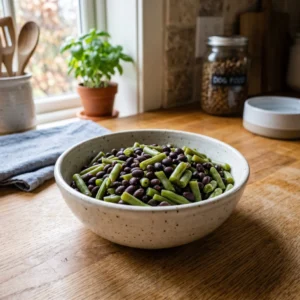
These beans are generally safe when cooked properly and served plain.
Black Beans
Black beans are rich in fiber and antioxidants. They can support digestion and overall health when given in small amounts.
Always cook them thoroughly and avoid adding salt.
Pinto Beans
Pinto beans can help with digestion and may support healthy gut bacteria.
They should always be cooked and served plain.
Navy Beans
Navy beans are safe and provide protein and essential nutrients.
Like all beans, they should be cooked at home without seasoning.
Green Beans
Green beans are one of the safest options.
They are low in calories and often used in dog diets for weight control. You can serve them cooked or raw in small amounts.
Beans Dogs Should Avoid
Some beans are unsafe and should never be given to dogs.
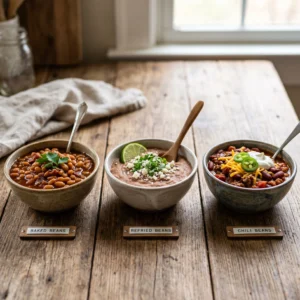
Raw Kidney Beans
Raw kidney beans are dangerous because they contain toxins.
They can lead to symptoms similar to Food poisoning in dogs, including vomiting and diarrhea.
Always cook kidney beans before serving.
Baked Beans
Baked beans are not safe.
They usually contain:
- Sugar
- Salt
- Garlic
- Onion
These ingredients make them harmful for dogs.
Refried Beans
Refried beans are also unsafe.
They are often cooked with oil, spices, and additives that can upset your dog’s stomach.
Chili Beans
Chili beans contain spices and seasonings that can irritate your dog’s digestive system.
They should be avoided completely.
Coffee Beans
Coffee beans are highly toxic.
They contain caffeine, which can cause:
- Rapid heart rate
- Tremors
- Seizures
Never let your dog eat coffee beans.
Can Dogs Eat Cooked Beans?
Yes, cooked beans are the safest option.
But they must be:
- Plain
- Soft
- Free from salt and spices
Home-cooked beans are always better than processed ones.
Can Dogs Eat Raw Beans?
No, raw beans are not safe.
They can contain harmful substances and are harder to digest. Always cook beans before feeding them.
What Happens If a Dog Eats Bad Beans?
The effects depend on the type and amount.
Mild Symptoms
- Gas
- Bloating
- Loose stool
Serious Symptoms
- Vomiting
- Lethargy
- Loss of appetite
- Signs of toxicity
What To Do If Your Dog Eats Unsafe Beans
If your dog eats harmful beans:
Monitor Closely
Watch for any unusual symptoms.
Provide Water
Help prevent dehydration.
Contact a Vet
If symptoms appear or worsen, seek professional help.
How Many Beans Can a Dog Eat?
Beans should only be given in small portions.
A few spoonfuls occasionally is enough. Feeding too many beans can lead to digestive issues.
Are Beans a Good Treat for Dogs?
Yes, but only when used correctly.
Beans can be a healthy, low-calorie treat if:
- They are cooked
- They are plain
- They are given in moderation
Final Verdict
Dogs can eat some types of beans, but not all.
Safe beans can provide nutrients and fiber. But unsafe beans or poor preparation can lead to serious health problems.
Always choose fresh, cooked beans without seasoning. Avoid processed or toxic varieties. And keep portions small.
If you follow these rules, beans can be a safe and occasional addition to your dog’s diet.