
Many dog owners assume chicken is the safest protein. But for some dogs, it causes problems. Food sensitivities and allergies linked to chicken are more common than people think.
If your dog shows signs like itching, ear infections, or digestive upset, switching to chicken-free dog food can help.
This guide explains when to avoid chicken, what ingredients to look for, and the 7 best chicken-free options you can choose.

What Is Chicken Free Dog Food? (Quick Answer)
Chicken-free dog food is any formula that does not contain chicken meat, chicken fat, or chicken by-products.
It uses alternative protein sources like beef, lamb, fish, turkey, or plant-based proteins.
Why Some Dogs Need Chicken-Free Food
Not every dog needs to avoid chicken. But for some, it can trigger health issues.

Common Reasons
- Food sensitivities
- Skin allergies
- Digestive problems
- Chronic itching
Chicken is one of the most common protein triggers in dogs.
Signs Your Dog May Be Sensitive to Chicken
Watch for these symptoms:
- Constant scratching
- Red or irritated skin
- Ear infections
- Vomiting or diarrhea
In some cases, this may be linked to Food allergies in dogs.
What to Look for in Chicken-Free Dog Food
Choosing the right food is important.
Alternative Protein Sources
Look for:
- Lamb
- Beef
- Salmon
- Duck
- Turkey (if tolerated)
Limited Ingredients
Fewer ingredients reduce the chance of triggering allergies.
Grain-Free vs Grain-Inclusive
Both can work.
- Grain-free: helpful for some sensitivities
- Grain-inclusive: better for balanced nutrition in many dogs
No Hidden Chicken Ingredients
Check labels carefully.
Avoid:
- Chicken fat
- Chicken meal
- Poultry by-products
7 Best Chicken-Free Dog Food Options
These options are commonly recommended for dogs that cannot tolerate chicken.
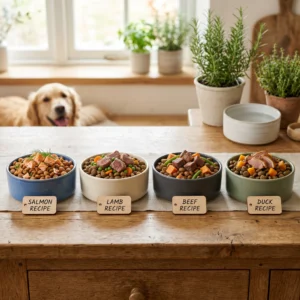
1. Salmon-Based Dog Food
Salmon is rich in omega-3 fatty acids.
Benefits
- Supports skin and coat health
- Helps reduce inflammation
- Easy to digest
2. Lamb-Based Dog Food
Lamb is a good alternative protein.
Benefits
- Less likely to cause allergies
- High in essential nutrients
- Suitable for sensitive stomachs
3. Beef-Based Dog Food
Beef provides strong protein content.
Benefits
- Supports muscle growth
- Rich in iron
- Widely available
4. Duck-Based Dog Food
Duck is a novel protein for many dogs.
Benefits
- Good for dogs with multiple allergies
- Rich flavor
- Nutrient-dense
5. Turkey-Based Dog Food
Turkey can be a lighter protein option.
Benefits
- Lean protein source
- Easier on digestion
- Good for weight management
6. Fish and Sweet Potato Formula
This combination is popular for sensitive dogs.
Benefits
- Easily digestible
- Supports gut health
- Provides balanced nutrition
7. Limited Ingredient Diets (LID)
These formulas focus on simplicity.
Benefits
- Fewer ingredients
- Lower allergy risk
- Easier to identify triggers
Is Grain-Free Better for Chicken Allergies?
Not always.
Grain-free food removes grains, not chicken. If your dog is allergic to chicken, removing grains will not solve the problem.
Focus on protein source first.
How to Switch to Chicken-Free Dog Food
Switching food too quickly can upset your dog’s stomach.
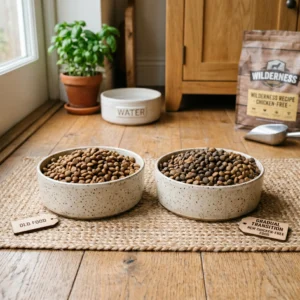
Step-by-Step Transition
- Day 1–2: 75% old food, 25% new food
- Day 3–4: 50% old, 50% new
- Day 5–6: 25% old, 75% new
- Day 7: 100% new food
This gradual change helps avoid digestive issues.
How Long Before You See Results?
Improvement takes time.
- Digestive issues: a few days
- Skin issues: 2–4 weeks
- Full improvement: up to 8 weeks
Be patient and consistent.
Can Puppies Eat Chicken-Free Dog Food?
Yes, but choose a formula designed for puppies.
Puppies need:
- Higher protein
- Balanced nutrients
- Growth support
Always check labels before feeding.
Homemade Chicken-Free Dog Food
You can also prepare food at home.
Simple Example
- Boiled beef or lamb
- Cooked rice
- Vegetables like carrots
Avoid seasoning and keep it simple.
Common Mistakes to Avoid
Ignoring Labels
Some products say “chicken-free” but still contain chicken fat.
Switching Too Fast
Sudden changes can cause diarrhea or vomiting.
Feeding Too Many Treats
Treats may contain chicken even if food does not.
When to Consult a Vet
If symptoms continue, seek professional advice.
Persistent issues may be linked to:
- Dermatitis in dogs
- Chronic digestive problems
A vet can guide proper diet changes.
Benefits of Chicken-Free Diet
Switching can lead to:
- Healthier skin
- Less itching
- Better digestion
- Improved energy
But only if chicken was the cause.
Final Verdict
Chicken-free dog food is a good option for dogs with sensitivities or allergies.
The key is choosing the right protein source and avoiding hidden ingredients. Not every dog needs a chicken-free diet, but for those that do, the results can be significant.
Take time to transition properly, monitor your dog’s response, and keep the diet simple and consistent.

























