Last year, I bought a fancy dog birthday treat box online because I thought it would make my dog’s birthday feel special. Tiny cookies, pastel frosting, little bone shapes. The photos looked amazing.
The box arrived two days late, half the frosting had melted, and somehow I had spent more on dog cookies than my own birthday cake the month before.
So this year, I skipped the pet bakery idea completely and made the cookies at home instead.
Honestly, it turned out better.

The kitchen smelled like peanut butter while the cookies baked, my dog sat near the oven the entire time pretending he had never eaten before, and the finished cookies actually looked good enough for photos without trying too hard.
That is the thing about homemade dog birthday treats. They do not need to be perfect. Dogs are already excited the second they smell peanut butter and oats mixing together.
These cookies are soft, lightly chewy, easy to decorate, and simple enough even if you have never baked homemade dog treats before.
Why Homemade Dog Birthday Cookies Are Worth Making
Store-bought birthday treats for dogs usually look cute, but many contain artificial colors, preservatives, and extra sugar that dogs do not really need.
Making them at home keeps things simple.
You control:
- The ingredients
- The texture
- The frosting
- The portion size
And honestly, homemade cookies feel more personal.
Maybe dogs do not understand birthdays the way we do, but they definitely understand excitement, attention, and standing in the kitchen waiting for something special to come out of the oven.
Ingredients for Dog Birthday Cookies
Cookie Ingredients
| Ingredient | Amount |
|---|---|
| Oat flour | 2 cups |
| Natural peanut butter | 1/3 cup |
| Egg | 1 |
| Unsweetened applesauce | 1/4 cup |
| Coconut oil | 2 tbsp |
| Cinnamon | 1/2 tsp |
If you do not have oat flour, blend regular oats in a blender until fine.
Always make sure your peanut butter is xylitol-free before using it.
Yogurt Frosting Ingredients
| Ingredient | Amount |
|---|---|
| Plain Greek yogurt | 1/2 cup |
| Coconut flour | 1–2 tbsp |
This frosting stays soft enough to spread but firms up nicely once chilled.
It also photographs surprisingly well, which matters more than most dog owners want to admit.
How to Make Homemade Dog Birthday Cookies
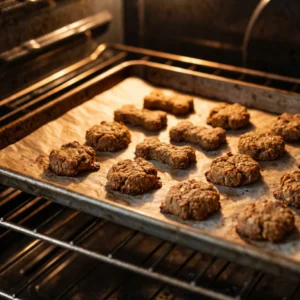
Step 1: Preheat the Oven
Set your oven to 325°F (165°C).
Line a baking tray with parchment paper.
Low heat helps keep the cookies softer instead of turning crunchy.
Step 2: Mix the Wet Ingredients
In a large bowl, combine:
- Peanut butter
- Egg
- Applesauce
- Melted coconut oil
Mix until smooth.
The mixture should look glossy and slightly thick.
Step 3: Add the Dry Ingredients
Stir in the oat flour and cinnamon.
The dough should feel soft but workable.
If it feels sticky, add a little extra oat flour.
If it feels dry or crumbly, add a tiny splash of water.
Homemade dog treat dough changes slightly depending on the peanut butter brand, so small adjustments are normal.
Step 4: Roll and Cut the Cookies
Roll the dough out about 1/3-inch thick.
Keeping the dough slightly thicker helps the cookies stay soft after baking.
Use bone-shaped cookie cutters, circles, hearts, or whatever you already have at home.
I used simple bone shapes once and spent more time cleaning the cutter than actually baking. Squares honestly work just fine too.
Step 5: Bake
Place the cookies onto the lined baking tray.
Bake for 18–20 minutes until the edges turn lightly golden.
The centers should still feel slightly soft when removed from the oven.
Do not overbake them.
They continue firming up while cooling.
Step 6: Cool Completely
Transfer the cookies onto a cooling rack.
Let them cool fully before frosting.
Trying to frost warm cookies usually ends with melted yogurt sliding everywhere. Learned that one quickly.
How to Make Dog-Safe Frosting
The frosting is probably the easiest part.
Add Greek yogurt into a small bowl and stir in coconut flour slowly.
Wait a minute before adding more because coconut flour thickens gradually.
You want the texture somewhere between cream cheese and soft frosting.
Too runny and it slides off the cookies.
Too thick and it becomes difficult to spread.
If you accidentally make it too thick, stir in a spoonful of yogurt to loosen it again.
Decorating the Cookies
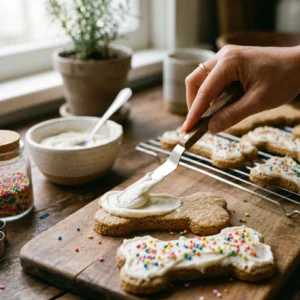
Spread a thin layer of frosting over each cooled cookie.
Then add dog-safe sprinkles immediately before the frosting sets.
Natural sprinkle colors made from beet powder, turmeric, or spirulina work better than artificial food dyes.
The colorful frosting makes these look like actual bakery treats without needing complicated decorating skills.
And honestly, dogs seem equally excited whether the frosting looks professional or slightly messy.
Storage Tips
Room Temperature
Up to 2 days in an airtight container.
Refrigerator
Up to 1 week.
This is usually the best option because the frosting stays firm.
Freezer
Up to 2 months.
Freeze the cookies in a single layer first so the frosting does not stick together.
Serving Guide
| Dog Size | Suggested Serving |
|---|---|
| Small dogs | 1/2 to 1 cookie |
| Medium dogs | 1 cookie |
| Large dogs | 1–2 cookies |
These are special occasion treats, not everyday snacks.
The frosting and peanut butter make them richer than basic dog biscuits.
Common Mistakes to Avoid
Frosting Warm Cookies
Warm cookies melt yogurt frosting almost instantly.
Always cool them completely first.
Rolling the Dough Too Thin
Thin dough creates crunchy cookies instead of soft birthday-style treats.
A slightly thicker cookie works much better here.
Using Artificial Sweeteners
Never use peanut butter containing xylitol.
Always double-check labels carefully.
Can Dogs Eat Yogurt Frosting?
Plain Greek yogurt is generally safe for most dogs in moderation.
It contains less lactose than regular yogurt and usually digests more easily.
Still, if your dog has never eaten yogurt before, start with a small amount first.
Dogs with dairy sensitivities may do better with unfrosted cookies instead.
Why These Cookies Work Well for Birthdays
A lot of homemade dog treats look healthy but do not really feel special.
These do both.
The cookies stay soft, the frosting gives them that bakery-style look, and the sprinkles make them feel like an actual celebration instead of regular training treats shaped like bones.
And honestly, that matters more than people think.
Sometimes making something homemade for your dog is less about the recipe and more about the small moment attached to it. Standing in the kitchen while they wait beside the oven. Watching them sniff the frosting before taking the first bite. Cleaning colorful sprinkles off the floor afterward.
That part ends up being the real memory.