I forgot the poop.
Out of everything that went wrong at my puppy Luna’s first vet visit, that is the one I still get teased about. I arrived proud and prepared, or so I thought, with a wriggling eight week old puppy, a brand new leash, and absolutely nothing else. No paperwork from the breeder. No list of questions. No stool sample, which the clinic had specifically mentioned on the phone and I had specifically forgotten. Luna peed on the reception floor within ninety seconds, I could not remember what food the breeder said she was eating, and when the vet asked about her deworming history I just stared at her like she was speaking another language.
The visit still went fine, because vets deal with flustered new owners every single day. But I walked out realizing that a first vet visit is really an interview where you are the main source of information, and I had shown up with nothing.
Luna is four years old now, and since then I have prepared two more puppies for their first visits, one mine and one my sister’s. This is the complete checklist I built from those experiences, everything to gather, pack, ask, and expect, so your first visit gives your puppy the best possible start instead of the fumbling mess I delivered.
First Things First: When Should the Visit Happen?
Book the appointment within the first few days of bringing your puppy home, ideally within 48 to 72 hours, even if the breeder or shelter says the puppy is perfectly healthy and vaccinated.
There are three reasons this timing matters. First, if there is a hidden health problem, a heart murmur, a hernia, parasites, you want to know immediately, both for the puppy’s sake and because many purchase or adoption agreements have a short window for health guarantees. Second, your puppy’s vaccination schedule is time sensitive, and the vet needs to see the existing records to plan the next doses correctly. Third, and people underestimate this one, the first visit sets your puppy’s lifelong opinion of the vet. A well planned, treat filled first visit creates a dog who walks into clinics happily for the next fifteen years.
A small tip for the booking call itself: mention it is a new puppy’s first visit and ask for a quieter time slot, often the first appointment of the morning. A waiting room full of barking adult dogs is a lot for a baby who is not fully vaccinated yet, and most clinics will happily accommodate you.
The Paperwork Checklist: What to Gather Before You Go
This is the part I failed completely, so learn from me. Sit down the evening before and collect the following into one folder or one clear photo album on your phone:
Vaccination records from the breeder, shelter, or rescue. This is the most important document you own right now. The vet cannot plan the next shots without knowing exactly what was given and on what date. If the breeder gave you a vaccination card, bring the physical card, not your memory of it.
Deworming history. Which product, what dates. Puppies are dewormed multiple times on a schedule, and the vet needs to know where in that schedule your puppy stands.
Any microchip paperwork, if the puppy was chipped before coming to you. The vet can scan the chip and help you make sure the registration is transferred to your name, a step a surprising number of owners never complete.
The name of the exact food the puppy is currently eating, and roughly how much per day. Photograph the bag label. Diet questions always come up, and “some kind of chicken one, I think” is not a useful answer, as I personally demonstrated.
Contract or adoption papers, if any health guarantee is mentioned in them.
Anything odd you have noticed, written down. Soft stool on day two, scratching at one ear, a little cough at night. New owners forget these details the moment they enter the exam room. I now keep a note on my phone from the first day home and read it out at the visit.
The Packing Checklist: What Goes in the Bag
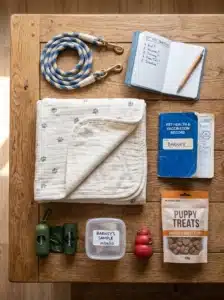
A stool sample, fresh from that morning. Yes, really. A fecal test for intestinal parasites is standard at first puppy visits, and worms are extremely common in puppies even from excellent breeders. A small clean container or a doubled plastic bag with a fresh sample saves you a second trip. Call the clinic when booking and ask if they want one, but the answer is almost always yes.
A carrier, or a towel lined box for a small puppy. Until vaccinations are complete, your puppy should not walk on clinic floors or the parking area, where sick dogs have walked. Carry her in, keep her on your lap or in the carrier, and let her greet the floor only when your vet says the vaccine series is done.
A soft blanket or cloth that smells like home. Familiar smells are the cheapest anxiety medicine that exists. I line the carrier with a blanket from Luna’s sleeping spot, and the difference in her calmness is visible.
The best treats you own, cut tiny. Not the everyday biscuits. The first vet visit is a marketing campaign, and you are selling the idea that the clinic is a wonderful place. Chicken, cheese, whatever your puppy loves most, fed generously in the waiting room, on the scale, and during the exam. Most vets will feed a few themselves, and the good ones do it before touching the puppy.
A favorite small toy, for distraction during the boring waiting parts.
Cleanup supplies. A roll of tissue, a plastic bag, and puppy pads. Nervous puppies pee. Luna announced her arrival on the reception tiles, and I had nothing to clean it with. The staff were kind about it. I still think about it.
Your list of questions, which brings us to the most valuable section of this article.
The Questions Checklist: What to Ask While You Have the Vet’s Attention
A first puppy visit usually gives you fifteen to thirty minutes with a professional whose knowledge you are paying for anyway. Most owners spend it nodding. Come in with questions and you leave with a customized plan instead of generic leaflets. These are the ones worth asking:
“Can you walk me through the full vaccination schedule, and when is my puppy allowed to meet other dogs and walk outside?” This is the question that shapes your next three months. Write the dates down or ask for a printed schedule.
“What parasite prevention does this specific area need?” Fleas, ticks, heartworm, intestinal worms, the right prevention depends heavily on where you live, and your local vet knows the local risks better than any website.
“Is my puppy’s weight on track, and how much should I be feeding?” Bring the food details and let the vet do the math for your puppy’s breed and age, because bag labels give wide generic ranges.
“When should we discuss spaying or neutering?” You do not need to decide anything at the first visit. You just want the timeline conversation started, because recommendations vary with breed and size, and it is worth hearing your own vet’s reasoning early.
“What is your emergency arrangement after hours?” Save the emergency number in your phone before you ever need it at two in the morning. Ask what the nearest 24 hour facility is if the clinic itself closes at night.
“Would you show me how to trim nails, clean ears, and check teeth?” Vets and their nurses demonstrate this happily, and a two minute live demonstration beats twenty videos. This single question, asked at my sister’s puppy’s first visit, is the reason her dog calmly accepts nail trims today.
“Is anything about this breed I should watch for?” Every breed and mix carries its own tendencies, and your vet has seen hundreds of each. Two sentences from her about what to watch for is prevention you cannot buy elsewhere.
And one honest last question that I now always ask: “Did anything in today’s exam seem even slightly off?” Vets sometimes soften minor findings for happy new owners. Asking directly invites the full picture.
What Will Actually Happen in the Exam Room
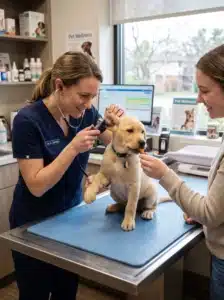
Knowing the routine calms nerves, yours more than the puppy’s, so here is the standard flow of a first visit.
The puppy gets weighed, which becomes the first point on a growth chart the clinic will track for months. Then a nose to tail physical: eyes, ears, and mouth checked, the bite alignment looked at, which matters more than people realize once teething begins around three months, heart and lungs listened to for murmurs, the belly gently felt for hernias or discomfort, skin and coat inspected for fleas and mites, joints and movement observed, and temperature taken, which happens at the rear end and surprises every puppy ever born.
If you brought the stool sample, it goes off for parasite testing. If a vaccine is due according to the records you brought, it is usually given at this visit. If a microchip is planned and not already in place, many owners have it done now or at a following vaccine visit.
Your only job during all this is to be the pleasant background. Feed treats, keep your voice light, and resist the urge to comfort in a worried tone if the puppy squeaks. Puppies read our anxiety fluently. A cheerful, slightly boring owner produces a puppy who concludes this whole event is no big deal.
After the Visit: The Checklist People Skip
The visit is not quite finished when you walk out. Three small tasks lock in its value:
Book the next appointment before leaving the building. Puppy vaccines come in a series a few weeks apart, and the schedule only protects if you keep it. Booking at the desk on the way out means it cannot slip your mind at home.
Watch your puppy for the rest of the day. Mild sleepiness or a small tender spot after a vaccine is common and passes, and do not be alarmed if she sleeps even more than usual, new puppies already sleep far more than most owners expect, as I break down in how much sleep a puppy actually needs. What you are watching for is the rare serious reaction, facial swelling, vomiting, hives, or collapse, which needs the vet immediately. This is exactly why you saved the emergency number an hour earlier.
Write down what you learned while it is fresh. The feeding amount, the vaccine dates, the deworming plan. I keep one note on my phone titled with the dog’s name, started on day one, and it has settled a dozen arguments with myself about what the vet actually said.
A Note for Shelter and Rescue Puppies
If your puppy came from a shelter or rescue rather than a breeder, most of this checklist applies exactly the same, with two adjustments. Records may be thinner or missing entirely, and that is fine, just tell the vet honestly what you do and do not know. Vets have safe protocols for puppies with unknown histories, and they would always rather restart a vaccine series than guess. Second, rescue puppies sometimes arrive with stowaways, worms, fleas, or ear mites picked up before you ever met them, so the stool sample and a thorough skin check matter even more. None of this should worry you. It simply means your first visit is doing even more useful work, and shelter puppies who get an early, thorough first exam catch up to their pedigreed cousins in no time.
The Whole Point of Getting This Right
Luna’s first visit was a mess because I treated it like an errand. Every visit since, I have treated like a meeting I prepare for, and the difference compounds. Her file at the clinic is complete from week eight onward, her weight curve is unbroken, and because those early visits were paved with cheese, she pulls toward the clinic door instead of away from it. Last year she needed a small procedure, and the calm dog who trotted into that building was built at eight weeks old, one tiny treat at a time.
Print the lists above or save this page, gather the folder tonight, cut the treats small, and for the love of everything, remember the poop.
Your puppy only gets one first visit. Walk in prepared, and you set the tone for every one of the hundred visits that will follow across a long, healthy life.