When I first thought about cooking for my dog, my reasoning was embarrassingly simple: I eat real food, so why is he eating brown pellets? It felt obvious. Then I actually researched it, and the obvious answer got complicated fast. Because here’s the thing nobody tells you at the start: a lovingly home-cooked meal can be less nutritious than a decent kibble if you don’t know what you’re doing.
That doesn’t mean you shouldn’t do it. It means you should do it right. These homemade dog food beginners tips are the honest starting guide I wish I’d had — what matters, what doesn’t, and the mistakes that turn good intentions into nutritional gaps. Let’s build your foundation properly.
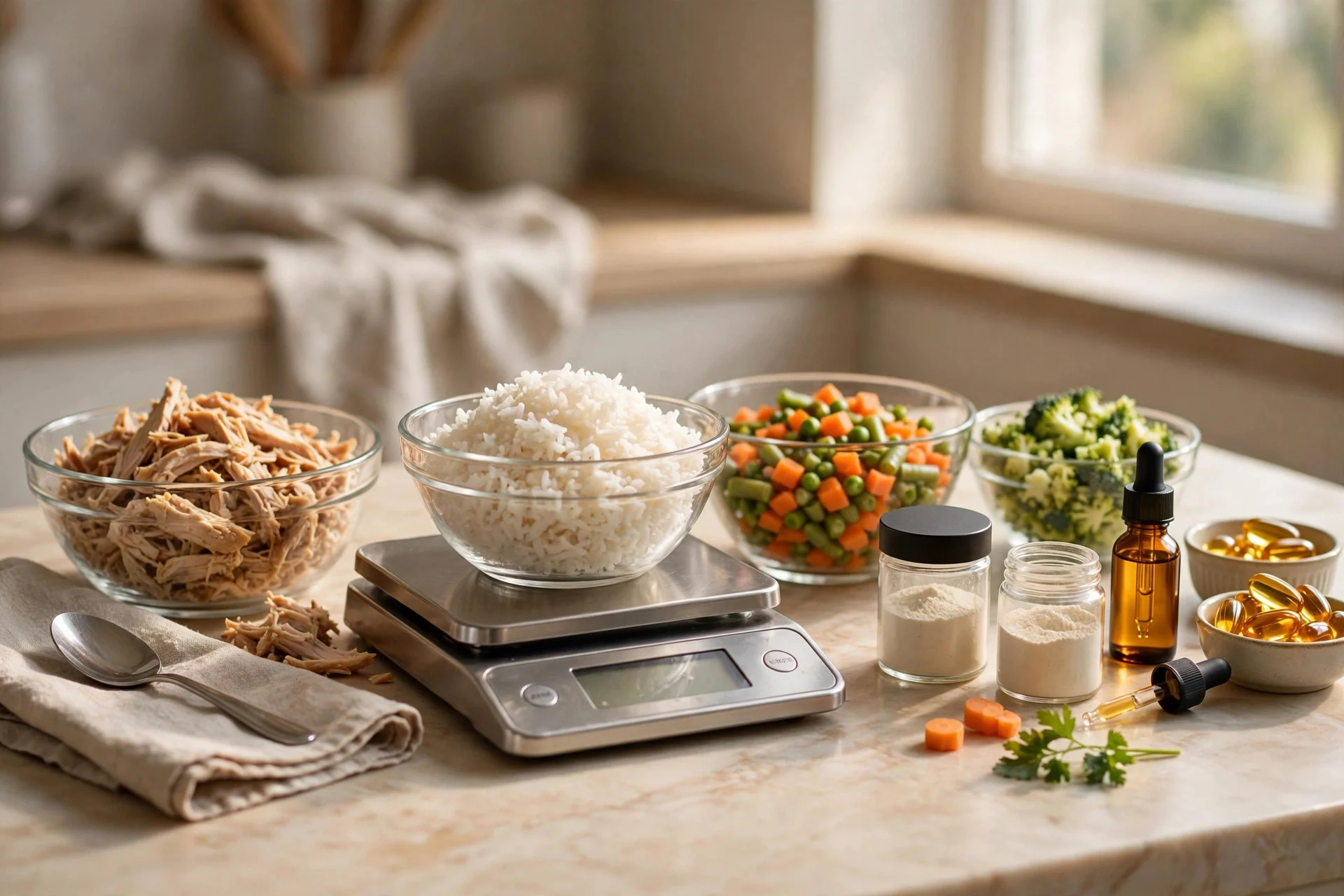
10 Starter Tips for Homemade Dog Food Beginners
1. Accept this truth: homemade isn’t automatically healthier
This is the most important tip and the one people resist most. A well-formulated commercial food is complete and balanced by definition. A homemade diet is only as good as the recipe behind it — and studies have found that the vast majority of homemade dog food recipes online are nutritionally incomplete. Homemade can be excellent. It can also be worse. The difference is knowledge, not love.
2. Start with a balanced recipe, not your imagination
Don’t invent ratios. Use recipes formulated by veterinary nutritionists — from reputable books, university veterinary nutrition services, or tools like BalanceIT that generate complete recipes. “Chicken, rice, and some veggies” is a meal, not a diet. A real recipe specifies exact amounts of protein, carbs, fats, calcium, and supplements. Follow one precisely, at least at first.
3. Talk to your vet before you start
Tell your vet you’re switching to homemade. They may want baseline bloodwork, and they can flag concerns specific to your dog — kidney issues, pancreatitis history, allergies. For dogs with health conditions, ask for a referral to a board-certified veterinary nutritionist. This isn’t optional for sick dogs; it’s essential.
4. Understand the calcium problem
Here’s the gap that sinks most homemade diets: calcium. Meat is high in phosphorus and low in calcium, and dogs need a calcium-to-phosphorus ratio around 1.2:1. Without a calcium source — and “a calcium source” means a measured supplement, not a random eggshell — the imbalance causes skeletal problems over time, especially in puppies. This single nutrient is why winging it fails.
5. Cook the meat properly — no raw shortcuts
Raw feeding has passionate advocates, but the food-safety risks are real: Salmonella, E. coli, and Campylobacter threaten both your dog and everyone in your household (especially kids and immunocompromised people). Cooking meat to safe temperatures (165°F for poultry, 145°F for other meats with rest time) eliminates the risk while keeping the nutrition. There’s no nutritional magic in raw that cooking destroys.
6. Learn which foods are off-limits
Memorize the toxic list before you cook a single meal: onions, garlic, grapes, raisins, chocolate, macadamia nuts, xylitol (birch sugar), alcohol, and raw yeast dough. Also avoid excessive salt, and go easy on high-fat add-ons. Tape the list inside a cabinet door until it’s second nature.
7. Weigh portions, don’t eyeball them
Homemade food is calorie-dense in unpredictable ways, and “a scoop” means nothing. Get a kitchen scale and weigh every meal according to your recipe’s calorie targets. Your vet can help you calculate your dog’s daily calorie needs based on weight and activity. Eyeballing leads to slow weight creep — the most common homemade-diet problem I see.
8. Transition gradually over 7–10 days
Don’t switch cold turkey. Mix increasing amounts of the new food with decreasing amounts of the old over a week to ten days. Sudden diet changes cause digestive upset in most dogs, and you’ll wrongly conclude the homemade food “doesn’t agree” with them when it was just the speed of the switch.
9. Budget honestly for time and money
Homemade feeding costs more than most people expect — quality protein isn’t cheap, and neither are the supplements. It also takes real time: shopping, cooking, portioning, cleaning. Batch-cook weekly and freeze portions to make it sustainable. If the routine collapses after three weeks, the diet wasn’t the problem — the plan was.
10. Monitor and adjust with your vet
Watch weight, coat quality, energy, and stool. Schedule a checkup with bloodwork 2–3 months after switching to confirm the diet is working. Homemade feeding isn’t “set and forget” — it’s an ongoing partnership with your vet. Dogs’ needs change with age, activity, and health, and the diet should change with them.
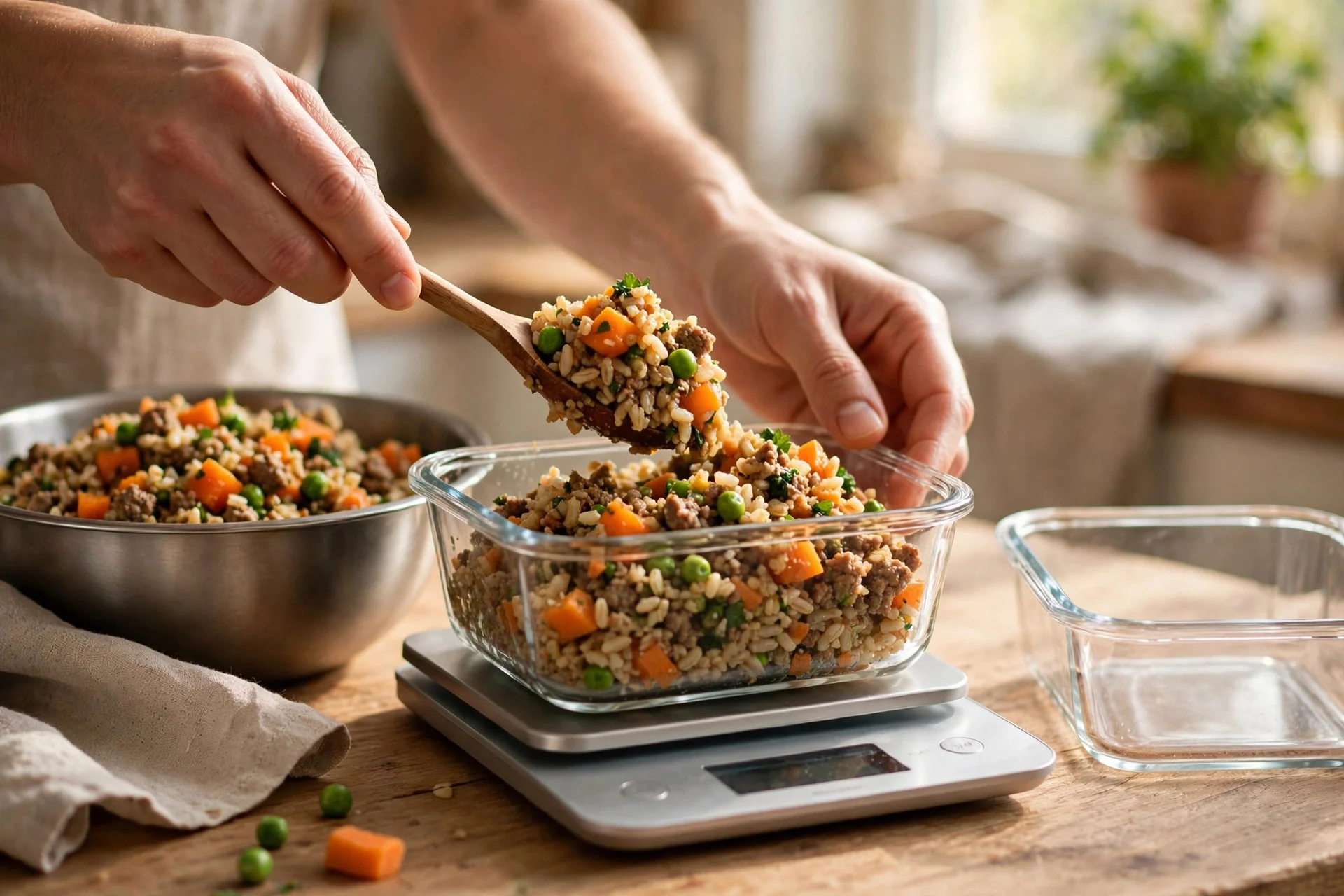
Practical Tips for Getting Started
Start with one balanced recipe. Master a single complete recipe before experimenting. Variety is nice, but a reliable staple you can cook in your sleep beats five half-remembered recipes.
Buy a kitchen scale and meat thermometer. These two tools do more for your dog’s nutrition than any supplement. Precision beats enthusiasm.
Keep a feeding log for the first month. What you cooked, how much, how your dog responded. It sounds fussy, but it makes troubleshooting easy and gives your vet useful information.

Mistakes Beginners Make
Copying a random internet recipe. Most online recipes aren’t balanced — no calcium source, wrong ratios, missing nutrients. Use vet-formulated recipes only, especially at the start.
Skipping supplements because “real food should be enough.” It isn’t. Even the best whole-food ingredients don’t reliably provide calcium, vitamin D, zinc, and other nutrients in the right amounts. Supplements aren’t cheating; they’re part of the recipe.
Feeding the same protein forever. Rotating proteins (chicken, turkey, beef, fish) across weeks provides a broader nutrient profile and reduces the risk of developing sensitivities. Just transition gradually between them.
Forgetting that puppies aren’t small adults. Growing puppies have much stricter nutritional requirements — especially calcium and phosphorus. Don’t feed a homemade diet to a puppy without a recipe specifically formulated for growth and vet supervision.
When Homemade Might Not Be the Answer
Honest moment: homemade feeding isn’t for everyone, and that’s fine. If your dog has complex medical needs, if you can’t commit to the time and precision, or if the budget doesn’t work — a high-quality commercial food is a perfectly good choice. There’s no shame in it. The goal is a well-nourished dog, not a lifestyle badge. Do what you can do consistently and well.

FAQs
Is homemade dog food actually healthier than kibble?
It can be — but only if the recipes are complete and balanced. A well-formulated commercial food beats a thrown-together homemade diet every time. The health advantage comes from precision, not from the food being homemade.
How much does homemade dog food cost?
Typically more than mid-range kibble — often $2–5+ per day for a medium dog depending on proteins used, plus supplements. Batch cooking and buying in bulk help, but budget honestly before committing.
Can I feed my puppy homemade food?
Only with a recipe specifically formulated for growth and veterinary supervision. Puppies’ calcium, phosphorus, and calorie needs are strict, and mistakes during growth cause permanent skeletal problems.
Do I really need supplements?
Yes. Calcium, in particular, plus typically a vitamin-mineral mix formulated for homemade diets. Whole foods alone don’t reliably hit every nutrient target — that’s what the research consistently shows.
Cooking for your dog is a wonderful thing to do — as long as you respect the science along with the love. Start with a balanced recipe, talk to your vet, measure everything, and you’ll be giving your dog something genuinely better than good intentions.