
An indoor cat with nothing to do is a cat plotting against your curtains. That’s not a joke — boredom is behind most “bad” cat behavior: the 3 a.m. sprints, the shredded sofa arm, the keyboard sitting. Good indoor cat enrichment isn’t about spoiling them. It’s about giving a tiny predator the outlets nature built them for.
My neighbor’s cat went from menace to mellow after two weeks of daily play and a window perch. Same cat, same apartment — just a life with things to do. Here’s what actually works, roughly in order of impact per dollar.
15+ Indoor Cat Enrichment Ideas
1. A window perch with a view
The cheapest big win. A suction-cup window seat turns the world’s most boring wall into Cat TV: birds, squirrels, passing dogs. Place it where the sun lands in the afternoon and watch your cat claim it within hours. Under twenty bucks, zero effort, hours of staring.
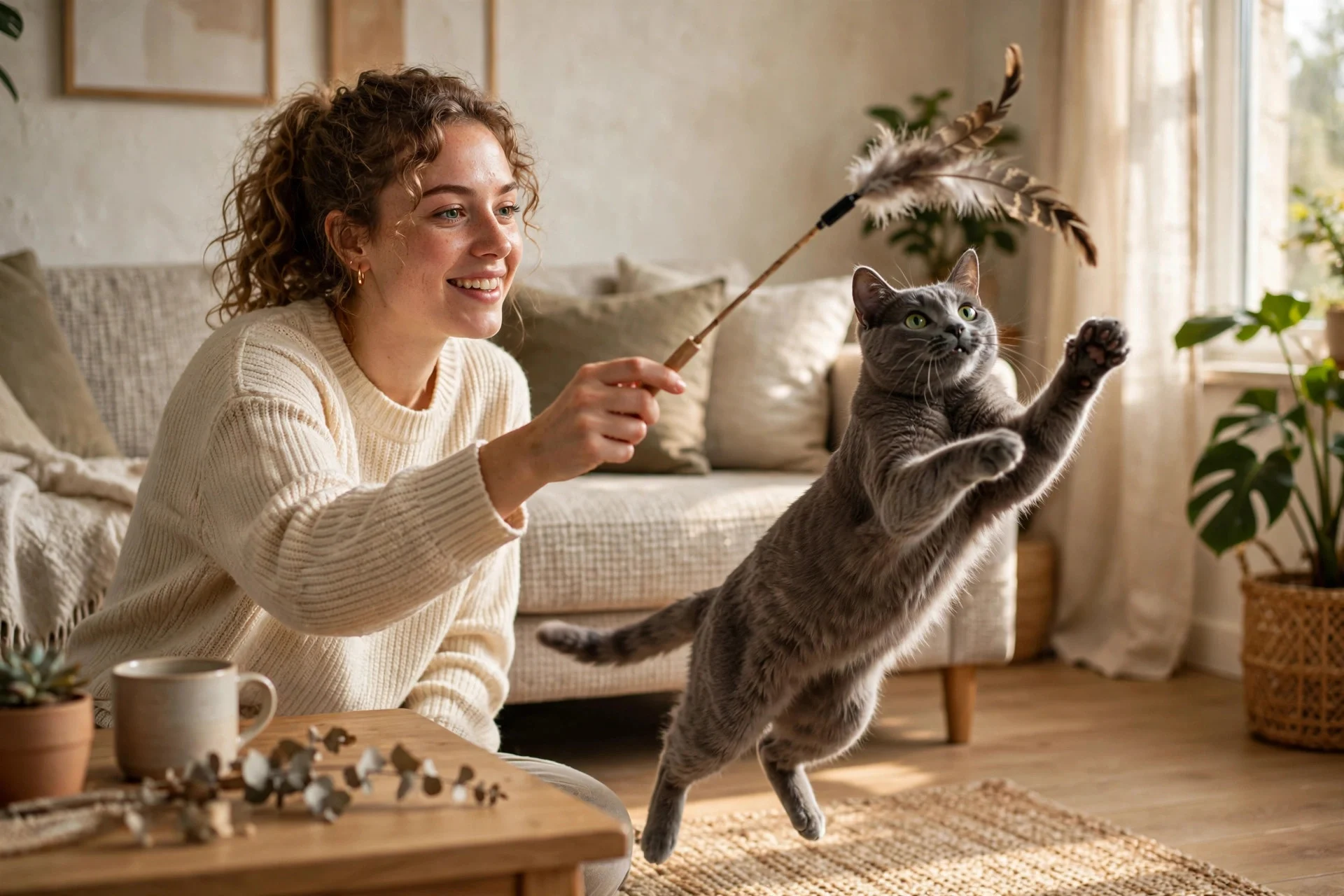
2. Daily hunting sessions with a wand toy
Ten minutes, twice a day, with a feather wand — that’s the single best thing you can do. Move it like prey: dart, hide behind furniture legs, pause. Let them catch it at the end. A cat that “hunts” daily is a cat that sleeps through the night.
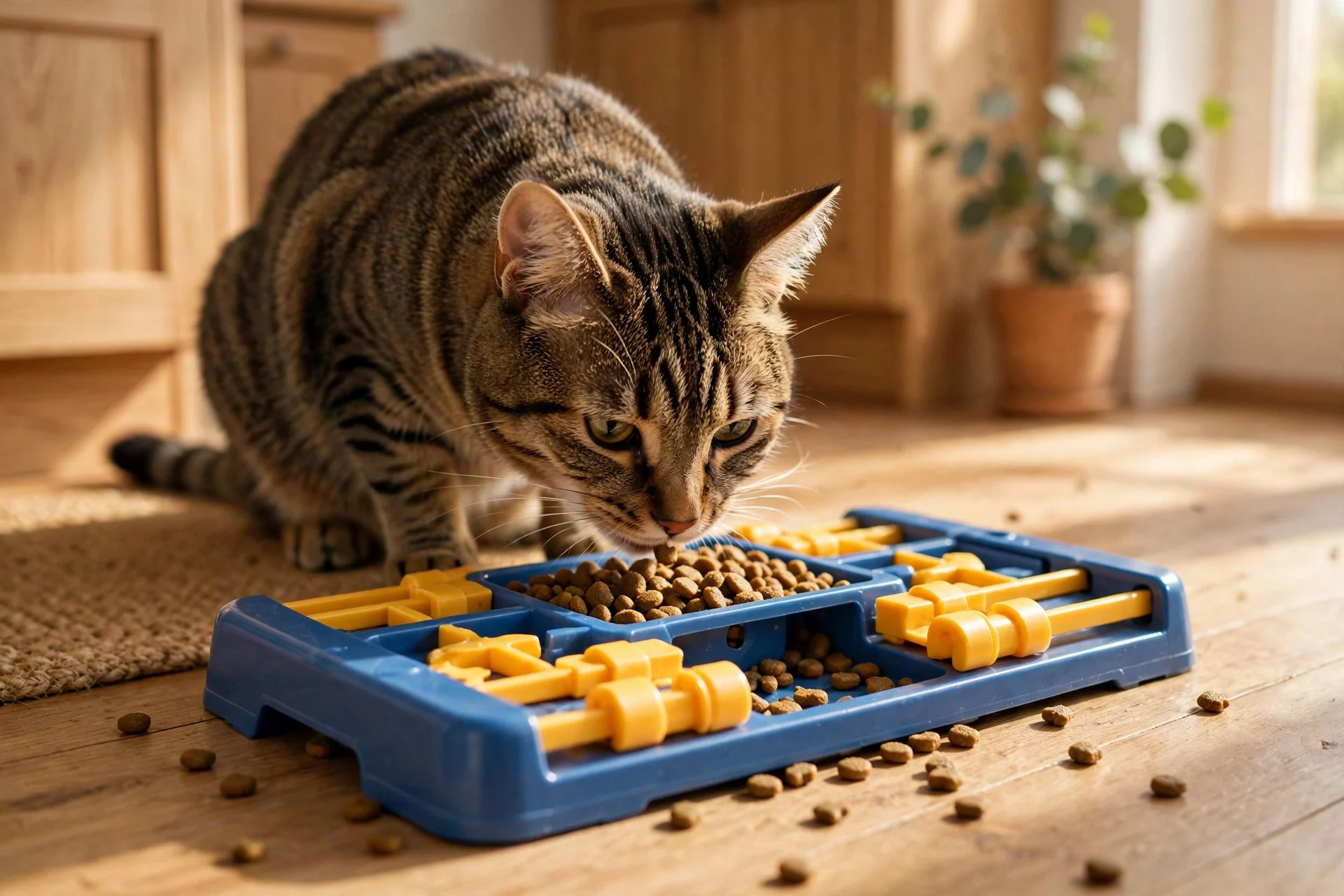
3. Puzzle feeders instead of a bowl
Ditch the bowl. Scatter kibble in a muffin tin with tennis balls on top, or buy a sliding puzzle feeder. Working for food engages the seeking brain that bowls put to sleep. Start easy — frustration isn’t enrichment.
4. A tall, sturdy cat tree
Cats think vertically. A tree with at least one perch above your eye level gives them a safe lookout, which is calming in a way floor-level beds never are. Anchor it so it doesn’t wobble — one tip-over and they’ll never trust it again.
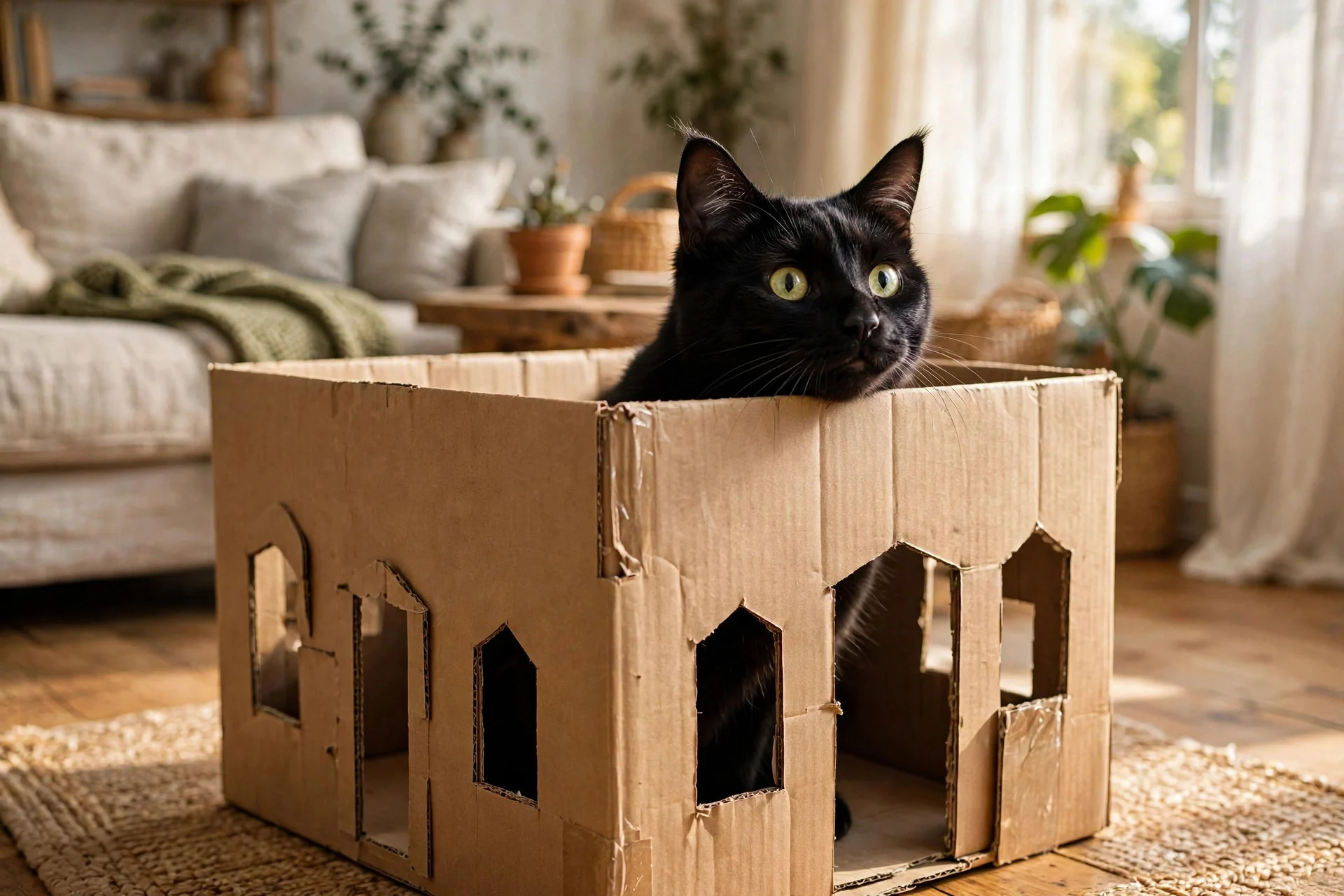
5. The humble cardboard box
Cut a few doorways in a big box and you’ve built a castle. Rotate boxes every couple of weeks; novelty is the enrichment. My record: a cat ignored a $90 bed for a shoebox. Every cat owner has this story.
6. Treat scavenger hunts
Hide five treats around one room while your cat watches from the hallway, then let them in. Start obvious — on the rug, behind a chair leg. Increase difficulty over weeks. It’s nose work for cats, and it tires them out mentally.
7. A crinkle tunnel
Tunnels satisfy the ambush instinct: hide, pounce, vanish. The crinkle sound adds a sensory layer cats find irresistible. Toss a toy mouse inside and leave. Ten dollars, months of use.
8. Rotate the toy box
Cats get bored of the same ten toys. Keep half in a closet and swap them every week or two. “New” old toys get the full pounce treatment. It costs nothing and it genuinely works.
9. Grow some cat grass
A pot of oat or wheat grass on the windowsill gives indoor cats a safe nibble and something to tend. It also redirects the urge to chew your houseplants — several of which are toxic, so this swap matters.
10. Paper bags (handles cut off)
Rustle, hide, pounce, repeat. A plain paper grocery bag is a top-five cat toy and it’s free. Always cut the handles first — cats get them looped around necks. Then just drop it on the floor and walk away.
11. Vertical shelving or a cat highway
A couple of staggered wall shelves let your cat patrol the room from above. You don’t need a full designer setup — two solid shelves with a grippy surface make a fine starter highway. Check weight ratings first.
12. Ice cube bobbing
Drop a few ice cubes in a shallow baking dish of water. Most cats are fascinated — pawing, fishing, splashing. Add a freeze-dried treat to one cube for the ambitious. Supervise the first time; some cats just drink it and leave.
13. Clicker-train simple tricks
Cats learn fast when treats are involved. Sit, high-five, spin — five-minute sessions, always ending on a win. Training is enrichment that also builds your bond. Yes, cats can be trained. They’re just selective about their students.
14. A bird feeder outside the window
Pair with idea #1 and you’ve built a cinema. A suction-cup feeder six feet from the glass gives hours of chattering and tail-twitching. Keep feeders clean to avoid spreading disease among the birds.
15. Catnip and silvervine, used smartly
Not every cat responds to catnip — about a third don’t — but silvervine works on many of the holdouts. Rub it on a scratcher or stuff it in a toy. Use it a couple of times a week; daily exposure dulls the effect.
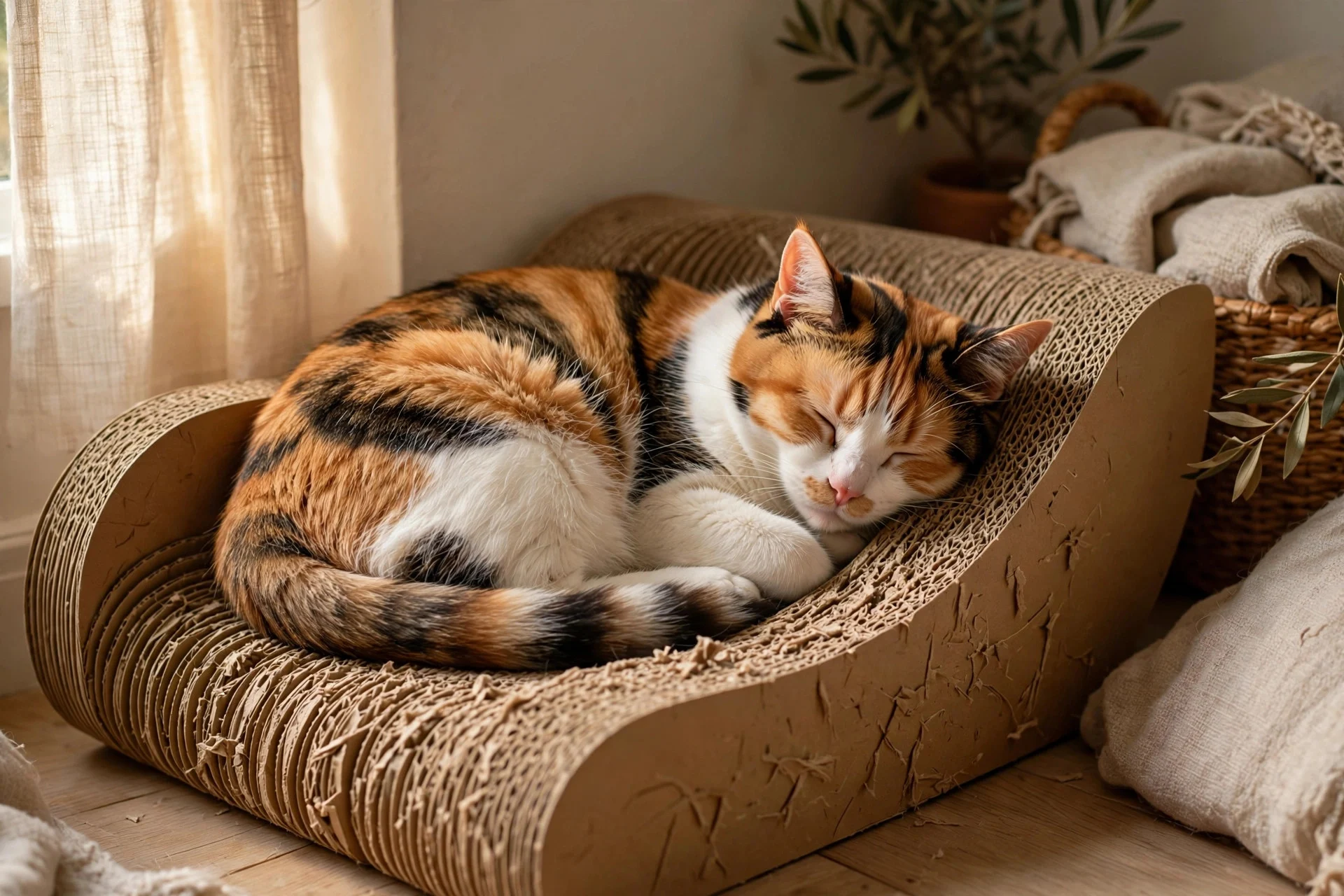
16. A cardboard scratcher lounge
The curved cardboard loungers are scratcher, bed, and throne in one. Put one where your cat already hangs out, sprinkle catnip, done. When it’s shredded flat, flip it or replace — they’re cheap.
How to Build an Enrichment Routine
You don’t need all sixteen ideas. Pick three: one hunting outlet (wand toy), one mental outlet (puzzle feeder or scavenger hunt), and one environmental upgrade (window perch or cat tree). Do the wand sessions at the same times daily — cats thrive on routine, and a predictable play-pounce-dinner cycle is what finally ends the 3 a.m. zoomies.
Rotate, don’t accumulate. A room stuffed with twenty toys is background noise. Five toys in play, the rest in the closet, swapped weekly — that’s how you keep novelty alive without spending a dime.
Enrichment Mistakes to Avoid
The classic mistake is buying everything at once and dumping it on the floor. Overstimulation looks like ignoring everything. Introduce one new thing at a time and let curiosity do the work.
Don’t skip the hunt-catch-kill-eat sequence either. Ten minutes of wand play should end with a small meal or treat. That’s the full cycle their brain expects, and it’s what produces the deep post-hunt nap.
And check toys regularly. String toys and rubber bands are the big dangers — if swallowed, linear objects can saw through intestines. Put wand toys away after sessions, every time.
Indoor Cat Enrichment FAQs
Do indoor cats really need enrichment?
Yes. An under-stimulated indoor cat doesn’t just get bored — they get anxious, destructive, or depressed. Enrichment is as basic as food and water for indoor cats.
How much play does an indoor cat need daily?
Aim for two 10–15 minute interactive sessions. Kittens and young adults may want more. Watch your cat: a good session ends with them lying down, satisfied, not still wired.
My cat ignores every toy. What now?
Try different prey types — some cats only chase feathers, others only ground toys. Try catnip vs. silvervine. And try playing at dawn and dusk, when their hunting drive peaks. Timing matters more than the toy.
Is a second cat good enrichment?
Sometimes — but it’s a 15-year commitment, not a toy purchase. A mismatched pair creates stress, not enrichment. Fix the environment first; add a cat only if you actually want one.
Start with the window perch and the wand toy this weekend. That’s maybe thirty dollars and twenty minutes a day, and it’s the fastest transformation in all of cat ownership. Your curtains will thank you.

























