Every morning, my dog Milo follows me into the kitchen like he’s supervising breakfast duty. The second he hears a cutting board hit the counter, he’s there. Tail wagging. Eyes locked on whatever I’m making.
For a long time, his meals were basic. Chicken, rice, maybe a spoonful of vegetables if I had leftovers. He ate it without complaints, but his coat looked dull and his energy felt inconsistent. Nothing serious. Just enough to make me wonder if he was missing something.
At one vet visit, I asked if I should start buying supplements.

Instead of recommending expensive powders or fancy chews, she gave me a short list of foods I could add straight from my kitchen. Real food. Simple ingredients. Things most people already have at home.
I started rotating them into Milo’s bowl over the next few weeks. The difference was honestly noticeable. Better digestion. Shinier coat. More steady energy during walks.
Here are six foods many vets recommend adding to your dog’s meals and why they actually matter.
Why Adding Fresh Foods Helps Dogs
Even good-quality dog food can fall short in certain areas. Fresh foods help fill nutritional gaps while adding natural vitamins, healthy fats, fiber, and antioxidants.
The key is balance.
You are not replacing your dog’s main diet completely. You are improving it with small additions that support things like digestion, skin health, joints, and immune function.
Most of these foods are inexpensive and take less than a minute to prepare.
1. Sardines
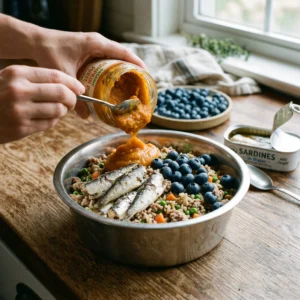
This is probably the most underrated food you can feed a dog.
When people think about omega-3s, they usually buy fish oil supplements. But many vets prefer whole sardines because they contain naturally occurring EPA and DHA along with vitamin D, calcium, selenium, and protein.
Small oily fish like sardines also tend to contain lower mercury levels compared to larger fish.
I started adding one sardine to Milo’s dinner twice a week. He acts like it’s the greatest thing he’s ever tasted.
Why Vets Recommend Sardines
Omega-3 fatty acids may help support:
- Skin and coat health
- Joint function
- Heart health
- Brain function
- Inflammation control
Dogs with itchy skin or dry coats often benefit the most.
How to Serve Sardines
- Choose sardines packed in water
- Avoid added salt or sauces
- Check labels for garlic or onion ingredients
- Serve plain
Serving Size
- Small dogs: 1 sardine
- Medium dogs: 2 sardines
- Large dogs: 3 to 4 sardines
Feed once or twice weekly.
2. Pumpkin
Pumpkin has a reputation for helping upset stomachs, but it does much more than that.
Plain pumpkin contains soluble fiber that helps regulate digestion naturally. It can help with both constipation and loose stools depending on what your dog needs.
It’s also low in calories, which makes it useful for dogs that gain weight easily.
Why Pumpkin Works
Pumpkin contains:
- Fiber
- Vitamin A
- Potassium
- Vitamin C
- Antioxidants
It also helps support healthy gut bacteria.
Best Way to Serve Pumpkin
Most vets actually recommend canned pumpkin puree because it’s easy to measure and store.
Just make sure the label says 100% pure pumpkin.
Pumpkin pie filling is not the same thing. It usually contains sugar and spices that are unsafe for dogs.
Serving Size
- Small dogs: 1 teaspoon
- Medium dogs: 1 tablespoon
- Large dogs: 2 tablespoons
You can safely add small amounts daily.
3. Blueberries
I used to think blueberries were mostly social-media dog treats. Then I looked into the research behind them.
Blueberries are packed with antioxidants that help protect cells from oxidative stress. They are also naturally low in calories and easy to feed.
Frozen blueberries became one of Milo’s favorite summer snacks almost immediately.
Benefits of Blueberries for Dogs
Blueberries may help support:
- Brain health
- Healthy aging
- Immune function
- Cellular protection
They also contain fiber and vitamin C.
How to Feed Blueberries
- Wash thoroughly before serving
- Fresh or frozen both work
- Cut in half for very small dogs if needed
Avoid canned blueberries or anything packed in syrup.
Serving Size
- Small dogs: 2 to 3 berries
- Medium dogs: 5 to 6 berries
- Large dogs: 8 to 10 berries
4. Eggs
Eggs are one of the simplest high-protein foods you can add to your dog’s bowl.
They contain complete protein along with important nutrients like selenium, choline, vitamin D, and several B vitamins.
And most dogs absolutely love them.
Why Eggs Are So Useful
Eggs may help support:
- Muscle maintenance
- Skin and coat health
- Eye health
- Brain function
They’re also easy on the stomach for many dogs.
How to Serve Eggs Safely
Always cook eggs before serving.
Scrambled or hard-boiled works best. Keep them plain with no butter, oil, salt, or seasoning.
Raw eggs are not worth the risk because of possible bacteria exposure.
Serving Size
- Small dogs: 1/4 to 1/2 egg
- Medium dogs: 1 egg
- Large dogs: 1 to 2 eggs
Feed a few times weekly instead of every day.
5. Bone Broth
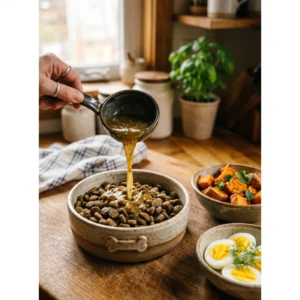
Bone broth looks simple, but it can be incredibly useful for dogs that need extra hydration or support for joints and digestion.
Homemade bone broth contains collagen, amino acids, and natural compounds that support connective tissue health.
It also makes dry food much more appealing for picky eaters.
Why Dogs Benefit From Bone Broth
Bone broth may help with:
- Joint support
- Hydration
- Digestion
- Appetite stimulation
Older dogs especially seem to enjoy it.
How to Make Safe Bone Broth
Use plain bones with water and simmer slowly for several hours.
Do not add:
- Onion
- Garlic
- Salt
- Seasoning
After cooking, strain carefully and remove all bones.
Serving Size
- Small dogs: 2 tablespoons
- Medium dogs: 1/4 cup
- Large dogs: 1/2 cup
You can pour it over meals a few times each week.
6. Sweet Potatoes
Sweet potatoes are one of the easiest vegetables to prepare for dogs.
They are rich in fiber and beta-carotene while being naturally filling and gentle on digestion.
I usually bake a few at the start of the week and keep portions in the fridge.
Benefits of Sweet Potatoes
Sweet potatoes provide:
- Vitamin A
- Fiber
- Potassium
- Vitamin B6
- Antioxidants
They can also help dogs feel fuller without adding excessive fat.
How to Serve Sweet Potatoes
Always cook them first.
Bake, steam, or boil until soft. Remove the skin before serving and avoid adding seasoning or butter.
Never feed raw sweet potato chunks.
Serving Size
- Small dogs: 1 teaspoon
- Medium dogs: 1 tablespoon
- Large dogs: 2 tablespoons
Feed a few times weekly.
Foods You Should Never Mix Into Dog Meals
Not every healthy human food is safe for dogs.
Avoid adding:
- Onion
- Garlic
- Grapes
- Raisins
- Chocolate
- Xylitol
- Excess salt
- Heavily seasoned foods
When trying any new food, start small and monitor your dog for digestive issues.
A Simple Way to Improve Your Dog’s Bowl
You do not need a complicated homemade diet to improve your dog’s nutrition.
Sometimes small additions make the biggest difference.
A spoonful of pumpkin. A sardine once a week. A little bone broth over dinner. Those tiny changes add nutrients that many dogs simply do not get enough of from dry food alone.
Milo still sits in the kitchen every morning waiting for something extra to land in his bowl. And honestly, it only takes a few seconds now.
That short conversation with our vet completely changed the way I think about feeding him. Not because we switched to expensive products, but because we started adding real food in smarter ways.