If you’ve ever had a cat rhythmically push its paws into your lap — claws and all — you’ve witnessed kneading. It looks like they’re making biscuits, and honestly, that’s what most of us call it. But why does my cat knead? It’s one of the most common cat questions, and the answer is a mix of instinct, comfort, and communication.
The short version: kneading is a leftover kitten behavior that adult cats never outgrow because it feels good and means good things. Here are the five reasons behind it, and what to do when the claws come out.
5 Reasons Cats Knead
1. It’s a leftover nursing instinct
Kittens knead their mother’s belly to stimulate milk flow. It’s one of the first purposeful movements a kitten learns, wired in before their eyes even open. Adult cats keep doing it because the neural pathway never goes away — like a song you can’t unlearn. This is also why cats often drool or suckle on blankets while kneading. They’re running the full kitten program.
2. They’re content and feel safe
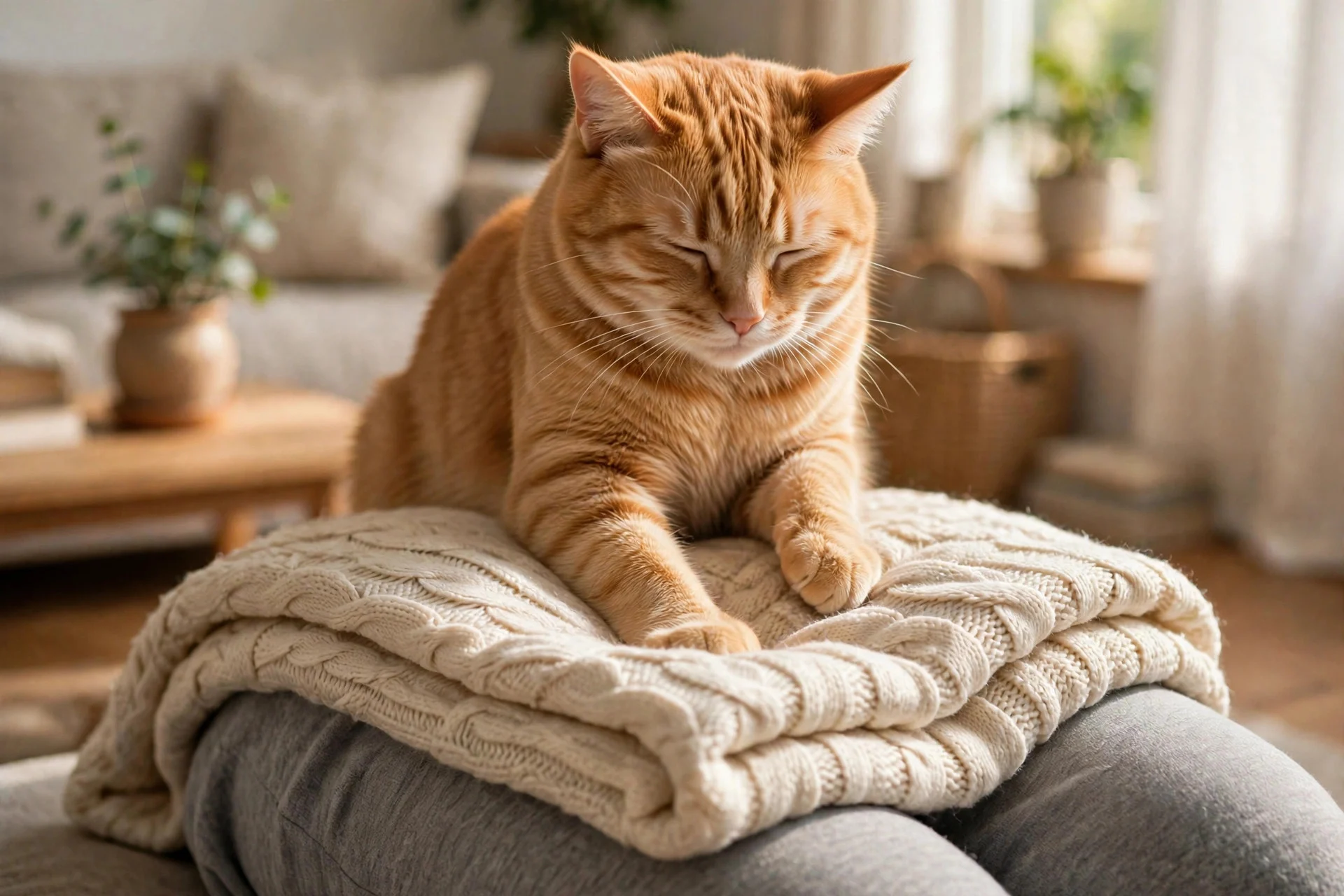
This is the big one. Cats knead when they’re relaxed — on a favorite human, a warm blanket, a sunny spot. It’s a contentment signal, roughly the paw equivalent of a deep sigh. If your cat kneads you, take it as the compliment it is. You’ve been categorized alongside kittenhood’s greatest hits: warmth, safety, and food.
3. They’re marking you as theirs
Cats have scent glands in their paw pads, and kneading presses that scent into whatever they’re working on. So yes — your cat is literally claiming you. The lap, the blanket, the pillow: all tagged. It’s affectionate territorial behavior, and it’s why cats often knead their favorite person more than anyone else in the house.
4. They’re stretching
Watch a cat wake from a nap: big stretch, then a few kneads. The pushing motion extends the toes, flexes the wrists, and works the shoulder muscles. For older cats especially, kneading doubles as gentle physical therapy. If your senior cat kneads more than they used to, it’s often just stiffness management.
5. They’re nesting
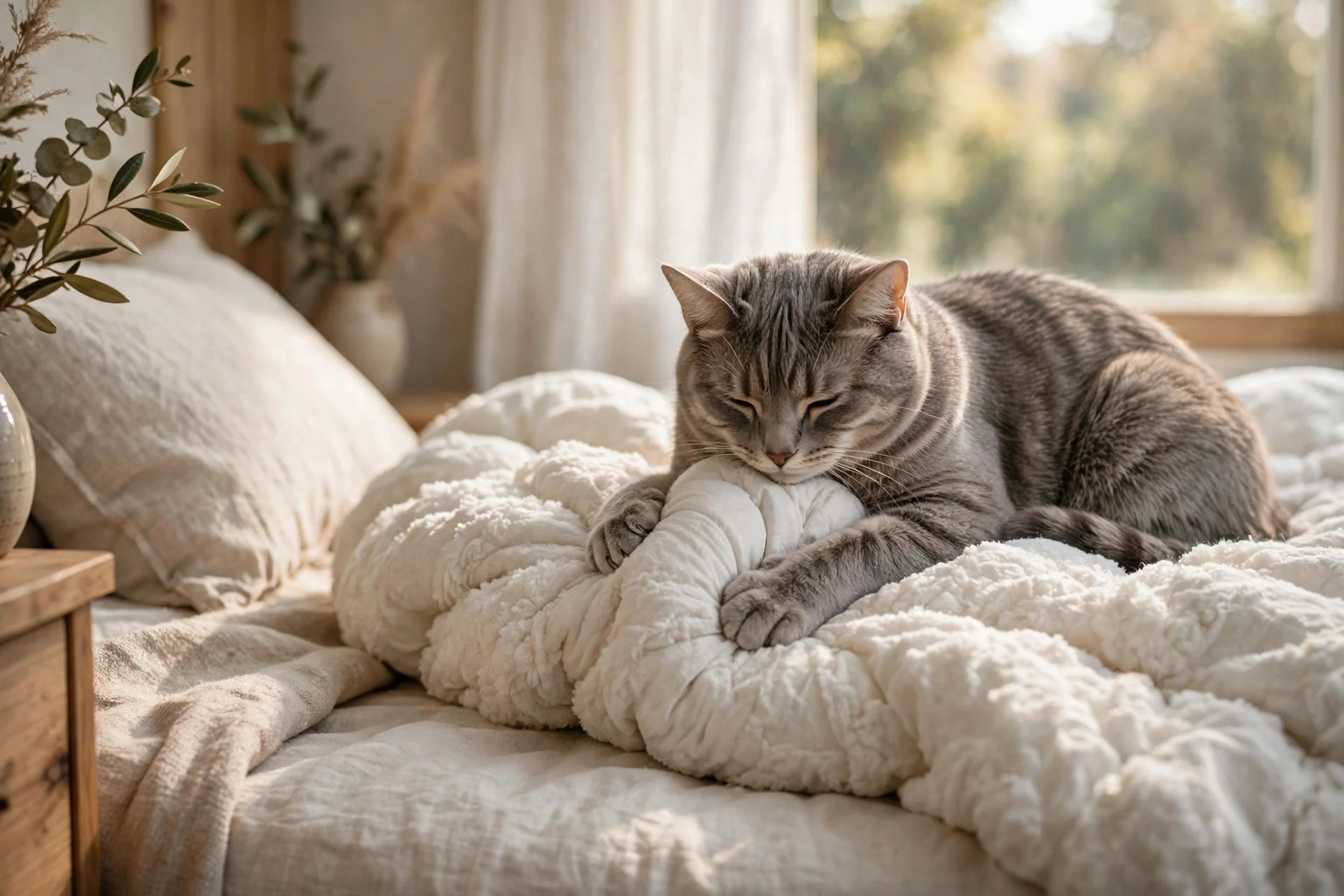
Wild cats pat down grass and leaves to make a sleeping spot. Your cat does the same thing to your duvet. Kneading before settling in is the domestic version of fluffing a nest — testing softness, arranging the surface, making it just right. Cats who knead blankets before sleeping are following an ancient bedtime routine.
When Kneading Hurts: Managing the Claws
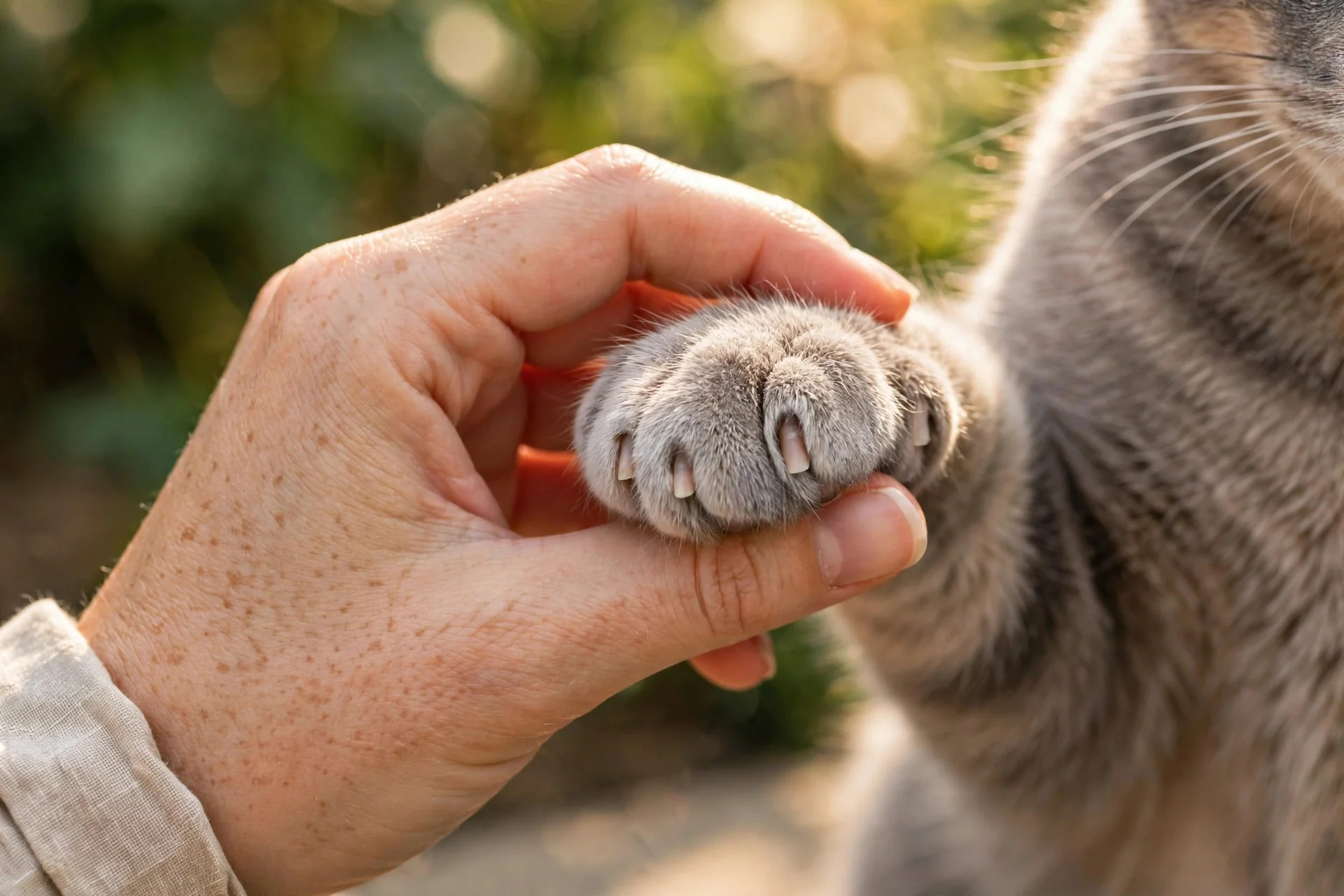
The love is real; so are the claws. A kneading cat on bare legs in summer is a special kind of pain. The fix isn’t stopping the kneading — it’s managing the hardware. Keep a thick folded blanket or towel on your lap as a designated kneading pad. Most cats happily transfer to it.
Trim the sharp tips of their nails every few weeks. Shorter claws turn kneading from acupuncture into a pleasant massage. And if your cat kneads aggressively when overstimulated, that’s your cue the petting session has gone on long enough — wind it down before the love bites start.
What Your Cat’s Kneading Style Says
Not all kneading looks the same, and the variations are telling. Slow, rhythmic kneading with half-closed eyes? Peak contentment — do not disturb. Fast, intense kneading while purring loudly? Excitement, usually right before a meal or during a favorite petting session. One-paw kneading on your arm while staring at you? That’s a request — usually for food, occasionally for the lap to stop moving so they can settle.
Cats also have preferences. Some only knead soft blankets, some only knead people, and some have a single sacred object — one particular pillow they’ll return to for years. My friend’s cat has kneaded the same ratty fleece throw for eight years, ignoring every replacement. Respect the throw.
Should You Ever Discourage Kneading?
Almost never. Kneading is self-soothing behavior, and suppressing it just stresses the cat. The only exception is kneading that comes with wool-sucking or excessive licking, which in some cats signals anxiety or compulsive behavior. If your cat kneads obsessively — for long stretches, ignoring food or play — mention it to your vet. For the other 95% of kneaders, it’s just happiness with claws.
One persistent myth worth killing: kneading does NOT mean your cat was taken from its mother too early. Adult cats from perfectly normal backgrounds knead their whole lives. It’s not a trauma response. It’s just a cat thing.
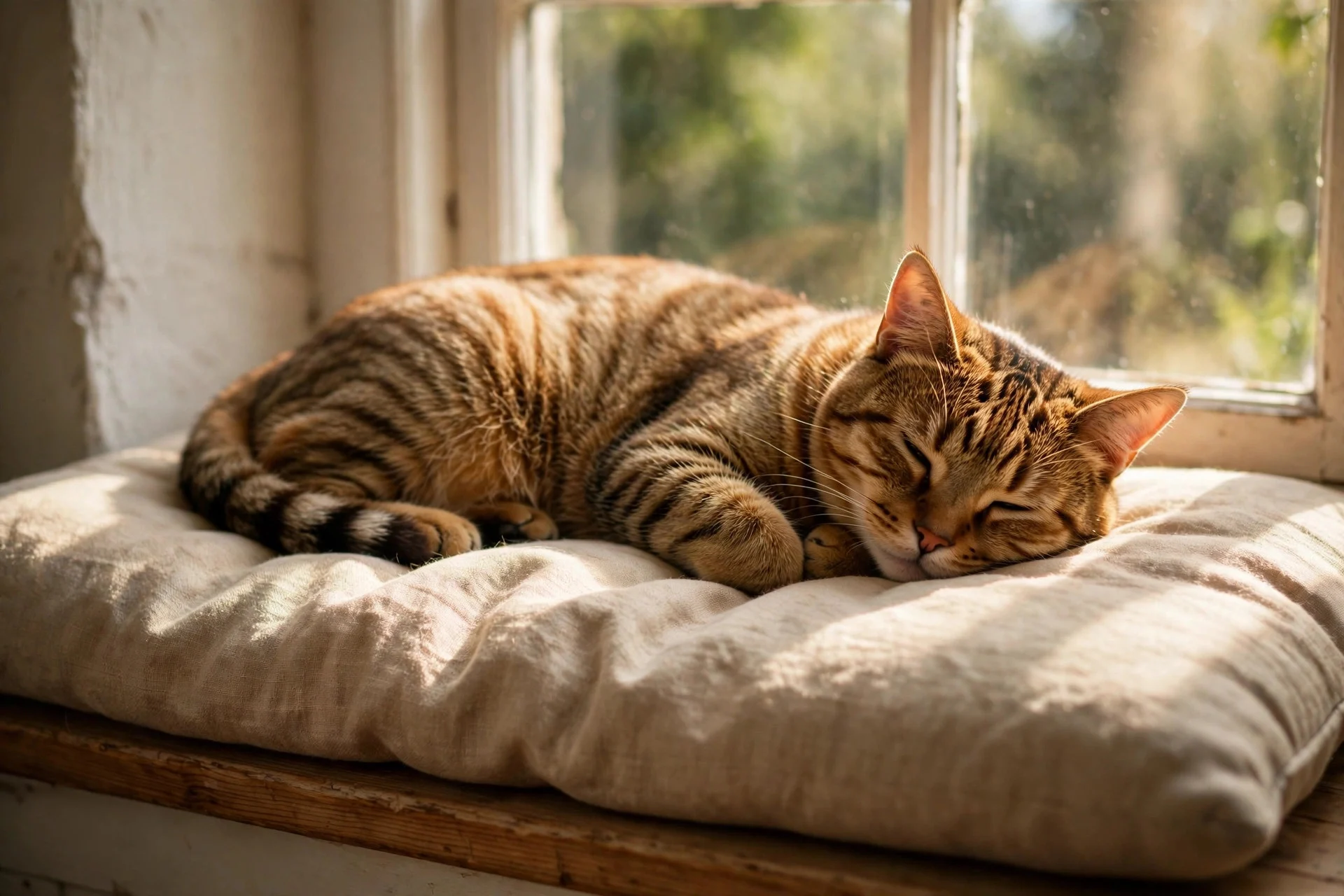
Cat Kneading FAQs
Why does my cat knead me and not anyone else?
You’re the favorite. Kneading targets whoever the cat associates with comfort and safety. It’s scent-marking plus contentment, aimed at their chosen person. Wear it with pride — and keep a blanket handy.
Why does my cat knead with claws out?
Claws extend naturally when the paw pushes down — it’s part of the motion, not aggression. Regular nail trims and a lap blanket solve it completely.
Do all cats knead?
Almost all, though some are subtle about it — a few quiet paw presses rather than full biscuit production. The rare cat that never kneads isn’t broken; they just express contentment differently, usually through purring or slow blinks.
Why does my cat knead before sleeping?
Nesting instinct. They’re testing and arranging the surface, just like wild ancestors patted down grass. It’s the feline version of fluffing your pillow.
So the next time your cat starts making biscuits on your lap, you know exactly what’s happening: a happy, comfortable cat telling you that you’re home. Just keep the nail clippers handy.