
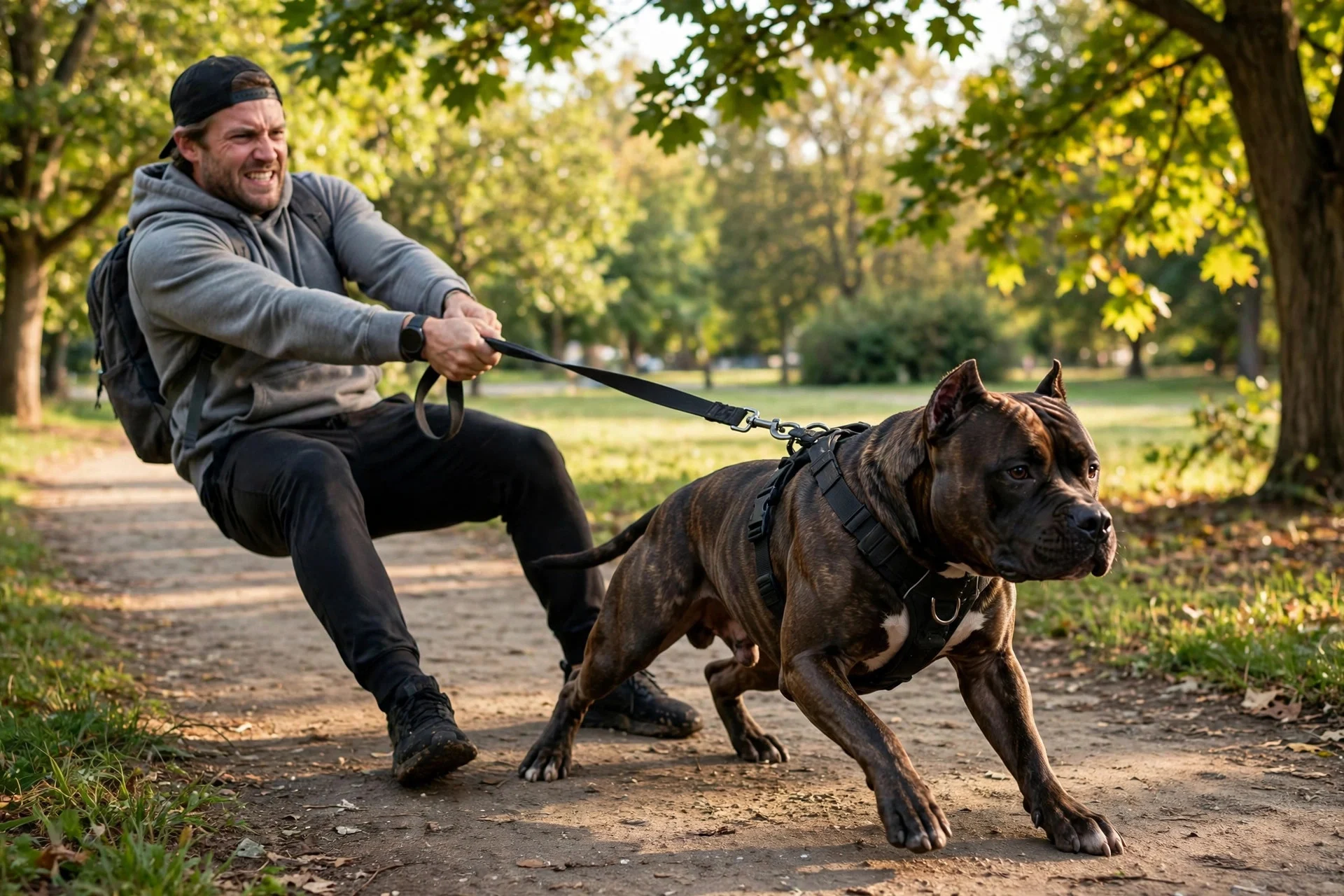
Walks are supposed to be the best part of the day. Instead, you’re getting dragged down the sidewalk like a water-skier, shoulder aching, while your dog sniffs everything at full sprint. If dog pulling on leash has turned your walks into a wrestling match, I get it — I’ve been the person getting yanked into a bush by a 70-pound Lab who spotted a squirrel.
Pulling isn’t stubbornness. From your dog’s perspective, it works: they pull, they get to the smell faster. Our job is to flip that math so walking politely gets them where they want to go, and pulling gets them nowhere. These seven steps build that understanding gradually — no yanking, no choke chains, just clear communication.
7 Steps to Stop Leash Pulling
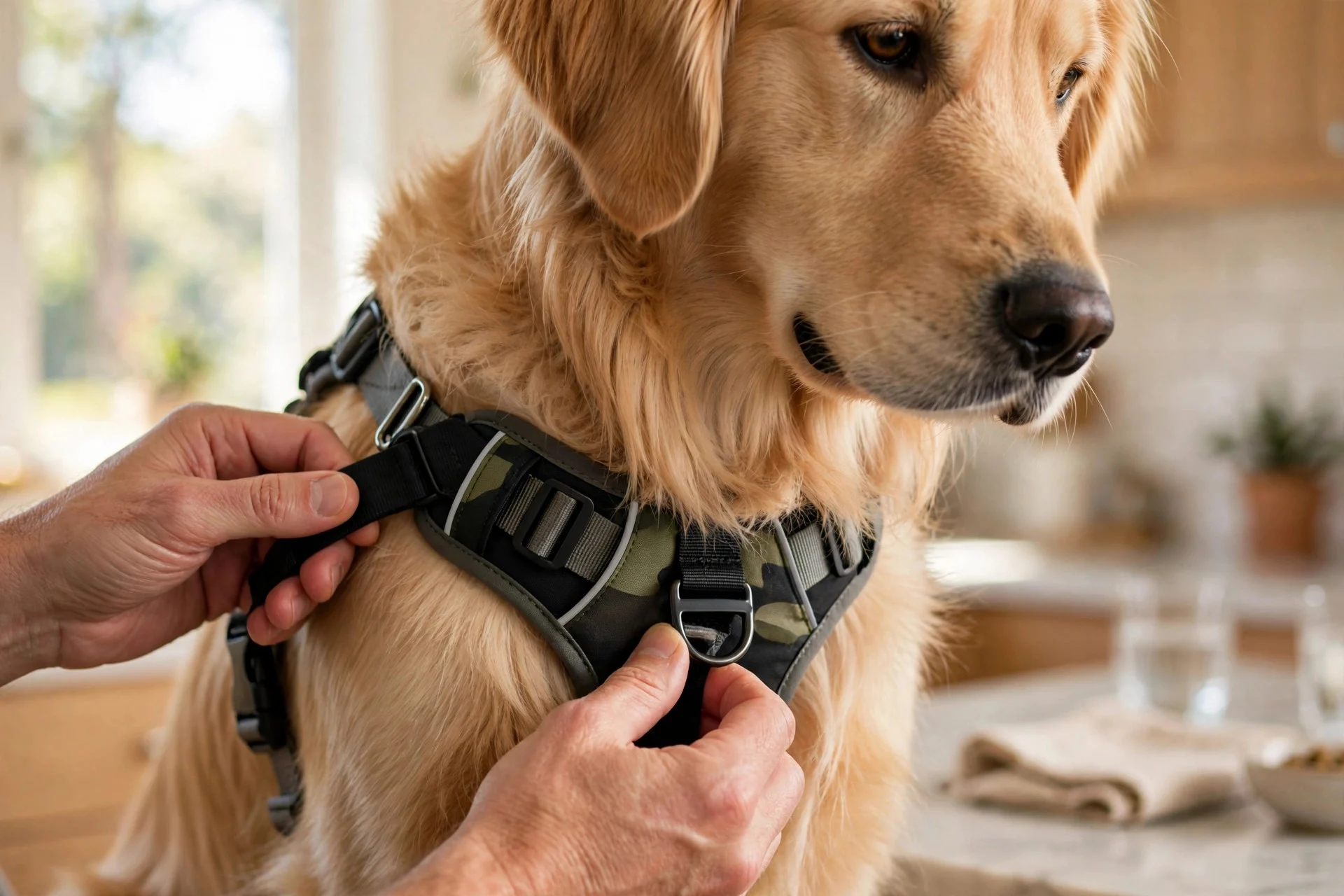
1. Gear Up Right (This Matters More Than You Think)
Start with a front-clip harness, not a collar. When a dog pulls in a front-clip harness, the leash gently turns their body back toward you instead of letting them lean into the pressure. A standard back-clip harness actually makes pulling easier — it’s built for sled dogs. Pair it with a 6-foot leash (not a retractable one; those teach constant tension). The right gear won’t train your dog by itself, but it makes every step that follows ten times easier.
2. Teach Them That Tension Stops the Walk
Here’s the core rule: when the leash goes tight, you become a tree. Stop walking. Stand still. Wait. The moment your dog glances back or the leash slackens even slightly, mark it with “yes!” and move forward. You’re not punishing — you’re showing them that pulling hits the brakes and slack starts the engine. Do this every single time, even when you’re in a hurry. Inconsistency here is why most people fail at this step.
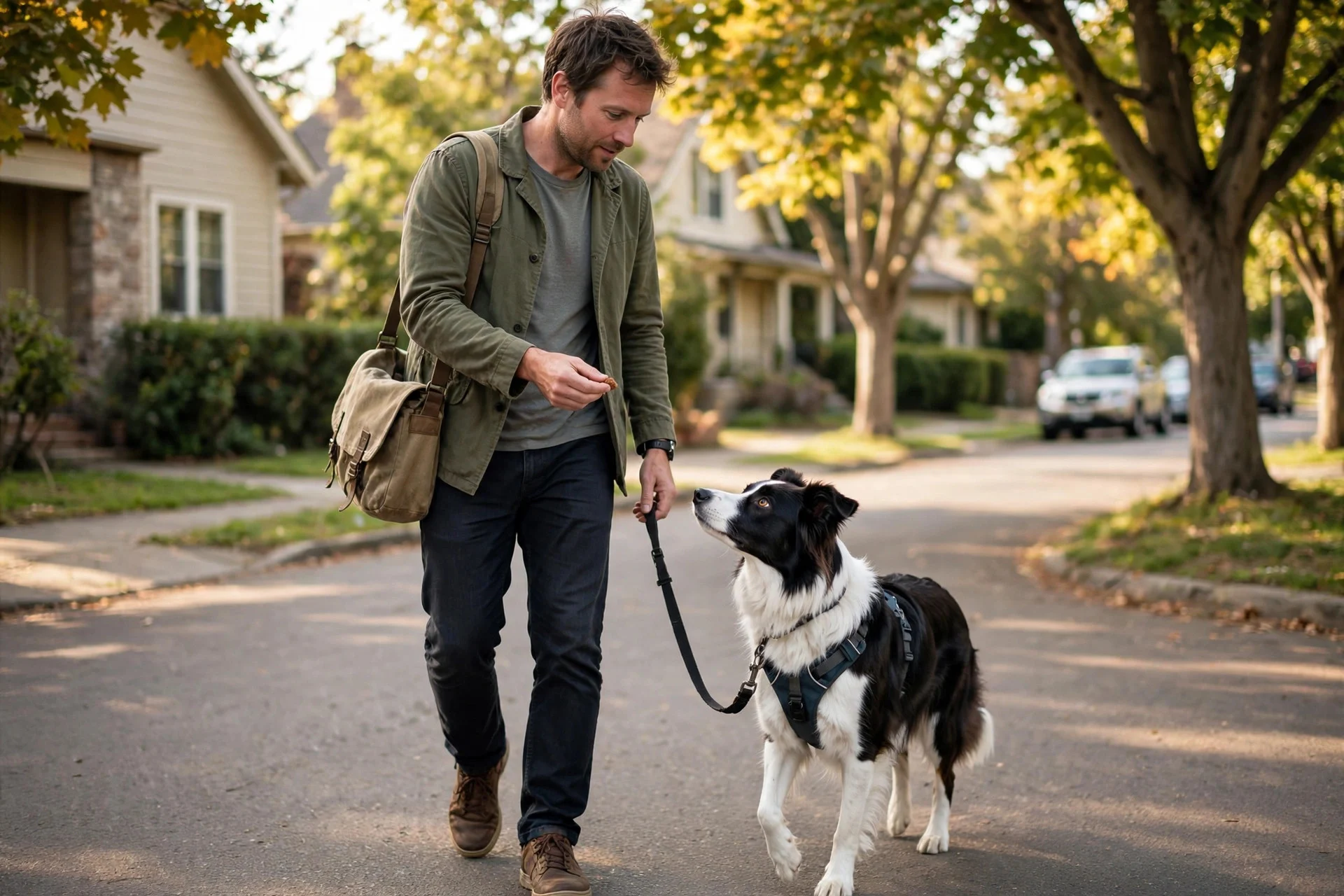
3. Reward the Position You Want, Constantly
In the early weeks, be a treat vending machine. Every few steps of loose-leash walking earns a small treat delivered at your side, right where you want the dog’s head to be. This isn’t bribery — it’s building a habit. You’re making the “heel zone” the most rewarding place on the walk. Most people under-reward here. If you think you’re treating too much, you’re probably treating just enough. Carry 30 to 40 tiny treats on every walk for the first two weeks.
4. Change Direction When They Blow Past You
When your dog surges ahead, do a calm 180 and walk the other way. No yanking, no scolding — just “we’re going this way now.” The dog learns that charging forward doesn’t get them to the good stuff; it gets them walking away from it. Do this matter-of-factly, like it’s the most natural thing in the world. After a dozen direction changes, most dogs start checking in with you. That’s the moment the whole walk changes.
5. Practice in Boring Places First
Don’t try to train on the exciting park trail where squirrels hold conventions. Start in your driveway, then your quiet street, then a slightly busier block. Each new environment resets the difficulty — a dog who walks beautifully at home may forget everything at the park. That’s normal. Drop your expectations, shorten the session to 5 minutes in the new place, and rebuild. Training in layers is slower but it sticks.
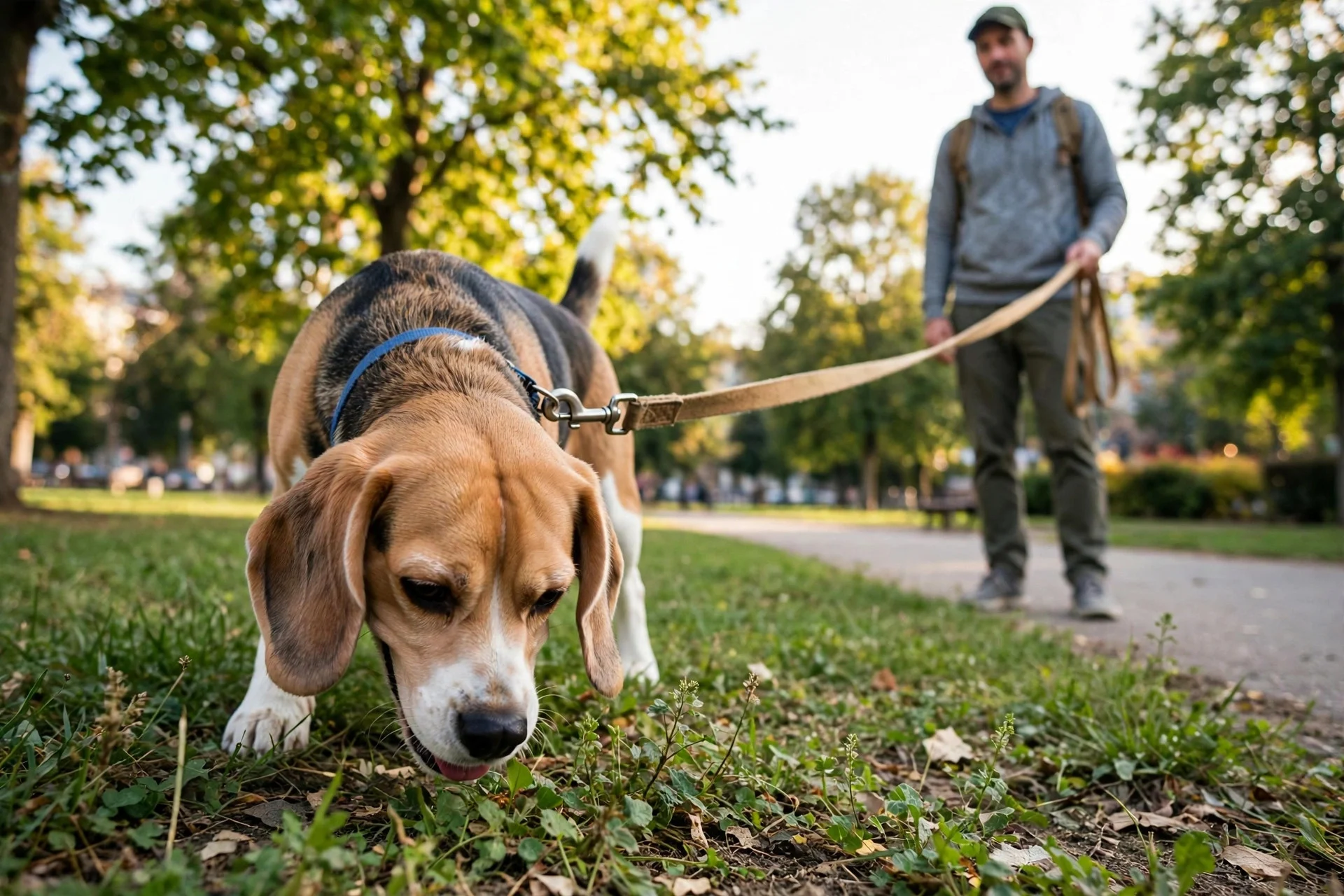
6. Let Them Sniff (On Your Terms)
A walk with zero sniffing is miserable for a dog — sniffing is how they read the news. Build “sniff breaks” into the walk: walk politely for a stretch, then cue “go sniff” and let them investigate for 30 seconds. This turns sniffing into a reward for good walking instead of the prize they steal by pulling. Dogs who get regular sniff breaks pull noticeably less, because they’re not desperate for information.
7. Train Tired… Actually, Walk Tired Dogs
A dog fresh out of the crate with a full tank of energy cannot learn loose-leash walking. Play fetch or do a quick training game for 10 minutes before the walk, so you’re working with a dog whose brain is online. This doesn’t mean exhausting them into compliance — just taking the edge off. The difference between training a wired dog and a settled one is the difference between teaching and shouting into the wind.
How Long Before Walks Feel Normal?
With daily 15 to 20 minute practice sessions, most dogs show real improvement in three to four weeks. Reliable, distraction-proof loose leash walking — the kind where you can stroll past another dog without drama — usually takes two to three months. Big, strong, adolescent dogs (looking at you, 10-month-old Labs) can take longer, and that’s fine.
The biggest accelerator is consistency between walkers. If you train and your partner lets the dog drag them to the park, the dog learns that pulling works with some people. Everyone who holds the leash follows the same rules. And if your dog shuts down — stops walking, lies down, won’t take treats — the session was too hard or too long. End it, try again tomorrow in an easier spot.
Mistakes That Keep the Pulling Going
Retractable leashes are the number one enemy here. They maintain constant tension and reward the dog for moving away from you — the exact opposite of what you’re teaching. Swap it for a fixed 6-foot leash this week.
Another classic: only correcting, never rewarding. If the only feedback your dog gets on a walk is “no” and leash pops, they learn walks are stressful, not that loose leash is rewarding. Catch them being good. Also, avoid the temptation to “just get through” a walk by letting them pull when you’re tired. Every pulled walk is a training session — you’re just training the wrong thing.
FAQs
Should I use a prong collar or choke chain?
I’d strongly recommend against them. They suppress pulling through pain and fear, which can create leash reactivity, anxiety, or a dog that only walks nicely when the scary collar is on. Front-clip harnesses plus training get you to the same place without the fallout.
My dog walks fine until they see another dog. Then it’s chaos.
That’s a distraction threshold issue, not a leash manners issue. Work at a distance where your dog notices the other dog but can still take treats — maybe 50 feet away — and reward calm behavior. Gradually decrease the distance over weeks. If they can’t take treats, you’re too close.
How many treats is too many?
In the first two weeks, there’s almost no such thing as too many. Use pea-sized, low-calorie treats and subtract a little from dinner if you’re worried about weight. You’ll fade the treats out naturally as the habit solidifies — by week four or five, you’ll be rewarding every tenth good stretch instead of every third step.
Can old dogs learn this, or is it too late?
Absolutely they can. I’ve seen 9-year-old dogs learn loose-leash walking in a month. Older dogs sometimes learn faster because they’re less frantic. The principles are identical — reward slack, stop for tension, be consistent.
Here’s the thing nobody tells you: the goal was never a robot dog glued to your leg. It’s a walk where the leash hangs in a loose J-shape and you both actually enjoy being out there. Give these steps an honest month. Your shoulder will thank you.

























