
Living on the 12th floor with a puppy who needs to pee every 45 minutes is a special kind of challenge. By the time you’ve got shoes on and waited for the elevator, the moment has passed — usually onto your rug. If potty training puppy apartment life feels impossible, it’s not. It just needs a different playbook than the suburban backyard version.
Apartment potty training comes down to three things: a realistic indoor-or-outdoor plan, a schedule tighter than you’d think necessary, and management that prevents accidents before they happen. Every accident your puppy has indoors is practice for the wrong habit. These ten tips are built for hallways, elevators, and neighbors who don’t want to smell your puppy’s mistakes.
10 Apartment Potty Training Tips
1. Decide: Outdoor Only, or Indoor Option Too?
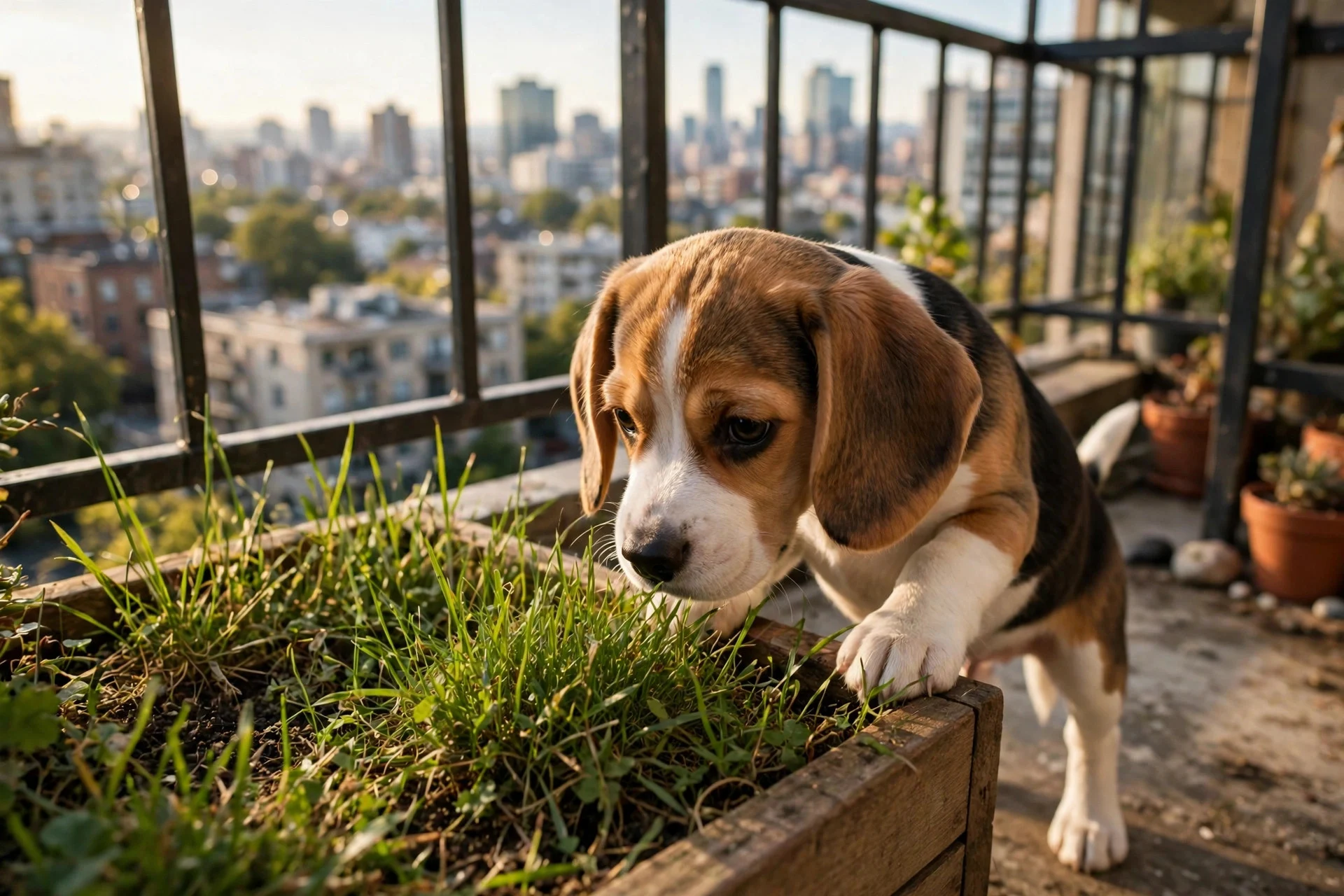
Make this decision in week one and stick with it. Outdoor-only is cleaner long-term but brutal in a high-rise — that elevator ride is a race against biology. Many owners succeed with a hybrid: outdoor for most breaks, plus a real-grass patch on the balcony for emergencies. Grass patches beat pee pads, which teach the puppy that soft indoor surfaces are toilets (and your rugs are soft indoor surfaces). Whatever you choose, consistency is everything.
2. Run a Ruthless Schedule
Take your puppy out after every predictable trigger: waking up, eating, drinking, playing — plus every 30 to 60 minutes in between. Set phone alarms. An 8-week-old puppy can need 12 to 15 trips a day, and in an apartment each trip is a 10-minute expedition. The schedule feels insane for two weeks. Then the bladder grows, intervals stretch, and you wonder why you ever stressed about it.
3. Master the Elevator Sprint
Learn your building’s rhythm — when elevators are free, which stairwell is fastest, the quickest route to grass. Carry your puppy in the elevator and hallways (don’t let them walk and pee en route), and put them down only on the potty spot. Keep a designated “emergency jacket and slip-on shoes” by the door so a 2 a.m. whine doesn’t cost you 3 minutes of dressing. Apartment potty training is 20% dog training and 80% logistics. Optimize the logistics.
4. Reward Like They Just Won Gold
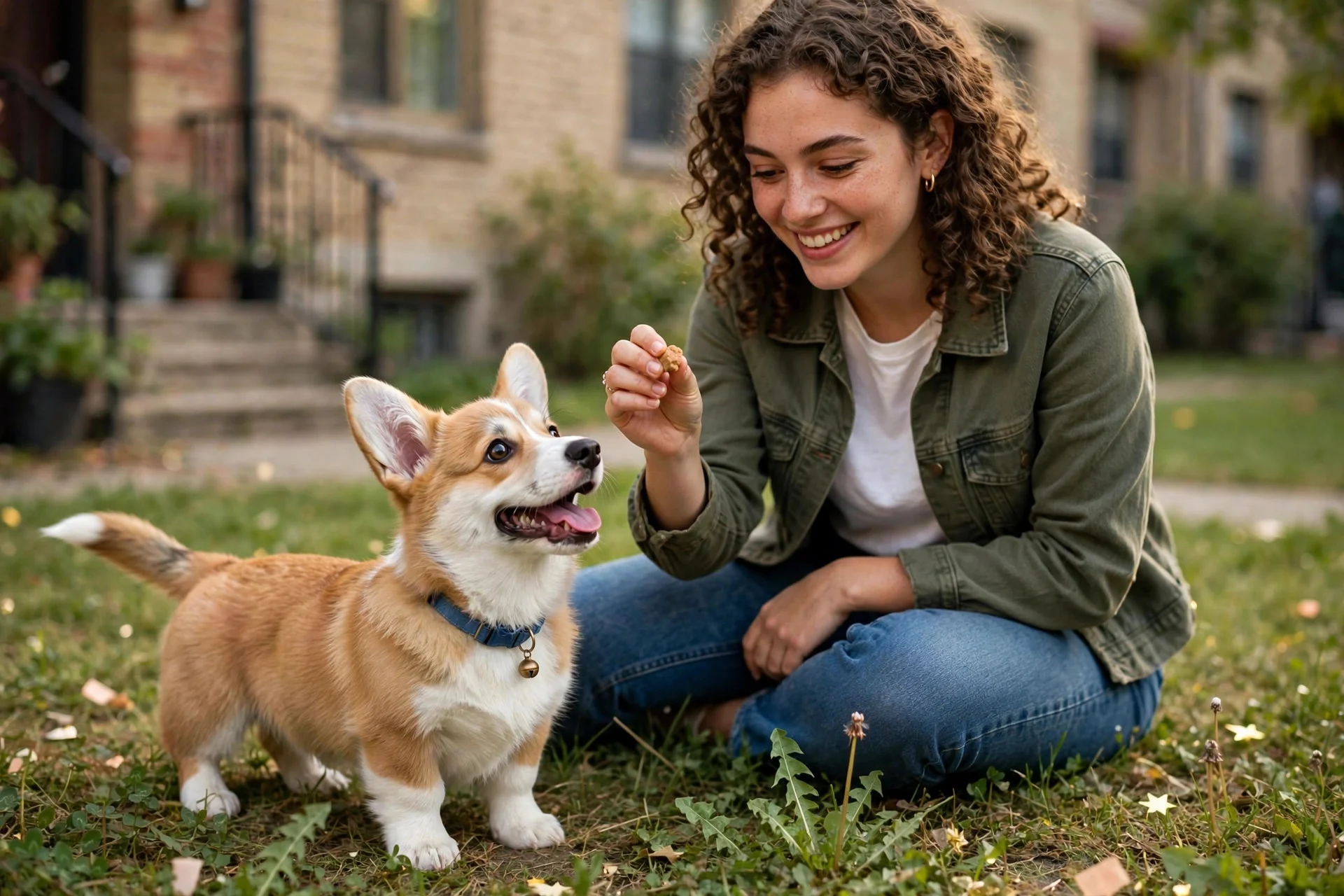
The moment your puppy finishes in the right spot, throw a party: three treats in a row, happy voice, right there at the spot — not back inside. For the first month, every correct pee is a jackpot. Every single one. Most owners under-reward here and then wonder why progress is slow.
5. Supervise or Confine — No Middle Ground
A puppy with unsupervised freedom will find a corner. When you can’t watch them fully, they go in the crate or pen. Learn the pre-pee signals: sudden sniffing, circling, wandering away from play. The instant you see them, scoop and go. Most accidents aren’t training failures; they’re supervision failures.
6. Clean Accidents Like a Crime Scene
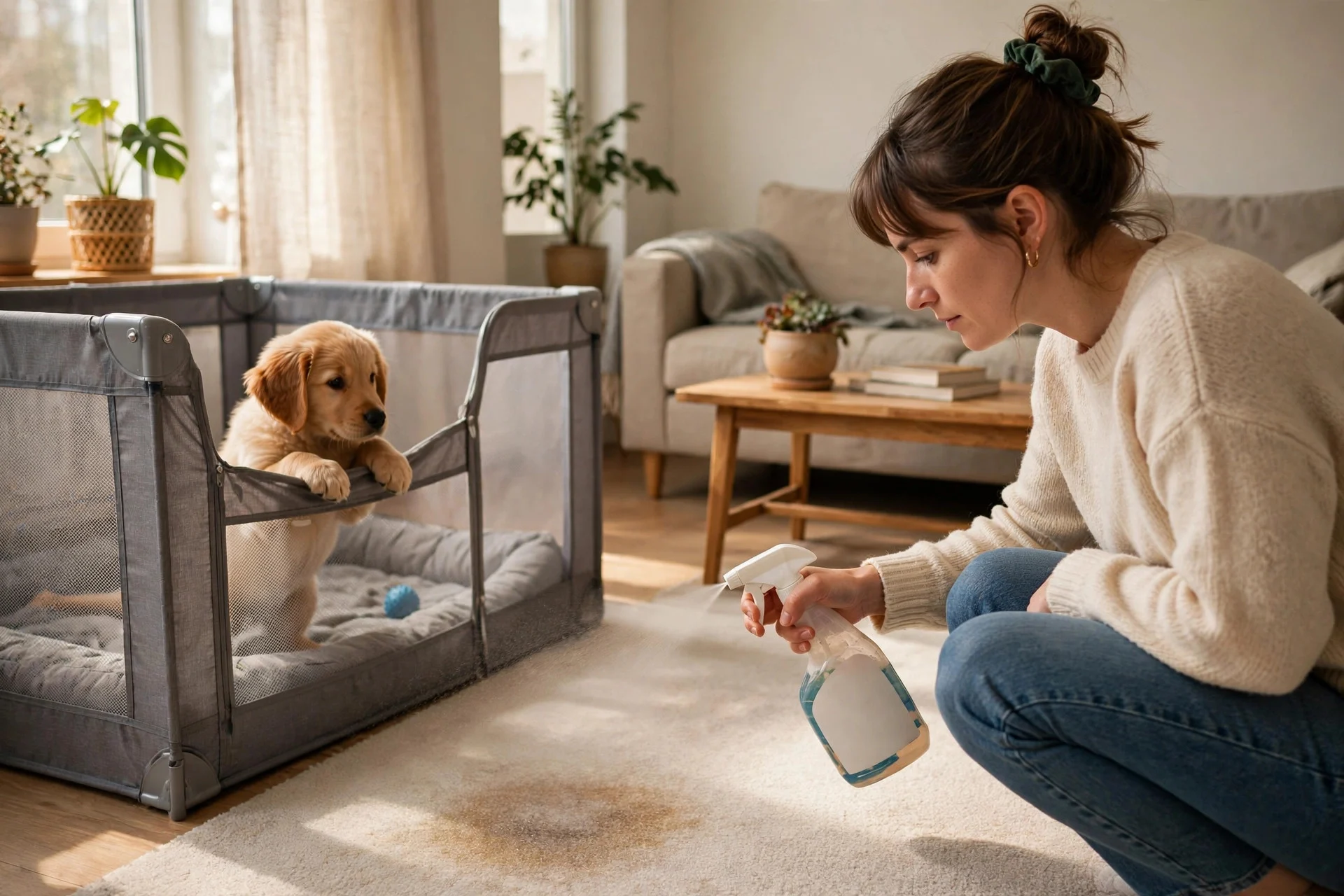
Regular cleaners don’t cut it — any remaining urine scent draws the puppy back to that spot. Use an enzymatic cleaner, soak thoroughly, air dry. Never punish accidents after the fact; it teaches the puppy to hide their peeing, not to hold it. If you didn’t catch it happening, clean it and move on.
7. Use the Crate as Your Secret Weapon
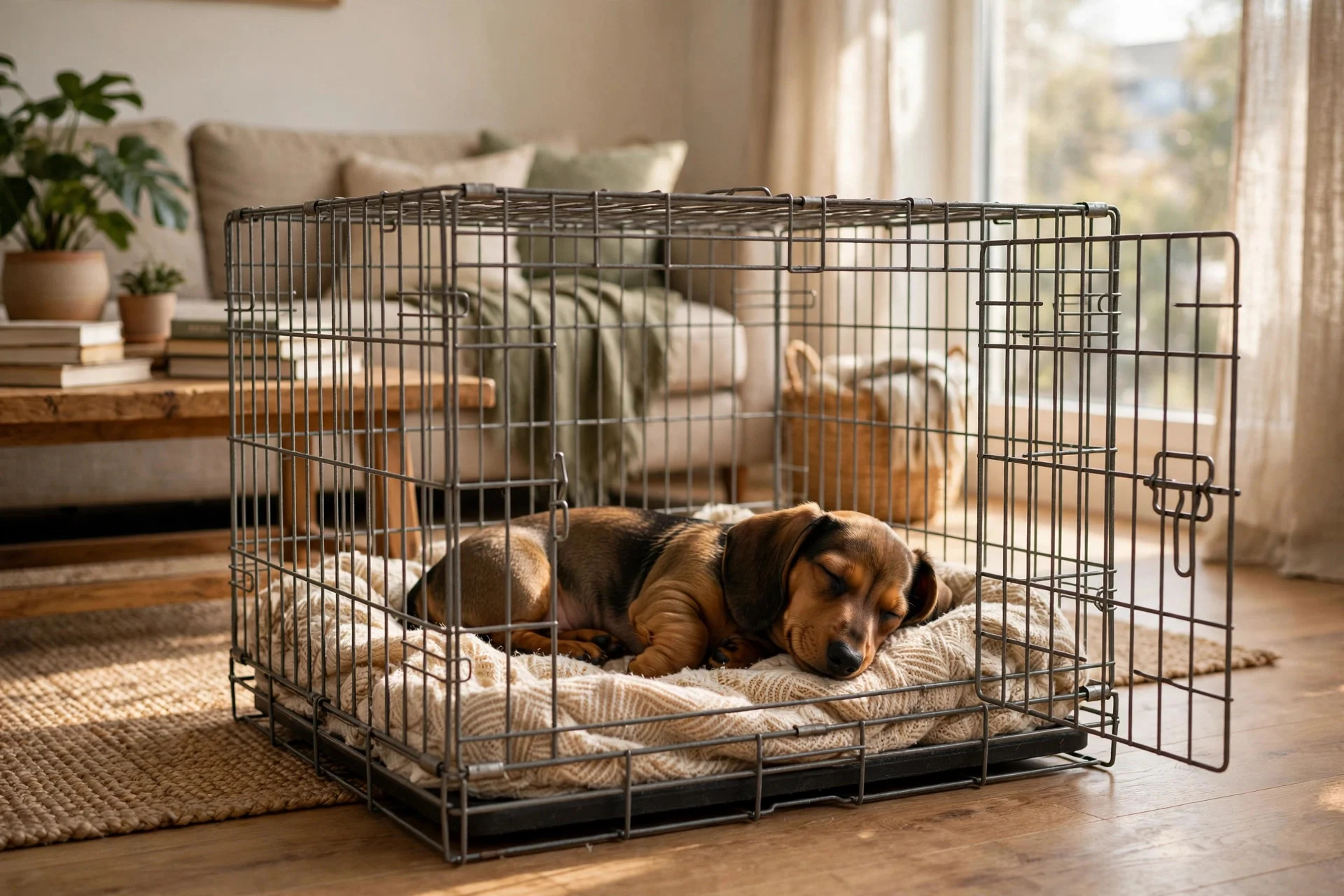
Dogs naturally avoid soiling their sleeping area, which makes the crate the best potty-training tool you own. A properly sized crate (just enough to stand, turn, lie down) plus the schedule from tip two means the puppy learns to hold it between trips. Crate them when you can’t supervide, take them straight to the potty spot on release. Within a couple of weeks, most puppies start signaling at the crate door when they need out. That’s the habit forming.
8. Teach a Potty Cue
Pick a phrase — “go potty” — and say it calmly while the puppy is in the act, then reward. After a week or two, you can say the cue first and the puppy will go on command. Pure gold for apartment life: rainy days, late nights, when you’re in a hurry. Train it from day one; you’ll use it for years.
9. Manage Water (Sensibly)
You don’t restrict water for a growing puppy during the day — that’s unhealthy. But pick up the water bowl 2 hours before bedtime, and note when the puppy drinks so you can predict the next pee (usually 15 to 30 minutes later). If your puppy tanks up at 9 p.m., plan a 9:20 trip. This isn’t about deprivation; it’s about predictability. A puppy with scheduled water intake is a puppy with a predictable bladder.
10. Be Patient With Regression
Around 4 to 6 months, many puppies regress — accidents return, signaling stops. This is normal; adolescence scrambles their brain. Don’t panic or punish — go back to the tight schedule for a week or two. Full reliability typically lands between 6 and 8 months for apartment puppies. That’s fine.
What About Balconies and Pee Pads?
A balcony grass patch is the apartment owner’s best friend — an outdoor-feeling option without the elevator odyssey. Real-grass subscription boxes run about $30 to $50 a month and most puppies take to them immediately. Fake turf works but needs frequent washing or it starts smelling like a locker room. Pee pads work in a pinch but teach the puppy that peeing on soft flat surfaces indoors is fine — and your rugs and bath mats are soft flat surfaces. Use pads only temporarily, in one consistent spot.
Mistakes Apartment Owners Make
The biggest: too much freedom too soon. A 10-week-old puppy should not have run of a two-bedroom apartment. Freedom is earned in stages — one puppy-proofed room first, then more space as reliability grows. Second: punishing accidents. It just teaches the puppy to pee behind the couch where you can’t see. If your puppy shuts down — hiding, submissive urination — the energy around potty training has gotten too intense. Dial it back to pure reward and management.
FAQs
How long until my apartment puppy is fully house trained?
Most apartment puppies are reliable by 6 to 8 months with consistent work. Small breeds can take a bit longer — tiny bladders are a real thing. If you’re still having frequent accidents past 8 months, check with your vet to rule out urinary issues, then tighten the schedule again.
My puppy pees in the elevator. Help.
Carry them. Seriously — for the first few months, carry the puppy through hallways and elevators and set them down only at the potty spot. It feels ridiculous carrying a 20-pound puppy, but it prevents the habit of peeing in transit. They’ll walk themselves soon enough.
Is it okay to use the balcony as the permanent potty spot?
It can work long-term for small dogs, especially with a real grass patch. For larger dogs, most owners transition to outdoor-only once the dog can hold it for reasonable stretches. Check your lease and be considerate — a smelly balcony affects your neighbors too.
My puppy won’t pee outside — they hold it until we’re back inside. Why?
The puppy has learned that indoors is the bathroom. This usually means they’ve had too many indoor accidents (each one reinforced the habit) or the outdoor spot is scary. Take them out on leash to a quiet, boring patch of grass, wait patiently (bring a book — this can take 20 minutes), and jackpot the moment they go. It typically resolves within a week of consistent outdoor success.
Apartment potty training is a logistics game, and logistics can be solved. Tight schedule, ruthless supervision, enzymatic cleaner on standby, and a grass patch for the 2 a.m. emergencies.

























