
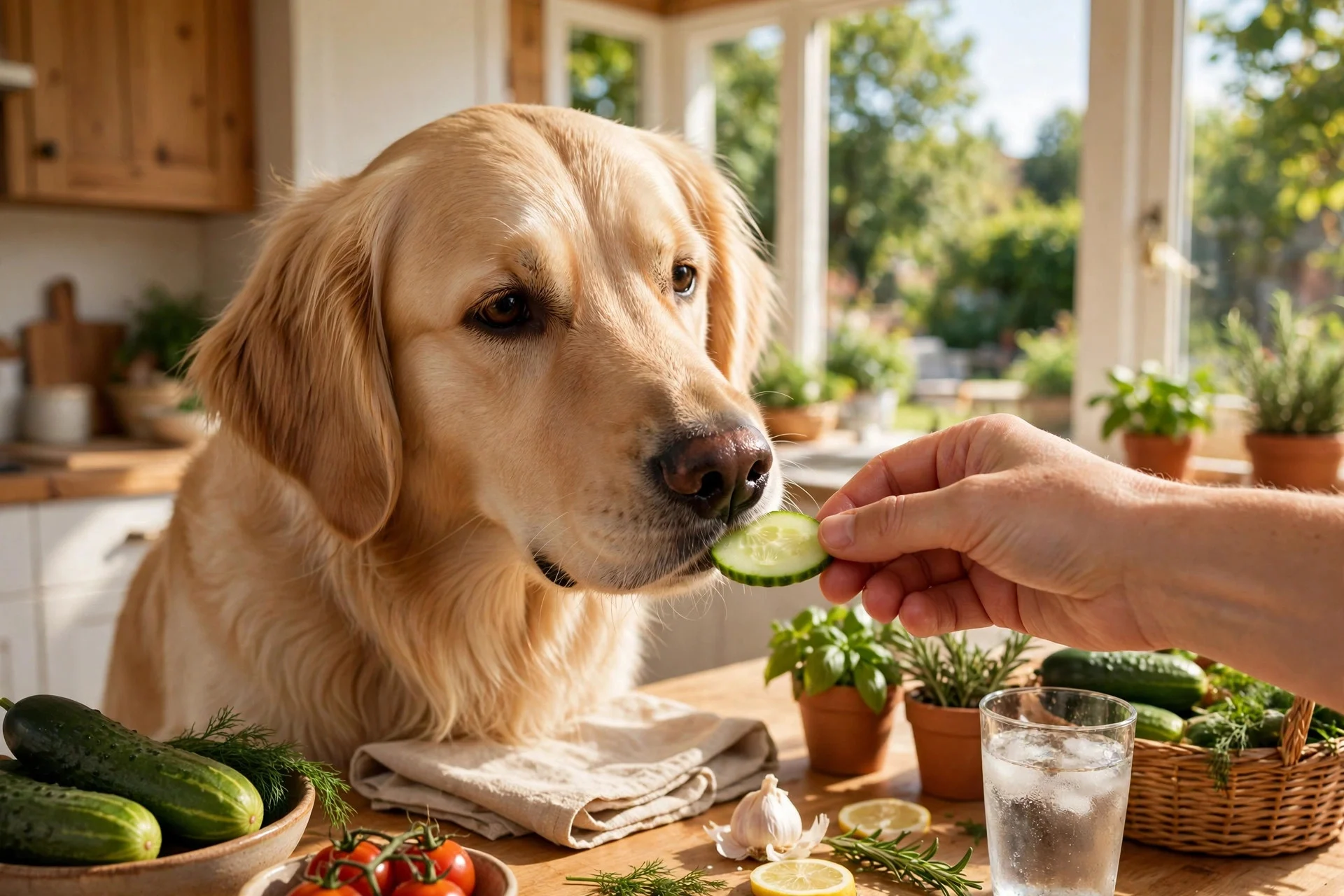
Yes — dogs can eat cucumber, and it’s one of the best low-calorie treats out there. Crunchy, hydrating, and basically a free food for dogs watching their weight. If your dog begs while you’re making a salad, cucumber is one of the safest things you can hand over.
So can dogs eat cucumber every day? Absolutely — with a little prep. Here’s why it’s so good for them, how to serve it safely (especially for small dogs), and the one part people forget.
Why Cucumber Is Good for Dogs
Cucumber is about 96% water, which makes it the ultimate hydrating snack. On hot days or after a long walk, a few cool cucumber slices do genuine good — they help top up fluids in a way most treats can’t. Dogs that don’t drink enough water (and plenty don’t) benefit from water-rich foods like this.
Calorie-wise, it’s almost nothing. A whole medium cucumber has around 45 calories, and nobody’s feeding their dog a whole cucumber. A few slices barely register, which makes cucumber the perfect training treat for overweight dogs or dogs on a strict diet. You can reward generously without the guilt.
It also brings a modest mix of vitamins — K, C, and B vitamins — plus minerals like potassium and magnesium. Nothing dramatic, but it’s a genuinely wholesome package. And the crunch factor matters: dogs love texture, and cucumber delivers that satisfying snap that makes a treat feel like a treat.
The Parts That Cause Trouble
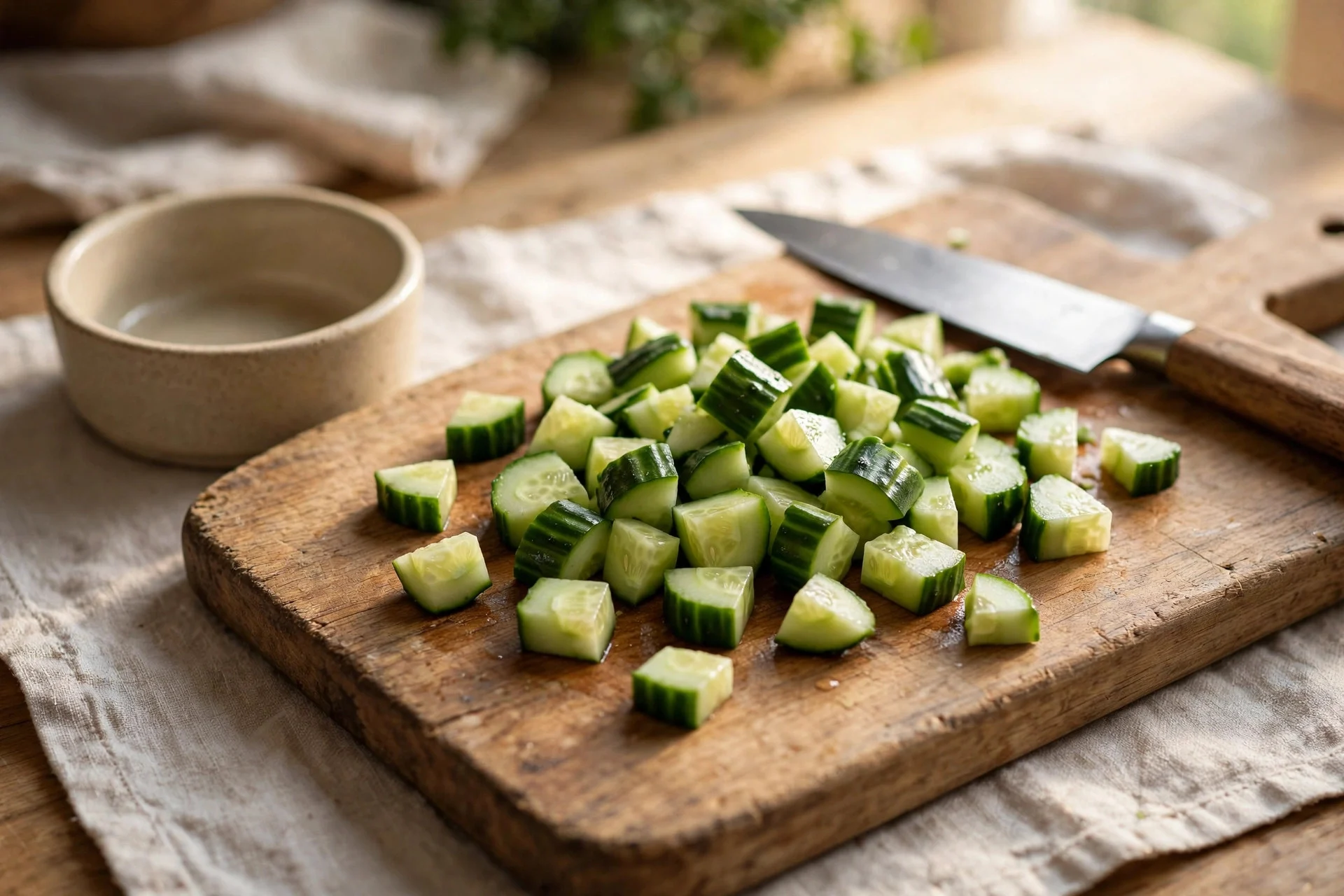
Cucumber itself is about as safe as vegetables get, but the shape is the issue. Round slices are exactly the wrong shape for enthusiastic eaters — a gulpy dog can try to swallow a whole slice and choke. This is the main cucumber hazard, and it’s completely preventable. Cut slices in half or quarters, or chop into small chunks, especially for small dogs and fast eaters.
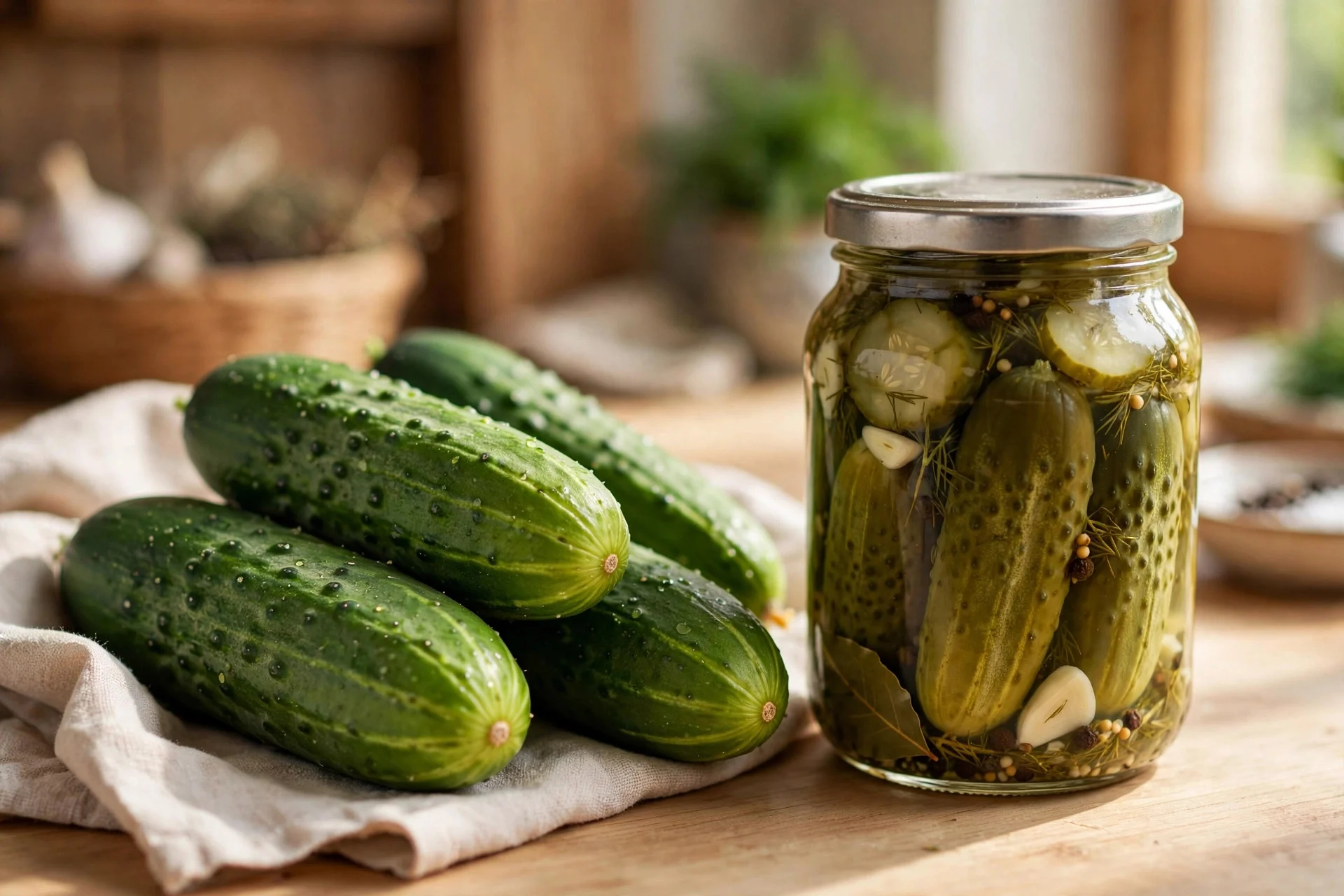
Pickled cucumbers are a different story. Pickles are loaded with salt, and many contain garlic, onion, or dill seasoning blends that aren’t dog-safe. A tiny taste of a plain dill pickle won’t hurt, but pickles shouldn’t be a treat. Stick to fresh cucumber.
Wax coating is worth a mention. Conventionally grown cucumbers are often coated in food-grade wax to stay fresh. It’s not toxic, but peeling the cucumber removes it along with any pesticide residue. Organic or garden cucumbers can keep their skin — which is where a lot of the nutrients live.
How Much Cucumber Can Your Dog Have?
Cucumber is so low-calorie that the 10% treat rule barely constrains it, but fiber and water content still mean moderation. Too much of anything watery can mean loose stools.
| Dog size | Weight | Cucumber (per day) |
|---|---|---|
| Small | Under 20 lbs | A few small chunks |
| Medium | 20–50 lbs | ¼ cucumber, chopped |
| Large | 50–90 lbs | ½ cucumber, chopped |
| Extra large | 90+ lbs | ¾ cucumber, chopped |
Honestly, most dogs self-limit with cucumber — it’s not exciting enough to overeat. But chop it properly regardless of how much you’re serving.
How to Serve Cucumber Safely
Wash it, and peel it unless it’s organic or homegrown. Then the critical step: cut it into safe shapes. For small dogs, dice into pea-sized pieces. For medium and large dogs, half-moon slices or chunks work fine. The goal is pieces that can’t lodge in a throat — think about how YOUR dog eats. Gulpers get smaller pieces, always.
Serve it raw and cold. Cucumber is best straight from the fridge — the chill makes it extra appealing, especially in summer. No need to cook it; heat just destroys the crunch that makes it fun.
Frozen cucumber chunks are a great teething aid for puppies. The cold soothes sore gums and the chewing keeps them busy. Cut them small before freezing, and supervise — as with anything frozen, you don’t want ambitious swallowing.

Cucumber Tips Worth Knowing
It’s a top-tier diet treat. If your vet has told you to cut calories, cucumber should be your first swap for commercial treats. Same satisfying crunch, a fraction of the calories. A lot of dogs genuinely prefer it once they try it — the freshness seems to appeal to them.
Try it as a food topper. A handful of diced cucumber mixed into kibble adds volume, moisture, and crunch without meaningful calories. Dogs that inhale their food sometimes slow down slightly when there’s chopping involved. Slightly.
English cucumbers are the easiest option. They’re usually sold wrapped in plastic (no wax), have thinner skin, and fewer seeds. If you’re buying specifically for the dog, grab the English ones and skip the peeling step.
Don’t bother with the fancy preparations. Cucumber with dip, cucumber salad with vinegar and sugar, tzatziki — all the human versions add things dogs don’t need. Plain, cold, chopped. That’s the whole recipe.
Mistakes to Avoid
Don’t serve whole round slices to gulpers. I keep coming back to this because it’s the one real hazard. A slice the exact diameter of your dog’s throat is a choking risk. Halve or quarter every slice, or just chop. It takes ten seconds.
Don’t confuse pickles with cucumbers. “But it’s just a cucumber!” — no, a pickle is a cucumber plus a cup of salt plus vinegar plus usually garlic. Fresh only.
Don’t overdo it with a sensitive stomach. Cucumber is gentle, but a huge amount of watery fiber at once can still mean diarrhea. A reasonable serving is plenty.
FAQs
Can dogs eat cucumber skin?
Yes, the skin is safe and nutritious. Just wash it well, and peel conventional cucumbers to remove the wax coating.
Can dogs eat cucumber seeds?
Yes, cucumber seeds are harmless — unlike some fruit seeds, they contain nothing toxic. English cucumbers barely have seeds anyway.
Is cucumber good for overweight dogs?
It’s one of the best treats for overweight dogs. Almost no calories, satisfying crunch, and hydrating. Ask your vet, but most will cheer this swap.
Can puppies eat cucumber?
Yes. Chop it small for tiny mouths, and frozen chunks are great for teething. Start with a little to make sure their stomach agrees.
Cucumber won’t win any awards for excitement, but as a daily treat it’s close to perfect: cheap, healthy, hydrating, and already in your fridge. Chop it right, keep it plain, and you’ve got a treat you never have to feel guilty about.

























